Usually no. You generally should not use your work phone number for networking events if that number is tied to your current employer, because follow-up calls, texts, and voicemail can create privacy and visibility risks you do not fully control.
A personal number or a stable separate number you manage yourself is usually the safer choice. Networking events are meant to create opportunities, but you should not create avoidable exposure just to make it easier for someone to contact you after a conversation.
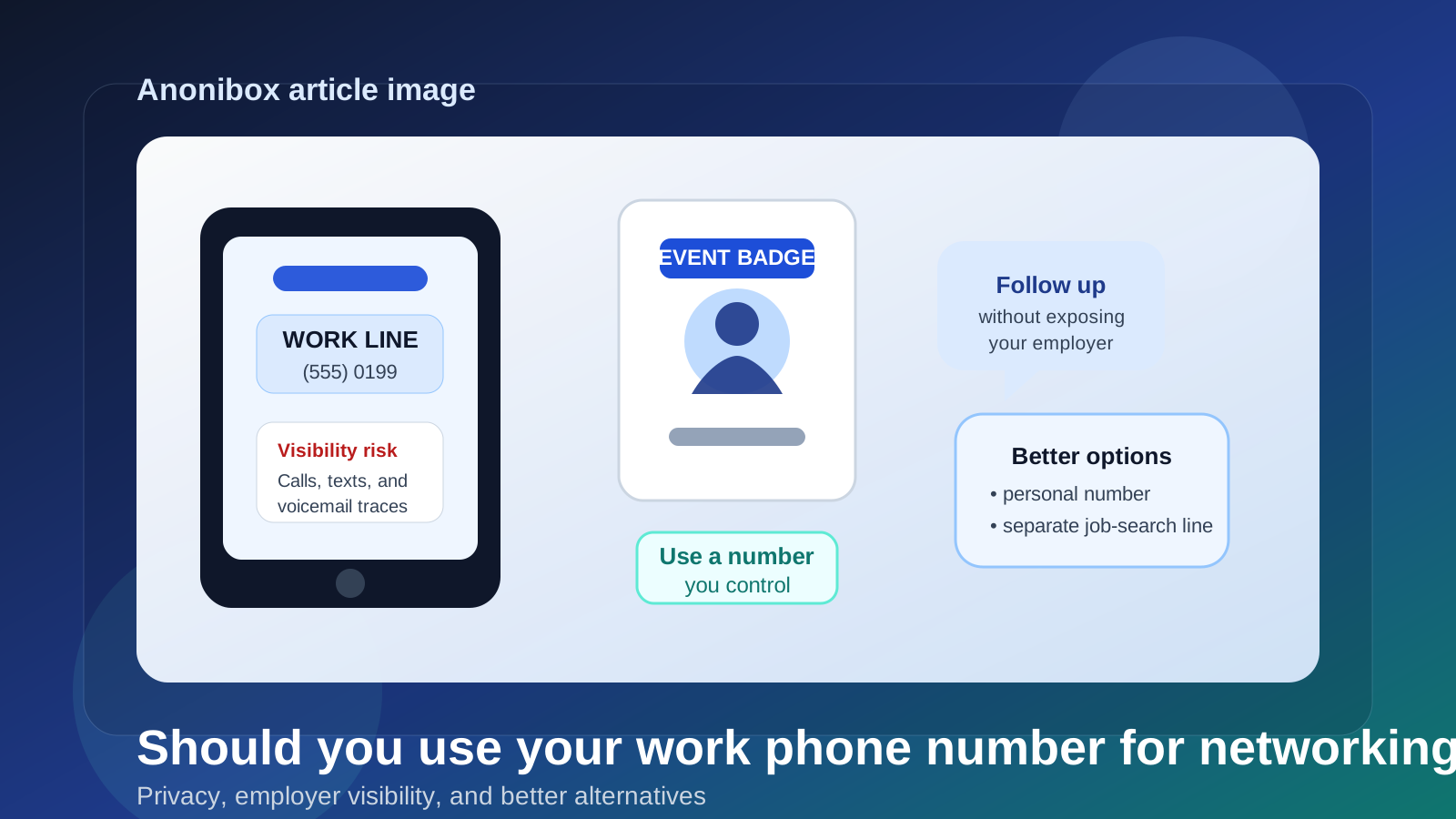
Why this question comes up at networking events
Networking events are awkward little privacy tests. You meet new people quickly, the conversation moves fast, and there is social pressure to share contact details on the spot. If someone asks for your number after a strong conversation, using the phone already in your pocket can feel like the easiest move.
That is exactly why people reach for a work number. It may be the line you answer most reliably during business hours. It may already be on your business card. If you work in sales, recruiting, partnerships, or any public-facing role, sharing that number may even feel normal.
But convenience and safety are not the same thing. If your real goal is private career networking, not official employer networking, the number attached to your current job can expose more than you intend.
Short answer: use a number you control, not a number your employer controls
If you want one simple rule, it is this: the best number for networking events is a number you can keep, monitor, and manage on your own terms. That is usually your personal mobile number or a dedicated job-search number you set up specifically for professional outreach.
A work number is different. Even if nobody is actively watching your calls, the line may still live on a company-owned device, a managed mobile plan, a VoIP account, or an internal phone system. That can create records, notifications, and access problems that do not fit a confidential job search.
What makes a work phone number risky for networking events?
1. It can reveal more to your employer than you expect
Many people imagine privacy problems only as dramatic surveillance. Real life is usually less dramatic and more annoying. A missed call notification shows up during a meeting. A voicemail transcript appears on a synced device. A call log is visible on a shared dashboard. A text preview pops up while you are screen-sharing. None of that requires a formal investigation to become uncomfortable.
At networking events, follow-up messages often arrive quickly. Someone may text you later that evening, the next morning, or during your workday. If that communication lands on a number tied to your employer, you lose some control over where and how it appears.
2. It blurs personal and employer identities
When you share a work number, the other person may assume they are reaching you in your official company role, not as an individual exploring opportunities. That can shape the entire follow-up conversation in a way you did not intend.
Maybe you only wanted to keep in touch about the industry. Maybe you wanted a private conversation about a role at another company. Maybe you are still deciding whether you even want your networking contacts mixed with your current employer identity. A work number makes those boundaries harder to manage.
3. You may lose access at the worst time
If a networking conversation turns into interviews, referrals, or offer-stage communication, reliability suddenly matters a lot. That is exactly when a work-owned number becomes a weak link. If you change jobs, lose the device, leave the employer, or get moved off that line, you can lose access to valuable follow-up right when timing matters most.
A number that belongs to you stays useful across months of career movement. A number that belongs to your employer does not always travel with you.
4. It invites boundary problems
Networking is not just about landing a job. It is also about building relationships over time. If every new professional contact has your work number, your current employer identity can end up attached to conversations that should stay personal, exploratory, or temporary. That can make it harder to separate your current responsibilities from your future plans.
When might using a work number be acceptable?
There are a few situations where using a work phone number is not necessarily a mistake.
- Your employer explicitly expects you to network publicly as part of your job.
- You are attending the event in an official company capacity rather than for personal career exploration.
- The relationship is purely business-development oriented and not related to a private job search.
- You fully understand how the line is managed and you are comfortable with that visibility.
Even then, it helps to be honest with yourself about the context. If you are privately testing the market, seeking referrals, or trying to protect your search from your current employer, a work number is still usually the wrong tool.
Better alternatives than a work phone number
Your personal mobile number
If you are comfortable sharing it selectively, your personal number is usually safer than a work line because you control the device, the account, the voicemail, and the long-term access. It is not perfect, but it is yours.
A dedicated job-search number
This is often the best compromise. A separate number gives you the convenience of calls and texts without mixing everything into your main personal line. It also lets you mute, organize, or eventually retire the number if it starts attracting spam or unwanted follow-up.
That same logic applies to email. Many people use a separate inbox for signups, outreach, or early-stage conversations so their main account does not get overloaded. A tool like Anonibox can fit naturally into that workflow when you want cleaner inbox separation for forms or low-trust outreach, while a stable separate phone number handles the voice and text side.
Email-first follow-up
At many networking events, you do not need to hand over a phone number immediately. You can say, “Let’s connect by email,” or “Send me your LinkedIn and I’ll follow up.” That gives you more time to decide whether the contact deserves a more direct channel later.
Email-first follow-up is especially useful when you just met someone, the opportunity is vague, or you want a written record before moving into more personal communication.
Practical best practices at networking events
Decide your contact strategy before you arrive
Do not improvise under social pressure if you can avoid it. Decide in advance whether you want to share a personal number, a separate number, email only, or a LinkedIn-first approach. Having a default answer makes it easier to protect your boundaries politely.
Use a short professional script
You do not need to over-explain. A simple line works: “Email is usually best for me first,” or “Here is my direct number that I use for professional follow-up.” The goal is to sound organized, not defensive.
Keep voicemail and contact labels clean
If you use a separate number, set up a simple voicemail greeting and save contacts with enough context to remember where you met them. Networking follow-up gets messy fast if you cannot tell which “Chris from marketing” is texting you two days later.
Be selective with badges, sign-up sheets, and QR forms
Not every event contact form deserves the same information. If you are adding yourself to a raffle bowl, a sponsor list, or a generic attendee database, you may want to share less than you would with a person you had a meaningful conversation with.
Watch for channel-switch pressure
If someone you just met immediately pushes you toward late-night texting, off-platform chat apps, or vague urgency about a role, slow things down. Legitimate networking follow-up does not need to become intense in the first hour.
Red flags that mean you should not use your work number
- The contact is asking about private job opportunities while you are on the clock or at an employer-sponsored event.
- You do not know whether your device, mobile plan, or phone system is company-managed.
- You would be uncomfortable if a recruiter text arrived during your workday on that device.
- You expect the conversation could turn into interviews, referrals, or offer-stage follow-up.
- You already feel the need to hide or explain why you are using the work line.
If any of those are true, that discomfort is useful information. It usually means a different contact method would serve you better.
A quick decision checklist
- Am I here in my employer role or in my own career role?
- Do I fully control this phone number, device, and voicemail?
- Would I still want this number used if the relationship turns into interviews or referrals?
- Could incoming calls or texts on this line expose my search at work?
- Would email or a separate number do the job with less risk?
If your answers point toward uncertainty, that is usually your sign not to use the work number.
Final answer
So, should you use your work phone number for networking events? Usually no. It may feel efficient in the moment, but it can expose your activity, blur your professional identity, and leave you dependent on a number you do not fully control.
For most people, the better option is a number they own or a more cautious email-first follow-up approach. Networking is supposed to expand your opportunities, not create unnecessary privacy problems. If you protect your contact channels early, you make it easier to stay reachable, professional, and private as conversations develop.