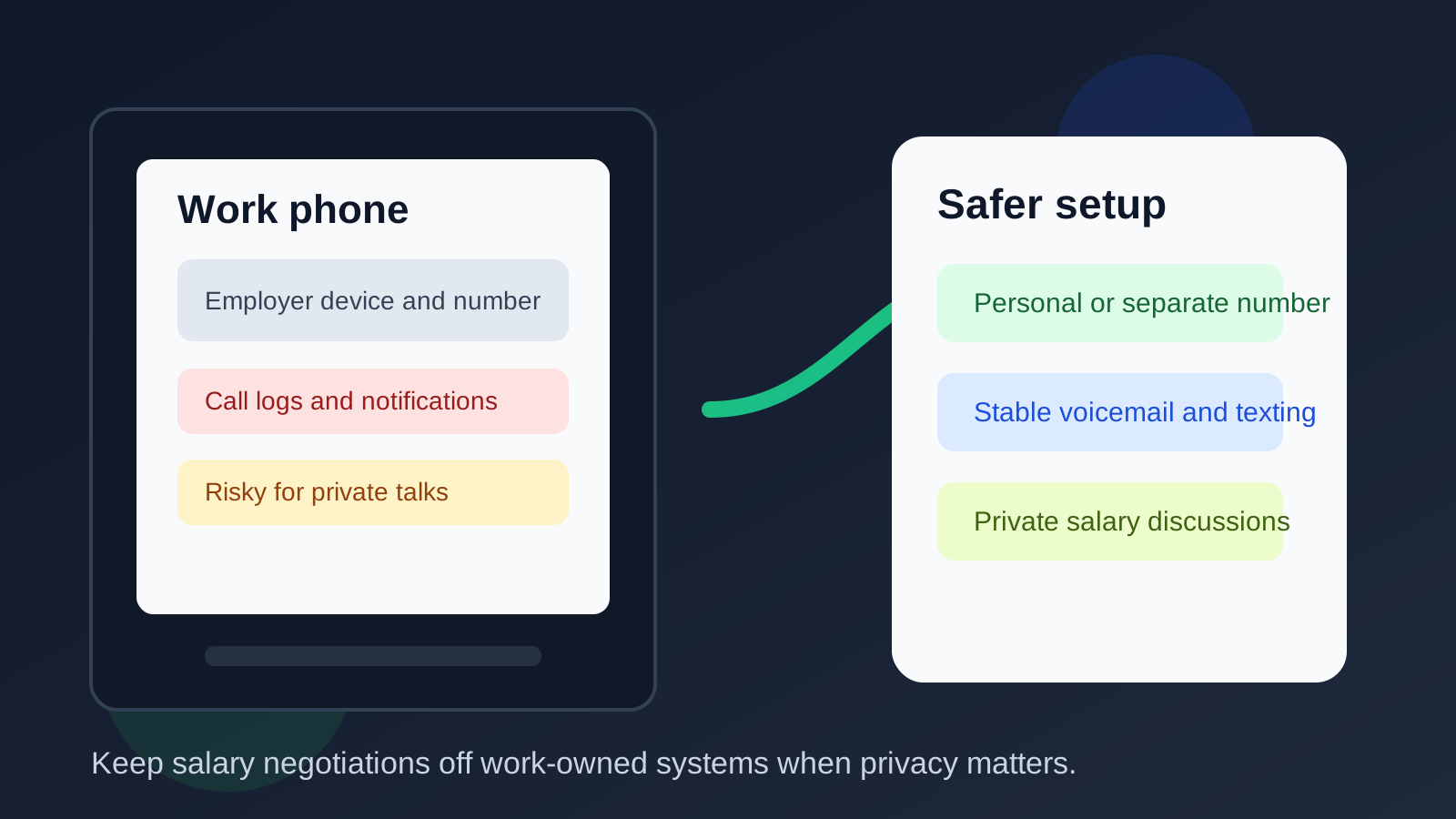
Usually no. If salary negotiations involve a current or prospective employer, your work phone can expose call timing, voicemail, notifications, and activity at the exact moment you want more privacy and control.
For most people, a personal number or a separate number you fully control is the safer choice for salary negotiations, as long as you actually monitor it and can respond quickly.
Why this question matters more during salary negotiations
Early in a job search, people often worry about spam, recruiter clutter, and keeping their contact details off every random job board. Salary negotiations raise a slightly different problem. At this stage, the conversation is more sensitive, more time-sensitive, and often more confidential. You may be discussing compensation ranges, bonus expectations, equity, relocation support, notice periods, or counteroffers. Those are not the kinds of conversations most people want happening on an employer-owned device.
A work phone can feel convenient because it is always nearby, charged, and already part of your daily routine. But convenience is not the same thing as privacy. If the number, device, or voicemail system belongs to your employer, or even just blends into your work environment, it can create risks that are easy to underestimate until you are already deep into a negotiation.
Short answer: a work phone is usually the wrong tool
If you are negotiating with a new employer while still working somewhere else, using your work phone is usually a bad trade. You may be faster to reach, but you also risk exposing negotiation activity on a device or account that does not fully belong to you.
Even if nobody is actively monitoring every call, work-owned systems often create enough visibility to make people uncomfortable. Call logs, synced notifications, mobile-device-management tools, shared billing records, backup policies, voicemail access, and plain old shoulder-surfing can all turn a private conversation into something less private than you intended.
The biggest risks of using your work phone number for salary negotiations
1. Employer visibility you cannot fully control
The biggest issue is simple: a work phone is part of work infrastructure. Depending on your company, call history, texting metadata, installed apps, or device management may be visible to someone besides you. That does not mean a manager is reading your messages in real time, but it does mean the system is not truly private.
When you are talking about compensation, timing matters. A call from a recruiter, a hiring manager, or an HR representative can stand out. Even the appearance of unusual contact can create stress if you are trying to keep your search discreet.
2. You may lose access at the worst time
If the number belongs to your employer, you may not control it long term. That matters during negotiations because conversations do not always end with one phone call. There may be follow-up questions, revised offers, benefits clarifications, document reminders, or start-date changes. If your access changes suddenly, you do not want that communication stuck on a number or device you no longer control.
3. Voicemail and text handling can get messy
Salary negotiations often move across email, phone calls, and text messages. A recruiter might call first, then send a text asking when you are free, then follow up by email with a revised package. If your voicemail greeting is generic, work-branded, or shared with other business use, that can feel awkward fast. The same goes for text notifications popping up during meetings or on screens you use for work.
4. It blurs personal and professional boundaries
Negotiating compensation is not just logistics. It is a private decision-making process. Many people want room to think, compare options, and respond on their own schedule. A work phone makes that harder if it keeps salary conversations mixed in with your current employer’s daily workflow.
5. It can create avoidable anxiety
Sometimes the technical risk is moderate, but the psychological cost is still real. If every recruiter call on a work device makes you tense or feel exposed, that alone is a good reason to use another number. Clean separation is valuable because it lets you negotiate more calmly and professionally.
When a work phone might seem reasonable
There are a few situations where using a work phone may not be a disaster. For example, you might be self-employed, fully own the number, and simply happen to use the same device for work. Or you might have a dual-SIM setup where the hardware is familiar, but the number used for negotiations is actually your own. In cases like that, the real question is not whether the phone sits on your desk during work hours. The real question is who controls the number, the device, and the data around it.
If the number is truly yours, the voicemail is yours, and the device is not managed by an employer, the risks drop a lot. But if the phone is company-issued, company-paid, or connected to work systems you do not control, the answer is usually still no.
Better alternatives than using your work phone
Use your personal number if you are comfortable with it
Your personal number is often the simplest reliable choice, especially if you already use it for job-search communication and keep decent boundaries around unknown calls. The downside is that it can collect recruiter noise over time, but for a serious offer-stage discussion it is still usually safer than a work-owned line.
Use a separate long-term number you control
If privacy matters to you, a separate number is often the best middle ground. It gives you distance from your everyday personal life without putting salary talks on work infrastructure. That separate number could be a second SIM, a stable virtual number where appropriate, or another lawful setup you control and check consistently.
The key word is stable. Salary negotiations are not the moment for a disposable number that might expire, stop receiving texts, or go unchecked. You want separation, not fragility.
Use a clean email strategy alongside it
Phone privacy works best when it matches the rest of your contact setup. If you already keep job-search communication separate through a dedicated inbox, the same logic applies here. Some people use Anonibox or a temporary inbox earlier in the funnel to avoid job-board clutter, but once a real salary negotiation is happening, your contact method should be dependable, monitored, and easy to reply from. Privacy still matters; reliability matters more than ever.
How to set up a safer salary-negotiation contact workflow
1. Pick one primary number for negotiation-stage communication
Do not bounce between your work number, personal number, and a half-used app line. Choose the number you want recruiters and HR to use, then stick to it. Consistency reduces missed calls and makes follow-up cleaner.
2. Update your voicemail before serious conversations begin
A short greeting with your name is enough. It should sound neutral and professional. If you are using a separate number, make sure the greeting does not sound temporary or confusing.
3. Keep negotiation notifications off work-owned screens
If you are using your own device, set focus modes or notification rules so you can respond privately. The goal is not secrecy for its own sake. The goal is avoiding accidental exposure or interruptions in the wrong setting.
4. Move complex details back to email when needed
Phone calls are good for pacing, rapport, and quick clarifications. But compensation details, revised terms, or anything important enough to revisit later should usually end up in email too. That gives both sides a cleaner record and reduces misunderstandings.
5. Decide in advance how fast you want to respond
One reason people default to a work phone is fear of missing something urgent. You can solve that without using the wrong number. Check your chosen number regularly, keep the ringtone or notifications clear enough to notice, and make sure text messages and voicemails actually reach you.
What to say if someone already has your work number
You do not need a dramatic explanation. A simple redirect is enough. For example:
- “Please use my personal number for any compensation follow-up. It is the best way to reach me privately.”
- “For scheduling and offer discussions, this number is easier for me to monitor outside work hours.”
- “I prefer to keep negotiation calls on my direct line. Here is the number I would like you to use.”
Most legitimate recruiters and HR teams will not care. They just want a dependable way to reach you.
Red flags to watch for
- An employer or recruiter insists on using whatever number is attached to your current workplace identity even after you provide a better one.
- Compensation details are pushed into disappearing or hard-to-track channels instead of confirmed clearly.
- You are pressured to answer immediately on a work device during hours when you cannot speak freely.
- The conversation keeps jumping between channels in a way that makes records and boundaries messy.
None of those automatically means something malicious is happening, but they are signs that your communication setup needs tightening.
So should you use your work phone number for salary negotiations?
Usually no. A work phone can make you easier to reach, but it also increases the chance that private negotiation activity sits on employer-owned infrastructure or gets mixed into a context you do not fully control.
The better approach is to use the most reliable number that still belongs to you: often your personal phone, and in many cases a separate long-term number dedicated to your job search. That way you stay reachable for real conversations about pay, benefits, and next steps without turning a sensitive negotiation into something your work environment can see, track, or complicate.
Privacy does not require disappearing. It just requires choosing the right channel before the stakes rise.