Yes — Zoho Mail can work well for employment verification if you use it as a stable inbox you monitor closely through the full process.
It is usually a better choice than a temporary address for verification workflows, but consistency, quick replies, and long-enough access matter more than the provider name.
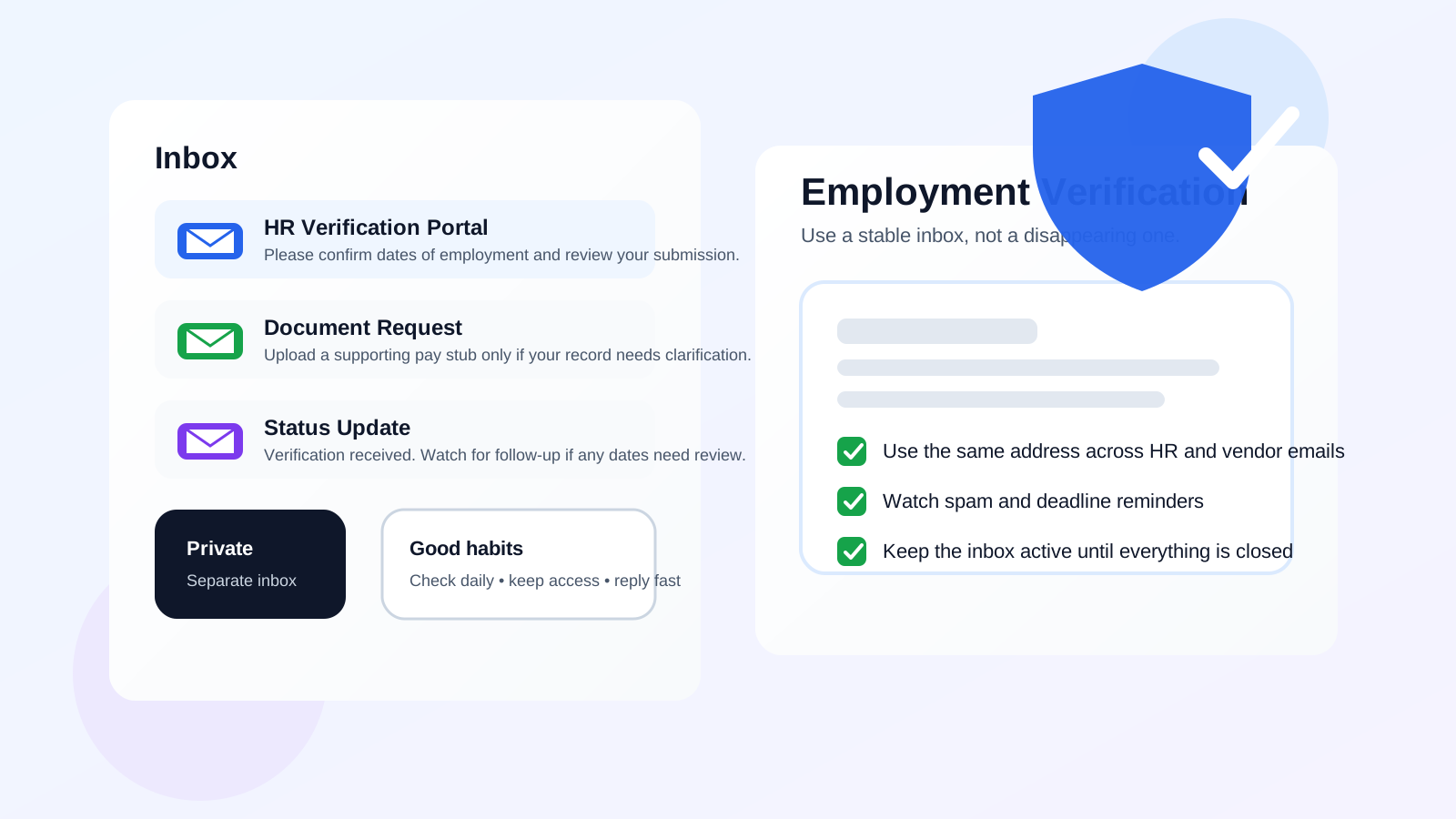
If you are asking should you use Zoho Mail for employment verification?, the practical answer is that it can be a sensible privacy-conscious option as long as you treat it like a real working inbox instead of a short-term shield.
Employment verification often happens after an offer is close, after a background check has started, or while HR, a recruiter, or a third-party vendor is confirming dates, titles, pay records, or supporting documents. At that stage, the goal is not just avoiding spam. The goal is staying reachable, organized, and credible while still keeping your oldest personal inbox out of every hiring workflow you touch.
Short answer: Zoho Mail is usually fine for employment verification
Most employers are not evaluating your candidacy based on whether you use Gmail, Outlook, iCloud Mail, Proton Mail, Fastmail, or Zoho Mail. They care about whether the address works, whether you see messages quickly, and whether the process moves forward without unnecessary delays.
Zoho Mail is usually a reasonable choice if:
- you check it consistently during the verification window,
- you plan to keep access to it for as long as follow-up may continue,
- you use a simple, professional display name, and
- you keep your contact details consistent across the employer, recruiter, and verification vendor whenever possible.
If those points are true, Zoho Mail can be a clean middle ground between oversharing your oldest personal inbox and relying on something too disposable for a late-stage hiring process.
Why employment verification email matters more than it seems
People often think of employment verification as a small admin task, but the communication around it can be surprisingly important. A company or verification vendor may send you:
- portal invitations,
- requests to confirm past job titles or dates,
- document-upload links,
- questions about discrepancies,
- identity-related follow-up, and
- deadline reminders if something is missing.
Those messages may arrive over several days, and sometimes over a couple of weeks if records need clarification. That means the best email for employment verification is not simply the most private one. It is the one that gives you enough privacy while still being dependable under pressure.
That is where Zoho Mail can fit well. It can give you separation from your main inbox without looking temporary, experimental, or obviously disposable.
Why some job seekers choose Zoho Mail for employment verification
1. It keeps hiring admin separate from everyday life
If your primary inbox is packed with bills, receipts, travel confirmations, newsletters, family email, and years of account notifications, verification messages can disappear fast. A separate Zoho Mail inbox can make it easier to spot a request from HR or a verification vendor before a deadline slips by.
That separation is useful even if the employer is fully legitimate. You do not need to assume bad intent to want less inbox clutter and less long-term exposure.
2. It feels more stable than a throwaway address
Employment verification is a poor place to gamble on an address you only planned to use for one click. Even if the first message is just a portal link, later follow-up might include a correction request, a reminder, or a confirmation that something still needs action.
Zoho Mail can work because it behaves like a normal inbox. That makes it a better fit than a temporary mailbox when the process may stay active longer than you expected.
3. It can limit unnecessary exposure of your oldest personal inbox
Verification often involves more than one party. You may have an employer, a recruiter, a staffing firm, and a third-party screening or verification platform touching the same workflow. Using a separate inbox can reduce how widely your long-term personal email gets distributed.
That does not make you anonymous, and it does not guarantee anything about how others handle your data. It simply gives you a bit more compartmentalization, which many privacy-conscious job seekers find worthwhile.
4. It can make the paper trail easier to manage
Employment verification often generates a trail of links, attachments, reminders, and confirmation emails. A dedicated inbox makes those easier to find later if a vendor asks you to resend a form, confirm a date range, or locate a previous message.
That organizational benefit is underrated. A late-stage hiring delay is often caused by something boring like a missed email, a forgotten deadline, or a clarification request buried under unrelated mail.
Where Zoho Mail can create friction
The main risk is usually not Zoho Mail itself. The risk is using a separate inbox badly.
- You rarely check it. A clean inbox is not helpful if you forget it exists for two days.
- You switch addresses mid-process. If the recruiter has one email, HR has another, and the verification vendor has a third, confusion becomes much more likely.
- Your display name looks inconsistent. A straightforward real-name display is easier than something playful, vague, or obviously temporary.
- You rely on a fragile alias setup. If you are using forwarding rules or multiple aliases, make sure they are stable before the process gets serious.
- You treat it like a disposable inbox. Employment verification rewards boring reliability much more than clever compartmentalization.
In other words, the question is not just “Is Zoho Mail acceptable?” It is also “Will I actually manage this inbox well enough for a time-sensitive workflow?”
When using Zoho Mail for employment verification makes sense
Zoho Mail is often a good choice when you want a real, monitored inbox that is separate from your main personal address.
It makes especially good sense if:
- you already use Zoho Mail regularly and are comfortable checking it often,
- you want a dedicated hiring-process inbox that still looks conventional,
- you are privacy-conscious but do not want to rely on a disposable mailbox,
- you expect several follow-up emails and want them all in one place, or
- you are balancing multiple late-stage job processes and want cleaner organization.
For many job seekers, that is the sweet spot. You get separation without taking on the reliability risks of a short-lived inbox.
When a different inbox may be better
Zoho Mail may not be the best choice if it is technically valid but not the inbox you watch most reliably.
You may want to use another address if:
- you only created the Zoho inbox recently and keep forgetting to check it,
- you already gave a different email to the employer and switching now would create confusion,
- you plan to abandon the inbox right after the offer stage, or
- your strongest habit is monitoring another mailbox throughout the day.
Sometimes the safest choice is simply the inbox you trust yourself to check consistently. Privacy matters, but missing an HR message because you chose the “cleaner” inbox and then ignored it is not a great trade.
Best practices if you use Zoho Mail for employment verification
Use one address from start to finish if possible
Consistency reduces friction. If the employer, recruiter, and verification vendor all have the same working address for you, the odds of a missed handoff are lower.
Check the inbox and spam folder daily
Do not assume every verification message will land perfectly. While the process is active, check the inbox and spam folder at least once or twice a day.
Reply quickly, even if you need more time
If someone asks for a document or clarification and you cannot send it immediately, a short reply acknowledging the request is still helpful. It shows you saw the message and are working on it.
Keep your display name simple and professional
Use your real name or a close professional version of it. Employment verification is easier when your contact details look straightforward and match the name on your documents.
Save key messages and attachments
Keep confirmation emails, portal links, and instructions easy to find. Even a simple folder or label for verification traffic can save time if you need to revisit something later.
Avoid turning late-stage hiring into a temp-email experiment
Tools like Anonibox can be useful earlier in the funnel when you are dealing with low-trust forms, broad job-board signups, or recruiter outreach you are not ready to absorb into your long-term inbox. Employment verification is different. Once the process is real and time-sensitive, a stable inbox usually beats a temporary one.
Zoho Mail vs a temporary email for employment verification
This is the part many job seekers get wrong. Temporary inboxes are excellent for one-off verification, low-trust signups, and inbox-protection during early research. They are much less ideal when an employer or verification vendor may need to reach you again next week with a reminder, a portal issue, or a discrepancy question.
For employment verification, a stable separate inbox usually beats a temporary one. Zoho Mail can make sense because it gives you separation without forcing you into disposable behavior. If your goal is to stay organized and protect your main inbox without becoming harder to reach, that balance matters.
A quick checklist before you use Zoho Mail for employment verification
- Will you check this inbox every day while the process is active?
- Will you keep access to it until all verification follow-up is truly finished?
- Does the display name clearly match your identity?
- Are you keeping the same address across the people and systems involved?
- Will this inbox make you more organized rather than give you one more place to forget messages?
If the answer to most of those questions is yes, Zoho Mail is probably a reasonable choice.
Final answer: should you use Zoho Mail for employment verification?
Yes — in many cases, Zoho Mail is a sensible option for employment verification if you want a separate, controlled inbox that you can reliably monitor from start to finish.
It is usually a better fit than a temporary address because verification depends on continuity, follow-up, and quick responses. The real question is not whether Zoho Mail looks acceptable. The real question is whether the inbox is stable, professional, and easy for you to check when something important arrives.
If Zoho Mail gives you that mix of privacy, consistency, and day-to-day reliability, it can be a smart choice. If it is just another inbox you rarely open, use the address you trust yourself to watch closely instead.