A temp email for Achievers is fine for a short, low-stakes employee recognition software evaluation when you only need signup verification, a quick product tour, and a first sense of whether the platform belongs on your shortlist.
It becomes a weak long-term choice once rewards workflows, team access, admin ownership, or account recovery depend on that inbox.
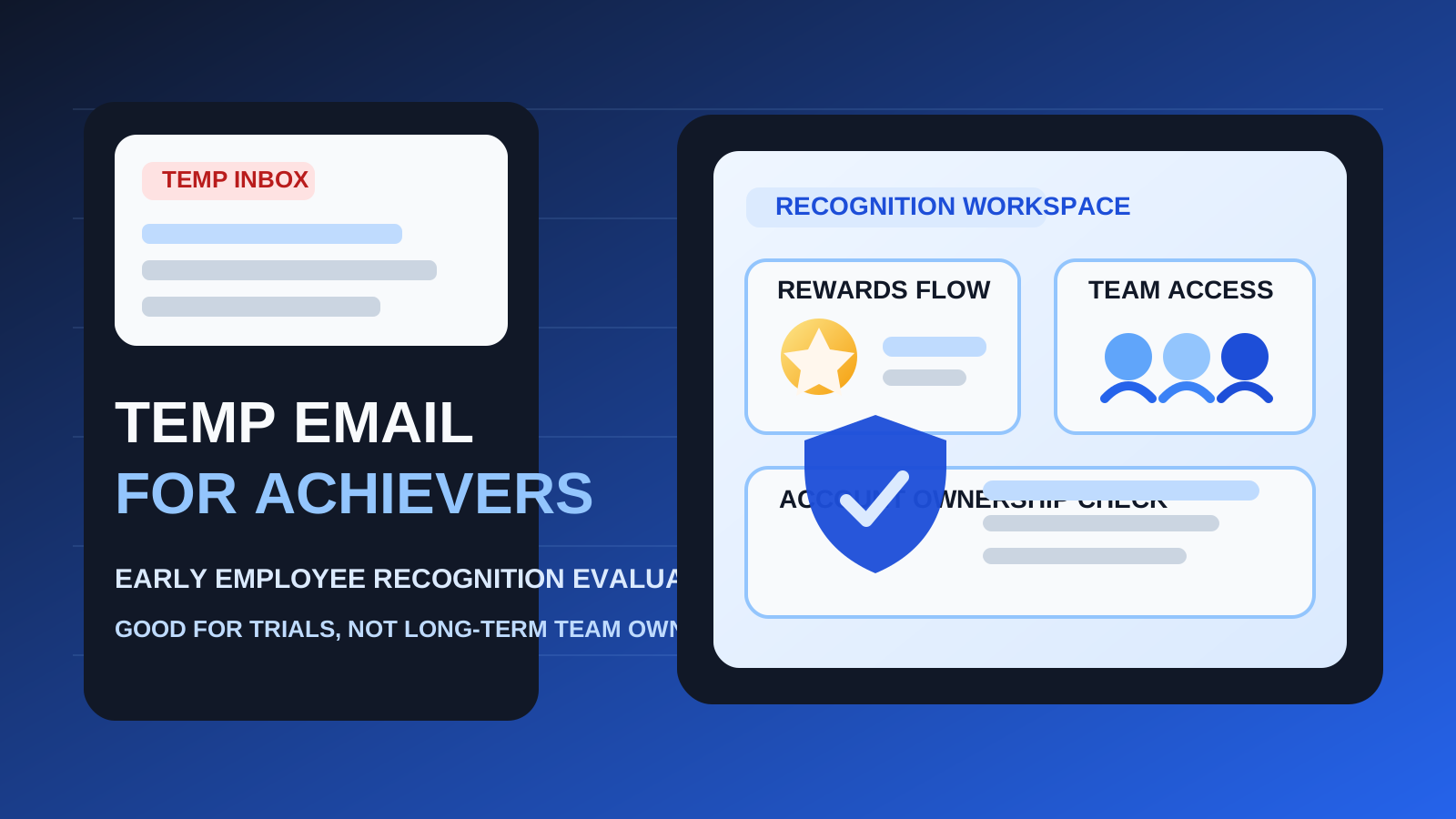
That is the practical answer behind most searches for temp email for Achievers. Many teams want to explore employee recognition platforms without sending another stream of welcome emails, product tours, webinar invites, and sales follow-ups into a permanent work inbox before they have even decided whether the tool is worth a serious pilot. In the earliest research phase, that is a reasonable instinct.
A temporary inbox can help you get through verification, look around the workspace, compare Achievers with other recognition tools, and keep exploratory vendor traffic separate from your daily email. A service like Anonibox can be useful for exactly that kind of first-pass filtering. The catch is that recognition software stops being disposable quickly once real admins, managers, budgets, or employee participation enter the picture.
The safest rule is simple: use a temporary inbox only while the Achievers account is temporary in every other sense too. If the workspace may become a real pilot, a shared evaluation environment, or the start of a live recognition program, move to a stable work-owned email before the account becomes important.
Why someone would use a temp email for Achievers
The biggest reason is inbox control. Software evaluations can create a long tail of follow-up emails, especially in HR, engagement, and employee-experience categories where vendors often want to book demos, share implementation advice, and send ongoing nurture content. If you are comparing several platforms at once, it is understandable to want separation between quick product research and the inbox you use for real work.
Used carefully, a temporary inbox can help with:
- first-pass evaluation when you only want to inspect the product before committing further
- vendor comparison across multiple employee recognition or engagement tools
- inbox hygiene so trial messages do not live in your main mailbox forever
- low-stakes research where the account is expected to remain disposable
That is the clean use case: you are testing the software, not establishing durable ownership yet.
When a temporary inbox makes sense
You are doing a quick shortlist review
If your team is still deciding whether Achievers deserves a deeper look, a disposable inbox can be a reasonable starting point. You can verify the account, review the interface, examine the core workflow, and decide whether the platform feels promising before tying the evaluation to a permanent address.
You want to limit vendor follow-up early
Recognition software vendors often send welcome sequences, setup prompts, customer stories, pricing nudges, and meeting requests soon after signup. If you are still in comparison mode, keeping those messages out of your main inbox can be genuinely useful.
You are evaluating alone
The temporary approach is lowest risk when one person is exploring privately and nobody else depends on the account. If the workspace is truly disposable, the inbox can be disposable too.
You are willing to abandon the account completely
Temporary email works best when you are comfortable treating the workspace like a scratchpad. If the answer is “no” after the first review, you should be able to walk away without needing that inbox again.
Where the temp-email approach starts to break down
The problem begins when the account gains real business value. What felt like a harmless trial can turn into a real evaluation environment surprisingly fast.
1. Rewards workflows are not throwaway
Employee recognition platforms are not just read-only demos. Even during a pilot, you may end up testing how nominations work, how budgets or reward settings are structured, what approval steps look like, and how recognition activity appears across the organization. Once the account touches workflow rather than pure browsing, the owner inbox matters more.
2. Team access changes the risk profile
A solo evaluator account is one thing. A workspace that HR, people ops, leadership, or managers may all want to review is another. Once multiple stakeholders care about the same environment, the original owner address should already be stable, monitored, and easy to recover.
3. Admin ownership matters more than signup convenience
Someone eventually owns settings, program structure, permissions, and the overall account direction. If that owner account is tied to a throwaway inbox, the setup is weaker than it should be from the start. That kind of fragility is easy to ignore until you need to reset a password or hand the account to the real internal owner.
4. Integrations and governance can arrive quickly
If the product looks promising, the next questions often involve SSO, HRIS connections, manager permissions, notifications, or reporting. Those are not the kinds of workflows you want hanging from an email address you may lose access to a few days later.
5. Recovery becomes important only after the account is useful
Password resets, suspicious-login alerts, verification prompts, and ownership changes usually feel theoretical on day one. They become painfully real later, when the account is suddenly important and the disposable inbox is gone.
A practical rule that works
Use a temp email for Achievers only while the account is disposable in every other sense too.
If the workspace exists purely for short-term exploration, a temporary inbox is fine. If the workspace might become a real pilot, a team evaluation, or the beginning of a recognition rollout, switch to a stable work-owned address before the account becomes meaningful. That one rule prevents most of the avoidable cleanup later.
How to evaluate Achievers safely with a temporary inbox
1. Decide whether this is research or rollout
Before signup, ask the honest question: are you just trying to see whether the platform deserves a closer look, or do you already think it may become a serious internal initiative? If it is just research, a temp inbox is reasonable. If it may become operational, start with a durable address instead.
2. Keep the first session focused
Do not wander through the product without a purpose. Go in with a short checklist such as:
- Does the admin workflow feel understandable?
- Does the recognition model fit your company culture?
- Do the reward and approval structures look workable?
- Would your stakeholders actually want to keep exploring this tool?
A focused first review makes it easier to keep the account temporary if the answer is no.
3. Avoid attaching real people or real process too early
If the owner inbox is temporary, keep the evaluation low stakes. Avoid treating the workspace like a live program before ownership is stabilized. The more genuine process you attach to it, the more frustrating the cleanup becomes later.
4. Save useful notes outside the platform
During the trial, capture what actually matters: what felt strong, what felt awkward, what questions you still have, and what would need deeper testing if the product advances. That way you keep the value of the first pass without being dependent on the original inbox.
5. Switch before the account becomes shared infrastructure
The best time to move to a permanent work-owned inbox is before multiple stakeholders start reviewing the environment, before the account gets tied to real program design, and before recovery details become important. Early migration is boring, and boring is exactly what you want here.
When a permanent inbox is clearly the better choice
Skip the temporary step and use a stable address from the beginning if any of these are already true:
- you expect the account to become a real pilot soon
- multiple stakeholders may need access
- you want to test real rewards or governance workflows
- the workspace may influence a live employee recognition rollout
- you care about clean recovery and ownership from day one
In those situations, the privacy benefit of a burner inbox is smaller than the operational weakness it creates.
Common mistakes to avoid
Letting the trial account become the real account
This is the classic mistake. The original signup feels temporary, the platform looks good, and the team keeps using the same workspace without ever fixing the owner inbox behind it.
Confusing inbox cleanliness with account safety
Keeping vendor messages out of your main inbox is useful. That does not automatically make a disposable inbox the right long-term foundation for software your organization may actually rely on.
Waiting for an access problem before changing the email
If you only think about durable ownership after a password reset, a handoff, or a suspicious-login event, you are already handling the problem the hard way. Changing the email early is almost always easier.
Adding coworkers before stabilizing the owner inbox
The moment shared access enters the picture, the stakes rise. If managers, HR leaders, or people-ops teammates are involved, the owner email should already be something the organization can maintain.
A quick decision checklist
Before using a temp email for Achievers, ask yourself:
- Is this only a first-pass evaluation?
- Will anyone else need access soon?
- Could this workspace turn into a real pilot?
- Would losing access to the inbox create unnecessary friction later?
- Am I trying to reduce spam, or am I accidentally weakening account ownership?
If the account is genuinely temporary, a disposable inbox is a practical tool. If the account may gain real value, a permanent work-owned address is the better choice.
Final takeaway
A temp email for Achievers is useful when you want to evaluate the platform quickly, compare it with other employee recognition tools, and keep early vendor follow-up out of your main inbox.
It becomes risky once rewards workflows, team access, admin ownership, or account recovery depends on that inbox. Use a temporary address for low-stakes exploration, then move to a stable work-owned email before the platform becomes part of serious internal process.
That way, you get the privacy and inbox-control benefits of a disposable inbox without turning a small signup convenience into a long-term ownership problem.