Yes — using a temp email for ArtStation Jobs is a smart way to browse creative job alerts, verify an account, and keep early applications out of your main inbox.
It works best when you are exploring roles, testing alert quality, or protecting your portfolio-related job search from spam; once a role becomes serious, switch to a permanent email you monitor every day.
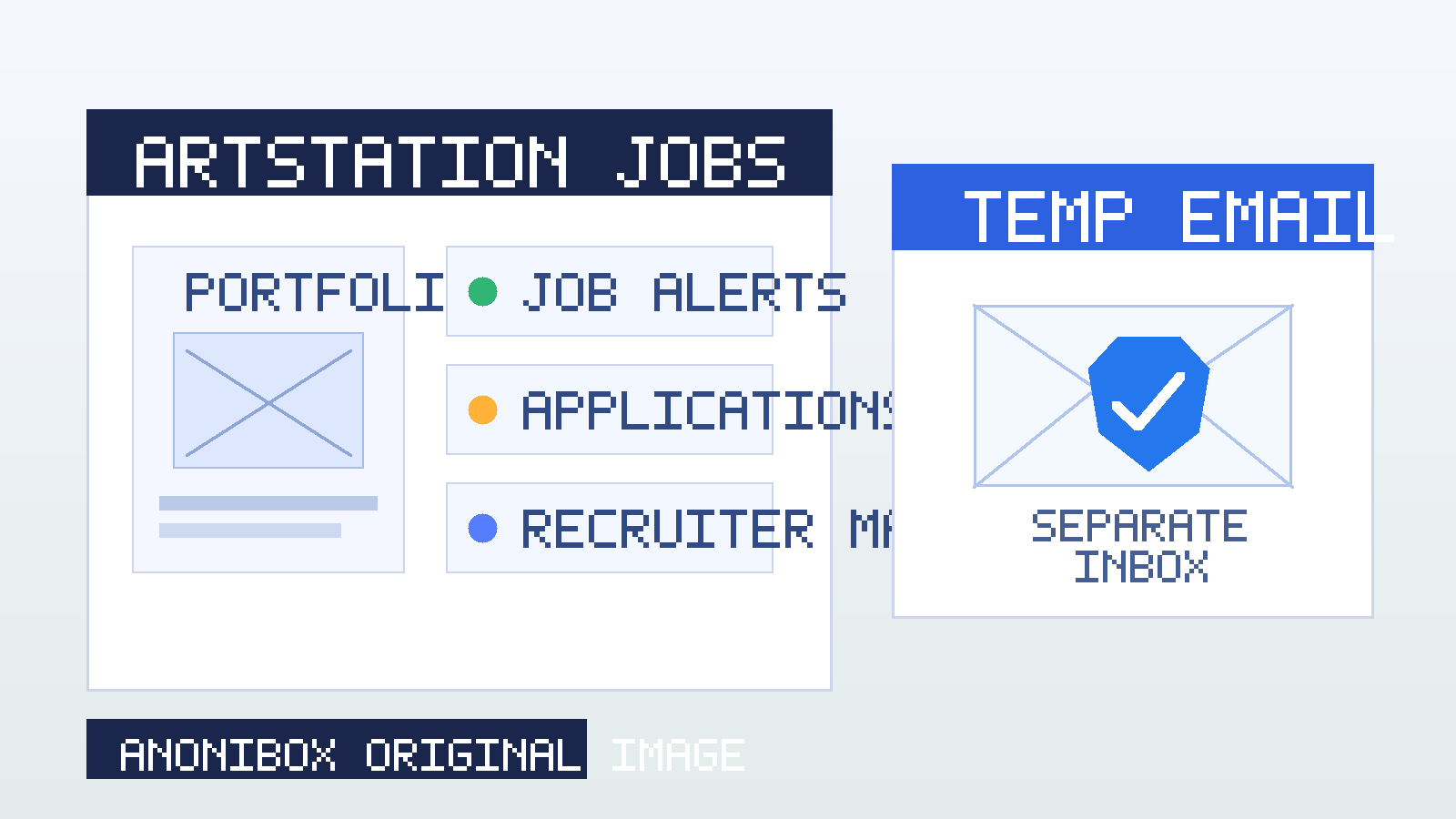
Why people look for a temp email for ArtStation Jobs
Creative job hunting can get noisy fast. One platform might send saved-search alerts, another might send account reminders, and a third might trigger recruiter outreach as soon as your profile is active. If you are exploring illustration, concept art, game art, 3D, environment design, animation, or adjacent creative roles, it is easy for one signup to turn into a long tail of email you did not really want.
That is why the query makes sense. People searching for a temp email for ArtStation Jobs usually are not trying to hide from legitimate employers. They are trying to control when a platform gets access to their long-term inbox. A temporary or privacy-first secondary inbox lets you test the platform first, see whether the alerts are useful, and decide later whether it deserves a permanent place in your job-search workflow.
That is especially helpful for creatives because portfolio-driven searches often involve more experimentation than a standard job search. You may compare several boards, test multiple alert combinations, watch for freelance leads, or quietly explore opportunities while still employed. A disposable inbox gives you separation during that early stage.
When using a temp email for ArtStation Jobs makes sense
1. You are still evaluating the platform
If you want to see whether the jobs match your discipline, geography, and seniority, a temp inbox is a practical first step. You can create the account, confirm the email, and inspect the quality of listings before connecting the platform to your main address permanently.
2. You are comparing several creative job channels at once
Many artists and designers do not rely on one source. They might check LinkedIn, Behance-adjacent communities, studio career pages, recruiter messages, niche game-art boards, and general creative sites all at the same time. Using a separate inbox for one platform makes it easier to see which source actually produces useful leads and which one mainly creates clutter.
3. You want a quieter portfolio search
Creative hiring often overlaps with public work samples, portfolio links, and speculative outreach. If you are browsing without wanting every alert mixed into your personal inbox, a temporary mailbox gives you breathing room. It does not make you anonymous, but it does reduce unnecessary exposure at the signup stage.
4. You are testing alerts before keeping them
Sometimes the issue is not the platform itself. It is the volume. A temp inbox lets you test how often alerts arrive, whether they are relevant, and whether the keywords you chose are too broad before you commit to receiving those messages long term.
What a temp inbox can help you do on ArtStation Jobs
At the top of the funnel, a temporary inbox is useful for a few specific tasks:
- Email verification: you can complete account setup without immediately using your main inbox.
- Alert sampling: you can see whether the jobs are actually relevant to your art, design, or game portfolio.
- Workflow separation: exploratory signups stay apart from serious applications and client communication.
- Spam control: if the platform is not a good fit, you avoid months of leftover alerts in your everyday mailbox.
That is where a tool like Anonibox fits naturally. It gives you a clean buffer between platform experimentation and long-term contact details, which is often all you need at the discovery stage.
When a temp email is the wrong tool
A temp inbox is useful, but it is not the best choice forever. There is a point where reliability matters more than separation.
- Do not rely on it for serious interviews. If a studio, recruiter, or hiring manager is actively moving you forward, switch to a stable email quickly.
- Do not use it for anything you may need to revisit later. Password resets, interview links, take-home assignments, and contract follow-up belong in an inbox you control long term.
- Do not let your contact identity get messy. If your portfolio, resume, and application emails all point to different places for no reason, you create unnecessary friction.
- Do not use a very short-lived inbox for high-priority roles. Missing one employer reply can erase the convenience you gained from staying separate.
The simple rule is this: temporary email is for testing and early filtering. A permanent professional inbox is for real opportunities.
How to use a temp email for ArtStation Jobs without missing opportunities
Start with the inbox before you sign up
Create the temporary address first so the whole signup flow stays compartmentalized from the beginning. That keeps verification emails, welcome messages, and first-round alerts in one place rather than scattering them across your normal inbox.
Use it for low-commitment exploration
Browse listings, test filters, and see whether the roles actually fit your work. For example, maybe you want environment art roles, freelance illustration projects, or remote 3D openings. The temporary inbox helps you test those streams without overcommitting.
Save the messages that matter
Temporary inboxes are good for access, not long-term record keeping. If something important arrives — an account confirmation, application receipt, or message from a recruiter that looks real — save the relevant details immediately in your notes or tracker.
Switch to a stable inbox when the lead is real
If a role becomes promising, move to a dependable email account you monitor every day. That is the moment when professionalism and reliability matter more than privacy segmentation.
Keep your materials consistent
Your email strategy should not confuse employers. If you apply seriously, make sure your name, portfolio links, resume, and reply address all line up. A temp inbox can help at the entry point, but it should not make the hiring process harder for you.
Why this matters more for creative and portfolio-based hiring
Portfolio-centric job searches create a different kind of visibility problem than many other fields. Your work may already be public. Your name might appear on a portfolio site, social accounts, community forums, or previous freelance projects. That means you may already be easier to contact than you realize.
Because of that, it makes sense to be selective about which platforms get your primary inbox right away. A temp email does not hide your public work, but it does stop every exploratory signup from attaching itself to the address you use for everything else. That can make a big difference if you are checking multiple boards while also juggling freelance inquiries, school applications, client email, or a current full-time job.
It also helps with simple mental load. Creatives often receive mixed inbound traffic: role alerts, portfolio feedback offers, speculative recruiter messages, event invites, and generic newsletter promotions. Separating one platform into its own inbox reduces the chance that the useful messages get buried under all the rest.
Red flags to watch for, even with a separate inbox
A temp email reduces inbox clutter, but it does not make bad outreach safe. Be cautious if you see any of these signs:
- a recruiter pushes you off-platform immediately to WhatsApp, Telegram, or another informal channel
- the role description is vague, under-explained, or too good to be true
- the sender asks for payments, identity documents, or financial information too early
- messages use mismatched domains, suspicious links, or poorly explained attachments
- the supposed employer cannot clearly explain the studio, team, or hiring process
A separate inbox gives you distance, which is useful. But you still need to verify who is contacting you and why.
A practical setup that works better than using one inbox for everything
For many job seekers, the best answer is not “use temporary email forever.” It is a layered system:
- Main personal inbox: everyday life, bills, family, banking, and critical accounts.
- Professional job-search inbox: serious applications, interview scheduling, offer conversations, and portfolio-related employer contact you need to keep.
- Temporary inbox: early signups, alert experiments, one-off platform tests, and low-commitment research.
That structure gives you privacy without making you unreachable. It also gives you a clean handoff point: if ArtStation Jobs turns out to be valuable, move from temporary to professional. If it turns out to be noisy or irrelevant, you can walk away without cleaning up your main inbox for months.
Common mistakes to avoid
- Using the temp inbox too long: what works for signup may fail once interviews or detailed follow-up begin.
- Forgetting to monitor it: if you expect a confirmation or application update, check the inbox until the task is complete.
- Keeping no external record: save important applications, company names, and deadlines outside the mailbox.
- Mixing identities carelessly: if your portfolio and communication details conflict, you may look disorganized.
- Assuming every alert deserves your long-term inbox: the point is to stay selective.
Final answer
Using a temp email for ArtStation Jobs is a practical way to protect your privacy while you test alerts, explore creative roles, and keep early applications out of your main inbox. It is most useful when you are still in discovery mode and want to judge whether the platform is worth keeping.
Once a lead becomes serious, switch to a stable professional email and keep the rest of your materials consistent. Used that way, temporary email is not a gimmick. It is just a cleaner, more deliberate way to manage a creative job search without turning every new signup into a long-term inbox problem.