A temp email for Baserow is useful for early database app testing, one-off verification, and keeping yet another software signup out of your main inbox.
It becomes risky once the workspace matters for shared ownership, teammate invites, billing notices, account recovery, or anything tied to real business data.
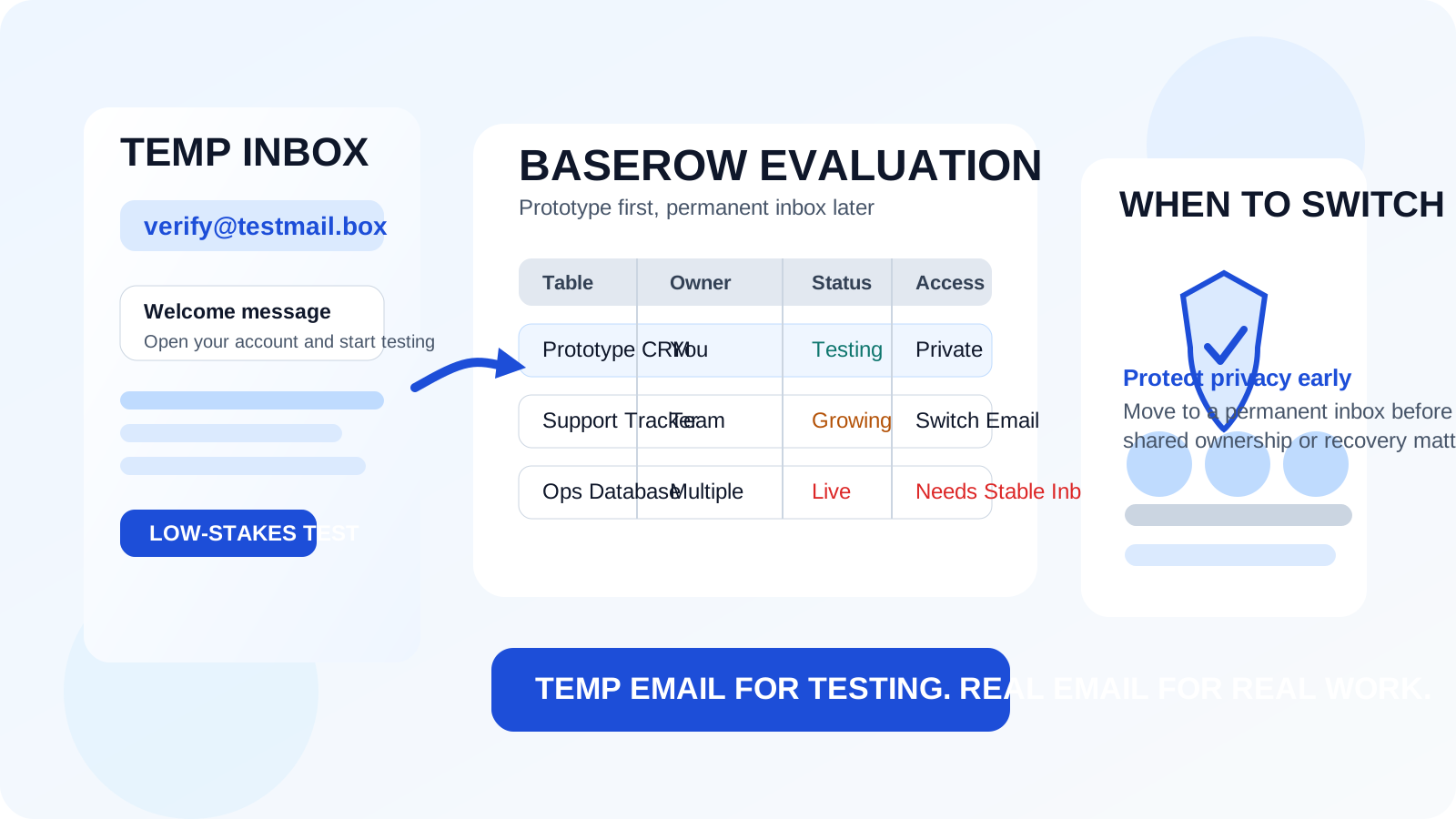
That is the short answer, but the real value is knowing when a temporary inbox helps and when it quietly turns into a liability. Baserow fits a pattern that comes up often with modern no-code and database tools: people want to test quickly, compare platforms privately, and avoid dragging a permanent work inbox into every experiment. That part makes sense.
The problem starts when a “just testing” account slowly turns into the workspace people actually use. A disposable address can be fine for your first hour of evaluation. It is a bad foundation for a live shared base, production workflow, or internal tool your team expects to keep using next month.
Why someone would use a temp email for Baserow in the first place
If you are exploring database-style tools, you may sign up for several products in a short stretch. Maybe you are comparing spreadsheet-like databases, lightweight internal tooling options, or ways to organize projects, requests, and structured records without building everything from scratch. In that phase, protecting your main inbox is reasonable.
A temporary inbox can help you:
- verify the account without exposing your primary address right away,
- separate a one-off test from your normal work email,
- avoid long marketing sequences if the product is not a fit,
- compare several tools without mixing all the onboarding email together, and
- run a private experiment before deciding whether the tool belongs in your real workflow.
If that is your goal, a disposable address from a tool like Anonibox can be perfectly practical. You get the confirmation message you need, open the workspace, click around, and judge the product on its actual usefulness instead of surrendering your permanent inbox first.
When a temp email for Baserow makes sense
There are a few situations where using a temporary address is genuinely sensible rather than merely convenient.
1. You are doing a quick product evaluation
If you only want to see how the interface feels, how records are structured, or whether the overall setup matches your workflow, a temp email keeps the test lightweight. You do not need to turn a simple product check into a long-term communication relationship.
2. You are comparing several tools at once
People often test more than one option in the same category. In that comparison stage, separate inboxes can keep the process cleaner. One tool’s welcome messages, upgrade prompts, and follow-up emails do not need to spill into your everyday mailbox before you even decide whether the platform deserves a second look.
3. You want less inbox clutter during research
Early software research can create a surprising amount of noise. Trial reminders, feature announcements, webinar invitations, and “can we help?” sequences pile up fast. A disposable inbox is one of the simplest ways to keep that noise contained.
4. You are testing alone and nothing important depends on the account yet
The key phrase is nothing important depends on it yet. If the account is only for a quick personal look, no shared ownership, no real stakeholders, and no meaningful data, the downside is limited.
When it becomes a bad idea
A temp email stops being smart the moment the account starts carrying real responsibility.
Shared workspaces and team invites
If teammates need access, the account is no longer just a disposable experiment. Shared tools need reliable ownership. If the original address disappears or becomes hard to reach, access management can get messy fast.
Account recovery
This is one of the biggest problems. Temporary inboxes are great at being temporary. That is also exactly why they are dangerous for any account you may need to recover later. If you lose access, need to confirm a security change, or have to reset credentials, an expired inbox can turn a small mistake into a major headache.
Billing and plan changes
The moment a paid plan, invoice, renewal, or billing warning enters the picture, disposable email is the wrong long-term choice. Financial messages should go to an address your team controls and monitors consistently.
Operational notifications
Many workspaces eventually generate useful notifications: collaborator invites, usage notices, integration confirmations, ownership updates, or admin messages. Even if you start with a harmless test, a good trial often grows into something you care about. When that happens, the inbox behind the account needs to be dependable.
Real business data
Once the workspace is holding customer information, internal records, lead data, project tracking, or anything operationally important, “I signed up with a throwaway inbox” is no longer a harmless shortcut. It is a weak ownership decision.
A better workflow: use temp email only for the evaluation stage
The cleanest approach is not “never use temp email” and it is not “always use temp email.” It is to use it in the narrow window where it helps most.
- Use a temporary address for the first signup if you are only evaluating Baserow privately.
- Test the basics quickly so you can decide whether the platform is actually worth deeper setup.
- Switch to a permanent controlled address before collaboration, billing, ownership transfer, or long-term use matters.
That gives you the privacy advantage upfront without trapping a useful workspace behind an inbox you cannot rely on later.
What should you test before switching to a permanent email?
If you want to use the temporary inbox stage well, focus on questions that help you make a real decision quickly.
- Does the interface make sense for the kind of data you want to manage?
- Can you organize records in a way that feels clear rather than fragile?
- Would non-technical teammates realistically understand the workflow?
- Does the product feel like a true fit for prototyping, operations, or internal processes?
- Do you trust it enough to move from “experiment” to “shared workspace”?
Those are good evaluation questions. “Can I keep this forever on a disposable inbox?” is the wrong question. If the product is good enough to keep, it is good enough to move onto a stable address.
Practical examples
A good use case
You want to compare a few database-style tools for a small internal prototype. You create a temporary address, verify the account, test the basic setup, build a sample table, and decide within a day whether the tool is worth keeping. If not, no problem. Your main inbox stays clean.
A bad use case
You sign up with a disposable address, invite coworkers later, connect the workspace to real processes, forget about the original email, and months later need to handle ownership, resets, or billing changes. Now the throwaway inbox is the weakest link in a workspace people depend on.
The best middle ground
Use a temp inbox for the first evaluation, then swap to a permanent team-controlled address as soon as the workspace passes the “yes, we may actually use this” threshold. That keeps the privacy benefit without creating long-term account fragility.
Mistakes to avoid
- Do not confuse low-stakes testing with long-term ownership. They are different phases and should use different email strategies.
- Do not wait too long to switch. If other people are joining, or the workspace is becoming operational, change the email early rather than after it becomes painful.
- Do not assume a disposable inbox improves every kind of privacy. It reduces inbox exposure, but it does not make bad security habits safe.
- Do not tie important recovery paths to an inbox you may lose. This is the most common self-inflicted problem with throwaway addresses.
Privacy benefit, without the fantasy
A temp email for Baserow can absolutely reduce friction and protect your main inbox during early testing. That benefit is real. It is also limited. Disposable email helps with inbox privacy and signup separation; it does not magically solve security, governance, or ownership problems.
So the right mindset is simple: use temporary email to evaluate, not to anchor. It is a smart shield against unnecessary inbox clutter. It is not a good permanent home for accounts that might matter later.
Final answer
A temp email for Baserow is a good idea if you are doing a private, short-term evaluation and want to avoid turning a quick software test into a permanent stream of email. It is a bad idea once the account starts mattering for shared work, billing, access control, or recovery.
If the workspace is still just an experiment, a disposable inbox is fine. If it is becoming real, move it to a stable address immediately. That is the simplest way to get the privacy advantage upfront without creating a preventable ownership mess later.