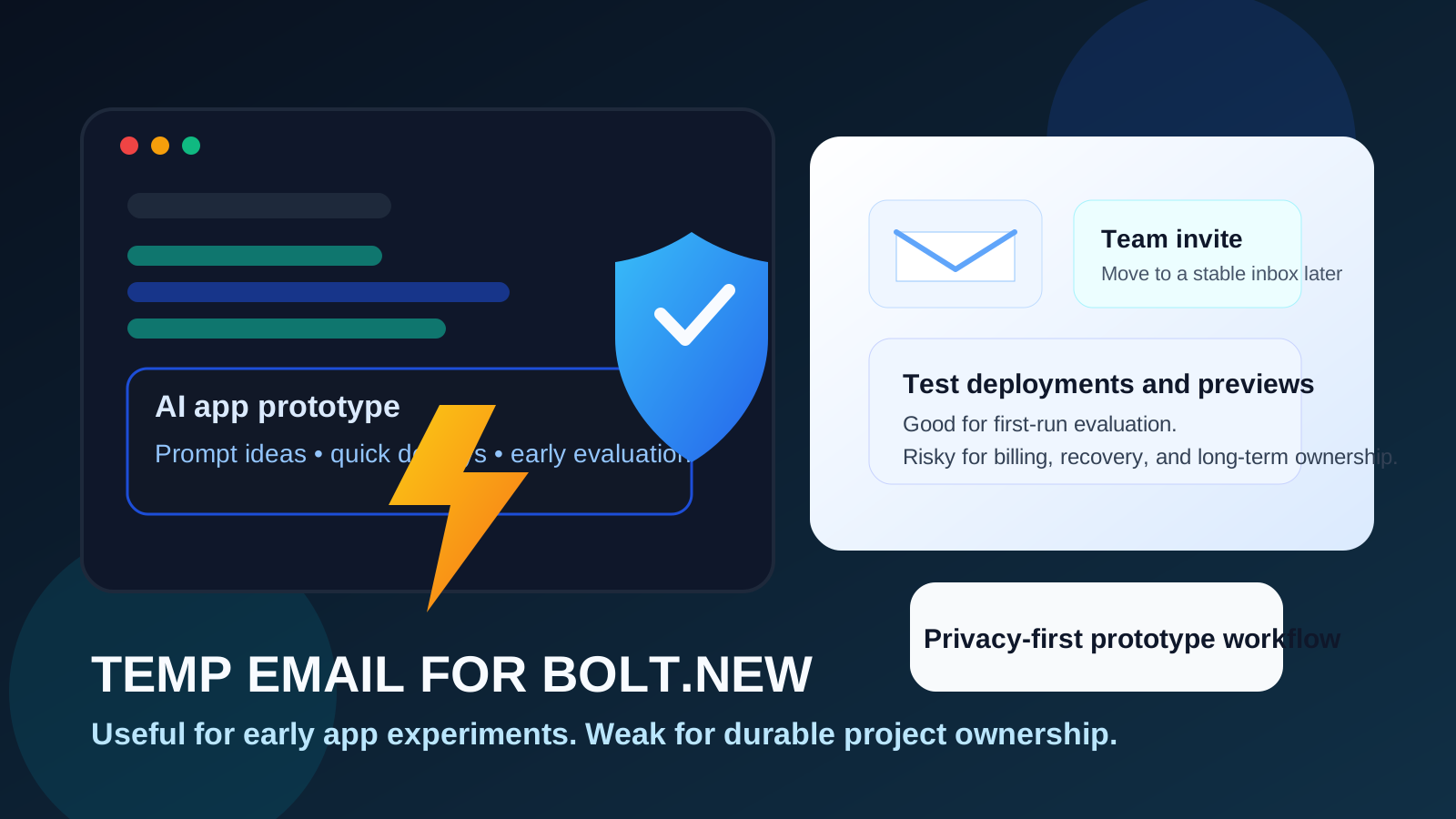
Yes — a temp email for Bolt.new can be useful if you are only testing quick AI app prototypes, verifying a one-off signup, or keeping curiosity-driven experiments out of your main inbox.
But once you start relying on the account for real projects, billing, deployment history, team invites, or recovery access, you should move to a permanent address you control long term.
Why people look for a temp email for Bolt.new
Bolt.new sits in the sweet spot where people want speed, convenience, and as little friction as possible. You can jump in with a prompt, generate a working prototype, tweak code, test flows, and sometimes get surprisingly far before you decide whether the tool belongs in your real workflow. That is exactly the kind of product where people start wondering whether they should use a temporary inbox.
The reason is simple: many experiments do not become real projects. You may open Bolt.new to test an idea, compare it with other AI app builders, or see whether the prompt-to-app workflow is good enough for your style of working. In that stage, you may not want another long-term onboarding sequence, marketing drip, update digest, or trial reminder arriving in your main inbox for months afterward.
A temporary address can create a clean separation between “I am just exploring this” and “I actually want this tool tied to my permanent account identity.” That separation is often worth having.
Short answer: good for early testing, bad for durable ownership
If your goal is to open Bolt.new, verify the account, build a quick prototype, and decide whether the platform feels useful, a temporary inbox is usually reasonable. It keeps the test lightweight and helps you avoid mixing every experimental signup with your main personal or work email.
If your goal is to keep the account, pay for it, invite collaborators, rely on deployment history, or treat the app as more than a disposable experiment, a temporary inbox becomes a weak foundation. Once the account matters, reliability beats short-term inbox privacy.
When using a temp email for Bolt.new makes sense
There are several situations where a temporary inbox is a practical fit:
- Trying Bolt.new for the first time to see whether the AI app-building flow matches your expectations
- Testing one or two prompt-driven prototypes before deciding whether the platform deserves a permanent place in your toolkit
- Comparing Bolt.new with adjacent tools like v0, Lovable, Cursor, or Windsurf without sending every trial into the same inbox
- Keeping experimental signups separate from your day-to-day work email while you are still at the curiosity stage
- Protecting your main inbox from onboarding and promotional follow-up when you are not sure the account will last
This is the stage where Anonibox fits naturally. You get the verification email you need, you can access the product quickly, and you do not have to hand your long-term address to every tool the moment it catches your attention.
When a temp email is the wrong choice
The logic flips as soon as the account stops being a toy and starts becoming infrastructure. A temporary inbox is usually the wrong choice if any of the following are true:
- You expect to keep the Bolt.new account for months instead of hours or days
- You plan to pay for the service or attach billing details
- You are relying on the account for important prototypes you may revisit later
- You are inviting teammates or joining a shared workspace
- You expect to need password resets, security alerts, or account recovery later
- You are using the platform for client work, work product, or business-critical experiments
- You are connecting external services where identity continuity matters
In those situations, a disposable inbox is no longer protecting you from clutter. It is creating a future support problem for yourself.
The biggest risks of keeping a temporary inbox attached too long
1. You may lose access to account recovery when you actually need it
Temporary inboxes are great at one thing: receiving early messages without long-term commitment. They are not great as a long-lived recovery channel. If you need to confirm a new login, reset a password, approve a security notice, or respond to an ownership question later, a throwaway inbox can become a liability fast.
2. Team invites and collaboration can get messy
Many prototype tools stay simple until collaboration enters the picture. Once you start inviting another person, transferring ownership, or managing a shared workspace, your email address stops being just a signup detail. It becomes part of how the product identifies you. If the address is temporary, that identity is fragile.
3. Deployment history and project continuity matter more over time
A quick prototype is one thing. A prototype you want to keep improving is something else. If Bolt.new becomes the place where you revisit earlier experiments, compare versions, or show working previews to other people, long-term account access becomes more important than the small privacy gain of staying on a disposable inbox.
4. Billing and product notices are not throwaway messages
The moment a tool becomes paid, account email becomes operational. Invoices, payment failures, policy updates, plan changes, and account-related notices should go to an address you can keep. A temp inbox is fine before that line. It is a poor choice after it.
5. You can forget to switch until the switch is annoying
This is one of the most common problems. People sign up with a temporary address thinking the account is just for a quick test. Then the test turns into something useful. Weeks later, the disposable inbox is still attached, and now the account has real value. It is much easier to move to a permanent address early than to clean it up after the account becomes important.
How to use a temp email for Bolt.new without causing avoidable problems
1. Be honest about whether this is a real adoption path or just a trial
Before you sign up, decide whether you are doing a short evaluation or the first step toward serious use. If it is just a short evaluation, a temp inbox is fine. If you already suspect you may use the account heavily, start with a permanent address instead.
2. Use the temporary inbox for first-run verification and early onboarding only
This is the best use case. Verify the account, open the product, test the initial experience, and see whether the workflow deserves more time. Do not assume that because the temporary inbox worked on day one, it is the best place to keep the account forever.
3. Keep the experiment focused
A temporary-email workflow works best when the test itself is focused. Maybe you want to know whether Bolt.new can take a vague app prompt and turn it into a useful scaffold. Maybe you want to judge the editing speed, the code clarity, or the preview workflow. A focused test helps you decide quickly whether to abandon the account or upgrade it to a permanent identity.
4. Save anything important before the experiment grows
If the tool is genuinely promising, capture the project details, record what worked, and decide early whether you want to keep going. The worst habit is drifting into real dependency while pretending the account is still disposable.
5. Switch to a long-term address before the account becomes valuable
The ideal time to switch is before you attach billing, share the project, or depend on the account for something you would care about losing. Switching early keeps your privacy strategy intact without turning it into a reliability risk.
What a temporary inbox helps with
Used correctly, a temp inbox gives you a few real benefits during the evaluation stage:
- Inbox control: you do not have to mix every AI tool experiment with your permanent work or personal email
- Cleaner comparisons: if you are testing several builders, each trial can stay more isolated
- Privacy: your main inbox does not have to be the default destination for every interesting prototype tool
- Lower commitment: you can explore the product before deciding whether it deserves a lasting place in your stack
For fast-moving AI tool research, that is genuinely useful.
What it does not solve
A temporary inbox does not solve long-term account management. It does not replace strong passwords. It does not guarantee that every service will welcome disposable addresses forever. It does not protect you if you later connect valuable assets and forget that your recovery channel is still temporary. And it does not remove the need to think clearly about where your important prototypes, access rights, and deployment history live.
In other words, it is an inbox-separation tool, not a full account-security strategy.
Why Bolt.new is a strong candidate for this split approach
Bolt.new is exactly the kind of product where a split approach makes sense. The barrier to trying it is low, the payoff can be immediate, and many people want to experiment without turning every curiosity-driven signup into a permanent part of their digital life. At the same time, a genuinely good prototype tool can become important very quickly.
That is why the best workflow is usually:
- use a temporary inbox for the first look
- judge the product based on real output, not marketing email volume
- move to a stable email if the account starts becoming useful enough to keep
That balance protects your privacy without sabotaging your ability to keep the work that matters.
Best practices before you move from testing to real use
Switch before billing or production use
If you are about to pay, rely on the account regularly, or show outputs to clients or teammates, stop treating the address like a temporary experiment. Upgrade your email strategy first.
Use an address you can monitor consistently
A stable account address should be one you will actually check. Recovery emails, sign-in notices, and product updates only help if they go somewhere you still control and still notice.
Separate experimentation from ownership
You do not need to give every casual test your best long-term inbox, but you also should not let a disposable inbox become the permanent owner of something valuable. Keep those two stages distinct.
Review your connected services
If the account is starting to touch repositories, team access, external identities, or business workflows, that is a strong signal the email on file should be durable too.
A quick decision checklist
- Am I only testing Bolt.new, or do I expect to keep this account?
- Would losing access to the signup inbox create a real problem later?
- Am I attaching billing, deployment history, or collaboration to this account?
- Do I just want less inbox clutter during experimentation?
- Has this prototype already started feeling like a real project?
If the answers mostly point toward experimentation, a temp inbox is probably fine. If they point toward continuity, ownership, or collaboration, move to a permanent address early.
Final takeaway
A temp email for Bolt.new is a smart fit for early experimentation, first-run verification, and privacy-conscious testing when you want to explore AI app building without feeding your main inbox another long-term product thread.
It stops being a smart fit once the account becomes important. If the prototype grows into real work, switch to a permanent address before billing, team invites, or long-term project ownership enter the picture. That gives you the privacy benefits of temporary email without turning a useful prototype into an avoidable account-management headache later.