Usually yes — using a temp email for BuildZoom can make sense when you are browsing contractors, requesting early quotes, or comparing remodeling options and you do not want your main inbox attached to every inquiry.
It becomes a bad fit if you need a durable account for ongoing project messages, saved contacts, or long-term follow-up with specific contractors, because disposable inboxes can expire or stop receiving mail when you still need them.
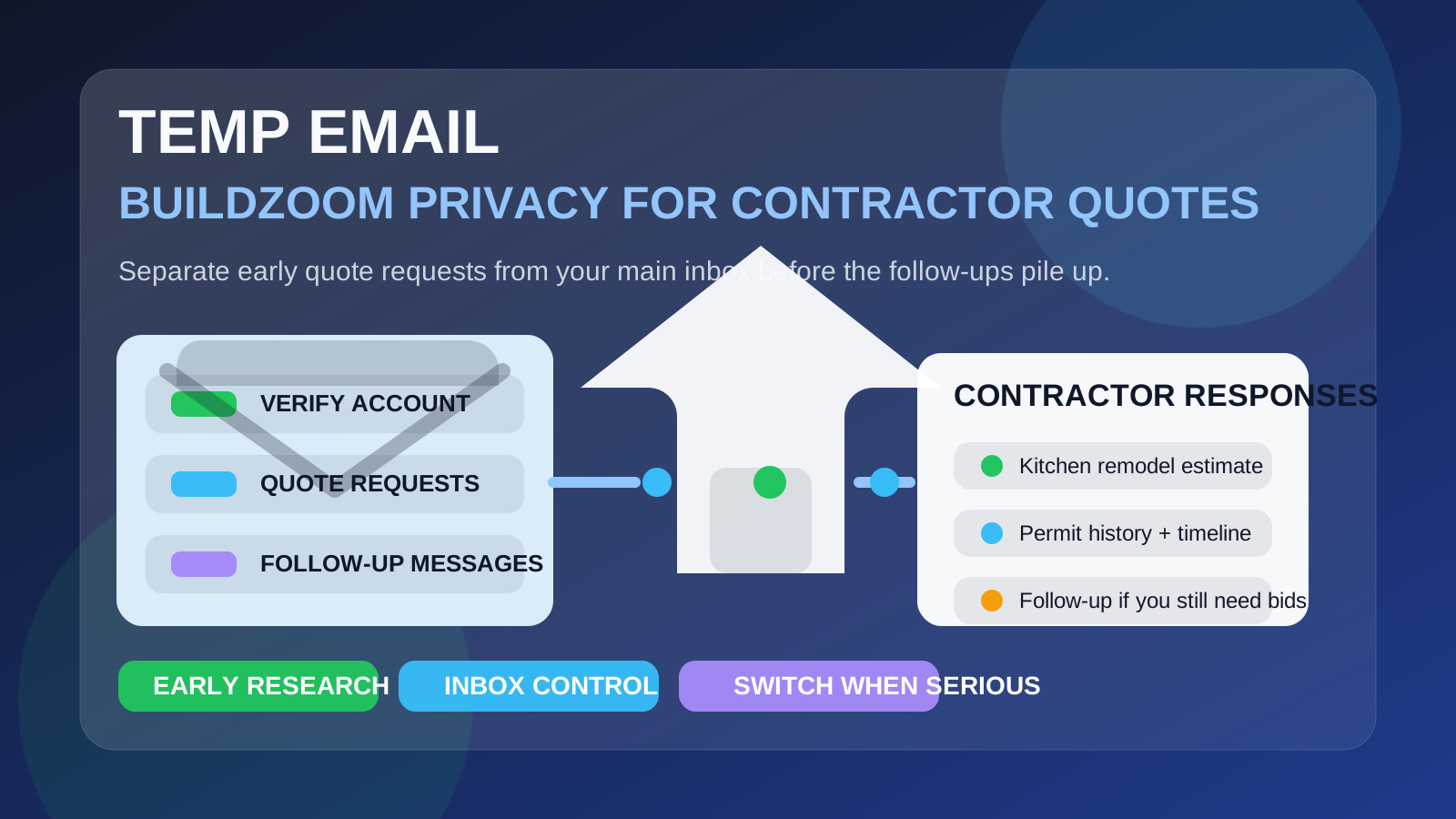
That tradeoff is the real answer behind the keyword temp email for BuildZoom. People are not usually looking for a throwaway address just for fun. They are trying to solve a practical problem: they want to compare contractors, learn what a project might cost, and avoid months of follow-up messages in the inbox they use for work, banking, friends, and everything else.
BuildZoom sits right in that zone where a temporary inbox can be useful. It helps homeowners and project planners research contractors, request estimates, and start conversations around renovations, repairs, and larger construction work. But as soon as you submit details about a project, you may invite a longer chain of replies, reminders, quote updates, and promotional follow-ups than you originally expected.
A privacy-first temporary inbox from a service like Anonibox can help during the research stage. The key is using it for the part of the process where privacy and inbox control matter most, then switching to a permanent address if a contractor becomes a real contender and the conversation turns into an active project.
Why people want a temp email for BuildZoom
Home-improvement and contractor marketplaces create a very specific kind of inbox problem. You may start with one small question such as:
- How much would a kitchen remodel probably cost?
- Which local contractor has better reviews or permit history?
- Can I get a few estimates before deciding whether to move forward?
- Who actually services my ZIP code?
Those are simple research questions, but the contact flow around them can turn into something much noisier. Once your address is tied to a project inquiry, you may receive outreach from multiple businesses, reminders to continue the request, messages about similar services, or general follow-up from companies hoping to stay top of mind.
That does not automatically make the platform bad. It just means your email address becomes part of a lead and messaging workflow. If you already know you do not want every early-stage inquiry attached to your main account, a temporary inbox is a reasonable thing to consider.
When a temp email works well on BuildZoom
A disposable or burner-style inbox is most useful when your goal is exploration rather than commitment. Good examples include:
- checking how the platform works before sharing your permanent address,
- researching contractors for a possible future project,
- collecting early estimate ranges for budgeting,
- testing whether the site is relevant in your area,
- keeping one category of home-service research out of your main inbox,
- avoiding long-tail marketing follow-up after a project you may never start.
If you are still in the “just comparing options” stage, a temp email for BuildZoom can be a smart boundary. It lets you receive account or inquiry messages without giving your day-to-day inbox a new source of noise.
When a temp email is the wrong tool
Temporary email becomes much less attractive once the interaction stops being casual. If you are moving toward real bids, scheduling calls, document exchange, or sustained back-and-forth with a contractor, reliability matters more than privacy convenience.
At that point, you may need:
- easy access to old quote threads,
- a stable inbox for project attachments and updates,
- continuity if you revisit the conversation weeks later,
- a credible email identity for contractors you actually want to hire.
A disposable inbox can fail you in exactly those situations. Some temporary addresses are short-lived. Some are hard to recover later. Some may receive the first verification email and then miss later messages. Others may be blocked by anti-abuse filters depending on how a platform handles signups and contact forms at a given moment.
So the practical rule is simple: use temporary email for low-commitment research, not for the phase where you need durable project communication.
A better middle ground for many people
If your real problem is not “I need an address that disappears” but “I do not want this mixed into my main inbox,” then a dedicated secondary address or a private alias is often the better answer.
That approach gives you most of the privacy benefit without the biggest downside of disposable email. You can still separate contractor inquiries from your normal mail, but you keep a stable inbox in case you need to search old threads, reply weeks later, or prove what was said in a quote conversation.
For example:
- Use a temp inbox if you are only testing the platform or collecting very early information.
- Use an alias or secondary inbox if you expect real quote conversations to continue.
- Use your main inbox only if you are comfortable with the long tail of follow-up and want everything in one place.
That middle option is often the sweet spot. It protects your primary account without making the conversation fragile.
How to use a temp email for BuildZoom without creating new problems
1. Decide whether you are browsing or actually hiring
Before you enter any address, be honest about your intent. If you are months away from the project and just trying to understand price ranges, a temporary inbox is fine. If you are actively picking a contractor right now, jump straight to a stable address you control long term.
2. Keep the project details realistic but minimal
You do not need to overshare in an early inquiry. Give enough detail to receive useful responses, but do not dump every personal fact, scheduling note, or household detail into the first message unless it is genuinely necessary.
3. Watch the first few messages closely
If the inbox receives the initial verification email or inquiry confirmations correctly, that is a good sign for short-term use. Save anything important right away instead of assuming it will still be easy to find later.
4. Move to a permanent inbox when one contractor becomes real
The minute the interaction shifts from “I am comparing” to “I may actually hire this company,” switch. That preserves continuity, prevents missed replies, and makes you easier to reach when scheduling becomes time-sensitive.
5. Keep your phone strategy separate too
Email is only one part of lead privacy. If you are concerned about spam, think about what phone number you are providing as well. Many people protect the inbox but forget that texts and calls can become the more annoying long-tail problem.
What to save before you leave the temp inbox behind
If you do use a temp email for BuildZoom, do not treat it like a permanent archive. Save the items that matter before the inbox goes stale:
- verification or sign-in links you may still need,
- quote summaries worth comparing later,
- the names of contractors you actually liked,
- messages that contain next steps, timelines, or pricing ranges,
- any thread you plan to continue from a stable address.
This is where many people misuse burner email. They use it correctly at first, then accidentally depend on it for ongoing project management. A temporary inbox is for reducing exposure, not for running the whole relationship.
Common risks people underestimate
You may miss a good contractor reply
Not every follow-up is spam. Some messages are the exact response you wanted. If you use a disposable address and stop checking it, you may lose track of the best lead you generated.
Your account history may become harder to revisit
Even if you only wanted a short test, people often come back later. Maybe the remodel gets delayed. Maybe the budget changes. Maybe you want to revisit a promising company. A temporary inbox is less forgiving when you need that history back.
Platform handling can change
Sites can tighten anti-abuse rules, change verification flows, or route communications differently over time. A temporary email that works today may not behave the same way later. That is why no one should assume a disposable address is always accepted or always reliable.
Privacy is not the same as anonymity
Using a temp inbox reduces how widely your main address spreads. It does not magically erase every other signal you share. Project descriptions, ZIP code, phone number, callback requests, and later conversations all matter too.
Questions to ask yourself before using temp email for BuildZoom
- Am I just researching or am I ready to hire?
- Would I care if this inquiry created follow-up email for months?
- Do I need to keep these messages accessible later?
- Am I likely to continue with one contractor if the responses look good?
- Would a private alias or secondary inbox solve the problem better?
If your answers point toward short-term research, temporary email is a reasonable fit. If they point toward an actual project with real scheduling and contractor selection ahead, a stable separate inbox is the safer choice.
So, should you use a temp email for BuildZoom?
Yes, for early research it can be a smart move. A temp email for BuildZoom helps you compare contractors, test the platform, and reduce the odds that your primary inbox becomes a permanent home for quote reminders and remodeling follow-up.
Just do not confuse a useful privacy buffer with a long-term communication plan. Once the conversation becomes real, move to an address you control and monitor consistently. That way you get the best of both worlds: less early-stage inbox exposure, but no unnecessary risk when it is time to evaluate serious bids and actually move a project forward.
If you want that early-stage separation, Anonibox is a straightforward way to create a temporary inbox without sacrificing the practical goal of getting the first messages you need.