A temp email for Character AI can work for low-stakes testing, but it becomes risky once you care about saved chats, account recovery, settings, or any paid access tied to the account.
If the current signup flow accepts disposable addresses, a temporary inbox is best treated as a short-term filter, not as the permanent foundation for an account you may actually want to keep.
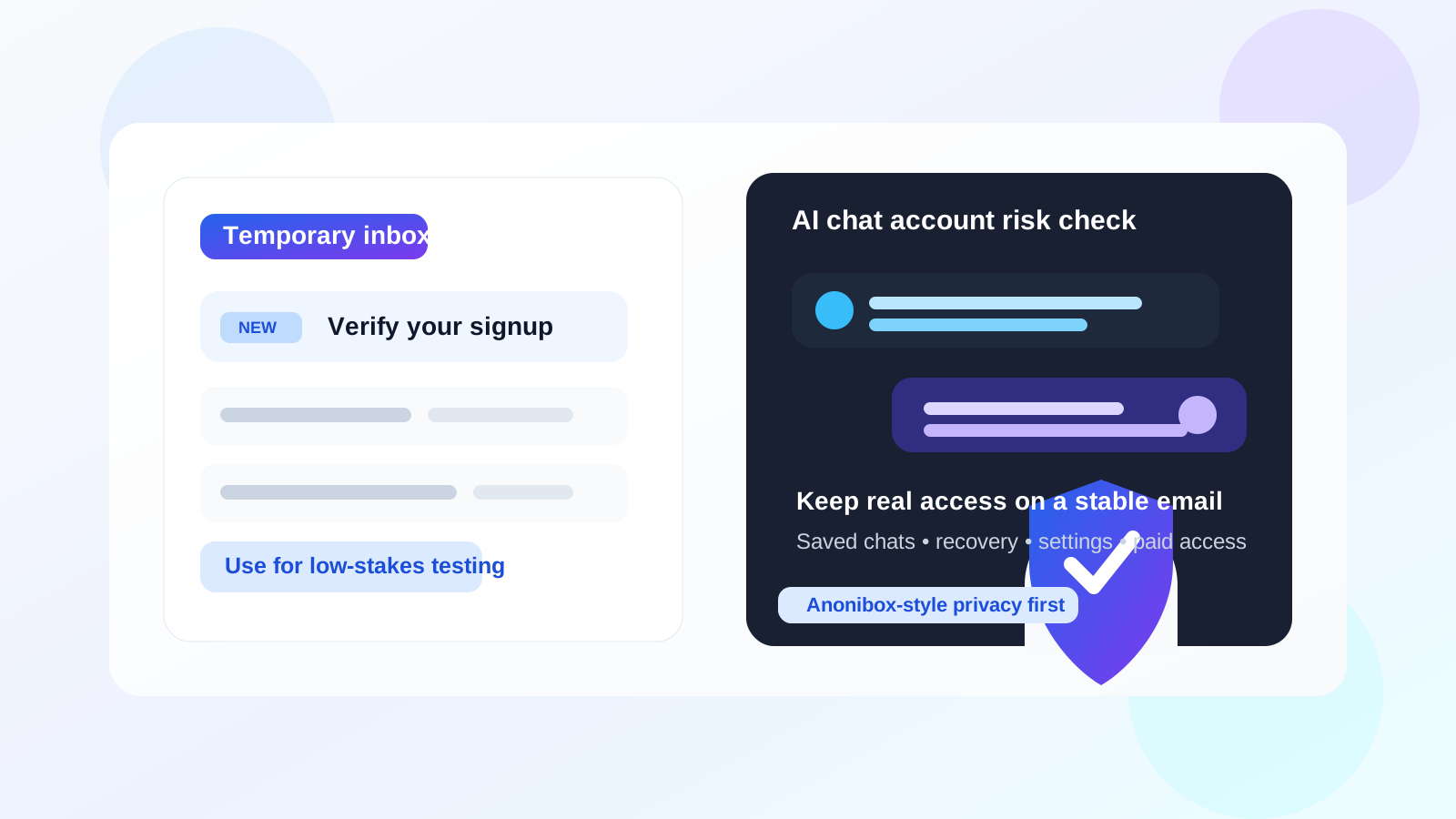
That distinction matters because AI chat accounts tend to start casually and become useful faster than people expect. You may create one just to test the interface, compare replies with another chatbot, or see whether a platform fits a personal project. A week later, the same account may hold conversation history, custom settings, creator preferences, or upgrade decisions you do not want to lose.
So the real question is not only whether you can use a temp email for Character AI. The better question is when it makes sense, when it becomes fragile, and what the safer alternative looks like once the account starts to matter.
Why people look for a temp email for Character AI
Usually, the motivation is simple: protect a main inbox, reduce marketing clutter, and keep early AI experimentation separate from long-term personal or work email. That is a reasonable goal. AI tools can generate more email than expected, including verification messages, update notices, product announcements, security alerts, and upgrade prompts.
If you are comparing several AI products in the same week, a disposable inbox can act like a buffer. A tool like Anonibox is useful in that first stage because it lets you receive the verification email and check the product without immediately giving another service your permanent address.
When a temporary email can make sense
A disposable inbox is most defensible when both the inbox and the account are genuinely disposable. Good examples include:
- Quick curiosity: you only want to see the interface, the tone, and the basic user experience.
- Low-stakes comparison: you are testing several chatbot or AI companion tools and do not want your real inbox in every onboarding sequence.
- One-off experimentation: you expect to abandon the account if the platform is not a fit.
- Inbox separation: you want sign-up mail isolated from your normal personal or work accounts.
In those situations, the downside is limited. If you never plan to depend on the account again, a temporary inbox can be a practical privacy layer.
Where a temp email gets risky fast
The risk changes as soon as the account stops being disposable. That point can arrive earlier than people think.
1. You want to keep your conversation history
Even casual AI accounts can accumulate useful material: prompts you want to revisit, character interactions you enjoyed, settings you refined, or experiments you may want to compare later. If the email behind the account is temporary and then disappears, recovery options can become weak or impossible.
2. You may need account recovery later
People often focus only on the first verification email. But the more important messages often come later: password resets, email-change confirmations, security warnings, suspicious-login notices, or reminders tied to account access. If you lose access to the inbox, those later messages are the real problem.
3. You might upgrade or attach billing
The moment an account is connected to real money, temporary email stops being a smart trade-off. Subscription management, receipts, support requests, and recovery all become more important than keeping one more platform out of your regular inbox.
4. You use the account across devices
Moving between desktop, tablet, and phone makes stable account recovery more valuable. If something logs you out, a disappearing inbox becomes a weak foundation.
5. You want a long-term identity on the platform
As soon as an account starts to feel like a profile you will come back to, stability should win over short-term convenience.
What people underestimate about disposable signups
A lot of users think the entire decision is about whether the first verification email arrives. That is only the easy part. The harder question is whether the account still makes sense three weeks later if you decide you actually like the platform.
Temporary inboxes are great for reducing exposure during the discovery stage. They are much worse for any account that may hold value later. That pattern shows up again and again across AI products: the disposable inbox helps at the beginning, then becomes the weak link once the account matters.
When you should use a stable email instead
Use a permanent address from the start if any of the following sound true:
- You expect to return to the account regularly.
- You care about keeping your chat history or settings.
- You may connect a payment method or paid tier later.
- You want reliable recovery if you change devices or forget a password.
- You prefer one consistent identity rather than a throwaway test account.
In that situation, a separate but stable email is often better than a fully disposable one. You still protect your main inbox, but you keep long-term control.
A better middle ground for privacy-conscious users
If your goal is privacy rather than pure disposability, the strongest setup is usually this:
- Use a temporary inbox only for early testing.
- If the platform looks worth keeping, create a fresh stable email dedicated to AI tools or side projects.
- Move anything important to the stable account before the temporary inbox becomes a problem.
That gives you the best of both worlds. You avoid handing your primary address to every service during the research phase, but you also avoid building a real account on top of an inbox you cannot depend on later.
Practical checklist before using a temp email for Character AI
- Am I just testing, or do I expect to keep this account?
- Would losing this inbox make account recovery painful?
- Do I expect to save useful chats or settings?
- Could I eventually pay for features or attach anything important?
- Would a separate stable email solve the problem better than a disposable one?
If your answers point toward long-term use, skip the disposable inbox and use a dedicated permanent address instead.
Common mistakes to avoid
- Treating a test account like a permanent account: what starts as a quick experiment can become your default profile.
- Forgetting about later email needs: recovery and security messages matter more than the first verification link.
- Upgrading too early on a throwaway inbox: billing and temporary email are a bad combination.
- Assuming temp email equals total privacy: it reduces inbox exposure, but it does not remove every platform-level or device-level trace.
So, should you use a temp email for Character AI?
Yes, sometimes — but only for genuinely disposable testing. A temp email for Character AI can be useful when you want to explore the platform without adding another long-term sender to your inbox.
It becomes a poor choice as soon as you care about saved chats, recovery, subscriptions, or any account continuity. If the account may matter tomorrow, use a stable email today. If it is truly just a quick experiment, a temporary inbox can be a reasonable privacy-first starting point.
That is the safest way to think about it: disposable inbox for disposable interest, stable inbox for anything you may actually want to keep.