Yes — using a temp email for Cloudability can be a smart way to open a trial, verify access, and inspect cloud cost workflows without turning an early evaluation into long-term inbox clutter.
It makes the most sense when you are comparing FinOps tools, reviewing cost allocation and reporting, or testing team access before deciding which permanent address should own the account.
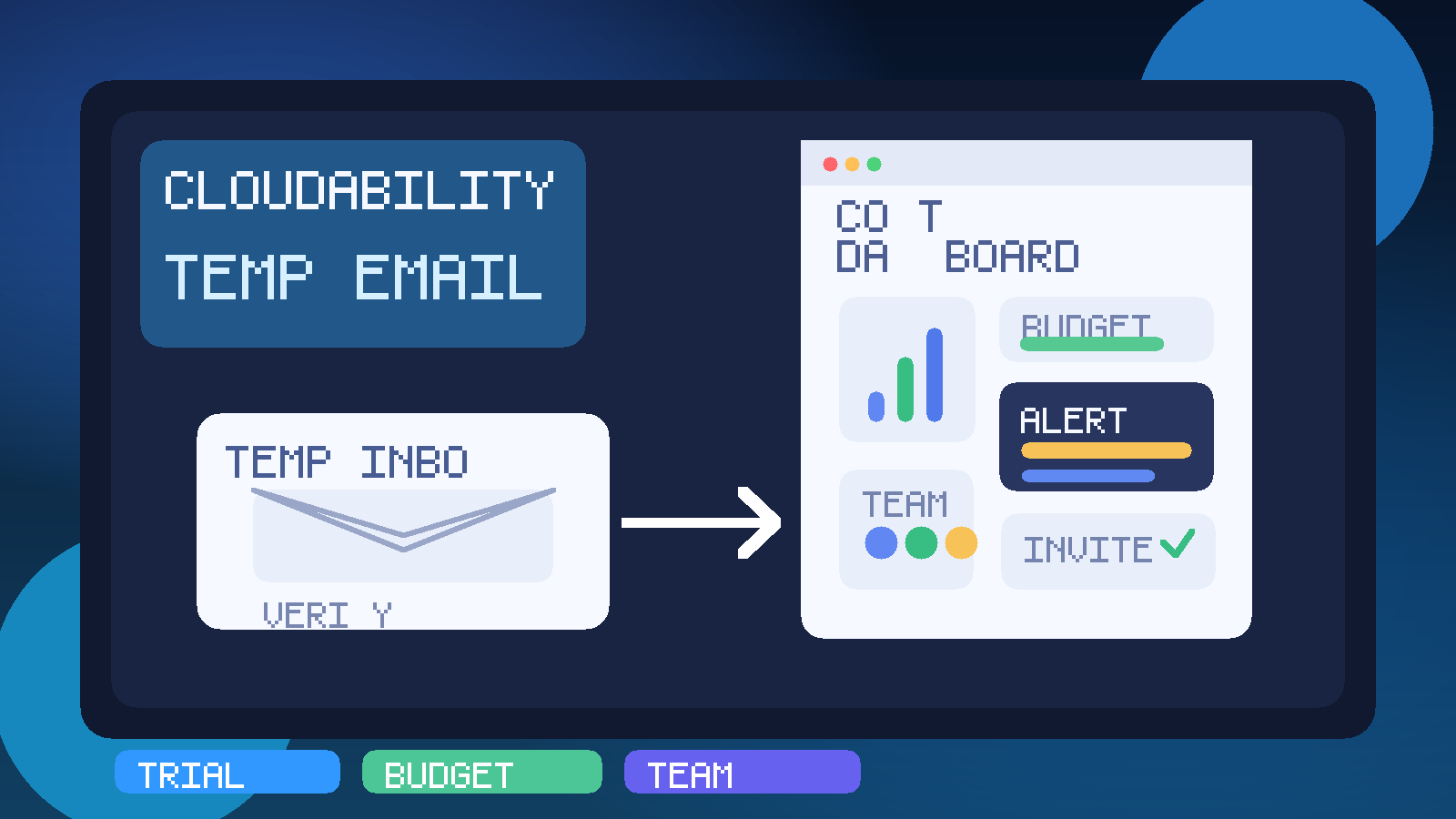
Why people look for a temp email with Cloudability
Cloud cost platforms usually ask for an email address before you can get into the product, request a demo, or start reviewing the workflow. That part is normal. The issue is what can follow afterward: welcome emails, setup prompts, product-tour nudges, budget alert explainers, meeting invitations, sales follow-up, and the usual “just checking in” messages that keep arriving long after you have moved on to another tool.
If you are still in the evaluation phase, that is not always what you want tied to your everyday work inbox. A temporary address gives you a cleaner boundary. You still receive the verification email and the first-run instructions, but you keep those early messages separate from the mailbox your finance, engineering, or operations team uses all year.
That separation is the real appeal. It is not about avoiding legitimate contact forever. It is about keeping short-term product research from becoming a permanent inbox relationship too early. If you prefer to keep exploratory signups isolated, a privacy-first tool like Anonibox fits that workflow naturally.
When a temp email for Cloudability makes sense
A temporary inbox is most useful when the account is genuinely temporary. Common examples include:
- comparing Cloudability with other FinOps or cloud cost management platforms,
- checking whether the dashboards and reports are clear enough for your team,
- reviewing cost allocation, budgeting, or alert workflows during a short trial,
- testing the invite flow before involving more stakeholders,
- keeping early-stage vendor follow-up out of your main inbox until the product survives the shortlist.
In those cases, the goal is simple: get access, learn what you need to learn, and keep the trial organized. A temp email can do that well.
When a temp email is the wrong choice
The moment the account starts to matter operationally, a disposable inbox stops being a good idea.
Avoid relying on a temp email for Cloudability if the account will be used for:
- ongoing cost reviews or regular reporting,
- shared ownership across finance, engineering, platform, or procurement teams,
- billing, procurement, renewals, or contract discussions,
- security notifications, account recovery, or permission management,
- anything your team would struggle to access if the inbox later disappeared.
That distinction matters because cloud cost tools quickly move from “interesting trial” to “important workflow.” Once a platform is connected to real accountability, budgeting, forecasting, or internal decision-making, the email attached to the account should be stable too.
How to use a temp email with Cloudability responsibly
1. Decide whether this is exploration or adoption
Before you sign up, be honest about what stage you are in. If you already expect to involve multiple teams, tie the account to a serious internal review, or use the platform beyond a quick comparison, start with a durable inbox from the beginning. If you only want to inspect the product and understand whether it deserves deeper attention, a temp inbox is reasonable.
2. Generate the inbox before you start signup
Create the temporary address first so every verification email, welcome note, and onboarding prompt lands in one place. That keeps the trial tidy from the start and makes it easier to separate this evaluation from others happening at the same time.
3. Use the temp address for verification and early product access
The strongest use case is short-term access: confirm the signup, enter the product, inspect the dashboards, and see whether the workflow feels useful. That is different from using a disposable mailbox as the long-term owner of an account your team will depend on.
4. Save the messages that actually matter
If a message contains a useful login link, a setup note, or anything you may want later, save it somewhere you control. A temporary inbox is convenient, but it is not your long-term archive.
5. Switch to a permanent address early if the tool becomes real
This is the step people skip. A trial becomes a serious candidate, one or two teammates get involved, and suddenly the throwaway inbox is attached to something important. If the platform makes the shortlist, move ownership early. That small cleanup is much easier before the account becomes busy.
What to evaluate while testing Cloudability
If you use a temp email for Cloudability, the inbox is only a support tool. The real point of the trial is deciding whether the product is useful for your organization.
Cost allocation clarity
One of the first things to evaluate is whether the platform makes cost allocation understandable. Can you quickly see how spend is grouped, filtered, and explained? Does the reporting help different teams understand where money is going, or does it still feel like you need to reconstruct the story yourself?
Budget and alert usefulness
Many teams care less about a flashy dashboard and more about whether the platform helps them react to spend changes in time. During a trial, look closely at how alerts are presented, whether thresholds and signals seem practical, and whether the product feels designed to help decision-making rather than just generate more notifications.
Shared visibility across teams
Cloud cost management is rarely a solo activity. Finance may want one view, engineering another, and leadership a simpler summary. Use the trial to judge whether the product seems understandable across those audiences. If the tool only makes sense to one specialist, that is worth noticing early.
Commitment and optimization conversations
Depending on the access level you have, you may also want to inspect how the product supports optimization discussions. Does it help frame useful questions around usage, waste, or commitments? You do not need every advanced workflow fully configured on day one, but the evaluation should still tell you whether the platform seems grounded in real cost-management work.
Invite and collaboration flow
If the product is likely to involve more than one person, test how collaboration feels. A temp email is fine for checking the early invite flow, but you should still ask whether user access seems understandable and whether the product feels built for shared review rather than a single-owner dashboard.
Benefits of using a temp email here
- Less inbox clutter: trial mail stays out of the inbox you rely on every day.
- Cleaner comparisons: each vendor evaluation can stay in its own lane.
- Better privacy hygiene: not every exploratory signup needs your permanent address immediately.
- Lower commitment pressure: you can inspect the tool before turning a quick evaluation into an ongoing vendor relationship.
That last point matters more than it sounds. Product research gets harder when every short test instantly becomes a months-long email thread.
The trade-offs you should not ignore
Temporary email is useful, but it has limits.
- Recovery can become awkward: if the inbox disappears while the account still matters, you create unnecessary friction.
- Important notices can be missed: account, billing, or security messages should not live in a mailbox you may never check again.
- Shared ownership gets messy: real internal workflows need dependable contact details.
- Migration later is annoying: changing the account email is easier early than after the workspace becomes part of team routines.
These are not arguments against temporary email. They are reminders to use it for the phase where it actually helps: short-term evaluation.
Common mistakes people make
Letting a trial quietly become a production dependency
This is the most common problem. Someone signs up just to look around, the product seems promising, more people get involved, and weeks later the account still points to a disposable inbox. That is avoidable if you promote the account early.
Using a permanent inbox for every vendor test
The opposite mistake is also common. Teams test several platforms in a short window and give all of them the same main inbox right away. The result is predictable: clutter, follow-up fatigue, and important messages getting buried in noise. A temp inbox is a practical way to avoid that during early research.
Focusing too much on the signup flow
The inbox should support the evaluation, not become the evaluation. The real questions are whether the product helps your team understand cloud spend, whether the views are usable, and whether the reporting supports better decisions.
Waiting too long to move to a stable address
If you already know the tool is a serious contender, switch early. “We will update the email later” sounds harmless until the account has invites, ownership questions, and important notices tied to it.
Temp inbox vs alias vs permanent team mailbox
If you are unsure whether the account will stay temporary, an alias or secondary mailbox may be a better middle ground. It gives you separation without the fragility of a short-lived inbox.
- Temp inbox: best for quick product evaluation, short trials, and early comparison work.
- Alias or secondary mailbox: useful for longer evaluations or vendor accounts you may revisit more than once.
- Main team mailbox: right choice for real ownership, billing, security notifications, and anything tied to ongoing cost operations.
That framework keeps the privacy habit practical. Not every signup deserves your permanent inbox on day one, but not every account should depend on a disposable address either.
A quick checklist before you use temp email for Cloudability
- Is this account clearly for evaluation rather than long-term ownership?
- Do you only need the inbox for verification and early access?
- Are you comfortable moving to a permanent address if the product becomes important?
- Would losing the mailbox later be inconvenient but not operationally damaging?
- Are you using the trial to judge the reporting and workflow, not just the signup experience?
If the answers are mostly yes, a temp inbox is probably a clean fit. If several answers make you hesitate, start with a more stable address instead.
Conclusion
A temp email for Cloudability is a practical choice when you want to review cost allocation workflows, inspect budget alerts, and test team access without sending every early-stage message into your main inbox.
Just keep the timing right. Temporary email is excellent for exploration, but once the account starts to matter to real people and real decisions, move it to a permanent address you control. That gives you the privacy and inbox benefits of a disposable sign-up workflow without creating avoidable admin problems later.