A temp email for Dubsado can be useful for a short early trial when you only want to verify the account, look around, and compare the workflow without handing over your main inbox right away.
It becomes a risky setup once real leads, inquiry forms, contracts, invoices, scheduler messages, or account recovery depend on that address.
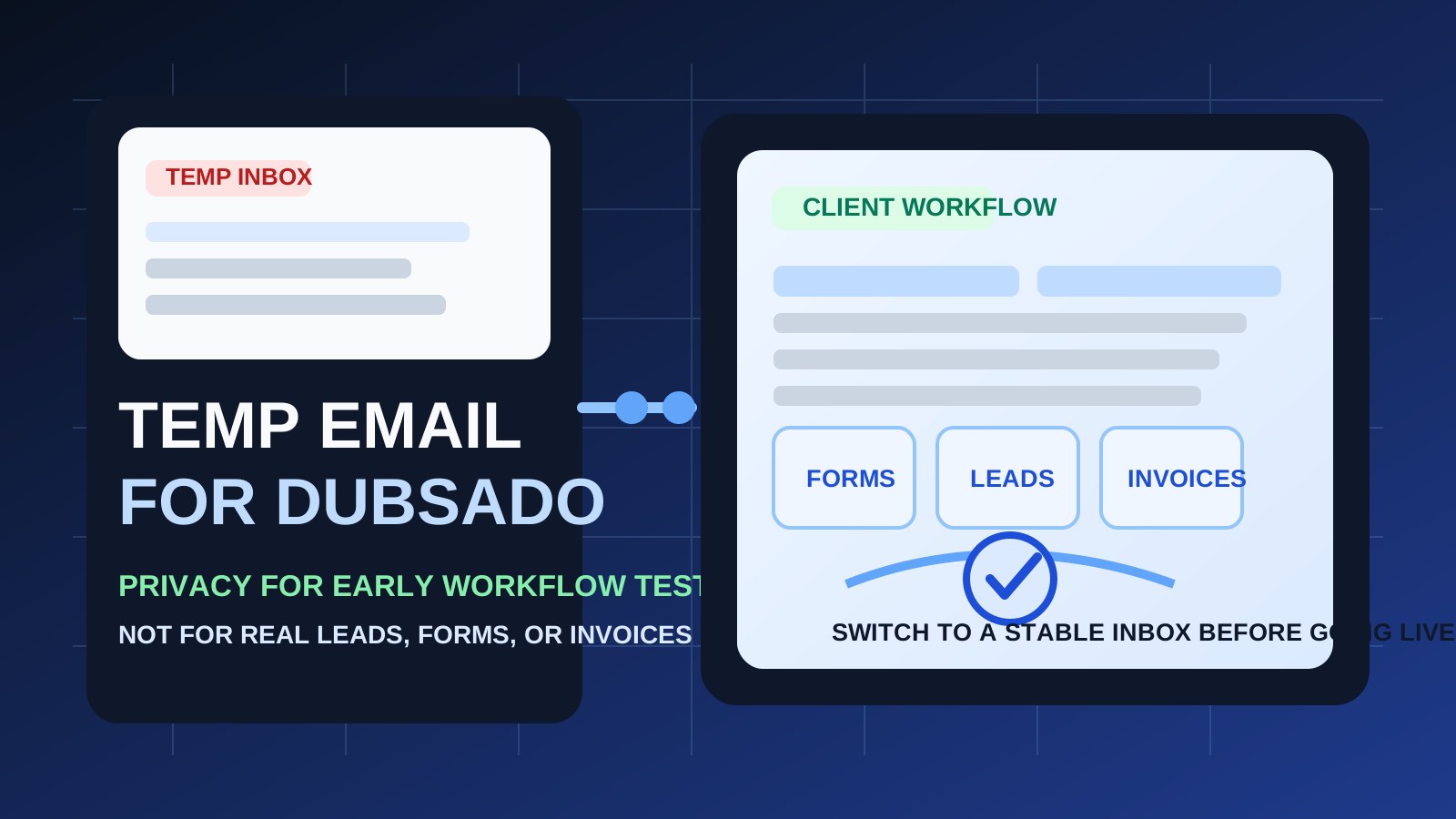
If you are testing Dubsado for client management, proposals, forms, workflows, or scheduling, a disposable inbox can make the early evaluation stage much cleaner. You get the verification email, the welcome sequence, and the initial setup prompts without turning your permanent inbox into a parking lot for yet another software trial.
That convenience is real, but it has limits. Dubsado is not just a dashboard you open once and forget. It can sit close to lead capture, client communication, forms, invoices, contracts, canned emails, and automation. The more real work you push into the account, the less sense a throwaway inbox makes. The smart approach is to use temporary email only while the account is still truly temporary.
Why people look for a temp email for Dubsado
Most people searching for a temp email for Dubsado are not trying to do anything shady. They usually have a much simpler goal: test the platform before committing a real business inbox to it.
That is understandable. If you are comparing Dubsado with tools like HoneyBook, Thryv, or other service-business workflow platforms, you may not want every welcome email, sales follow-up, webinar invite, and “book a demo” nudge landing in the same inbox you use for daily work. A temporary inbox from a service like Anonibox can help you keep that first-pass research separate.
In other words, the appeal is not mystery. It is inbox control. The real question is where that control stops being helpful and starts creating operational risk.
When a temporary inbox makes sense
There are a few situations where using a disposable address for Dubsado is reasonable.
1. You only want to verify the account and inspect the dashboard
If you are still in the “is this even worth my time?” stage, a temp email is fine. You can confirm the signup, see how the interface is organized, check the onboarding flow, and decide whether the platform deserves a deeper look.
2. You are comparing several client-workflow tools at once
This is probably the strongest use case. Maybe you are reviewing schedulers, CRM-lite systems, proposal tools, or all-in-one service-business platforms side by side. Temporary inboxes help keep those trials separated so your main email does not become a long-term archive of products you never chose.
3. You want to reduce low-value follow-up email
Trial accounts often trigger welcome sequences, feature reminders, case studies, upgrade offers, and demo invitations. If you are not sure you will keep the account, it is reasonable to shield your primary address from that stream.
4. Your testing is low-stakes and short-lived
If you are only checking sample forms, workflows, canned emails, or scheduling basics in a temporary setup, a throwaway inbox can be perfectly practical. At that stage, you are evaluating the software rather than depending on it.
Where a temp email starts breaking down fast
Dubsado becomes risky with temporary email for the same reason a lot of service-business software does: email continuity matters once the workflow becomes real.
Lead capture and inquiry forms
If a real lead fills out a form, that is no longer a harmless trial. A missed notification can mean a lost inquiry or a slow response that leaves a bad first impression. The inbox attached to the account is suddenly part of your sales process.
Contracts, proposals, and questionnaires
These are not disposable moments. Once forms, agreements, or proposal steps begin to matter, you need reliable access to the notifications, updates, and recovery path connected to the account. A temporary inbox is weak at that kind of continuity.
Invoices and payment-related communication
Even when payment processing is handled elsewhere, invoice notices, reminders, and confirmation emails still matter. If you abandon the inbox tied to those messages, you create confusion for yourself and potentially for clients too.
Scheduler messages and appointment reminders
If you start using scheduler features, the original signup message is no longer the important one. The important messages are the ones that come later: booking confirmations, reschedules, reminders, and follow-up notices. Those are exactly the messages you do not want tied to an inbox you barely monitor.
Automations and canned emails
Dubsado can sit close to automated communication. That means your account email is not just an admin detail. It can become part of how you supervise workflows, check what fired, troubleshoot issues, and recover from mistakes. Disposable email is not built for that kind of responsibility.
Account recovery and long-term ownership
This is the part people underestimate. Password resets and security alerts do not feel important until something goes wrong. If the account matters at all, recovery should point to an inbox you control long term.
A practical rule of thumb
Use a temp email for Dubsado when you are evaluating the tool, not when you are running part of your business through it.
If the account is for a quick test, a temporary inbox is fine. If the account is about to touch real leads, client communication, signed paperwork, invoices, or scheduling, switch to a stable email address before that happens.
How to use a temp email for Dubsado safely
1. Decide whether this is a trial or the beginning of a real setup
Be honest before you sign up. Are you just comparing platforms? Checking whether the workflow feels intuitive? Testing forms and proposals with dummy data? If yes, temporary email can work. If you already suspect Dubsado may become your live system within a few days, starting with a permanent address may save you hassle later.
2. Save the messages that actually matter
During a short trial, you usually only need a few emails:
- the verification message
- the main onboarding or quick-start links
- any setup information you may want to compare with competitors
- password or access information needed during the same test session
Do not assume the inbox will still be convenient later. If something is useful, capture it while you are testing.
3. Test the workflow quickly and on purpose
Instead of letting the trial sprawl, use one focused session to answer the questions that matter:
- Is the lead-to-project flow clear?
- Do the forms and proposals feel polished enough for your kind of client?
- Is the scheduler good enough for your booking process?
- Do the automations feel helpful or overcomplicated?
- Would moving into Dubsado reduce admin work or just relocate it?
That is where temporary email adds value. It keeps the trial lightweight while you judge the real fit.
4. Switch to a permanent inbox before anything client-facing goes live
If you plan to send actual forms, take real inquiries, issue invoices, or rely on scheduler messages, update the account email first. Do not wait until there is already live activity attached to the temporary address.
What to evaluate inside Dubsado during the trial
The inbox question matters, but it should not distract you from the bigger question: does Dubsado actually fit your business?
During the trial, pay attention to things like:
- how easy it is to move from inquiry to booked client
- whether forms and proposals look professional enough without too much manual cleanup
- how much setup work the workflows require before they become useful
- whether the scheduler fits your actual availability and service model
- how comfortable you feel handing off the system to a future assistant or teammate
- whether the platform reduces back-and-forth or just gives you more screens to manage
Those answers matter far more than whether the first welcome emails went to a disposable inbox. Temporary email is just a trial tactic. It is not the product decision itself.
Realistic examples
Example 1: you are comparing Dubsado and HoneyBook over one weekend
A temporary inbox makes sense here. You can verify both accounts, inspect the workflows, compare follow-up emails, and keep the research separate from your real client inbox.
Example 2: you want to build sample forms and send yourself test proposals
Still reasonable. If everything is fake or internal, the risk is low. You are using the account as a sandbox, not as a live business system.
Example 3: you are about to connect real inquiries from your website
This is where the temp setup stops being smart. Once actual prospects can enter the system, every notification matters more. A stable inbox is the better choice before that switch happens.
Example 4: you plan to send invoices this week
Do not keep a disposable address attached. Billing-related communication is one of the clearest signs that the evaluation phase is over.
Common mistakes to avoid
- Letting a trial quietly become a live system: what starts as “just testing” can turn into real usage faster than expected.
- Ignoring account recovery: people remember forms and invoices but forget the recovery path until they need it.
- Using the temp inbox for too long: the longer you wait to switch, the messier the transition gets.
- Bringing real leads into a temporary setup: that defeats the whole purpose of a low-risk trial.
- Focusing only on inbox clutter: reducing follow-up email is nice, but it should not outweigh reliability once business activity is involved.
A better middle ground than a pure throwaway inbox
If you already think Dubsado has a serious chance of becoming your long-term platform, a separate but permanent evaluation inbox is often better than a fully disposable one. It keeps vendor follow-up away from your main inbox while still giving you continuity if the trial becomes a real setup.
That middle-ground option works well for freelancers, studios, consultants, and service businesses that expect to test for more than a day or two. You still get separation, but you do not create an avoidable recovery problem.
Final takeaway
A temp email for Dubsado is useful for short early testing when your goal is simply to verify the account, inspect the workflow, and compare the platform without inviting long-term trial spam into your main inbox.
It becomes the wrong tool once real leads, forms, contracts, scheduler messages, invoices, or long-term ownership matter. Use temporary email for the evaluation stage, then switch to a stable inbox before Dubsado becomes part of live client operations.