A temp email for Expensify can work for a quick first-pass evaluation, but it becomes risky once expense reports, reimbursements, receipt workflows, team access, or account recovery depend on that inbox.
Use a disposable inbox only for the research stage, then switch to a stable company-controlled address before the account starts handling anything your team would care about losing.
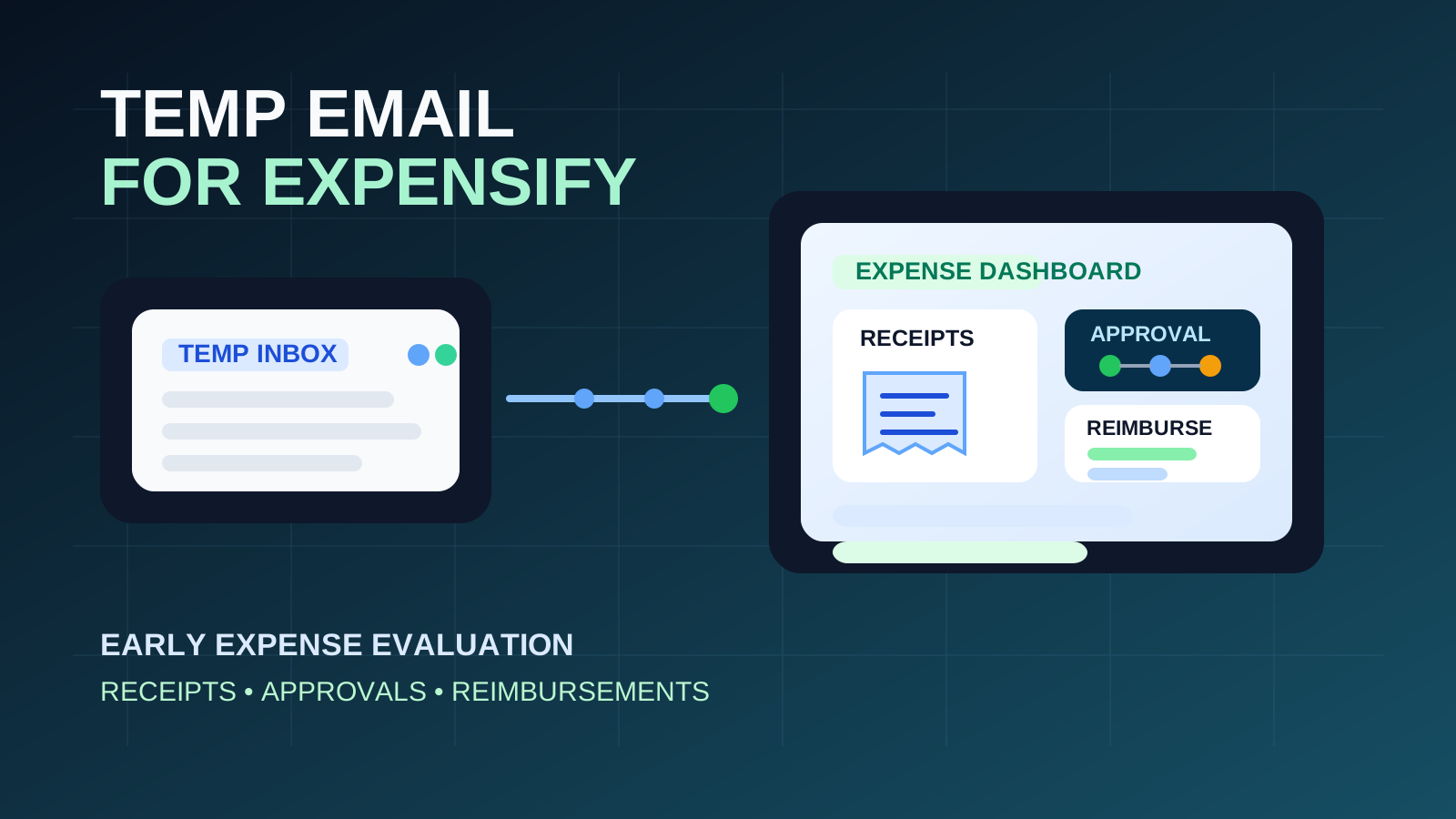
That is the practical answer behind most searches for temp email for Expensify. Usually the person typing that query is not trying to game the system. They just want to look at the product, receive the verification email, and see whether the workflow makes sense before turning a real work inbox into the landing zone for every onboarding campaign, product tour, sales follow-up, and “invite your whole finance team” nudge that tends to follow software trials.
That is a reasonable use case. A temporary inbox can help you separate early product research from the inboxes your team already uses for actual accounting, reimbursement questions, vendor replies, and everyday operations. A service like Anonibox fits that stage well because it lets you complete the first pass without committing your long-term inbox to a product you may rule out in twenty minutes.
The important limit is simple: once the account starts holding real value, the owner email stops being a convenience detail. If your evaluation begins touching live reimbursements, receipt workflows, approval chains, admin settings, accounting handoff, or recovery access, a throwaway inbox becomes an avoidable liability.
Why someone would use a temp email for Expensify
Expense software evaluations create more inbox noise than many teams expect. Even a single signup can trigger activation emails, setup tips, mobile-app reminders, feature walkthroughs, pricing prompts, demo offers, integration questions, and repeated requests to bring colleagues into the evaluation. If you are comparing several spend or expense tools in a short window, that noise stacks up fast.
A temporary inbox can make sense when you want to:
- verify access without giving every platform your long-term work address on day one
- compare multiple expense or spend tools side by side
- keep exploratory signups separate from your real finance and operations inboxes
- reduce long-tail follow-up from products that may never reach the shortlist
- test the basic workflow before you involve approvers, accounting, or leadership
Used that way, the disposable inbox is a filter. It helps during the research stage, not the ownership stage.
Why this keyword is a clean fit for Anonibox
The live site already covers adjacent finance-software intent, including expense management software free trials, spend management software free trials, and the newer companion brand page for Brex. Expensify sits naturally in that same evaluation-and-privacy cluster, but the site did not have a dedicated Expensify article at publish time.
That makes the keyword useful rather than forced. Someone looking specifically for temp email for Expensify usually wants a practical answer about trial signup, verification, inbox clutter, and when a disposable address stops being smart. That is exactly the kind of human-first problem Anonibox content should solve.
When a temporary inbox is a reasonable choice
You are doing early product research
If you are still answering questions like “Does this tool look credible?”, “Can I understand the reporting flow quickly?”, or “Is this worth a deeper evaluation?” then a temporary inbox is usually fine. At that point you are collecting signal, not building durable process.
You are evaluating alone or with one teammate
The risk is lower when the workspace can disappear tomorrow without harming anybody else. If nobody depends on the account yet, the inbox can be temporary too.
You want to contain vendor follow-up
This is one of the strongest reasons to use a burner inbox. Many teams want a first look at software without feeding a permanent work address into a long nurture funnel before they even know whether the product belongs on the shortlist.
You can abandon the account with no operational cost
If you would be comfortable walking away from the account after a short review, a temporary inbox is practical. The less real value the account holds, the safer the arrangement is.
Where the temp-email approach starts breaking down
The problem usually does not appear during signup. It appears later, when the account quietly becomes important while still being tied to an inbox that was never meant to last.
1. Reimbursements and expense reports stop being “just a trial” very quickly
Expense tools often move from casual evaluation to serious internal discussion faster than expected. Maybe you start by clicking around the dashboard, then somebody asks whether reimbursements look manageable, whether report review feels sane, or whether the receipt workflow is better than your current setup. The moment the workspace becomes part of a real buying conversation, the owner inbox matters more.
2. Receipt and notification workflows need continuity
If the account starts receiving important alerts, submission notices, or approval-related messages, a disposable inbox stops being a harmless convenience. Even if the tool is not fully live yet, the account can still gather enough history and context that losing access becomes annoying.
3. Team access raises the stakes
A solo evaluator is one thing. A shared finance or operations workspace is another. Once multiple people need access, the account should be anchored to a monitored company-controlled address, not a throwaway inbox that may vanish when someone needs a verification link or password reset.
4. Admin and policy settings are not disposable details
Even during evaluation, you may start exploring approval paths, reimbursement policies, categories, exports, or workspace settings. The more setup work accumulates under the account, the less sensible it is to keep the owner email temporary.
5. Account recovery becomes a delayed problem
This is the classic trap. The inbox feels harmless during the first session, then two weeks later someone needs a reset link, a security notice, or ownership confirmation. If the inbox is gone or forgotten, you now have an access problem in the middle of a finance-software review.
A safer way to evaluate Expensify with a temp email
You do not need an all-or-nothing rule. The smarter approach is to use the temporary inbox only during the stage where it genuinely helps, then switch before the account gains real weight.
Step 1: Decide whether this is research or a likely pilot
Before signup, ask a blunt question: are you only exploring, or is there already a strong chance this tool will move into a real pilot? If finance leadership or operations stakeholders are already invested, starting with a durable business address is usually cleaner from the beginning.
Step 2: Keep the first session focused
Do not let the evaluation drift into half-built implementation. Go in with a short checklist:
- Is the product easy to understand without a guided demo?
- Do the expense and reimbursement flows look practical for your team?
- Does receipt handling feel straightforward rather than fussy?
- Would this deserve a deeper review against other tools?
- Who would own the account if the evaluation moved forward?
A focused first pass keeps the account disposable in practice, not just in theory.
Step 3: Save your notes outside the platform
Keep your observations in your own document or spreadsheet. Write down what worked, what felt clumsy, what questions came up, and whether the tool deserves a second round. That way, if you later recreate or transition the account under a permanent address, you keep the insight without depending on the first inbox forever.
Step 4: Move finalists to a permanent email early
The best time to switch is before multiple people rely on the workspace. If the platform looks promising, move ownership to a stable company address early, before approvals, settings, and real expectations pile up.
What to evaluate during the first pass
If a temporary inbox saves you from inbox clutter, spend that attention on the product itself.
Submission and receipt capture
Can users submit expenses without friction? Does the workflow look realistic for busy employees, not just finance admins? If receipt capture already feels clumsy in a controlled test, it will not improve once people are under deadline pressure.
Review and approval flow
Look at how managers or finance reviewers would interact with reports. Is it clear what is pending, what is missing, and what needs attention? Good software reduces follow-up chaos instead of creating more of it.
Policy clarity
Even a first-pass review should show whether the platform makes policy expectations visible. You want fewer “I did not know that needed approval first” surprises, not more.
Reporting and handoff
You do not need a full rollout to judge whether the tool seems understandable. Can you tell what was submitted, approved, reimbursed, or delayed? Does the reporting feel usable, or does it look polished without answering practical questions?
When you should skip the temp-email step entirely
Use a stable company address from day one if any of these are already true:
- you expect the trial to become a real pilot almost immediately
- multiple stakeholders will need access soon
- the evaluation may touch real reimbursement or approval workflows
- you care about ownership continuity and recoverable access from the start
- the account may become part of a broader finance-systems decision
In those cases, the privacy benefit of a disposable inbox is smaller than the operational weakness it introduces.
Common mistakes to avoid
Letting the trial account quietly become the real account
This happens all the time with business software. The trial begins as a quick look, the product seems promising, more people get involved, and nobody changes the owner inbox before the workspace starts to matter.
Assuming a temp inbox is automatically more secure
A disposable address can reduce spam and keep early research tidy, but it does not automatically improve long-term account safety. It solves one problem while potentially creating another.
Waiting until something breaks to switch
If you only think about the owner inbox after a lost password or missed confirmation email, you are already fixing the problem late.
Inviting too many people too early
If the account is still tied to a temporary inbox, keep the evaluation small and controlled. Shared access raises the cost of weak continuity.
Quick checklist before you use a temp email for Expensify
- Is this truly early-stage evaluation?
- Can the account be abandoned without consequences?
- Will anyone else need access soon?
- Could this turn into a real expense or reimbursement pilot quickly?
- Would losing the inbox create a recovery problem later?
If the honest answers still point to a disposable first pass, a temporary inbox is reasonable. If not, use a stable company address immediately.
Final takeaway
A temp email for Expensify is useful when you want a low-friction way to verify access, inspect the workflow, and keep another stream of vendor follow-up out of your main inbox during early evaluation. That is a legitimate use case.
But once the account might support real reimbursements, receipt workflows, team access, admin settings, or recovery, the disposable inbox stops being the smart choice. Use the burner inbox for the disposable stage only, then switch to a stable company-controlled address before the account becomes part of something real. That balance is where Anonibox helps most.