A temp email for Fellow can be useful for a quick trial, but it becomes a weak long-term setup once shared agendas, meeting notes, and account recovery start to matter.
Yes — if you only want to test Fellow without feeding your main inbox into another SaaS follow-up sequence, a temporary inbox is a practical way to start.
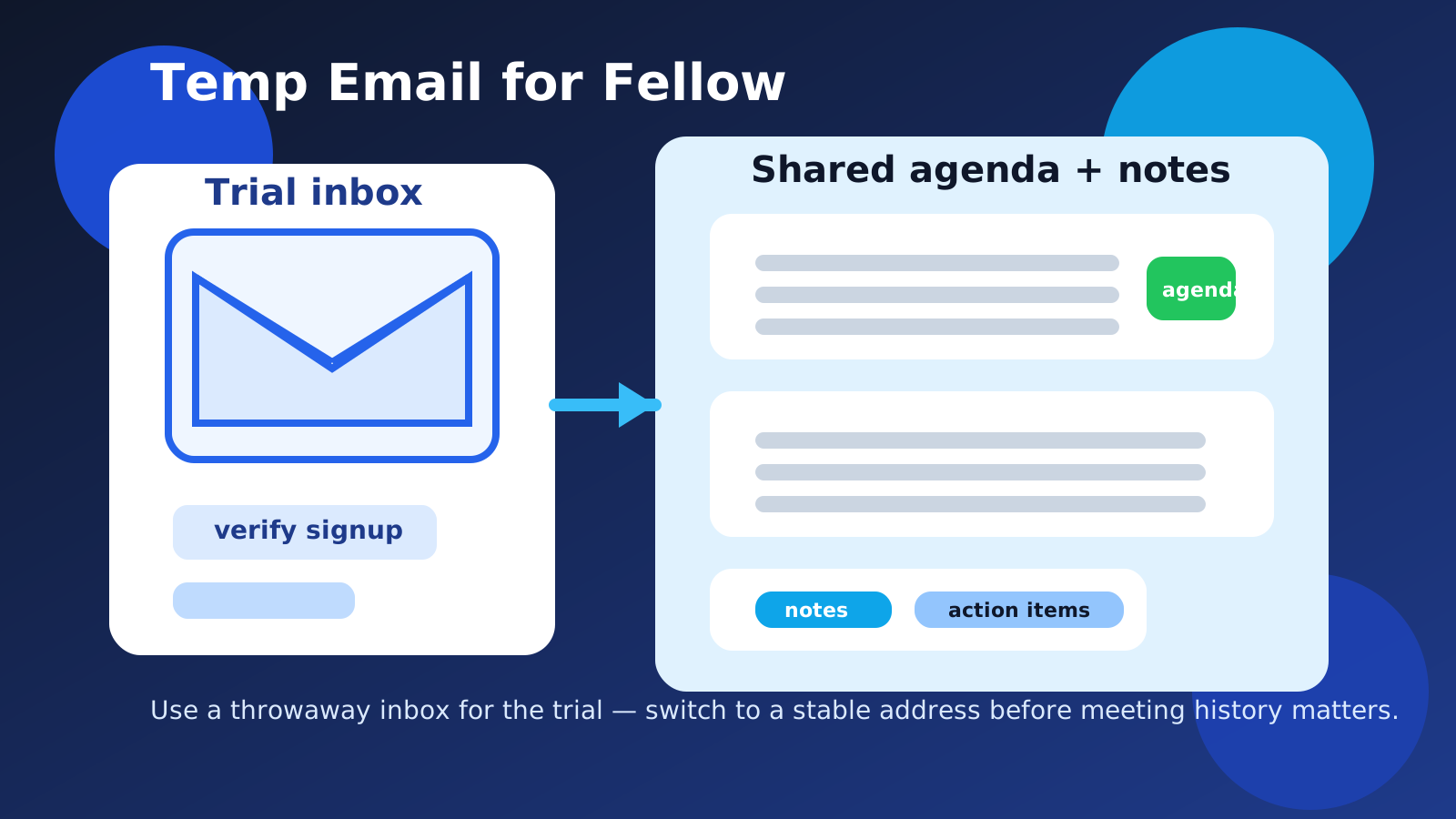
Why people look for a temp email for Fellow
Most people searching for a temp email for Fellow are trying to solve a simple problem: they want to test the product without giving their primary inbox to another work tool too early. That is a reasonable instinct. Meeting software often starts with a low-friction promise, but the email relationship tends to get bigger after signup. What begins as one verification email can quickly turn into onboarding messages, feature updates, meeting-workflow suggestions, webinar invites, reminders to upgrade, and follow-up nudges that continue long after the trial ends.
If you are comparing several tools in the same week, the inbox clutter becomes part of the product-evaluation problem. A temporary inbox gives you a clean way to verify the account, check the first-run experience, and decide whether Fellow belongs on your shortlist before your long-term address gets pulled into the cycle.
What makes Fellow different from a one-click throwaway signup
Fellow is not just another simple newsletter gate or one-time download. If you keep using it, the value of the account can grow quickly because the tool is tied to shared agendas, meeting notes, action items, and team coordination. That means the email address behind the account matters more than it does for a casual one-off signup.
For a temporary offer or a throwaway content download, a disposable inbox can be enough from start to finish. Fellow sits in a more durable category. If the product turns out to fit your workflow, the account may end up holding information you want to revisit, share, or recover later. A temp email is useful at the start, but it is not always a smart place to stay.
When using a temp email for Fellow makes sense
A temporary inbox is most useful when the evaluation is narrow, low stakes, and clearly temporary. Good examples include:
- Comparing Fellow with Granola, Notta, Avoma, Read AI, Otter AI, or another meeting tool before choosing a shortlist
- Testing the signup flow, interface, and first-run setup without exposing your main inbox right away
- Checking whether the agenda, note-taking, and action-item workflow feels useful for your team
- Running a solo trial before deciding whether the tool deserves a real team rollout
- Keeping early experiments separate from your permanent work or personal email identity
In those situations, the account is still disposable because the work inside it is still disposable. A service like Anonibox can help you receive the confirmation email, complete the first setup steps, and finish a focused evaluation without committing your primary inbox too early.
When a temp email becomes the wrong choice
1. You begin storing notes you will actually need later
Many people sign up planning to run only a quick test, then realize the notes or agendas are useful. The moment you think there is a real chance you will want those notes after the trial window, the logic changes. A disposable inbox is fine for disposable work. It is a poor foundation for information you may rely on later.
2. You invite teammates or build a shared process around it
The more other people touch the workflow, the less appropriate a throwaway inbox becomes. Once a meeting tool starts affecting shared agendas, prep habits, follow-up notes, or team accountability, the account should be tied to an address you control over time.
3. You care about recovery and continuity
Password resets, suspicious-login checks, and ownership questions are manageable when the inbox is stable. They become much more annoying when the account depends on an address you no longer monitor. If the tool becomes even slightly important, continuity starts to matter as much as privacy.
4. You are really looking for separation, not disposability
A lot of people do not actually want a fully temporary account forever. They just want distance between product trials and their everyday inbox. That is a different goal. If separation is what you want, an alias or dedicated trial inbox is often a better long-term answer than a fully disposable address.
A smarter way to test Fellow without cluttering your main inbox
Start with a defined evaluation goal
Before you sign up, decide what you are actually testing. Are you trying to see whether shared agendas help your meetings? Whether action items stay clearer after calls? Whether the notes are easier to review than what you get from another meeting assistant? A specific goal keeps the trial focused and makes the temp-email decision much easier.
Use the temporary inbox only for the first pass
Generate the address before you visit the signup page. Use it for account verification, onboarding access, and the first round of product exploration. That keeps the evaluation contained and prevents your permanent inbox from becoming part of the product relationship before you have decided whether you want one.
Save anything important right away
If the first emails include setup details, login instructions, or anything else you may need during the test, save them early. Temporary inboxes are useful for quick access, not for permanent record-keeping.
Switch to a stable address if the tool makes the shortlist
If Fellow seems useful, do not wait until the account is full of valuable notes to move it. Switch while the trial is still easy to manage, before important meeting history builds up and before the product becomes part of your recurring workflow.
What to evaluate during a Fellow trial
If you are going to spend time testing Fellow, focus on the parts that actually determine whether the product is worth keeping.
Does it make meeting prep easier?
Plenty of tools promise to improve meetings. The better question is whether this one reduces friction before the meeting starts. Does agenda planning feel clearer? Can you see what needs to be discussed without extra coordination overhead? If prep does not feel lighter, the tool may not justify another account in your stack.
Do the notes feel useful after the meeting, not just during it?
Some products look good in the moment but do not hold up when you come back a day later. Review the notes like you would during a busy week. Are they clear enough to trigger action? Could you hand them to someone else without a long explanation? That matters more than whether the interface feels polished.
Can you track action items without creating more work?
A meeting tool should reduce follow-up confusion, not create another place to chase tasks. Look closely at how decisions, owners, and next steps appear. If those are still fuzzy after the meeting, the tool may be adding another layer without actually solving the main problem.
Would you trust it with recurring team use?
This is the real decision point. If the answer is no, then the temp inbox did its job: it let you test the product without long-term inbox exposure. If the answer is yes, that is your signal to stop treating the account like a throwaway experiment and move it to a durable address.
Better alternatives if you want privacy and reliability
A disposable inbox is not the only privacy-friendly option. Depending on how you work, one of these may fit better:
- Email alias: useful if you want filtering and separation while keeping recovery practical.
- Dedicated trial inbox: useful if you review many work tools and revisit finalists later.
- Separate workstream address: useful if you want all product evaluations isolated from your main inbox without losing long-term control.
These options usually make more sense once a product stops being a throwaway test but you still want stronger inbox boundaries.
Common mistakes to avoid
- Keeping a temp inbox attached after the account starts holding useful meeting notes
- Forgetting to save the onboarding or verification details you still need
- Using a disposable address for a shared team workflow that may need continuity
- Confusing inbox separation with permanent account safety
- Waiting too long to switch to a stable address after the tool proves useful
A quick checklist before you sign up
- Is this a short solo evaluation or something that could become a recurring workflow?
- Would losing access to the account matter after a few meetings?
- Are you testing notes, agendas, action items, or all three?
- Do you really need a throwaway inbox, or would an alias be enough?
- If the tool works well, how quickly can you move it to a durable address?
Those questions help you decide whether a temp inbox is the right starting point or whether you should begin with a more stable setup from day one.
Final verdict
Using a temp email for Fellow is a sensible choice if you only want a short, low-stakes trial and you are mainly trying to avoid feeding your main inbox into another SaaS onboarding sequence.
It becomes the wrong choice once the account starts holding notes you care about, supports shared agendas that matter, or needs a reliable recovery path. Use a temporary inbox for the first pass, keep the evaluation focused, and switch to a stable address as soon as the tool proves it belongs in your real workflow.
That approach gives you privacy up front without making future access harder than it needs to be.