Yes — a temp email can make sense for Highspot if you are only opening a demo, testing early content access, or deciding whether the platform deserves deeper attention.
No — it is a poor long-term choice for shared workspaces, team access, sales content ownership, or any Highspot account you may need to recover later.
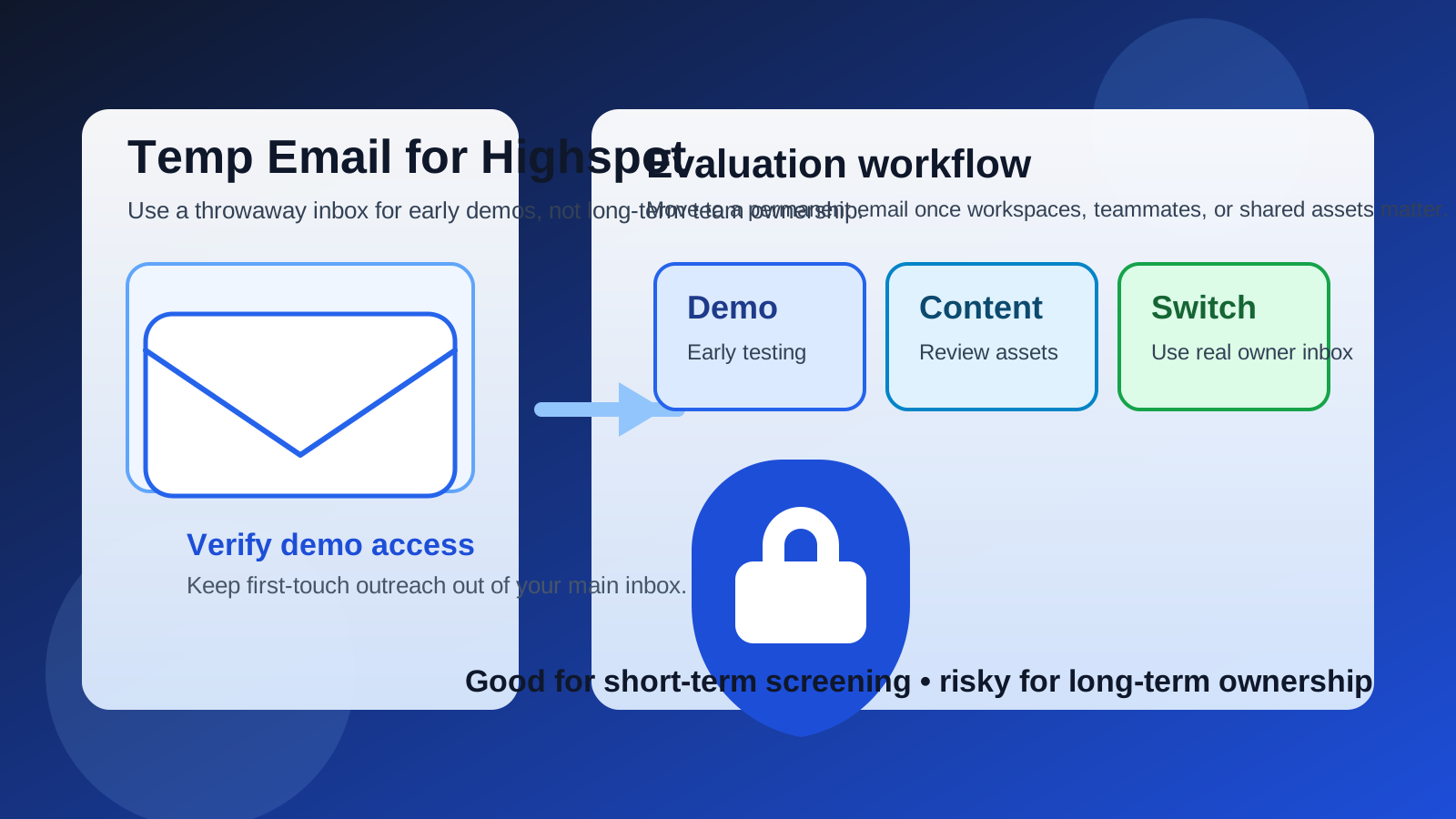
That is the practical answer behind the search for temp email for Highspot. A disposable inbox can help when you want to verify an account, look around, and keep your real inbox out of early vendor follow-up. But once a platform becomes tied to teammates, sales materials, customer-facing sharing, or ongoing administration, the same disposable address that felt convenient at the start can create avoidable problems later.
The smartest way to think about it is simple: use a temp inbox as a screening tool, not as the permanent home for an account that may matter to your team. If your goal is quick evaluation, privacy, and less inbox clutter, a temporary address can help. If your goal is stable ownership, collaboration, and long-term access, you should switch to a real inbox you control.
Why people look for a temp email for Highspot
People usually do not search for this because they want to hide forever. They search for it because they want a little breathing room during software evaluation.
Sales enablement and content platforms often start with a familiar pattern: fill out a form, confirm an email, open a welcome sequence, and then receive a stream of check-ins, reminders, meeting offers, and follow-up campaigns. That can be perfectly normal, but it can also get noisy fast if you are comparing multiple tools at once.
A temp inbox helps in a few common situations:
- Early product research: you want to see the platform before handing over your permanent work address.
- Short demo access: you only need the verification email and first onboarding steps.
- Inbox hygiene: you do not want weeks or months of follow-up from a tool that may never make your shortlist.
- Vendor comparison: you are looking at several enablement, demo, or buyer-facing tools and want the first-touch messages separated from your main inbox.
- Privacy during exploratory testing: you are not ready to tie your everyday work identity to every signup form you touch.
That is where a temporary inbox from a service like Anonibox can be genuinely useful. It lets you receive the first confirmation message, review the early onboarding flow, and decide whether the product deserves a deeper look without immediately opening the door to long-term email traffic in your main account.
When a temp email is usually fine for Highspot
A disposable address makes the most sense when the account is still disposable in practice too. In other words, when you are evaluating instead of adopting.
1. You only want a first look
If you are trying to understand what Highspot is, how the interface feels, or whether the product belongs on your shortlist, a temporary inbox is reasonable. You can verify the account, open the welcome email, and judge whether the experience feels relevant before committing your long-term work identity.
2. You are comparing several tools at once
Many buyers do not evaluate one platform in isolation. They compare categories, vendors, workflows, and pricing models at the same time. In that phase, disposable email can keep each test separate. That makes it easier to remember which follow-up came from which tool and prevents your main inbox from becoming a pile of overlapping product sequences.
3. You only need early setup messages
If your immediate goal is just to receive a confirmation link, a welcome note, or the first onboarding email, a temp inbox can do the job cleanly. For quick access, it is often enough.
4. You want to reduce sales follow-up before you are ready
There is nothing wrong with wanting less pressure during the research stage. If you have not decided that a platform is serious for your team, using a temp inbox can give you more control over when and how you invite deeper contact.
When a temp email becomes risky
The risk shows up when the account stops being a test and starts becoming part of real work. That is the turning point many people miss.
Shared workspaces change the equation
If teammates need access, ownership matters. The email tied to the account is no longer just a throwaway signup detail. It becomes part of who receives invitations, change notices, admin messages, and recovery links. Using a disposable address too long can leave your team depending on an inbox that was never meant to last.
Customer-facing or buyer-facing sharing raises the stakes
If the platform is being used for shared materials, external review, or anything that may influence real buyer communication, you want a stable address behind the account. Even if the content itself is not especially sensitive, the workflow around it becomes more important once real people rely on it.
Account recovery gets harder
This is the most obvious downside and still the one people underestimate. Temporary inboxes are good at being temporary. If you later need a password reset, a security confirmation, an ownership check, or a billing-related notice, the disposable address may no longer be available when you need it most.
Important notifications can disappear with the inbox
Early welcome emails are easy to replace. Ongoing admin notices are not. Once a tool becomes part of an active process, losing visibility into those messages becomes an operational problem, not just a minor inconvenience.
A safer way to use temp email for Highspot
The best approach is not “always use disposable email” or “never use disposable email.” It is a staged workflow.
- Use a temporary inbox for the first pass. Open the account, verify access, and review the initial onboarding.
- Decide quickly whether the platform is still just research. If it is not worth pursuing, you have protected your main inbox from more clutter.
- Switch to a permanent address as soon as collaboration or ownership matters. Do not wait until teammates are invited or real materials are being shared.
- Save the messages that matter. If setup instructions, confirmation links, or admin notes are useful, copy or document them before the temp inbox expires.
This is the sweet spot. You keep the privacy benefit during evaluation, but you do not drag a disposable address into the part of the workflow where stability matters more than inbox protection.
Practical signs it is time to stop using a throwaway inbox
- You are inviting teammates.
- You are uploading or organizing materials that your team will revisit.
- You expect ongoing notifications to matter.
- You may need support, billing, or password-recovery emails later.
- You are moving from curiosity to actual rollout discussions.
- You would be annoyed if the account vanished tomorrow.
If any of those are true, the account is no longer temporary enough to deserve a temporary inbox.
What a good privacy-first evaluation looks like
If you want the privacy benefit without creating future headaches, keep the evaluation process disciplined:
- Use a separate inbox only for early-stage testing.
- Document what you liked and disliked during the first session. That way you do not need to keep the temp account alive longer than necessary.
- Do not build team processes on top of a disposable login.
- Switch to a controlled permanent address before any serious setup.
- Keep ownership clear. If the platform might become real, decide who should own the long-term account early.
This same logic works well across many software evaluations. Disposable email is good for reducing noise. Permanent email is better for continuity. The mistake is treating both jobs as if they were the same.
Common mistakes to avoid
- Leaving the temp email in place for too long: what starts as a harmless test account can quietly become the account everyone depends on.
- Forgetting to save important setup information: temp inboxes are not a durable filing system.
- Assuming recovery will be easy later: if the inbox is gone, recovery may be much harder than expected.
- Using one throwaway inbox for too many vendors: that can make it harder to track which messages belong to which trial.
- Confusing privacy with permanence: a temp email protects your main inbox; it does not create a good long-term admin identity.
Quick checklist before you sign up
Ask yourself these questions before you use a temp email for Highspot:
- Am I only evaluating, or am I about to involve other people?
- Would losing access to this inbox later create a real problem?
- Do I only need a confirmation email, or will ongoing notices matter?
- Am I trying to reduce noise, or am I avoiding a decision I will have to fix later?
- If the tool looks promising, am I ready to move it to a permanent address quickly?
If your answers point toward short-term testing, a disposable inbox is reasonable. If your answers point toward ownership, coordination, and continuity, switch early and avoid future cleanup.
Final answer: should you use a temp email for Highspot?
Yes, for early demos and content testing. No, for anything that may become shared, operational, or important to recover later.
That is the cleanest rule. A temporary inbox is useful when you are screening a platform and protecting your main inbox from unnecessary noise. It becomes risky when the account starts carrying real responsibility. Use a service like Anonibox for the first look if you want more privacy, then move to a permanent inbox the moment the platform starts looking like a real workspace instead of a disposable test.
That way you get the best of both worlds: less spam during evaluation, and fewer self-inflicted access problems once the work becomes serious.