Yes, a temp email for Insomnia can be a smart way to verify an account, compare API tools, or keep another test signup out of your main inbox during early evaluation.
No, it is not a safe long-term address once shared workspaces, synced data, recovery, or any team workflow depends on that inbox still existing later.
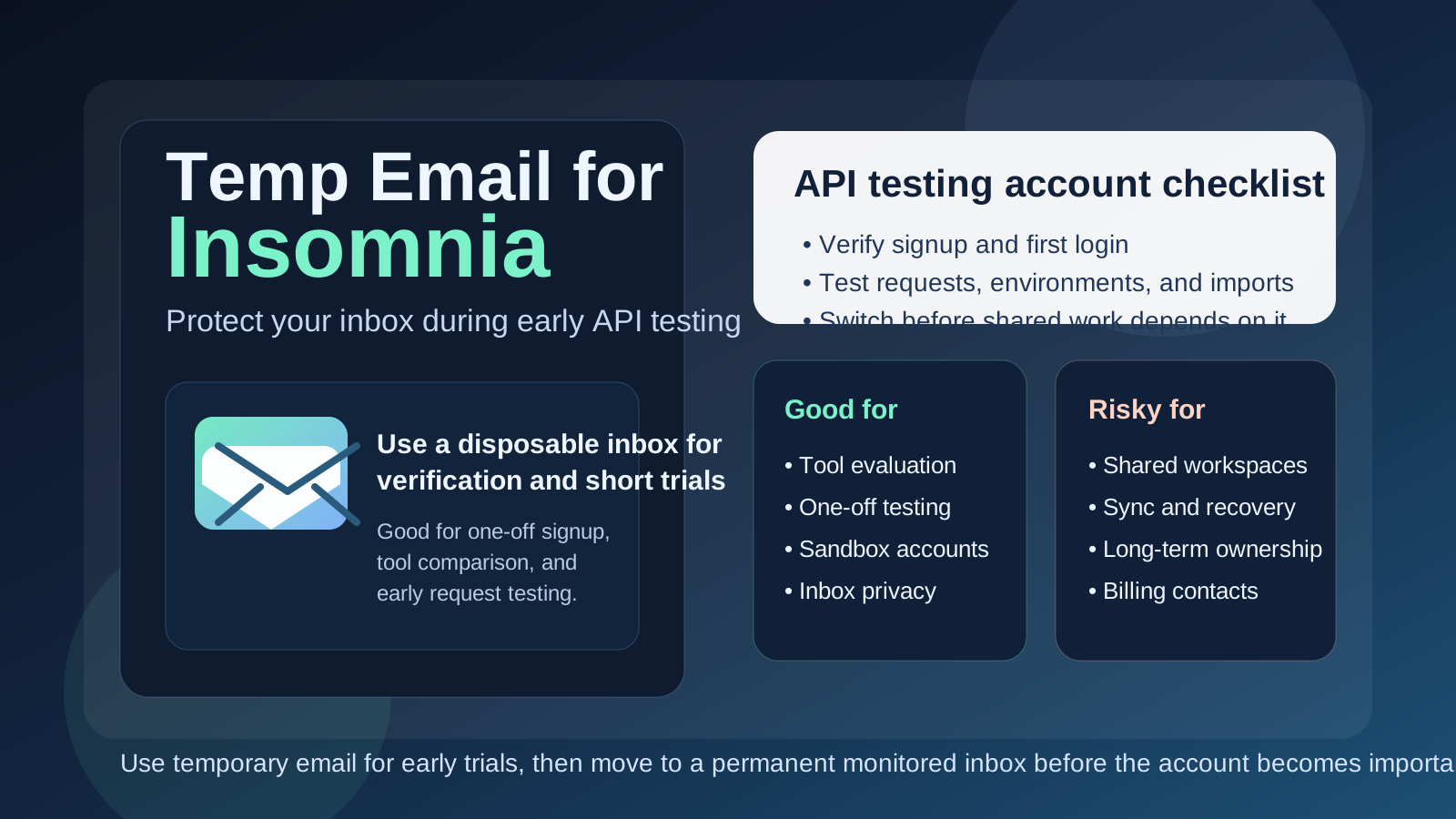
That is the practical answer most people actually need. Insomnia is exactly the kind of product people want to try before they commit. You may only want to send a few requests, import a collection, test an environment, compare it with Postman or another API client, and decide whether it fits your workflow. A temporary inbox can help you do that without pushing every vendor follow-up, product announcement, and nurture email into your regular address on day one.
The catch is that API tools have a habit of becoming more important than expected. A throwaway experiment can quietly turn into the workspace where you keep requests, reference environments, handoff notes, or team collaboration that matters. Once that happens, the email behind the account is no longer a small detail. It becomes part of ownership, access, and recovery.
If you use Anonibox or any other temporary inbox, the safest approach is simple: use it for short-lived evaluation and early testing, then switch to a permanent monitored address before the account starts holding anything you would miss.
Why people look for a temp email for Insomnia
Most people searching for this are not trying to do anything shady. They are usually doing one of three normal things: testing an API tool, protecting their inbox while comparing software, or creating a low-stakes trial account before they know whether the product deserves a place in their long-term workflow.
That makes sense. Developer tools often ask for signups before you can reach sync features, team settings, hosted services, saved workspaces, or account-linked options. Even if the trial is legitimate and useful, the signup can still lead to a long stream of marketing emails, onboarding nudges, webinar invites, and sales follow-up. If you are comparing multiple tools at once, your inbox gets noisy fast.
A temporary inbox gives you a cleaner evaluation path. You get the verification message and the first account email you need, but you do not immediately hand over your permanent address before you know whether Insomnia will actually stay in your toolkit.
When a temp email makes sense for Insomnia
Temporary email is most helpful when your use case is clearly short-lived, personal, or experimental. Good examples include:
- Trying Insomnia for the first time to compare it with another API client
- Testing signup, verification, and basic account access during a one-off evaluation
- Reviewing the interface, request flow, or import process without committing your main address
- Keeping product-trial email out of a personal or work inbox that is already overloaded
- Separating sandbox testing from your long-term development accounts
- Running a short-lived proof of concept that does not yet involve a real team or durable assets
In these situations, the email address is supporting an experiment rather than owning something important. That is where a disposable inbox is useful. It helps with privacy and inbox hygiene without creating much operational risk.
When a temp email becomes a bad idea
The problem starts when an account stops being disposable but the inbox behind it still is. That shift can happen slowly. At first, you only meant to explore the product for twenty minutes. A week later, the same account may contain saved requests, environments, organization settings, project history, or collaboration that matters to your daily work.
A temporary inbox is the wrong choice if the Insomnia account controls or receives anything important, including:
- Your main long-term account for API development work
- Shared workspaces or team collaboration settings
- Synced project data you may need later
- Password recovery, account-change alerts, or security notices
- Billing or subscription communication
- Any account another teammate may rely on after the evaluation phase
Once an account matters, the inbox behind it should be stable, recoverable, and monitored on purpose. Disposable email is great for low-stakes entry. It is weak as a long-term control point.
A simple rule that keeps you out of trouble
If the account exists to help you test something, a temp email can be fine. If the account exists to store something, share something, recover something, or own something, switch to a permanent address before the stakes rise.
That rule works well because it matches how software trials actually evolve. The danger is not that temporary email is inherently bad. The danger is forgetting to migrate when a test account quietly becomes a real one.
How to use a temp email for Insomnia safely
1. Decide whether this is a test or a keeper
Before you sign up, ask whether you are doing a quick evaluation or setting up an account you might still want in a month. If there is a serious chance the same account will become part of your real workflow, starting with a permanent inbox is often cleaner.
2. Use the temp inbox only for the evaluation phase
It is fine to use a temporary address to catch the verification email, open the account, and see whether the tool feels worth deeper attention. That phase is exactly where a service like Anonibox helps. The mistake is not the temporary inbox itself. The mistake is leaving it attached after the account begins to matter.
3. Save what you need immediately
Temporary inboxes are useful because they are lightweight, but that also means you should not treat them like permanent storage. Save the key email or details you need during testing, especially if you may want to reference the setup later.
4. Move to a permanent inbox before collaboration or long-term use
The safest moment to change the email is before shared workspaces, synced projects, or team access enter the picture. Making the switch early is far easier than trying to untangle ownership after multiple people rely on the account.
What to test while you still have the temp inbox
If you are going to use a disposable address during the trial phase, use that window well. The point is not just to receive a single email and move on. The point is to figure out whether Insomnia fits the way you actually work.
Basic signup and verification
Start with the obvious. Make sure you can create the account smoothly and that the verification flow is not confusing. If the first few minutes are already awkward, that tells you something about the overall product experience.
Import and request workflow
If you normally work with collections, exported definitions, or existing request sets, test how easy it is to bring those in and use them. Early evaluation should focus on real workflow fit, not just whether the tool looks nice.
Environment handling
Many developers care less about the landing page and more about whether the client is pleasant once variables, auth details, and multiple environments enter the picture. That is worth testing before you decide whether the tool deserves a permanent place in your setup.
Sharing and collaboration boundaries
Even if you are evaluating alone, think ahead. Does this account look likely to become something you will share with teammates? If the answer is yes, that is your signal that a disposable inbox should only be temporary.
Recovery assumptions
Do not ignore account recovery just because it is not exciting. A surprising number of software headaches start when a person can still use a tool today but no longer controls the inbox needed to recover the account tomorrow.
Common mistakes people make
- Leaving the temp email attached for too long: the “trial account” quietly becomes the real one.
- Using one disposable inbox across multiple tool experiments: verification and reset messages become hard to track.
- Ignoring recovery until later: later is exactly when the missing inbox becomes a problem.
- Letting a personal test turn into a shared asset: teammates inherit a setup built on an unstable contact point.
- Confusing privacy with permanence: a temp inbox helps reduce exposure, but it does not create durable ownership.
Temp email vs a separate permanent project inbox
It helps to separate two different ideas that people sometimes mix together.
- Temp email: useful for short-lived testing, vendor comparisons, and keeping your main inbox cleaner
- Separate permanent project inbox: useful for long-term ownership, shared tool access, account recovery, and continuity
Those are not the same thing. A temporary inbox is a privacy and clutter-control tool. A permanent project inbox is an ownership and recovery tool. If your Insomnia usage becomes serious, you usually want the second one.
Who should be most cautious?
Individual developers doing a quick trial can use temporary email with relatively low risk, as long as they remember it is temporary. The people who should be more careful are agencies, teams, consultants, and anyone working in a client or shared environment. Those setups have a way of outliving their original assumptions.
If more than one person may depend on the account later, treat the email decision as infrastructure rather than convenience. It is much easier to set up a proper owner inbox early than to explain later why an important shared tool is still tied to a throwaway address from an old trial.
A practical workflow that works well
- Create a temporary inbox for the first-pass evaluation.
- Use it to verify the account and inspect the early workflow.
- Decide whether Insomnia is only a short test or a tool you may actually keep.
- If it survives the test phase, move the account to a permanent monitored inbox.
- Only then attach shared work, long-term recovery expectations, or team dependence to it.
That approach gives you the privacy benefit up front without creating preventable account-risk later.
Where Anonibox fits naturally
Anonibox is most useful at the front of the process. It helps you verify a trial, inspect the product, and keep another round of software-signup email out of your main inbox while you evaluate whether the tool deserves a real commitment.
What it should not become is the permanent root of an account that matters to your work. Once Insomnia is part of your real toolkit, the better choice is a stable inbox you control for the long haul.
Final takeaway
A temp email for Insomnia is a practical choice for early API testing, short-lived comparison work, and privacy-conscious trial signups. It keeps your main inbox cleaner and lets you evaluate the tool without immediately turning a quick experiment into a long-term stream of vendor email.
But once the account starts holding real work, shared access, synced data, or recovery responsibility, switch to a permanent monitored address. Temporary email is great for the evaluation phase. It is the wrong foundation for anything you may still care about later.