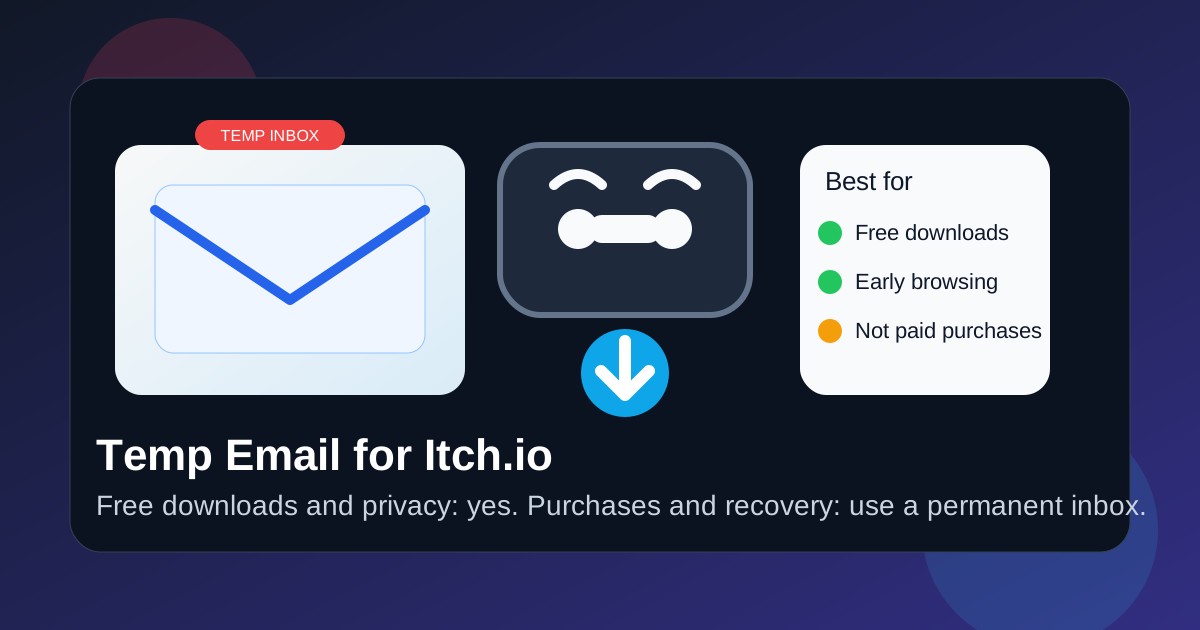
Yes—using a temp email for Itch.io can make sense for one-off browsing, free downloads, or an early low-stakes signup when you want to keep promotional mail out of your main inbox.
It is a bad fit for paid games, bundles, creator accounts, jam submissions you care about, or anything tied to receipts, library access, support, or long-term account recovery.
Why people look for a temp email on Itch.io
Itch.io sits in a slightly unusual spot. It is part storefront, part community, part indie publishing platform, and part discovery engine for tiny experiments, game jams, asset packs, soundtracks, and early-access projects. That mix makes a temporary inbox tempting. You might want to grab a free prototype, test a creator tool, join a jam page, or follow a niche project without inviting months of update mail into the same inbox you use for work, family, and important logins.
That instinct is reasonable. A privacy-first signup workflow can be useful when you are still deciding whether a platform deserves a permanent place in your online life. But Itch.io is also a platform where ownership, receipts, claim links, bundle delivery, and creator communication can matter later. That is where a disposable inbox stops being convenient and starts creating avoidable risk.
Short answer: good for low-stakes exploration, bad for long-term ownership
If your goal is simple curiosity—checking out free games, browsing creator pages, or trying a one-off account flow—a temporary inbox can be fine. If your goal involves purchases, paid bundles, publishing your own project, collecting comments, managing jam deadlines, or keeping access to a library over time, use an address you control for the long haul.
The practical test is simple: would it matter if you lost access to the inbox next week? If the answer is yes, do not use a disposable address for that Itch.io activity.
When a temp email for Itch.io can be reasonable
- Testing the platform before you commit: You want to see how signup, discovery, and download flow work before giving out your main address.
- Browsing free projects: You are downloading a no-cost prototype or community-made experiment and do not expect ongoing account value.
- Checking a creator page or jam ecosystem: You want a quick look without turning that curiosity into a permanent stream of notifications.
- Separating hobby signups from your primary inbox: You already keep shopping, work, and experimental signups in different lanes.
- Reducing inbox clutter from one-off interest: You are not building a game library there yet; you are just testing interest.
These are the kinds of low-risk use cases where a temporary inbox can help. The value is not magic anonymity. The value is simply better inbox control while you are still in the “maybe” phase.
When it becomes a bad idea
1. Paid purchases and bundles
The moment money enters the picture, inbox reliability matters more than convenience. Paid downloads, bundle redemptions, and receipts are exactly the kind of thing you do not want tied to an address you may lose. If something goes wrong with delivery, access, or proof of purchase, a throwaway inbox is the opposite of helpful.
2. Creator accounts and publishing
If you plan to upload games, assets, soundtracks, or devlogs, use a permanent email from the start. Publishing accounts collect ownership, reputation, payout, support, and recovery risk. This is not disposable behavior.
3. Game jam participation you care about
Some people only want to view jam pages, which is low stakes. But if you are entering a jam, tracking submissions, receiving organizer updates, or waiting on results, you want a stable inbox. Missing one deadline or clarification email is a very silly way to sabotage your own work.
4. Account recovery and security
Any account you may want to revisit later needs an email address you control long-term. Password resets, unusual sign-in alerts, account confirmations, and support follow-up all become harder when the original inbox is gone.
5. Community follow-up that actually matters
If you care about replies, ownership confirmations, download updates, or creator communication, temporary email stops being a neat privacy trick and becomes a reliability problem.
A better way to think about the risk
People often ask whether temporary email “works” for a platform. That is not quite the right question. The better question is whether the specific use case is disposable.
Free experimental download you may never revisit? Probably disposable enough.
Paid bundle, creator storefront, or account you may want next month? Definitely not disposable.
That distinction matters more than the platform name. A lot of trouble comes from using a short-term tool for a long-term relationship.
How to use a temp email for Itch.io without making a mess
- Decide whether the signup is truly low stakes. Be honest. If you already know you may buy something, publish something, or come back often, skip the disposable inbox.
- Create the inbox before you register. That keeps the whole test clean and separate from your main inbox.
- Finish any verification immediately. If a platform sends a confirmation message, handle it while you still have the inbox open instead of assuming you will remember later.
- Save anything important right away. If a message includes a key link, claim URL, or receipt-like detail, do not leave it stranded in a temporary inbox.
- Upgrade to a permanent address before the account becomes important. If you decide the account is worth keeping, change the email while you still control the login.
That last step is the one people skip. The risk usually is not “I used a temp email once.” The risk is “I kept using a temp email after the account stopped being temporary.”
When a separate long-term inbox is smarter than a disposable one
Sometimes the right answer is not your main personal inbox and not a temp inbox either. A separate long-term account or alias is often the sweet spot. It gives you privacy, cleaner organization, and less spillover into your everyday email without sacrificing recovery and receipts.
That is especially useful if you regularly sign up for creator tools, indie marketplaces, newsletter-heavy platforms, or gaming communities. You still get boundaries, but you are not gambling with access. If you like the privacy mindset behind Anonibox, this is the grown-up version for accounts you might actually care about later.
What about free games and no-cost asset packs?
This is where the decision gets fuzzy. Free does not always mean unimportant. Some free projects later update, disappear, change delivery method, or become the start of a creator relationship you want to keep following. If you are downloading something truly casual and instantly replaceable, temporary email is usually fine. If it is a tool, asset pack, soundtrack, or prototype you may want to revisit—or if it came from a creator you expect to support later—a separate permanent inbox is safer.
In other words, do not judge only by price. Judge by future value.
Red flags that mean you should not use a temp inbox here
- You expect to spend money.
- You may upload your own work.
- You care about maintaining a library or purchase history.
- You need organizer updates, comment replies, or support responses.
- You would be annoyed if you had to recreate the account from scratch.
- You are already thinking, “I will probably keep this account anyway.”
If even one of those sounds true, use an address you can keep.
A realistic privacy workflow for Itch.io
Here is a simple setup that works well for most people:
- Use a temp inbox only for low-stakes trial signups or one-off curiosity.
- Use a separate long-term inbox for hobby platforms you may revisit, even if they are not mission-critical.
- Use your best-controlled permanent inbox for purchases, creator accounts, support, billing, or anything tied to identity and ownership.
This keeps your main address from absorbing every niche signup while avoiding the classic mistake of making paid or meaningful accounts too fragile.
Common mistakes people make
Using the same temp inbox for too many platforms
That defeats the point. If you are reusing one disposable address across multiple services, you lose track of where messages came from and make cleanup harder, not easier.
Forgetting that hobby accounts can become real accounts
A free indie game platform account may feel disposable today and important six months later. People change their minds after they discover a creator, buy a bundle, or join a community.
Leaving recovery tied to a dead inbox
This is the classic self-own. If an account becomes valuable, change the email early—before you forget, before the inbox disappears, and before you need support.
Assuming privacy and permanence are the same thing
They are not. Privacy tools reduce unnecessary exposure. Permanent inboxes protect continuity. Good account hygiene uses both at the right time.
Final answer
A temp email for Itch.io is fine for low-stakes exploration: casual browsing, quick free downloads, and early curiosity you may never revisit. It is the wrong tool for purchases, bundles, creator publishing, jam participation you care about, and any account where long-term access matters.
If you just want to keep one more platform out of your main inbox, a disposable address can help. If you think the account might matter later, switch to a separate permanent inbox instead. That gives you privacy without sacrificing receipts, recovery, and control.