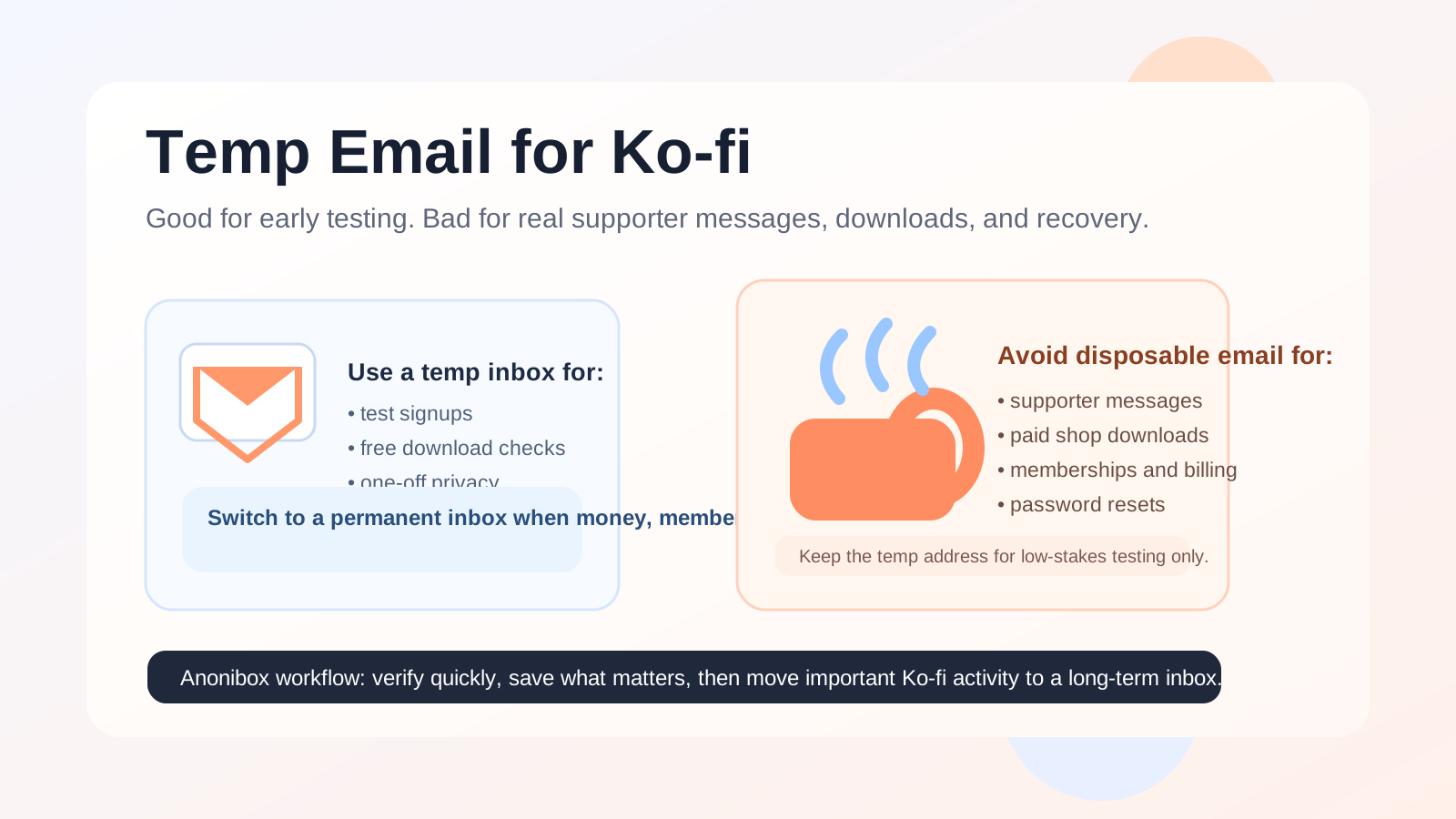
Using a temp email for Ko-fi can be useful for early creator-page testing, one-off free download checks, and short-term signup privacy, but it becomes risky once real supporter messages, shop downloads, memberships, or account recovery depend on that inbox.
The practical rule is simple: a disposable address can help during low-stakes testing, but if you plan to keep the Ko-fi account, sell through it, or communicate with real supporters, switch to a permanent inbox you control.
Why people look for a temp email for Ko-fi
Ko-fi sits in an interesting middle ground. Some people use it casually to test a creator page, claim a free download, check how a shop or membership setup works, or explore whether the platform fits their workflow. Others rely on it for real supporter relationships, commission requests, digital products, or recurring membership income.
That split is exactly why temporary email can be helpful in some situations and a bad idea in others. If you only need to confirm a signup, review the dashboard, or see how a page feels before committing, a short-lived inbox keeps your main email from being dragged into another long follow-up sequence. But when money, customer support, access links, or account recovery matter, the trade-off changes fast.
In other words, the question is not whether temporary email is always good or always bad. It is whether the Ko-fi activity is disposable too.
When a temp email can make sense on Ko-fi
There are a few low-risk, early-stage situations where using a temporary inbox is reasonable.
- Testing creator-page setup: You want to see the signup flow, basic settings, and page structure before connecting real creator operations to the account.
- Checking a free or low-stakes download flow: If you are evaluating how a creator delivers a free file or preview, a throwaway inbox can help you avoid long-term marketing email.
- Comparing creator platforms: If you are deciding between Ko-fi, Patreon, Buy Me a Coffee, Gumroad, or similar tools, it can be useful to isolate each test in its own inbox.
- Protecting your main inbox during research: Not every signup turns into a long-term account. A temporary address keeps early experimentation separate.
That is where a tool like Anonibox fits naturally. If your goal is to verify the account, check the welcome emails, and quickly judge whether Ko-fi deserves more serious setup time, a temporary inbox can reduce clutter without adding much friction.
Where it becomes risky very quickly
Ko-fi is not just a throwaway signup platform. For many creators, it becomes part storefront, part membership tool, part message inbox, and part account hub. That means the moment real activity begins, email becomes more important than it first appears.
1. Supporter messages and contact follow-ups
Creators often use Ko-fi to receive notes from supporters, replies tied to purchases, or follow-up messages around commissions and custom work. If your inbox disappears or you stop monitoring it, those conversations can vanish with it. That is not just inconvenient. It can damage trust.
2. Shop downloads and delivery emails
If you sell digital products, the email account connected to the platform may matter for receipts, product delivery, order issues, and updates. A temporary inbox is fine for seeing how a test download arrives. It is a bad long-term home for real orders that people may need help with later.
3. Memberships and recurring supporters
Recurring support means ongoing access and ongoing communication. If a membership confirmation, billing notice, or account warning lands in an inbox you no longer control, the cleanup can be annoying at best and expensive at worst.
4. Password resets and account recovery
This is the most obvious failure point. The email on the account is often your recovery path. If the inbox expires, a later password reset or security check can turn into a real problem.
5. Creator identity and professionalism
If Ko-fi becomes part of your public creator stack, your support systems should feel stable. Disposable email works against that once your account becomes customer-facing.
A good rule of thumb: test with disposable, operate with permanent
If you want a clean decision rule, use this one:
- Disposable email is acceptable when you are only testing, browsing, or verifying a short-lived experiment.
- Permanent email is better when the account may hold money, files, supporter conversations, product access, or recovery importance.
That line keeps the privacy benefit without creating a support headache later.
How to use a temp email for Ko-fi safely
1. Decide whether this is research or a real account
Before signing up, be honest about what you are doing. Are you only checking the platform for ten minutes, or are you likely to keep the page and build on it? If it is the second one, start with an address you intend to keep.
2. Use the temp inbox only for low-stakes verification
If the goal is early testing, use the temporary address for the welcome message, confirmation link, and first-run setup. That is the safe zone.
3. Save anything you may need later
Temporary inboxes are best when you do not need long retention. If you receive an important link, onboarding note, or configuration detail, save it right away instead of assuming the inbox will always be there.
4. Upgrade to a permanent inbox before real launch
The moment you decide to accept supporters, publish products, run memberships, or communicate with customers, move the account to a stable address you control long term.
5. Keep your privacy strategy consistent
Many people protect privacy better when they think in layers. Use a temporary inbox for low-stakes tests, a separate long-term creator inbox for real operations, and your primary personal inbox for only the most important accounts. That gives you separation without losing control.
Realistic Ko-fi scenarios
Scenario A: You are comparing creator platforms
You want to see whether Ko-fi feels better than Patreon or Buy Me a Coffee for a side project. You create a temporary inbox, verify the account, explore the settings, and decide whether the platform is worth deeper setup. That is a reasonable use case.
Scenario B: You are claiming a one-off free download
A creator offers a free file through Ko-fi, but you do not want ongoing promotional mail in your primary inbox. If the file is low-stakes and you do not expect long-term updates, a temporary inbox may be fine.
Scenario C: You are launching a real creator page
You plan to collect tips, offer memberships, sell digital products, or handle supporter messages. This is where a disposable address stops making sense. Use a permanent email from the start or switch before launch.
Scenario D: You are taking commissions or custom requests
If people may contact you about order changes, revisions, deadlines, or delivery problems, you need a dependable inbox. Temporary email is the wrong tool here.
Signs you should stop using the temp inbox
- You have added real products or downloads.
- You expect people to message you through the platform.
- You are receiving billing or payout-related notices.
- You would be frustrated if you lost access to a password reset email.
- You are treating the Ko-fi page as part of your real creator business.
If any of those are true, you have probably outgrown the disposable address.
A better privacy alternative for long-term Ko-fi use
Some people reach for temporary email because they want privacy, not because they actually want a short-lived inbox. If that is your situation, a better answer is often a separate dedicated email for creator tools. That gives you distance from your personal inbox without breaking support, recovery, or customer communication.
You can think of it as three levels:
- Temporary inbox: best for quick tests and one-off experiments.
- Dedicated creator inbox: best for real platform use while protecting your main personal email.
- Primary personal inbox: best reserved for the accounts you most want to centralize.
For most serious Ko-fi use, the middle option is the best balance.
Final answer
Using a temp email for Ko-fi can be smart when you are only testing the platform, reviewing a creator page, or checking a one-off free download without inviting more email clutter into your main inbox. It is much less smart once real supporter messages, recurring memberships, digital product delivery, or account recovery start to matter.
So the best approach is simple: use a temporary inbox for low-stakes evaluation, then switch to a stable long-term address before Ko-fi becomes part of your real creator workflow. That keeps the privacy benefit while avoiding the very predictable problems that show up when a disposable inbox is asked to support a non-disposable account.