A temp email for Letterboxd can be fine if you only want to test the app, keep one more signup out of your main inbox, or avoid tying a casual movie account to your everyday address right away.
It becomes a bad long-term choice once you start saving watchlists, writing reviews, following friends, or treating the account like a real profile you would hate to lose.
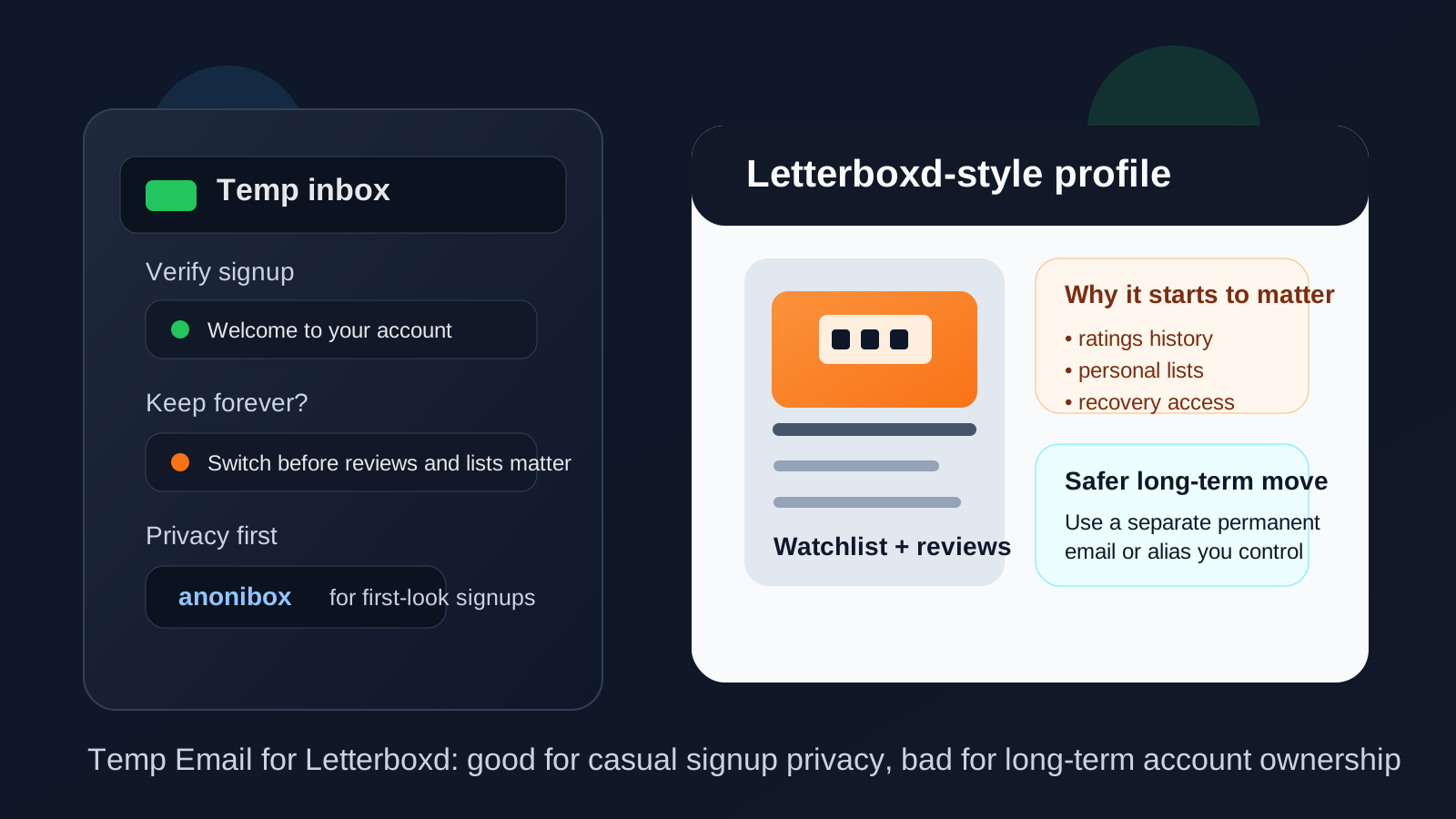
That is the practical answer most people actually need. Letterboxd feels casual at the beginning. You open an account, rate a few films, maybe make a watchlist, maybe follow a couple of friends, and it all seems low stakes. But casual accounts have a habit of turning into personal archives. A few weeks later, the same profile may hold your ratings history, reviews, lists, diary entries, and years of movie notes you did not expect to care about so much.
If your goal is just to protect your inbox during a trial run, a temporary address from a service like Anonibox can make sense. If your goal is to build a profile you will keep, a disposable inbox is usually the wrong foundation.
Why people look for a temp email for Letterboxd
Most people are not trying to be mysterious. They usually want one of a few normal things:
- to test Letterboxd without giving another app their primary email address immediately
- to keep sign-up and welcome messages out of a crowded personal inbox
- to separate hobby accounts from work or family communication
- to make a low-commitment account for browsing lists, ratings, or community activity
- to avoid long-term promotional email from a service they may never use seriously
Those are all reasonable goals. Temporary email is good at solving short-term inbox exposure. The problem is not the first day. The problem is what happens if the account becomes important later.
When a temp email for Letterboxd actually makes sense
1. You only want a quick first look
If you are curious about the interface, want to see how ratings and lists work, or just want to browse around before deciding whether the platform is for you, a temporary inbox is a practical buffer. In that situation, you may only need the verification message and nothing else.
2. You are testing whether you even like the product
A lot of people sign up for a new platform because friends mention it, a creator recommends it, or they want a better way to track films for a week or two. If the account is truly experimental, a disposable address can keep the experiment from following your main inbox for months.
3. You want hobby separation
Some people simply do not like mixing everything together. They prefer one inbox for work, another for personal life, and a separate layer for casual app signups. That instinct is healthy. The only mistake is confusing “separate” with “temporary forever.”
4. You care about privacy during the first stage
If you are privacy-conscious, the idea of handing out your everyday email for every social or entertainment app gets old fast. A temp inbox can reduce that exposure during the early stage when you have not yet decided whether the service deserves a permanent spot in your digital life.
Why it becomes risky faster than people expect
Letterboxd is easy to underestimate because it does not feel like a bank account, a business tool, or a work platform. But that is exactly why people get lazy with it. They assume it does not matter, then quietly build something they care about.
Your ratings history becomes personal data
A movie profile can turn into a record of your taste, habits, interests, and memories. Once you spend time rating films, building lists, or keeping a diary, the account stops being throwaway. Losing access may not be catastrophic, but it can still be annoying enough to regret.
Your watchlist and lists take real effort to rebuild
People often treat watchlists like scratch pads at first. Then the list grows. You save recommendations from friends, critics, podcasts, and random late-night browsing. Rebuilding that manually later is a pain.
Reviews and social connections add attachment
If you write reviews, follow friends, or use the platform as a conversation space, the account starts carrying social value too. A temp inbox is fine for low-stakes signup privacy; it is weak for anything tied to continuity, identity, or community.
Account recovery is where disposable email usually fails
The most predictable problem is the boring one: one day you need access again. Maybe you change devices, forget a password, stop using the app for a while, or just want to log back in after months away. That is when a disposable inbox stops feeling clever and starts feeling fragile.
A better privacy setup if you plan to keep the account
For a long-term Letterboxd profile, the smarter move is usually not your main everyday inbox and not a burner inbox either. It is a separate permanent email address you actually control.
That gives you most of the privacy benefits people are looking for:
- your primary inbox stays cleaner
- the account is separated from work and important personal communication
- you still have a stable recovery path
- you can keep hobby platforms grouped together more neatly
- you avoid building real value on top of an address that may disappear later
An email alias or dedicated hobby inbox is often the sweet spot. You get separation without sacrificing ownership.
How to decide between temporary, separate, and primary email
Use a temporary email if:
- you are only testing Letterboxd briefly
- you are not sure you will keep the account
- you do not mind abandoning the profile entirely if it never matters
Use a separate permanent email if:
- you expect to rate films regularly
- you care about your lists, reviews, or diary
- you want privacy without giving up future account recovery
- you like keeping hobby platforms separate from your primary inbox
Use your primary email if:
- you want maximum simplicity
- you are comfortable tying the account to your everyday inbox
- you would rather manage one contact point than maintain separate account lanes
Practical examples
Good use case for a temp email
You heard about Letterboxd from a friend, want to click around for half an hour, rate a few movies, and decide whether the platform is even worth using. A temporary inbox is perfectly reasonable here because the goal is exploration, not long-term ownership.
Borderline use case
You think you are just browsing, but you have already started building a watchlist and writing a few reviews. That is the moment to stop pretending the account is disposable. If the profile is starting to feel personal, it deserves an email address you control long term.
Bad use case for a temp email
You use Letterboxd as your running movie diary, maintain lists for friends, keep notes on films you want to revisit, and care about your profile history. That should not depend on an inbox you might not be able to access later.
A quick checklist before you sign up
- Am I testing Letterboxd, or do I already expect to keep the account?
- Would I care if I lost my watchlist, ratings, or reviews later?
- Do I want a throwaway inbox, or do I really want a separate permanent hobby email?
- Will this account stay casual, or is it likely to become part of my routine?
- If I needed access again in six months, would I trust the email setup I chose today?
If your answers lean toward “this is just a quick look,” temporary email is fine. If they lean toward “I am going to keep using this,” switch to something stable before the account gets harder to replace.
Final takeaway
A temp email for Letterboxd is useful for sign-up privacy, short-term testing, and keeping one more casual account out of your main inbox. That is the real upside, and it is a fair one.
The downside is that Letterboxd profiles often become more valuable than people expect. If you care about your lists, ratings, reviews, followers, or recovery options, treat the account like something worth keeping and attach it to an email address you actually control long term.