A temp email for Loxo can make sense for early recruiter outreach, candidate portal signups, and low-stakes job-search exploration when you want less inbox spam.
Once a recruiter starts sending interview details, follow-up questions, assessments, or offer-related messages, switch to a stable inbox you control long term.
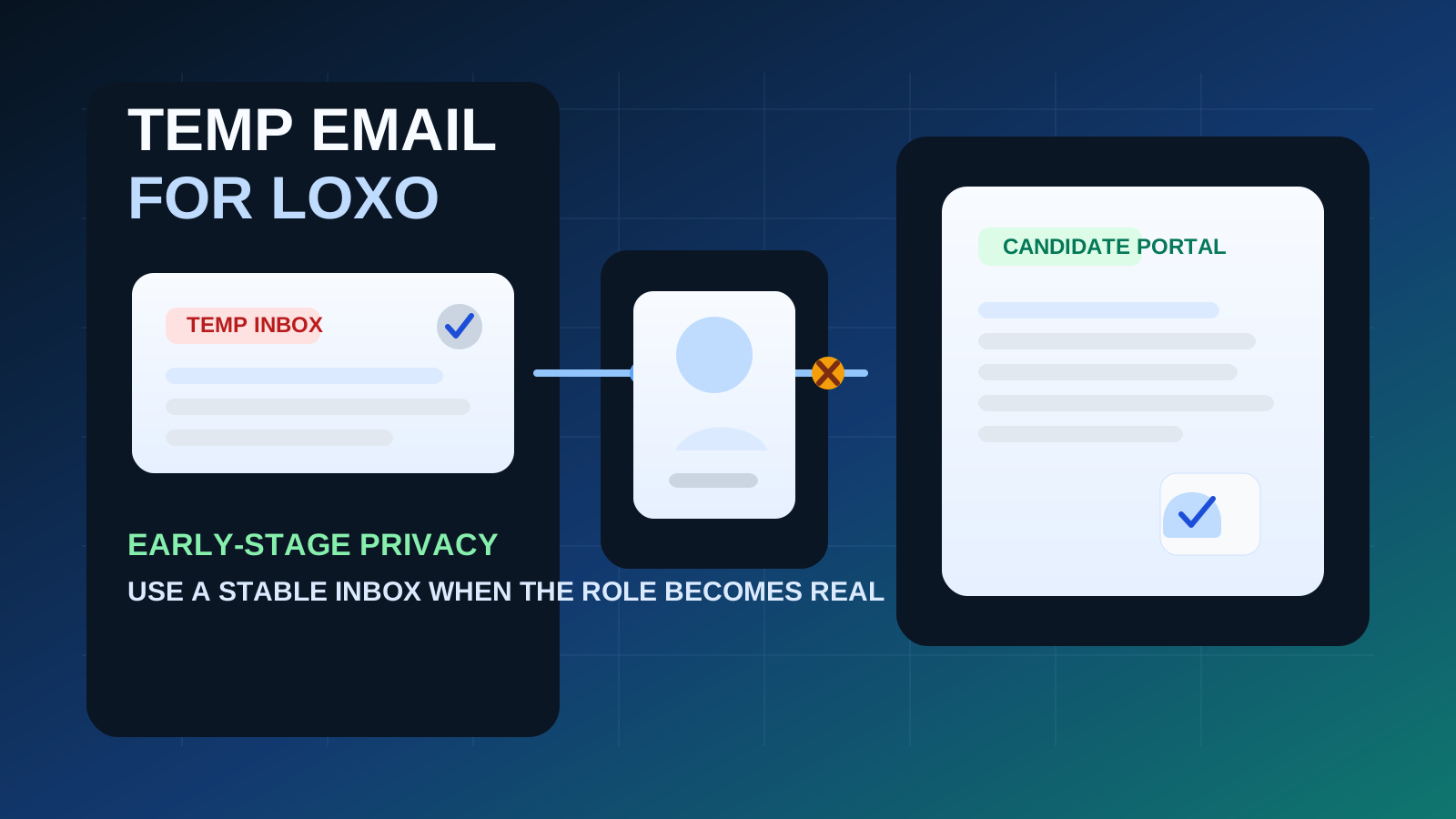
Loxo is often used for recruiting workflows, candidate records, recruiter communication, and talent pipeline management. From a job seeker’s side, that can mean profile creation, application confirmations, recruiter follow-ups, or messages that continue after the first click. That is exactly why people look for a temp email for Loxo in the first place: they want a cleaner privacy buffer between “I’m exploring this opportunity” and “I want this platform in my main inbox forever.”
That instinct is reasonable. Broad job searches create noise fast. One platform becomes five, then fifteen, and suddenly your main mailbox is full of recruiter updates, candidate portal notices, reminders, automated check-ins, and talent network campaigns that no longer matter. A disposable address can reduce that clutter. The key is knowing where it helps and where it becomes a liability.
Short answer: yes for early-stage exploration, no for serious hiring steps
If you are using Loxo to browse openings, join a talent pool, test a candidate portal, or respond to initial outreach from a recruiter you are not yet sure about, a temporary inbox can be a smart way to protect your main email address. It keeps low-commitment activity separate and limits how widely your long-term inbox gets distributed.
But disposable email is a poor fit once the process becomes real. If the recruiter is responsive, the role is promising, or the company starts sending scheduling details, application status messages, interview instructions, or next-step documents, you want continuity. Missing a useful message because the inbox expired is not a clever privacy move. It is just losing control at the wrong moment.
Why someone would use a temp email for Loxo
Most people are not searching this keyword because they want to game a hiring process. They usually want something far simpler:
- Less inbox clutter: recruiter systems and talent communities can keep sending follow-ups long after your interest fades.
- More privacy: your personal inbox does not need to be handed to every platform or staffing firm during early research.
- Cleaner organization: separate inboxes make it easier to see which opportunities are real and which ones are just automated noise.
- Lower long-term exposure: once your main address spreads across recruiting databases, it is hard to pull it back.
That makes temporary email attractive for the same reason people use separate inboxes for trials, newsletters, and one-off forms. Early contact is not always the same thing as long-term trust.
When a temporary inbox is a reasonable choice
1. You are only exploring a recruiter message
Sometimes a recruiter reaches out with a role that might be interesting, but you are not ready to move the conversation into your main email. A temp inbox can give you a way to receive that first follow-up without letting every exploratory conversation follow you forever.
2. You want to test the portal or profile flow
If your goal is simply to see how the Loxo-powered candidate experience works, a disposable inbox is a fair tool. You can verify the account, view the workflow, and decide whether the opportunity is worth deeper attention.
3. You are applying broadly and expect noise
High-volume job searching often creates a lot of low-value email. If you are casting a wide net, a temporary or highly segmented inbox can help separate “maybe” roles from serious targets.
4. You are protecting your primary address during early-stage research
Your main inbox may connect to work history, personal accounts, banking, shopping, travel, and other parts of your life. Limiting how often it appears in external systems is a sensible privacy habit, especially when you are still deciding which opportunities deserve deeper engagement.
When a temp email for Loxo becomes a bad idea
The role is now real
If a recruiter is responding quickly, asking screening questions, proposing times, or moving you into interviews, you should stop treating the inbox as disposable. This is the point where reliability matters more than inbox cleanliness.
You may need a long message trail
Hiring processes can stretch across multiple stages: interview scheduling, take-home tasks, reference coordination, revised job descriptions, compensation questions, and final paperwork. That kind of thread belongs in an address you can access weeks or months later.
You need account recovery and continuity
Even if the first email is low stakes, later steps may depend on password resets, confirmation links, or message history. Disposable inboxes are built for convenience, not permanence.
The opportunity has deadlines
Anything with interview windows, assessments, or time-sensitive next steps deserves a dependable address. One missed message can turn a promising lead into silence.
A safer way to use temp email for Loxo
If you want the privacy benefits without sabotaging your own job search, use a deliberate workflow instead of a careless one.
Step 1: Use the temporary inbox only for low-commitment entry points
Good examples include a first portal signup, a broad talent community form, an exploratory recruiter reply, or a one-off look at how the application flow works.
Step 2: Save the first useful details immediately
If a message contains a recruiter name, company name, role link, or confirmation number, copy it into your notes. Disposable email is safer when you are not relying on it as the only record.
Step 3: Switch to a stable inbox the moment the opportunity matters
As soon as there is a real conversation, move to a permanent address you control. That can be your personal inbox, a professional alias, or a job-search-only mailbox. The point is continuity.
Step 4: Keep your resume and contact flow consistent
If you change addresses mid-process, do it clearly. Recruiters do not mind practical updates, but confusion slows things down. One concise note is enough: you prefer to continue on a different email address going forward.
Step 5: Separate privacy goals from disappearing entirely
The best privacy strategy is not always the most disposable one. Often, the smarter move is a separate long-term inbox that shields your primary address without risking lost follow-up.
Better alternatives than a throwaway inbox
In many cases, a temporary inbox is only the first draft of the right solution. Better options often include:
- A separate permanent job-search inbox for resumes, applications, and recruiter conversations.
- An email alias that routes to your real inbox while giving you more control over where your main address appears.
- A staged approach where you use a disposable inbox for exploration, then upgrade to a stable address for real opportunities.
If your main goal is early privacy rather than long-term anonymity, that middle path is usually better. It gives you the control people want from temp email without the downside of vanishing inboxes. Anonibox fits well into that early-stage workflow when you want to test a platform, limit unnecessary exposure, and keep broad job-search activity from cluttering your main account.
Will using a temporary email hurt your application?
Sometimes it will not matter at all, especially if the interaction is shallow and automated. But you should not assume every recruiting workflow treats disposable addresses the same way. Some recruiters may simply continue the conversation if the role is strong. Others may prefer a normal long-term address once communication becomes more personal.
That is why the safest rule is simple: use temporary email only when losing that inbox would not hurt you. If the opportunity matters, graduate to a stable address before the process gets serious.
Common mistakes people make
- Using a temp inbox for final-stage communication. Great for exploration, terrible for important scheduling.
- Forgetting to save recruiter details. Once the inbox is gone, the context may be gone too.
- Applying broadly with no system. Disposable email helps only if you know which roles should move into a permanent inbox later.
- Confusing privacy with zero accountability. Serious applications still need a reliable way for employers to reach you.
- Letting one throwaway inbox hold everything. If you are running a large search, segmentation still matters.
A quick decision checklist
Before you use a temp email for Loxo, ask yourself:
- Am I just exploring, or do I already care about this role?
- Would missing a follow-up message cost me something real?
- Do I need this inbox to exist next week, next month, or after an interview?
- Would a separate permanent job-search inbox solve the same privacy problem better?
- If a recruiter replies today, am I ready to move the conversation to a stable address immediately?
If the role is speculative and the risk is low, temporary email can be reasonable. If the answer starts leaning toward “this could become important,” do not keep treating your contact address like a disposable experiment.
Final takeaway
A temp email for Loxo is useful for early-stage privacy, recruiter exploration, and reducing inbox clutter. It is not the best long-term contact method for interviews, deadlines, or any hiring flow that may matter later.
The practical move is to use temp email selectively, save the details that matter, and switch to a stable address as soon as a real opportunity appears. That way you keep more control over your privacy without accidentally making yourself harder to hire.