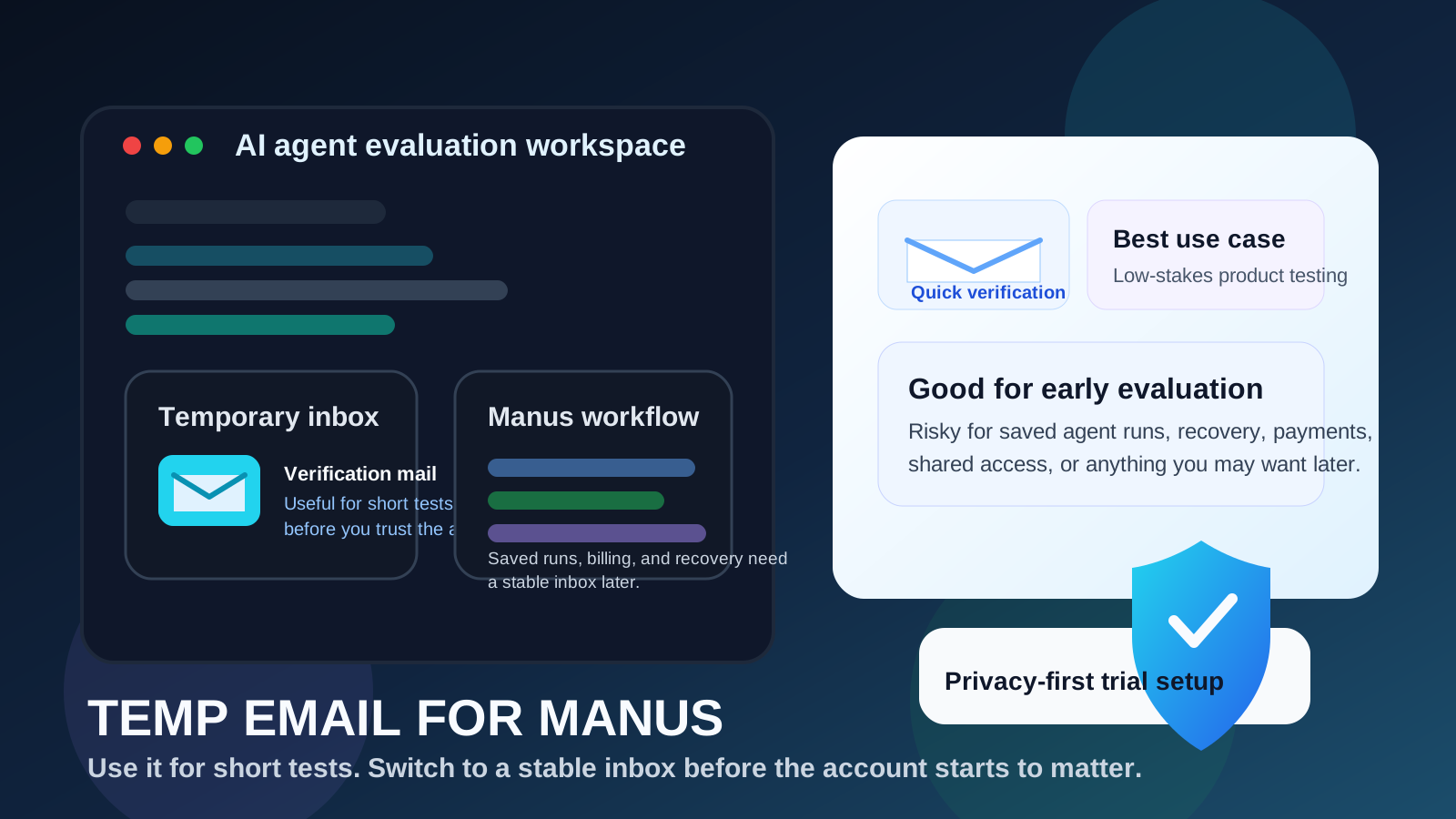
Maybe — a temp email for Manus can be useful for low-stakes testing if the current signup flow accepts disposable addresses, but it is a poor long-term choice for an account you may want to keep.
It works best when you want to explore the product, keep early messages out of your main inbox, and avoid tying a one-off AI experiment to a permanent address before you know whether Manus fits your workflow.
Why people look for a temp email for Manus
AI signup fatigue is real, especially with newer tools that feel exciting enough to test right away but not important enough to hand your main inbox to forever. That is the basic logic behind the search for temp email for Manus. Most people are not trying to do anything sneaky. They usually want to try the platform, collect the verification email, and keep another product experiment from turning into a long-term stream of updates and follow-up messages.
That is a reasonable goal. The problem is that AI accounts stop feeling temporary very quickly. A short test can turn into saved agent runs, useful prompts, research notes, automation experiments, or an account you want to revisit later. Once that happens, the email behind the account matters a lot more than it did at signup.
So the real question is not only whether a disposable inbox can work for the first login. It is whether a disposable inbox is still a good idea once the account starts holding something valuable.
Short answer: useful for testing, weak for anything you care about keeping
If you only want to explore Manus, compare it with other AI assistants, or keep a one-off trial out of your primary inbox, a temporary inbox can be a practical privacy move. It can help you verify the account, isolate the experiment, and reduce inbox clutter before you decide whether the product deserves a permanent place in your stack.
But if you think you may keep the account, rely on saved work, upgrade later, or need recovery options, a temp inbox becomes much less attractive. “Good enough for signup” and “smart for long-term account ownership” are not the same thing.
When a temp email for Manus makes sense
There are a few situations where using a temporary inbox is genuinely reasonable.
You are doing a quick product comparison
Maybe you are comparing Manus with other AI assistants or agent-style tools and only need enough access to judge the interface, output quality, task flow, or general usefulness. In that case, a temporary address can keep the trial separate from your normal inbox.
You do not want another permanent email relationship yet
Even when a product’s emails are not excessive, they still add up. Welcome emails, feature updates, account reminders, tips, and upgrade nudges can turn a short test into a permanent inbox relationship. A temporary inbox helps delay that commitment until you know the product is worth keeping.
You want to isolate a one-off experiment
Sometimes you are only testing whether an AI tool belongs anywhere in your routine. That is different from creating an account you expect to depend on. Temporary inboxes fit the first case much better than the second.
You are privacy-conscious about casual signups
If your default habit is to avoid spreading your main email across every new tool, a temporary inbox can be a sensible first layer of separation. A service like Anonibox can help with that early stage, especially when the test is still low stakes.
When it gets risky fast
A temp email for Manus becomes a weak idea as soon as the account stops being disposable in practice.
Saved agent runs start to matter
If you create useful prompts, task histories, summaries, workflows, or research threads you may want to revisit, the account has value. Once that happens, a fragile inbox is no longer a good foundation for access.
You may need account recovery later
Password resets, suspicious-login notices, verification steps, and account changes are hard to manage if the original inbox is gone. That may not matter on day one, but it matters a lot the first time something goes wrong.
You might upgrade or connect billing
Paid access changes the stakes. If Manus becomes worth paying for, the email behind the account should be stable, recoverable, and fully under your long-term control. Disposable inboxes are the opposite of that.
You want continuity across real work
If the account becomes tied to ongoing research, recurring tasks, or shared internal experiments, the temporary-email phase should end. A real workflow needs a real account identity behind it.
What can break with a disposable address?
Even if a temporary inbox works at signup, there are still practical weak points.
- Login friction: some products rely on repeated email verification or sign-in links.
- Recovery problems: you may lose access if you ever need the original inbox again.
- Missed notices: security messages, billing emails, or important account alerts may never reach you later.
- Blocked disposable domains: some services reject known temporary-email domains outright or inconsistently.
- Lost continuity: a useful test can become annoying to preserve because the account identity was disposable from the start.
That is the core trade-off: a disposable inbox can make signup lighter, but it can also make long-term account ownership weaker.
A better way to think about the decision
Instead of asking, “Can I use a temp email for Manus?” the more useful question is, “What kind of account am I creating right now?”
If the answer is a throwaway test, then a temporary inbox may be fine. If the answer is something I may actually keep, then you should start with a stronger identity or switch early before the account becomes important.
That distinction helps because many people choose an email based on day-one convenience and forget that the account may become more valuable than expected.
Better alternatives than a disposable inbox
If you want privacy without the fragility of a temporary inbox, there are better middle-ground options.
Use a separate permanent inbox
A dedicated email address just for AI tools, trials, and experiments is often the cleanest solution. You still protect your main inbox, but you keep long-term recovery and access under your own control.
Use an email alias
If your provider supports aliases, that can be even better. You get separation and easier filtering without giving up account stability.
Use temporary email only for the first checkpoint
Some people use a disposable inbox for early evaluation, then move to a permanent address if the tool proves useful. That is often the most balanced approach: isolate the trial, then upgrade the identity once the account earns it.
A simple decision framework
If you are unsure, this checklist makes the decision easier.
- Use a temp email if you are only testing signup, running a short comparison, or trying to avoid instant inbox clutter.
- Use a separate permanent inbox if you think you may keep the account, save useful work, or return later.
- Switch early if a throwaway test starts becoming a real tool in your routine.
That approach gives you privacy without trapping important accounts behind disposable contact details.
Mistakes to avoid
Treating every AI signup like a long-term commitment
You do not need to hand your main email to every new tool immediately. If you are still exploring, a more cautious first step can be sensible.
Treating every temporary signup like it will stay temporary
This is the opposite mistake, and it is just as common. People open an account “just to test,” then end up storing useful work or returning repeatedly. At that point, the account deserves a better email foundation.
Assuming temporary means anonymous
A disposable inbox can reduce inbox exposure, but it does not create magical privacy or erase every other trace tied to the account. It is a practical inbox-management tool, not a guarantee of anonymity.
Waiting too long to switch
If you realize the tool is useful, do not keep procrastinating on the email problem. Move to a stable address before recovery, billing, or continuity becomes a headache.
How to use a temp email for Manus more safely
If you still want to use a temporary inbox for a short test, keep the workflow disciplined.
- Create the temporary inbox before signup so the whole test stays isolated.
- Use it only for low-stakes evaluation, not for anything you expect to keep.
- Save any information you may need during the test window.
- Avoid attaching billing or important personal data to the account.
- Switch to a stable email address early if the account proves useful.
That keeps the disposable part limited to the stage where it is actually helpful.
What a good long-term setup looks like
For most people, the smartest durable setup is not “main inbox for everything” and not “throwaway inbox for everything.” It is a layered approach.
Your primary personal or work address stays reserved for important accounts. A separate permanent inbox or alias handles tools, experiments, and newsletters. Temporary addresses cover truly low-stakes signups when you only need a quick verification step.
That model works well because it gives you options. You can protect your main inbox without building long-term accounts on unstable contact details.
Final answer: is a temp email for Manus worth using?
Yes, sometimes — but mainly for short-term testing. A temp email for Manus can be a practical way to reduce inbox clutter and keep a one-off AI experiment separate from your main address, especially if you are only evaluating the product and the current signup path allows disposable domains.
No, it is usually not the best choice for an account you may actually care about later. If saved runs, recovery, billing, or ongoing use might matter, a separate permanent inbox or alias is the safer move.
The cleanest rule is simple: use temporary email for disposable experimentation, not for accounts that are becoming valuable. If you want the privacy benefit without the long-term fragility, start with a temporary inbox for the test phase and move to a stable address as soon as Manus earns a place in your real workflow.