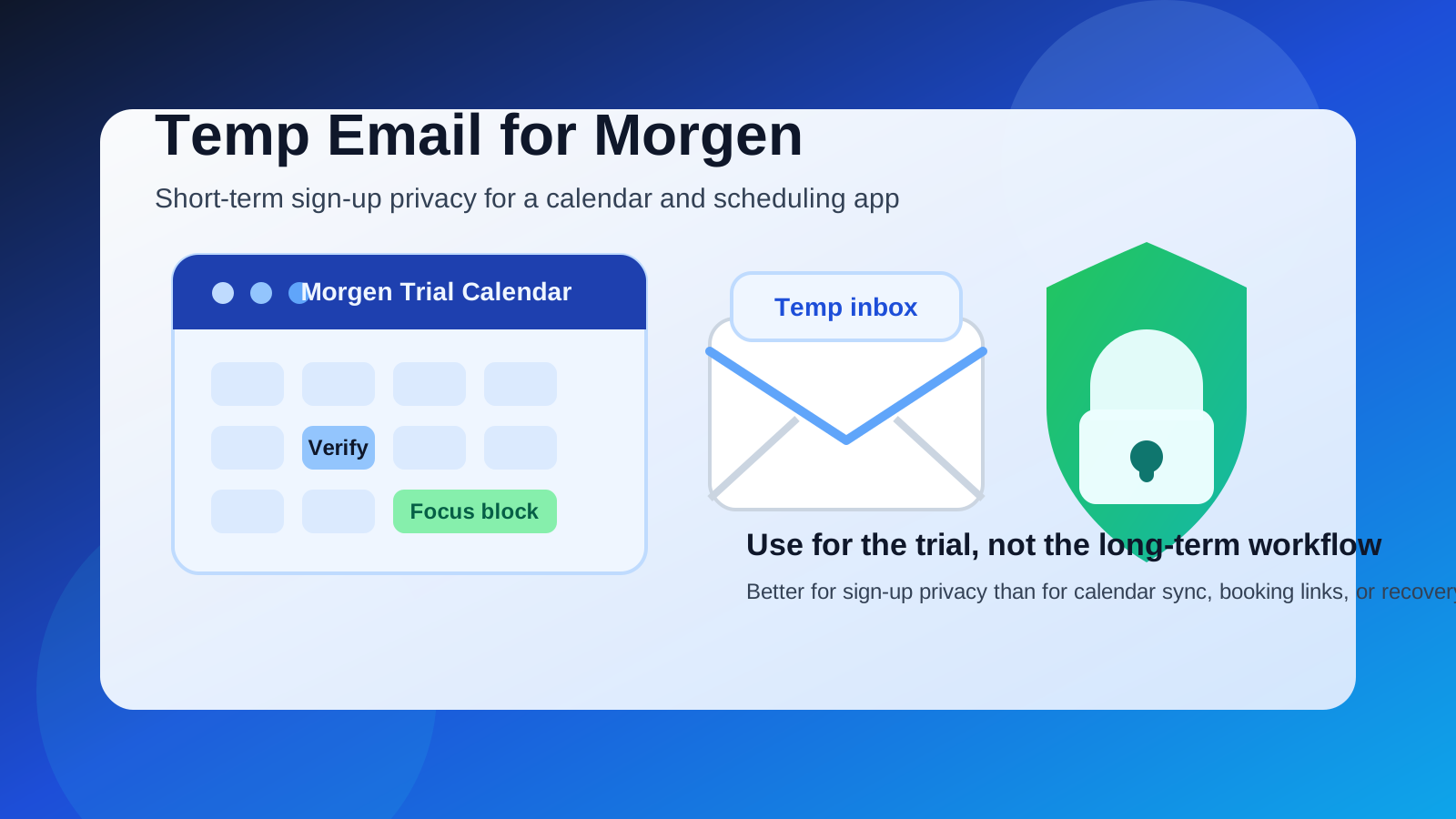
Yes, you can use a temp email for Morgen if you only want sign-up privacy and a short trial.
It becomes a poor long-term choice once calendar sync, scheduling links, shared availability, reminders, or account recovery start to matter.
Why people look for a temp email for Morgen
Morgen sits in a category where people often want to test before they commit. It combines calendars, tasks, planning, and scheduling in one account, which makes it useful but also means signup choices can become important faster than they do with a casual newsletter or one-purpose web app.
If you are comparing productivity tools, a temporary inbox can help you keep that early research separate from your everyday address. You can receive the first verification message, open the welcome email, and explore the app without adding another long onboarding sequence to your permanent inbox. That is a reasonable privacy instinct, especially if you are testing several planners in the same week.
The issue is not the first login. The issue is what happens if Morgen stops being an experiment and starts becoming part of your actual planning system.
Short answer
A temp email for Morgen is fine for low-stakes evaluation, quick sign-up privacy, and trial cleanup. It is a bad long-term choice if you expect to rely on calendar syncing, booking links, reminders, task planning, team availability, or account recovery.
The practical middle ground is simple: use a disposable address for the first test if you want, then move the account to a permanent inbox before you trust it with real scheduling.
When a temp email for Morgen makes sense
A temporary inbox can be perfectly reasonable in the earliest stage of evaluation. Good use cases include:
- Testing the signup flow to see how much setup the app requires.
- Comparing planners like Fantastical, Motion, Reclaim AI, Akiflow, or similar tools without filling your main inbox with every trial sequence.
- Exploring the interface before you decide whether the app fits your style of planning.
- Keeping vendor follow-up separate until you know whether you actually want the service.
- Running a low-stakes experiment with sample tasks and non-critical calendar data.
In these cases, the email address is mostly there to clear account verification and receive the first few onboarding messages. A disposable inbox can do that job just fine.
Why it gets risky once you rely on Morgen
Morgen is not just an app that sends one confirmation email and disappears into the background. If you keep using it, the registered inbox can become tied to scheduling, availability, reminders, integrations, and access recovery. That is where a throwaway address starts to work against you.
1. Calendar sync raises the stakes quickly
Many people try Morgen because they want multiple calendars in one place. That is useful, but it also means the account can become connected to real commitments fast. Once you start relying on synced personal or work calendars, losing control of the registered inbox is no longer a small inconvenience. If you ever need to confirm a change, verify ownership, or troubleshoot access, you want an address you still control.
2. Scheduling links and availability are not throwaway workflows
If you use Morgen to share booking links or availability, the account stops being a casual test. At that point, your identity inside the app matters. A temporary inbox is fine for curiosity, but it is fragile for anything tied to meetings, invite flow, or other people choosing time on your calendar.
3. Tasks and reminders become part of daily life
Planner tools have a habit of moving from “interesting trial” to “daily habit” very quickly. The moment you start relying on recurring reminders, scheduled tasks, or structured planning inside the app, the account becomes worth protecting properly. A disposable address is weak insurance for a system you may depend on every weekday.
4. Account recovery is where the shortcut hurts
This is the biggest practical problem. Temporary inboxes are great when the cost of losing the account is low. They are bad when you later need a password reset, device migration, login confirmation, or support conversation. Day-one privacy can easily become day-ninety friction if the inbox no longer exists when you need it.
5. Paid features make the account more serious
If you upgrade, the account becomes more than a test. Billing notices, renewal reminders, plan changes, and access confirmations are not messages you want attached to an expired address. Once money or serious workflow enters the picture, a stable inbox is the better choice.
A better way to test Morgen privately
If your real goal is privacy, not chaos, use a staged approach instead of treating the temporary address as permanent.
Start with a short-term inbox for the first signup
Use a disposable address only for the evaluation phase. A service like Anonibox can help you collect the verification email and initial onboarding messages without exposing your main inbox right away.
Keep the test narrow at first
Before you connect important calendars, try a limited workflow. Create a few sample tasks, inspect the planner layout, look at scheduling options, and decide whether the app actually feels useful. The point is to test the product, not to rebuild your entire time system on day one.
Decide quickly whether the app is staying
Ask a simple question after the first session: is Morgen still a trial, or is it becoming a real tool for me? If it is staying, that is your signal to switch the account to a permanent email while everything is still easy.
Switch before deep integration
Do not wait until you have important recurring events, multiple linked calendars, or shared booking links. The best time to move from a temp email to a permanent one is before those workflows become essential.
Good signs it is time to stop using the temp email
- You plan to keep using Morgen beyond a short trial.
- You are connecting personal or work calendars you actually care about.
- You want to share availability or booking links with real people.
- You are setting up recurring reminders or structured daily planning.
- You are considering a paid plan.
- You would be annoyed if you could not recover the account next month.
If any of those are true, the account has already outgrown a throwaway inbox.
When you should skip the temp email idea entirely
Sometimes the right answer is not “test privately first.” Sometimes the better answer is “use a permanent email from the start.” That is usually true if:
- You already know Morgen will become part of your daily workflow.
- You are evaluating it for work use rather than casual curiosity.
- You need dependable meeting scheduling right away.
- You expect to connect business-critical calendars on day one.
- You know you will forget to update the email later.
In those cases, the privacy win is small and the cleanup risk is larger than it is worth.
Temp email vs. alias vs. secondary permanent inbox
If your main goal is not pure throwaway testing but cleaner separation, a true temporary inbox may not be the best long-term choice. There are three common options:
- Temp email: best for short trials, low-stakes exploration, and avoiding early inbox clutter.
- Email alias: better when you want separation and spam control but still need long-term access.
- Secondary permanent inbox: strongest choice when you want privacy boundaries without sacrificing recovery.
For a tool like Morgen, the second or third option often becomes the smarter answer once you move past the test phase. A planner account is simply more durable than the average throwaway signup.
Common mistakes to avoid
Forgetting to change the address later
This is the classic mistake. People sign up with a temp inbox, keep using the app casually, and only remember the issue when they need recovery help.
Connecting live calendars too early
There is a big difference between browsing features and trusting an app with real commitments. Keep that boundary clear while you are still deciding whether to keep the account.
Using the account for real scheduling before securing it
If other people are booking time with you, the account should already be tied to an inbox you control long term.
Treating a planner like a newsletter signup
A planner account can become part of your daily operating system. That is a very different risk profile from subscribing to a blog.
Quick checklist before you use a temp email for Morgen
- Am I only testing the app, or do I expect to keep it?
- Will I connect important calendars immediately?
- Do I want to share booking links or availability soon?
- Would losing the signup inbox make recovery painful later?
- Would an alias or secondary inbox fit better than a disposable one?
If your answers point to short trial, low stakes, and quick comparison, a temp inbox is reasonable. If they point to real scheduling, important commitments, or long-term use, move to a permanent email early.
Final verdict
Using a temp email for Morgen is a practical move for short-term sign-up privacy and product evaluation. It lets you verify the account, inspect the workflow, and avoid handing your everyday inbox to another tool before you know whether it deserves a place in your stack.
It is not a smart foundation for long-term planning. Once calendar sync, reminders, availability sharing, or recovery matter, the safer move is a stable inbox you control. Use the disposable address for curiosity, then switch before the app becomes part of real life.