A temp email for myInterview can be a smart choice for quick signup, first-pass video interview evaluation, and keeping trial follow-up out of your main inbox.
It becomes a bad choice once candidate invites, reviewer access, shared hiring workflows, or account recovery start depending on that email address.
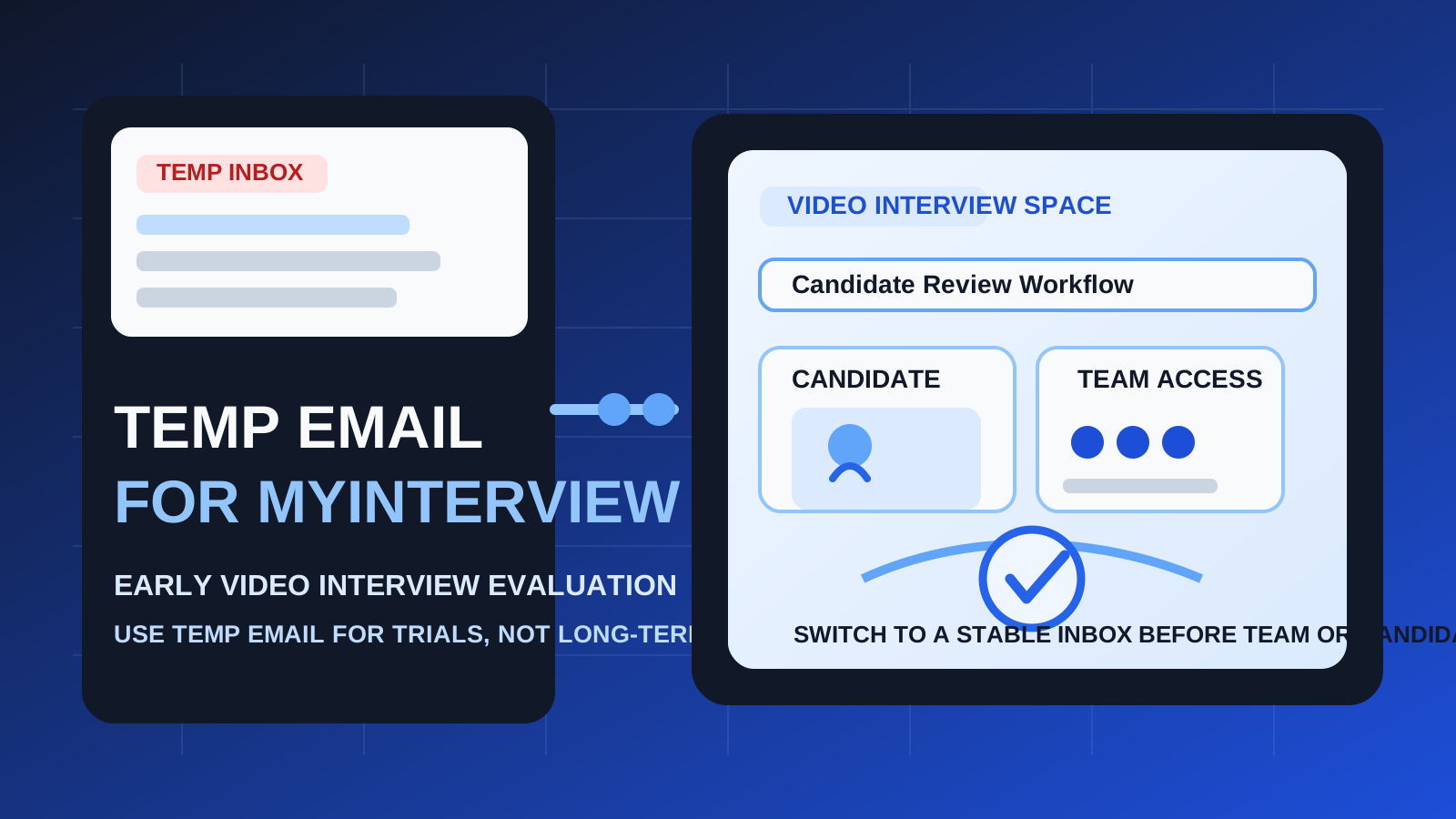
If you are comparing video interview platforms, you probably do not want every trial to spill into your main inbox forever. Welcome sequences, product tours, webinar invites, “book a demo” reminders, security notices, and sales follow-ups can pile up quickly when you are testing several hiring tools in the same week. That is exactly why some teams reach for a disposable inbox first.
myInterview fits that pattern well. A temporary email can help you verify the account, look around the workspace, and decide whether the product deserves deeper evaluation. But there is an important boundary here: once the account becomes part of a real hiring process, the email address is no longer just a signup detail. It becomes part of access control, ownership, collaboration, and recovery.
So the practical answer is simple. Use a temp email for myInterview if you are doing a short, low-stakes product check. Switch to a permanent inbox before the account starts touching candidate communication, teammate access, or anything you may need to recover later.
When a temp email for myInterview makes sense
There are several situations where a temporary inbox is a reasonable first step.
- Fast product comparison: you are evaluating myInterview alongside tools like HireVue, Spark Hire, VidCruiter, Willo, or Hireflix and want to keep each trial isolated.
- Low-stakes exploration: you only need to see how the product feels before deciding whether it belongs on your shortlist.
- Inbox control: you want the verification link and early onboarding emails without committing your everyday work inbox to another long vendor sequence.
- Short evaluation window: you expect to make a quick yes-or-no decision rather than keeping the account alive for weeks.
That is the best-case use for a disposable address. You get through the door, verify the account, and review the basics without turning a simple trial into a long-term inbox burden.
Why people use disposable email for hiring-tool trials
Early software testing is messy by nature. You want enough access to judge the tool, but you do not always want to start a real vendor relationship just to answer that question. A temporary inbox gives you breathing room. You can separate serious tools from the ones that looked promising on the website but do not actually fit your workflow once you get inside.
This is where a service like Anonibox feels natural. For low-stakes evaluation, it lets you receive the verification message and the first onboarding emails without sending everything into your permanent work account. That can make product testing cleaner, especially if multiple people on the team are each running quick comparisons.
The part that matters is discipline. Temporary email is useful when the account itself is temporary too. Problems start when teams keep using a throwaway inbox long after the account stops being throwaway.
Where a disposable inbox starts creating risk
1. Candidate workflows are more durable than the trial phase
Hiring teams often begin with “just testing,” then realize the tool is actually usable. Once that happens, the account can start holding more than a quick login. It may become connected to candidate invitations, interview steps, reviewer activity, or notes that the team expects to revisit. A disposable inbox is a weak foundation for that kind of continuity.
2. Shared access changes the stakes
A solo evaluation is one thing. The moment other people get involved, the account matters more. If a recruiter, coordinator, or hiring manager needs access, the original email address becomes part of ownership and handoff. If that address was temporary, cleanup gets harder for no good reason.
3. Recovery problems always show up later
The biggest weakness of temporary email usually appears after the excitement of signup is gone. Password resets, confirmation checks, suspicious-login alerts, and recovery flows all assume you still control the inbox on file. If you do not, a useful account can become frustratingly fragile.
4. Team trust depends on clear ownership
If multiple people are relying on a hiring tool, nobody wants the core access path tied to an inbox that may no longer exist. Even when the software itself is solid, uncertainty around account ownership creates avoidable operational risk.
A simple rule that works
Use a temp email for myInterview while you are evaluating the platform. Do not use one once you expect the account to matter to real recruiting work.
That rule covers most edge cases. A temporary inbox is good for screening, comparing, and reducing clutter. A permanent inbox is better for account continuity, handoffs, and recovery. Most mistakes happen when people keep treating a real account like a disposable one because that is how it started.
How to use a temp email for myInterview without creating a mess
1. Decide whether this is truly an evaluation account
Before signup, ask a blunt question: are you only checking the product, or do you already suspect this account may become part of a real hiring workflow? If it is only a short product check, a temporary inbox is reasonable. If you already plan to involve other people or revisit the workspace later, start with a stable address instead.
2. Save the messages that matter
During a short evaluation, you usually only need a small set of emails:
- the verification email
- initial setup links
- any onboarding message that explains an important first-run step
- details you may want later if you recreate the account properly
Do not assume the inbox will be there when you want it later. If something matters, capture it while the context is fresh.
3. Evaluate deliberately, not passively
The point of a disposable inbox is to help you test quickly, not to encourage half-committed account sprawl. Go into the trial with a checklist. For example, you might review:
- how easy the signup and verification flow feels
- whether the workspace is intuitive on first use
- how clearly the product supports your evaluation goals
- whether the workflow feels built for your team size and hiring style
- whether it seems meaningfully better than the other video interview tools you are considering
A focused session gets you the value of the trial without letting a disposable account drift into permanent use by accident.
4. Switch before valuable work accumulates
The safest time to move from a temporary inbox to a permanent one is before the account matters, not after it already matters. Do it before teammates join, before the workspace becomes part of a live process, and before recovery flows become important.
When a permanent inbox is clearly the better option
Start with a real, stable email address if any of these are already true:
- you expect to keep the account beyond a quick evaluation
- other team members may need access
- you will rely on the account as part of a real hiring workflow
- you want a dependable recovery path later
- the account belongs to a company or client rather than a one-off personal test
Once any of those conditions apply, the privacy benefit of a throwaway inbox shrinks fast. What felt convenient on day one can become the main source of friction on day thirty.
Practical examples
Example 1: same-day vendor comparison
You want to compare several video interview tools in one afternoon and quickly narrow the field. A temp email is sensible here. You can verify the account, inspect the workspace, and avoid months of follow-up from products that never make the shortlist.
Example 2: founder or recruiter testing solo
If one person is exploring alone and only needs to judge product fit, a temporary inbox can still work well. The important part is keeping the account temporary too. If the platform looks promising, recreate it early or update the contact email before more value accumulates.
Example 3: team pilot with real stakeholders
This is where temporary email usually stops being the smart move. If the account may become part of live recruiting work, stable ownership matters more than inbox cleanup. Use a permanent address from the start and save yourself the migration headache later.
Common mistakes to avoid
- Using a throwaway inbox for a non-throwaway account: this is the biggest and most common mistake.
- Waiting too long to switch: if the tool becomes useful, move to a stable address before more people and more workflow depend on it.
- Forgetting about recovery: the first verification email is only the beginning; the harder problems usually appear later.
- Confusing inbox hygiene with account safety: reducing email clutter is helpful, but not if it undermines ownership.
- Letting test accounts drift into real process use: once something touches a real hiring workflow, treat it like a real account.
A cleaner workflow for evaluating myInterview
- Use a temporary inbox only for first-pass evaluation.
- Verify the account and review the earliest onboarding steps.
- Test the core workflow in one focused session.
- Decide quickly whether the platform is disposable to you or strategically useful.
- If it is useful, move to a stable email before teammate access, shared workflow, or recovery depend on the account.
That approach gives you the privacy and inbox-control benefit of temporary email without pretending that a disposable inbox is the right long-term answer for hiring software.
Final takeaway
A temp email for myInterview is useful when you want to test the platform, compare video interview tools, and keep low-stakes signup messages out of your main inbox.
It is the wrong long-term choice once the account becomes part of shared candidate workflows, team access, or anything you may need to recover later. Use a disposable inbox for the trial phase, then switch to a stable address before real ownership starts to matter.