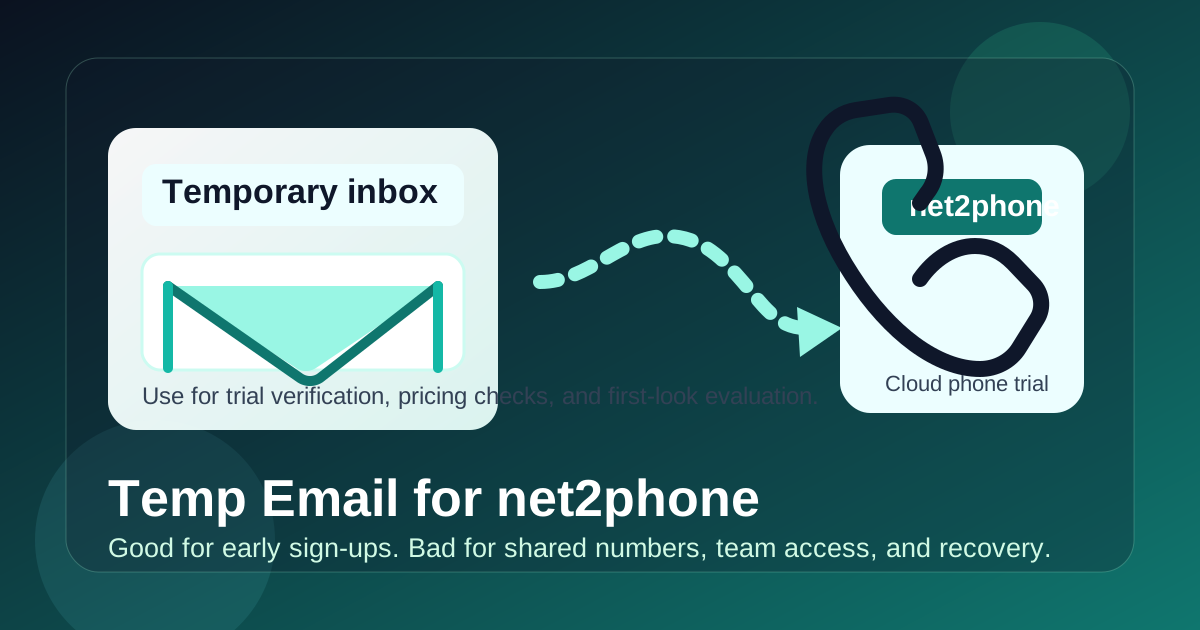
Yes — a temp email for net2phone can make sense for a trial sign-up, demo request, or first-pass comparison if you want to keep sales follow-up out of your main inbox.
No — it is not a smart long-term email for a real phone-system deployment, because shared numbers, user invites, billing notices, admin ownership, and account recovery work better with a durable address your team controls.
If you are evaluating cloud phone systems, that distinction matters. A temporary inbox is useful during the research stage, when you mostly need a verification link, a welcome email, and maybe a couple of onboarding messages. Once a platform starts turning into a real business system, though, the email attached to the account stops being a throwaway detail. It becomes part of how you manage access, recover the account, approve changes, and keep the right people informed.
That is why the best answer is not “always use a disposable email” or “never use one.” The better answer is to use a temporary address for the narrow part of the workflow where it helps, then switch to a permanent team-owned mailbox before the account becomes operational.
Why people look for a temp email for net2phone in the first place
Most businesses do not evaluate just one phone provider. They compare multiple options, request pricing, test call flows, review admin dashboards, check integrations, and see how easy it is to add users or manage numbers. In that stage, every vendor wants an email address before you can move forward.
That often leads to a familiar problem: one quick comparison turns into weeks or months of follow-up email. Trial reminders, sales outreach, feature announcements, and scheduling nudges start piling up in the same inbox you use for real work. If you are only trying to get a first impression, that is more noise than value.
Using a temporary inbox from a tool like Anonibox can help you separate evaluation from adoption. You still get the confirmation email you need, but you do not have to turn your everyday work address into a permanent lead-capture endpoint for every provider you compare.
When a temporary email is a reasonable choice
A temp email is most useful when your goal is limited, short-term, and exploratory. For example:
- You want to see the signup flow before involving the rest of your team.
- You are comparing net2phone with RingCentral, Dialpad, OpenPhone, Phone.com, Talkroute, MightyCall, or other business-phone options.
- You only need the initial verification message and basic onboarding material.
- You want to avoid mixing vendor outreach into your long-term operations or IT inbox.
- You are still deciding whether the platform even deserves a real internal review.
In those cases, a disposable address can be practical. It lets you inspect the interface, review the welcome emails, and judge whether the product feels worth deeper testing without immediately handing over your permanent contact point.
Where a temp email stops being a good idea
Cloud phone platforms are not like one-off content downloads. Even during a trial, they tend to move toward operational ownership quickly. As soon as that happens, a throwaway inbox becomes a weak foundation.
1. Shared numbers and admin control
If the account is going to manage business numbers, extensions, routing rules, or team permissions, the main email address needs to be stable. A temporary address may vanish or become inaccessible at exactly the wrong time.
2. Team invites and handoffs
Many companies test a phone system with multiple people: an admin, a manager, maybe someone in support or sales. Once other users are invited, the account email is no longer just a signup detail. It is part of the collaboration structure.
3. Billing and renewal notices
If a trial becomes a paid account, invoices, payment issues, tax confirmations, and subscription changes start landing in the attached mailbox. That information should not live in an inbox designed to expire or disappear.
4. Security and recovery
Password resets, unusual-login alerts, and account recovery messages need to go somewhere dependable. A temporary email is fine for low-stakes exploration, but it is the wrong tool when account continuity matters.
5. Number porting and implementation details
If you move beyond a casual test and start discussing setup, implementation, or number migration, you want those details tied to a durable email address your business can keep using.
A smarter workflow: temporary first, permanent before rollout
The most practical approach is a staged one.
- Use the temp inbox for the first look. Sign up, verify the account, review the welcome messages, and inspect the trial environment.
- Decide whether net2phone is a serious contender. If the product is not a fit, you can walk away without adding long-term clutter to your real inbox.
- Switch to a permanent business-controlled address before real use. If the platform looks promising, move the account to an address such as
it@,ops@, orphone-admin@that your team can manage over time. - Document ownership clearly. Make sure more than one trusted person knows who controls the account and where critical notices will go.
This gives you the best of both worlds: inbox privacy during evaluation and stability once the service becomes important.
What you should save before a temporary inbox disappears
If you do use a disposable address for a net2phone trial, do not treat the inbox as a permanent filing cabinet. Save anything you may need later, such as:
- the original verification email
- trial activation links or setup steps
- pricing or demo follow-up worth keeping
- notes on the account name you used
- any early configuration details that matter to your comparison
The point of the temp inbox is convenience, not archival reliability. If a message matters, copy the relevant information somewhere durable.
Common mistakes to avoid
There are a few predictable ways this goes wrong.
Using the temp inbox for too long
The biggest mistake is keeping the disposable address attached after the account becomes real. What starts as a quick evaluation shortcut turns into an avoidable admin risk.
Letting one person control a business-critical account alone
Even with a permanent address, it is better if the mailbox is team-owned rather than tied to one employee’s personal inbox. That matters for continuity when roles change.
Forgetting to copy important setup info
If you plan to compare several cloud phone tools at once, save the details you need while they are still easy to reach. Temporary inboxes are helpful because they are lightweight, but that same lightness means they are not ideal for long-term reference.
Confusing signup privacy with operational privacy
A temp email can reduce vendor follow-up noise. It does not solve deeper questions like access management, number governance, billing workflows, or telecom ownership. Those need a proper internal process.
Example: a clean way to evaluate net2phone
Imagine a small business comparing net2phone with a few other phone providers. The operations lead wants to see how each product handles admin setup, user creation, and number management, but does not want months of trial-related email hitting the main company inbox.
A sensible workflow would look like this:
- Create a temporary inbox.
- Use it to sign up for the initial trial or request information.
- Capture the verification email and any useful onboarding notes.
- Test the dashboard and decide whether the service deserves a fuller review.
- If it does, move the account to a permanent role-based mailbox before inviting teammates, adding numbers, or discussing rollout.
That keeps the early evaluation tidy without creating avoidable problems later.
How this compares with other phone-system trials
The same rule usually applies across the business-phone category. A temp inbox is often fine for a first look at products like RingCentral, Dialpad, OpenPhone, Freshcaller, Phone.com, or similar platforms. But once the account starts to represent a real business communications setup, the email on file should stop being temporary.
That is especially true when the system may end up linked to customer-facing numbers, shared call flows, support routing, voicemail delivery, or internal admin permissions. Those are long-lived workflows. They deserve long-lived ownership.
Final verdict: should you use a temp email for net2phone?
Yes, for the early evaluation stage. If you only want to verify the signup, review the first few emails, and compare the platform without opening the door to long-term inbox clutter, a temp email for net2phone is a practical move.
No, for the real account you expect your business to keep using. Once the system involves shared numbers, team access, billing, or recovery, switch to a permanent mailbox your organization controls. That keeps the convenience of temporary signup privacy without building your phone system on an address that was never meant to last.
Used that way, a temporary inbox is not a gimmick. It is just a clean boundary between research and real operations.