A temp email for PerformYard is reasonable for a short, low-stakes evaluation when you only need signup verification, a guided product tour, or a first look at the workspace.
It becomes a weak long-term choice once review cycles, manager access, goals, admin ownership, or account recovery start depending on that inbox.
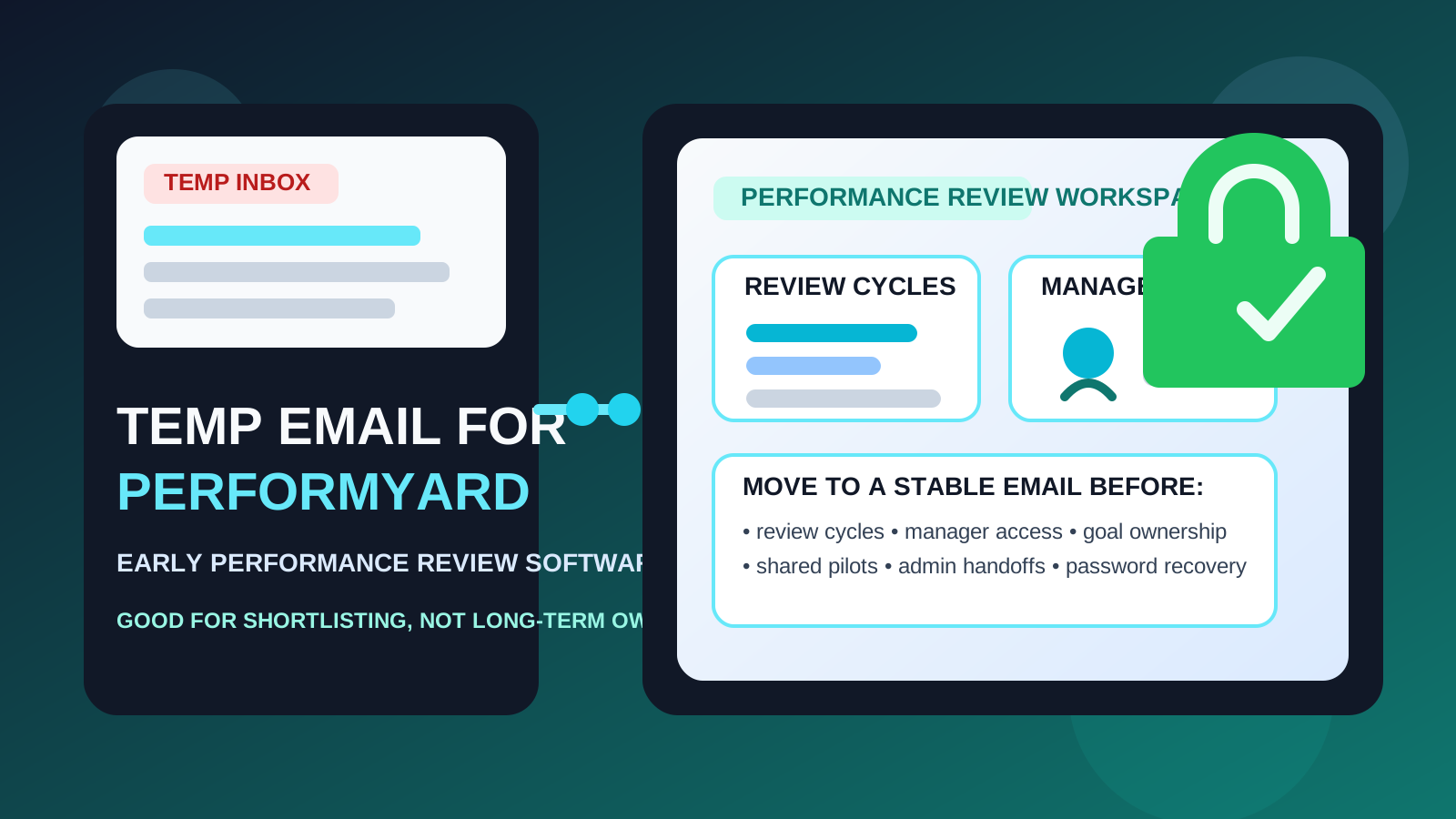
That is the practical answer behind most searches for temp email for PerformYard. Teams evaluating performance-management software often want a quick way to unlock a demo, compare vendors, and avoid feeding another long follow-up sequence into a real work inbox before the platform proves it deserves serious attention.
A temporary inbox can help during that early research stage. It lets you receive the verification message, review onboarding emails, and explore the product without committing your main mailbox to months of sales outreach. A tool like Anonibox fits that phase well because it keeps low-stakes software evaluation separate from everyday HR, people-ops, and manager communication.
The limit is simple: PerformYard stops being a disposable product very quickly once the workspace starts touching real performance workflows. Performance reviews, manager access, employee records, goal tracking, and follow-up conversations all depend on continuity. At that point, the email behind the owner account matters much more than it did during the first signup.
If your goal is only to take a first look, a burner inbox can be practical. If the account could become a shared evaluation, a pilot, or the beginning of a real review process, moving to a stable company-controlled email early is the safer choice.
Why someone would use a temp email for PerformYard
Most people searching this keyword are not trying to do anything unusual. They are just trying to stay organized. A typical software evaluation can trigger welcome emails, pricing follow-ups, webinar invitations, setup suggestions, implementation offers, and ongoing sales contact. If you are comparing several HR or performance-management tools at once, that gets noisy fast.
A temporary inbox makes sense when you want to:
- verify a demo or trial quickly without committing your long-term inbox to another vendor too early
- compare multiple people-performance platforms during shortlist research
- keep product evaluation separate from actual HR or manager communication
- limit inbox clutter from tools that may never make the final shortlist
Used carefully, a disposable inbox is just a filter. It helps you evaluate the product cleanly without pretending that a temporary address is suitable for an account that may later support real people processes.
When a temporary inbox makes sense
You are doing a first-pass review
If you only want to answer basic questions like “Does this platform look relevant?”, “Do the review workflows make sense?”, and “Should this stay on our shortlist?”, a temp inbox is defensible. At that point you are gathering signal, not setting up a durable internal system.
You are evaluating alone
The temp-email approach is safest when one person is exploring privately and nobody else depends on the account. If there are no invited managers, no test employees, and no shared admin ownership yet, the downside stays relatively small.
You want to contain early sales follow-up
This is one of the most practical reasons to use a temporary inbox. Performance-management vendors often begin outreach quickly once a form is submitted. If you are not ready for a serious buying conversation, it is reasonable to keep that stream out of your main inbox until the platform proves it belongs in deeper evaluation.
You are comfortable abandoning the account entirely
A burner inbox only makes sense when the account itself is disposable too. If you are happy to throw the whole workspace away after a short review, then the inbox choice stays low risk. If you would hate to lose the account later, treat the email as important from day one.
Where a temp email for PerformYard starts to break down
The convenience disappears once the account becomes meaningful. PerformYard sits close to recurring people workflows, which means ownership starts to matter faster than it does in a simple one-click SaaS trial.
1. Review cycles need continuity
Performance review tools are not one-time utilities. Even during a pilot, teams may start sketching review templates, scheduling cycles, or testing workflows that several people want to revisit. If the owner account sits behind a temporary inbox, you are creating unnecessary fragility right where continuity matters most.
2. Manager access changes the risk profile
A solo test is one thing. The moment a manager, HR lead, or people-ops teammate wants access, the account becomes more than a disposable experiment. Shared evaluations need clean ownership, dependable recovery, and a monitored email that can survive handoffs if responsibilities change.
3. Goals and feedback often become sticky
People tend to treat review notes, goal structures, and feedback workflows as reusable once they have spent time creating them. That is why a harmless trial can quietly become the real pilot environment. A temporary inbox is fine when the account is disposable. It is risky once the workspace contains material your team may want to keep.
4. Admin ownership matters more than it seems
During an early trial, the owner email feels like a technical detail. Later it becomes the place for resets, alerts, access changes, and governance questions. If the inbox is unstable or expires, a small early shortcut can turn into a surprisingly annoying ownership problem.
5. Recovery issues only matter after the account matters
Password resets and verification emails feel unimportant until the day they suddenly matter. That timing is exactly why temp inboxes create risk: by the time recovery becomes important, the account often contains enough useful setup work that recreating it is frustrating.
A simple rule that keeps you out of trouble
Use a temp email for PerformYard only while the account is temporary in every other sense too.
If the workspace exists only for short-term product exploration, a temporary inbox is fine. If the environment could become a pilot, a shared evaluation, or the start of a real performance-management rollout, move to a durable work-owned email before the account becomes important.
That balance gives you the privacy and inbox-control benefits of a burner address without turning a convenience choice into an admin headache later.
How to evaluate PerformYard safely with a temp inbox
1. Decide whether you are researching or actually piloting
Before signup, ask the honest question: is this just product research, or is there already a good chance multiple stakeholders will review the same workspace? If it is pure research, a temporary inbox can work. If the account may become a real pilot, start with a permanent business-controlled email instead.
2. Keep the first session focused
Go in with a short list of evaluation questions so the whole exercise stays temporary unless the platform truly earns a deeper look:
- Does the review workflow look usable for your organization?
- Can managers and HR likely navigate it without confusion?
- Does the product seem worth recreating under a permanent owner account?
- Would you trust the platform enough to move it into a real internal pilot?
A focused first pass makes it easier to walk away cleanly if the answer is no.
3. Avoid attaching real employee process too early
If the account is tied to a burner inbox, do not let the trial become more serious than the ownership model. Avoid loading sensitive employee data, building review cycles people may rely on, or inviting stakeholders who will expect the environment to remain available long term.
4. Save your notes outside the platform
Document what mattered during the test: what felt intuitive, what felt clunky, which review steps raised questions, and what your team would want to recreate later. That way, if you decide to restart under a stable email, you preserve the insight without being trapped by the original inbox choice.
5. Switch before others depend on the workspace
The best time to move from a temporary inbox to a durable company address is before managers, HR, or other stakeholders start relying on the same environment. Once the workspace becomes shared, fixing ownership usually gets harder and more political.
When a permanent inbox is clearly the better choice
Skip the temporary step and start with a stable work address if any of these are already true:
- you expect the account to become a real pilot
- multiple stakeholders may need access soon
- the workspace may hold real review structures, goals, or feedback flows
- you care about clean recovery and internal admin ownership
- the account may become part of a buying, rollout, or governance process
In those situations, the privacy benefit of a disposable inbox is smaller than the friction it can create later.
Common mistakes to avoid
Letting the trial account quietly become the real account
This is the classic trap. The evaluation goes well, nobody bothers to replace the owner email, and the temporary account slowly turns into the unofficial pilot environment by accident.
Confusing inbox cleanup with account safety
Keeping vendor follow-up out of your primary inbox is useful. It does not automatically mean a disposable inbox is safe for a platform that may end up touching recurring review or goal-management workflows.
Waiting for a recovery problem before fixing ownership
If you only think about the owner email after a reset or lockout issue, you are already solving the problem the hard way. Early migration to a stable work address is much easier.
Inviting other people before ownership is stable
If the account could shape internal opinions or vendor decisions, the inbox behind it should already be durable. Stabilize ownership first, then expand access.
A quick decision checklist
Before using a temp email for PerformYard, ask yourself:
- Is this only a first-pass evaluation?
- Will anyone else need access soon?
- Could this workspace become a real pilot?
- Would losing the inbox create a recovery headache later?
- Am I reducing spam, or am I accidentally weakening account ownership?
If the workspace is truly temporary, a disposable inbox is practical. If the account may gain real organizational value, move to a permanent work-owned email before the platform becomes part of a serious people process.
Final takeaway
A temp email for PerformYard is useful when you want to evaluate the platform quickly, keep early vendor follow-up out of your main inbox, and decide whether it deserves deeper attention.
It becomes risky once review cycles, manager access, goals, admin ownership, or account recovery depend on that inbox. Use a temporary address for the earliest exploration phase, then switch to a stable company-controlled email before the account becomes part of real performance-management work.
That is the balance most teams actually need: less inbox clutter during research, without creating preventable ownership problems later.