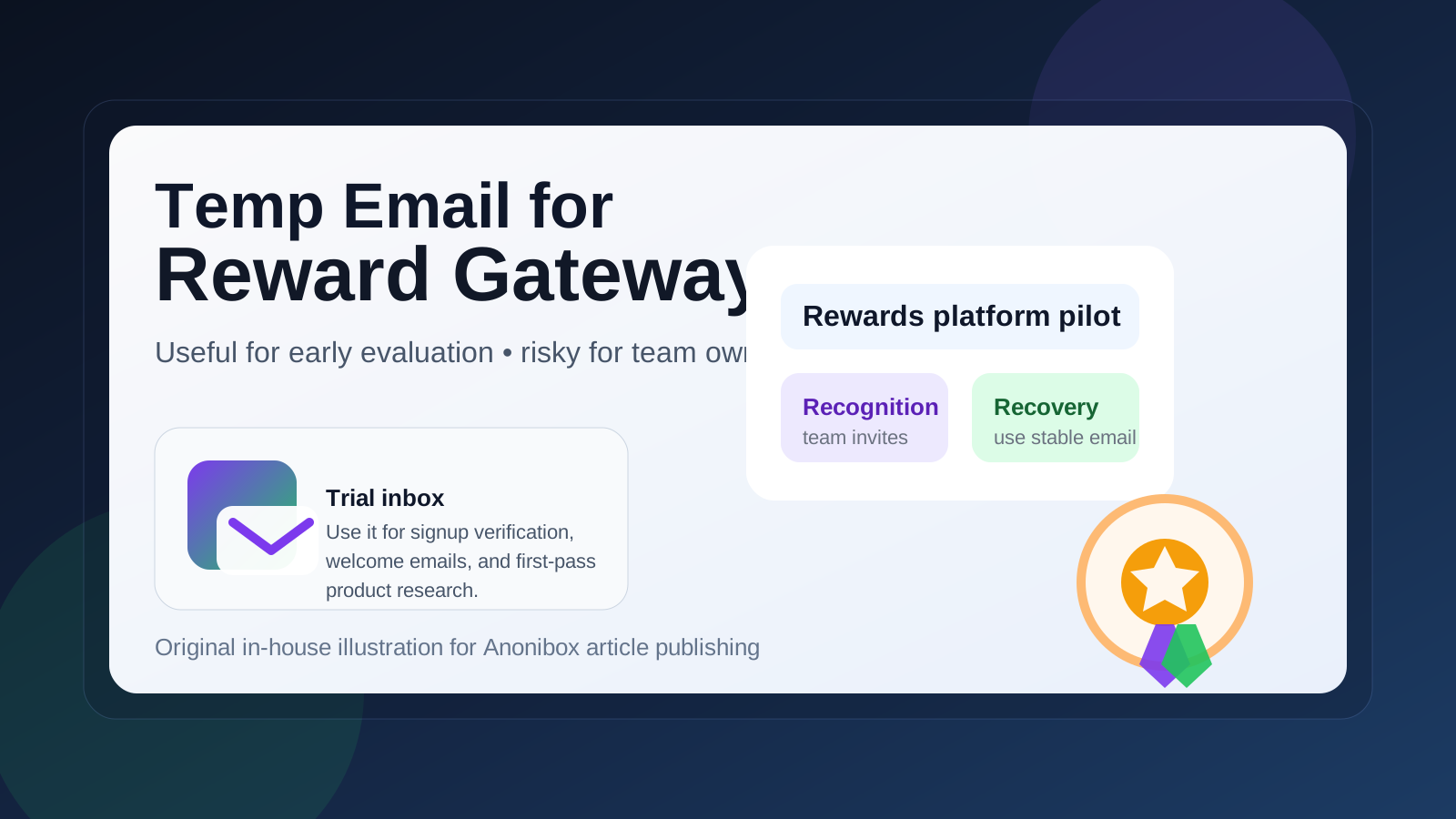
A temp email for Reward Gateway can work for a quick first look at the platform, but it becomes risky once team access, recognition workflows, admin ownership, or account recovery depend on that inbox.
Use a disposable address for early evaluation only; if the workspace might turn into a real pilot or shared program, switch to a stable company-controlled email before the account starts to matter.
That is the practical answer behind most searches for temp email for Reward Gateway. People usually are not trying to hide from a vendor for the sake of it. They are trying to evaluate employee rewards and recognition software without immediately feeding their main inbox into a long stream of demo follow-ups, pricing nudges, newsletter sequences, webinar invites, and account-management outreach.
A temporary inbox can be a sensible filter during that early stage. You get the verification message, the welcome email, and the first setup instructions without tying your everyday work address to a platform you may decide not to use. A service like Anonibox fits that early research phase well because it helps separate exploratory signups from the inbox your team relies on for real work.
The catch is that recognition and rewards platforms stop being disposable faster than many people expect. The moment a test account starts holding team invitations, admin settings, budget-related workflows, redemption details, or program structure, the owner email is no longer a casual detail. At that point, a throwaway inbox turns from a convenience into a continuity risk.
Why someone would use a temp email for Reward Gateway
Reward and recognition software often sits at the edge of HR, people operations, internal communications, and culture work. That means even a simple trial can produce a surprising amount of email. Some of it is helpful, especially at the start. Some of it becomes noise very quickly if the platform never makes it past the shortlist.
A temporary inbox can make sense if you want to:
- verify a trial without giving a new vendor your primary work email on day one
- compare several employee recognition or rewards platforms side by side
- keep sales follow-up separate from real HR or people-ops communication
- reduce long-term inbox clutter from tools that may never reach procurement
- test the onboarding flow before deciding whether the platform deserves stakeholder time
Used that way, the inbox is just part of your evaluation workflow. It is a buffer, not a permanent home for the account.
When a temporary email is reasonable
You are only doing first-pass product research
If your goal is simply to answer basic questions like “Does this product look promising?” or “Should this move into a deeper comparison?”, a temporary inbox is usually fine. At that point, you are collecting signal, not building process.
You are the only person touching the account
The risk stays much lower when one evaluator is exploring privately and nobody else depends on the workspace. If the whole environment can be thrown away without consequences, the inbox can be temporary too.
You want to contain vendor follow-up until real interest exists
This is one of the strongest reasons to do it. A platform may be worth a look, but that does not mean you want weeks of promotional or sales email landing in a permanent inbox before you even know whether the software belongs on the shortlist.
You can walk away from the account completely
If you would feel comfortable abandoning the trial after an hour of testing, a temp email is a practical option. The less attached value the account holds, the safer the approach is.
Where the temp-email approach starts breaking down
The weakness shows up when the account begins collecting anything operational, shared, or hard to recreate. Reward Gateway is not just a static demo page. If the product seems promising, teams often start exploring real rollout questions quickly.
1. Team access changes the stakes fast
A solo evaluation can turn into a shared pilot in a hurry. Someone from HR may want to see the admin side. A manager may want to review recognition flows. A stakeholder may want to test how the experience feels for employees. Once multiple people depend on the workspace, the owner inbox should be durable and monitored.
2. Program settings create ownership risk
Recognition and rewards platforms usually involve more than a simple login. Even early setups can touch permissions, budget rules, program structure, communication settings, and launch planning. If the account begins accumulating real configuration work, the email attached to it needs long-term stability.
3. Reward and redemption workflows are not “throwaway” forever
A trial may start casually, but the platform becomes more sensitive if it moves toward real employee use. Once you are thinking about real recognition, reward redemptions, or employee participation, the owner email matters for accountability and recovery.
4. Integrations and notifications need continuity
Even if you do not set up integrations on day one, promising evaluations often move in that direction. Notifications, admin alerts, stakeholder invites, or identity-related setup can all become harder to manage if the primary inbox is disposable.
5. Account recovery becomes important only after the account matters
This is the classic delayed problem. The temporary address feels convenient at signup, then later the team needs a password reset, a verification message, or ownership confirmation. That is when the short life of the inbox turns from a convenience into a liability.
A simple rule that keeps the decision clear
Use a temp email for Reward Gateway only while the workspace is disposable in every other sense too.
If the account exists only for quick evaluation, a temporary inbox is fine. If there is a real chance the environment could become a pilot, a shared review space, or the seed of an actual rewards and recognition program, move to a stable company-controlled email early.
How to evaluate Reward Gateway safely with a temporary inbox
1. Decide whether this is research or a likely pilot
Be honest before signup. Are you just browsing, or do you already think this platform has a strong chance of moving forward? If it is light research, a temp inbox is reasonable. If real adoption is already plausible, starting with a durable email is usually cleaner.
2. Keep the first session focused
Do not let the trial drift into half-built operational setup. Go in with a short list of questions you actually want answered:
- Does the platform look credible and easy to navigate?
- Do the recognition and rewards flows fit the kind of program your team would actually run?
- Does the admin side seem manageable?
- Would this tool deserve a deeper comparison against other recognition platforms?
- Is there enough value here to justify a stakeholder review?
A focused first pass makes it easier to preserve the line between temporary research and real implementation.
3. Avoid attaching real operational value too early
If the account is tied to a disposable inbox, keep the trial low stakes. Avoid treating it as the base for a real launch. Avoid inviting too many people. Avoid making it the center of a genuine rewards program until the account identity is stable.
4. Save your evaluation notes outside the platform
Write down what matters in your own docs: what looked strong, what felt awkward, what concerns came up around permissions, and whether the product deserves the next step. That way, if you later recreate the evaluation under a permanent email, you keep the insight without depending on the original inbox forever.
5. Switch to a permanent address before the account becomes shared infrastructure
The best time to change the owner email is before multiple people rely on the same workspace. Doing it early is much easier than trying to untangle ownership after the account has become meaningful.
When a permanent email is clearly the better choice
Skip the temporary step and use a durable work-controlled address from the beginning if any of these are already true:
- you expect to run a real pilot rather than a casual trial
- multiple stakeholders will likely need access soon
- the platform may touch real rewards, recognition, or internal engagement workflows
- you care about clean ownership and reliable account recovery from the start
- the evaluation is tied to an active HR, people-ops, or culture initiative rather than individual curiosity
In those cases, the privacy benefit of a burner inbox is smaller than the operational weakness it introduces.
Common mistakes to avoid
Letting the trial workspace quietly become the real workspace
This is the most common mistake. The account is created for convenience, the platform looks promising, and nobody updates the owner email before more people start depending on it.
Confusing inbox privacy with account durability
A temporary inbox can reduce sales noise. That does not mean it is a good long-term foundation for software that might become part of an actual employee recognition program.
Waiting until a reset or lockout to fix the owner email
If you only think about continuity after something breaks, you are already solving the problem late. Switching to a stable address early is easier and less risky.
Adding stakeholders before the account identity is stable
The moment managers, HR staff, or program owners begin relying on the workspace, the owner inbox should already be something durable and controlled.
Assuming “temporary” means consequence-free
Recognition tools can become important surprisingly fast because they touch access, culture, and internal communication. Even a short pilot can become sticky if people start using it seriously.
Quick checklist before you use a temp email
- Is this truly just early-stage research?
- Will anyone else need access soon?
- Could this trial turn into a real pilot?
- Would losing the inbox create a recovery problem later?
- Am I reducing spam, or creating avoidable ownership risk?
If the workspace is temporary in every practical sense, a disposable inbox is a reasonable tool. If the account may gain real importance, move to a stable email before that importance arrives.
Final takeaway
A temp email for Reward Gateway is useful when you want a low-friction way to inspect the platform, collect the verification emails, and decide whether it deserves deeper review without feeding your main inbox into long-term follow-up. That is a legitimate use case.
But once the account might support a real rewards or recognition rollout, shared evaluation, admin ownership, or recovery workflow, the temporary address stops being the smart choice. Use the burner inbox for the disposable phase only, then switch to a monitored company-controlled email before the platform becomes part of something real.