Yes, you can use a temp email for SkillSyncer if you only want to test its ATS resume scanner, match scores, and keyword suggestions without adding another long-term signup to your main inbox.
Use a permanent address instead if you plan to keep returning to saved scans, rely on the account during an active job search, pay for features, or need dependable account recovery later.
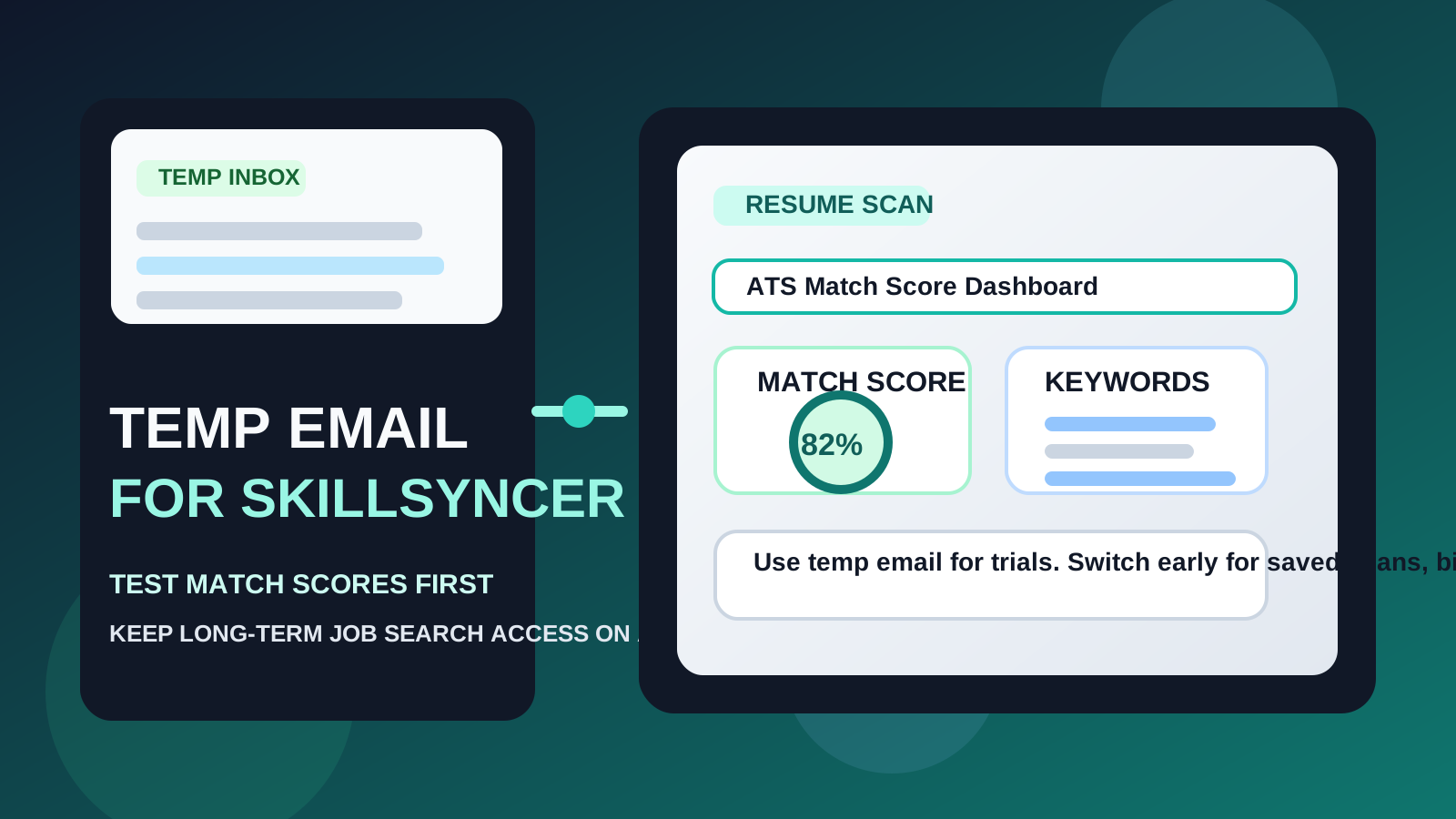
If you are trying resume tools during a job search, you already know how quickly the inbox clutter starts. One platform wants you to upload your resume for a score. Another promises keyword suggestions, rewrite ideas, or ATS alignment. A third invites you to webinars, premium trials, follow-up offers, and “helpful” job-search sequences that keep arriving long after you decided the product was not for you. That is exactly why people look for a temp email for SkillSyncer in the first place.
SkillSyncer is built around resume scanning and matching your resume to job descriptions, so it makes sense to test it before committing your long-term inbox. During that early stage, a disposable address can be practical. You get through signup, verify the account, review the first scan, and decide whether the tool is genuinely useful. The catch is that a temporary inbox only works well for evaluation. Once the account becomes part of your repeat job-search workflow, the safer move is to switch to a stable address you actually control.
Why a temp email makes sense for SkillSyncer
Most job seekers do not want every resume tool to live in the same permanent inbox forever. That is even more true when you are comparing several products in the same week. SkillSyncer may be one of a few tools you are evaluating alongside Jobscan, Resume Worded, Careerflow, or other resume-optimization platforms. In that situation, using a temporary inbox can help you:
- Keep trial messages separate from your real job-search inbox.
- Verify the account quickly without handing over your main address immediately.
- Test the first scan or match score before deciding whether the platform deserves more time.
- Avoid long follow-up sequences from tools you may never use again.
- Reduce distraction while you focus on actual applications instead of software marketing.
That is the ideal use case: low-stakes testing, fast comparison, and better inbox hygiene.
What SkillSyncer is actually useful for in early testing
When people try SkillSyncer, they are usually looking for a practical answer to one question: Will this help me tailor my resume to real job descriptions more effectively? That is a legitimate reason to use a throwaway inbox during the first pass.
For example, you might want to see:
- how easy it is to upload your resume and a job description
- whether the match score feels understandable or vague
- if the keyword suggestions seem relevant rather than generic
- whether the workflow actually saves time
- if the product looks useful enough to become part of your repeat application process
If those are the only questions you need answered, a temporary inbox is fine. You are not committing to a long-term account yet. You are just checking whether the tool earns a place in your workflow.
When a disposable inbox starts becoming a bad idea
The problem is not using temporary email on day one. The problem is forgetting to stop using it once the account becomes important.
1. You keep going back to old scans
If you find yourself returning to prior match reports, keyword suggestions, or resume versions, the account has already moved beyond quick testing. At that point, the email behind it matters because it is tied to something you may need repeatedly.
2. You are actively applying and need continuity
Job-search tools are often most helpful when you use them across several applications, not just one. If SkillSyncer becomes part of your normal routine for tailoring resumes, a stable inbox is safer than a temporary one that may disappear or become inconvenient later.
3. You upgrade or add billing details
Anything involving payment, subscription changes, invoices, or renewal notices should live on an address you monitor reliably. Disposable email is not a great foundation for that.
4. You may need password resets or account recovery
This is the obvious risk, but it still catches people. If the inbox behind the account is temporary and you lose access later, recovering the account can become needlessly annoying.
5. You save a polished workflow you want to keep
Sometimes a tool starts as “just testing” and then quietly becomes part of how you prepare applications. Once that happens, the account is no longer disposable even if the original inbox was.
A practical workflow that keeps things clean
If you want the privacy benefits of temporary email without creating a bigger mess later, use a simple workflow:
- Create the temporary inbox first. A tool like Anonibox works well when you want a clean address just for trial signups.
- Use it only for the first pass. Sign up, verify the account, and run a realistic test with a resume and one real job description.
- Judge the product quickly. Ask whether the score, keyword guidance, and resume-tailoring help are actually useful enough to keep.
- Save anything important immediately. If a report, suggestion, or setup note matters, copy it somewhere you control.
- Switch to a permanent inbox early if the tool is a keeper. Do not wait until you have a dozen saved scans and an active subscription.
This approach keeps the evaluation phase lightweight while protecting you from later account headaches.
Good reasons to use a temp email for SkillSyncer
- You are comparing multiple resume scanners and only want a short test.
- You do not know yet whether SkillSyncer is better than your current process.
- You want to avoid extra promotional email in your main inbox.
- You only need one or two scans to decide whether the product is worth deeper use.
- You are experimenting with different job-search tools and do not want every vendor to keep your primary address.
Better reasons to start with a permanent email instead
- You already expect to use the tool across many applications.
- You want to save progress and return to it repeatedly.
- You are in the middle of an active, time-sensitive job search and do not want account friction.
- You may pay for premium features or rely on customer support later.
- You want all of your resume-tool records tied to one stable inbox from the start.
In other words, temporary email is best for screening the tool. Permanent email is better for depending on the tool.
Common mistakes job seekers make
Treating the signup like it is the only moment that matters
The first verification email is not the only email that counts. Future resets, alerts, upgrade messages, or saved-workflow notifications matter too.
Using a temp inbox for every single job-search account
That sounds privacy-friendly, but it can become chaotic if you actually depend on those tools later. Use temporary email selectively, not blindly.
Forgetting the difference between testing and operating
Testing a tool for 20 minutes is one thing. Building a real process around it is another. Your email strategy should change when your level of dependence changes.
Letting inbox cleanup override workflow stability
A clean inbox feels good, but not at the cost of losing access to a tool that genuinely helps you apply faster or tailor better.
What a realistic evaluation should look like
If you are going to test SkillSyncer, make it a meaningful test. Upload a resume you would actually send. Paste in a real job description, not a random sample. Compare the results to the work you would do manually. Ask yourself practical questions:
- Did the scan show anything genuinely useful?
- Did it surface missing keywords you would want to add honestly?
- Did the score help you decide what to change next?
- Did the workflow save time, or just create another layer of friction?
- Would you trust yourself to keep using it over several applications?
A temporary inbox is most useful when it supports that kind of focused evaluation. It is less useful when it becomes a permanent crutch for an account you actually need.
How this fits into a broader job-search privacy strategy
Using temporary email for SkillSyncer is only one small part of staying organized during a job search. Many people also separate their job-search inbox from their personal inbox, use a dedicated phone number for applications, and keep interview scheduling, recruiter outreach, and resume tools compartmentalized. The point is not paranoia. The point is reducing clutter and maintaining control.
That is why a service like Anonibox can make sense during early tool testing. It gives you a cleaner boundary between “I am evaluating this” and “I am trusting this enough to attach it to my real long-term workflow.” That boundary matters more than people think, especially when a job search already involves dozens of forms, alerts, accounts, and follow-up messages.
Quick decision checklist
Before you sign up, ask yourself:
- Am I just testing SkillSyncer, or do I already expect to depend on it?
- Do I only need one quick scan, or will I come back repeatedly?
- Would I be annoyed if this account became hard to recover later?
- Am I trying to avoid spam, or am I accidentally making a useful tool harder to manage?
- Could I start with temporary email and switch early if the product proves valuable?
If you are still in trial mode, a temp inbox is reasonable. If the tool is likely to become part of your real application process, use a permanent address instead.
Final takeaway
A temp email for SkillSyncer is a smart way to test ATS match scores, keyword suggestions, and resume-tailoring workflow without feeding another long-term email sequence into your main inbox.
It stops being the smart move once you rely on the account for repeated scans, ongoing applications, billing, or recovery. Use temporary email for early evaluation, then move to a stable inbox before the account becomes important to your job search.