Yes — a temp email for Spot by NetApp can be a smart way to open an early cloud optimization evaluation, verify access, and keep vendor follow-up out of your main inbox.
No — it is not a good long-term address once cost alerts, team invites, account recovery, shared ownership, or procurement conversations start depending on that inbox.
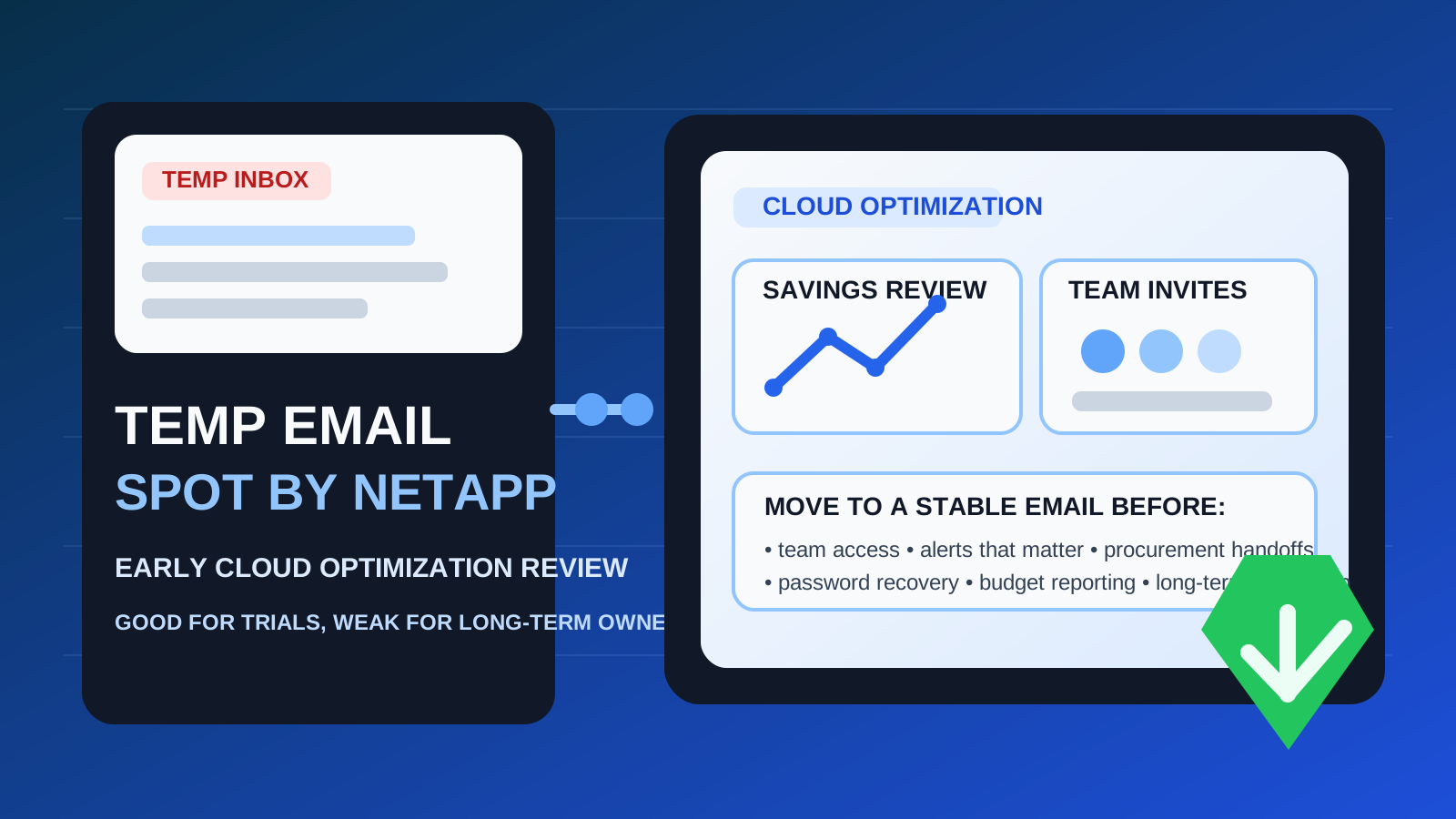
That is the practical answer behind most searches for temp email for Spot by NetApp. During an early evaluation, many teams want a clean way to request access, confirm the account, inspect optimization workflows, and compare tools without sending another stream of sales follow-up into a permanent work inbox. That is a reasonable goal. The problem starts when a trial account quietly becomes the real operational account.
Cloud optimization tools move from “just testing” to “actually useful” faster than people expect. The moment a workspace starts collecting team members, surfacing savings recommendations, sending alerts, or becoming part of a real cost review, the inbox behind the account matters more. That is why a temporary address can be fine for research, but fragile for anything that may turn into a real workflow.
If you are only comparing platforms, a disposable inbox can be a useful buffer. If the evaluation may become a real pilot or a shared FinOps process, move to a stable work-owned address early.
Why someone would use a temp email for Spot by NetApp
The appeal is simple: you want access without committing your primary inbox to every early vendor interaction. Signing up for cloud optimization and cost-management tools often triggers welcome emails, product tours, meeting prompts, demo follow-ups, team-invite reminders, and other nurture sequences. When you are reviewing multiple vendors in the same category, that traffic adds up quickly.
A temporary inbox helps you separate low-stakes research from your day-to-day operations work. Tools like Anonibox are useful in that narrow phase because they let you verify the trial, receive the first emails, and keep the evaluation isolated while you decide whether the platform deserves deeper attention.
Used carefully, a temp inbox can help with:
- shortlist research when you only want to inspect the product
- vendor comparison across several FinOps or cloud optimization tools
- inbox hygiene so trial marketing does not spill into your main work address
- early experimentation before the account has any operational weight
That is the healthy use case: you are evaluating the tool, not building a durable process around a throwaway inbox.
When a temporary inbox makes sense
You are doing a first-pass product review
If you only need to see whether Spot by NetApp belongs on a serious shortlist, a temp inbox can be reasonable. You can verify the account, open the workspace, inspect the interface, and decide whether the product looks relevant before a permanent address gets tied to everything.
You are comparing several cloud cost tools at once
FinOps reviews often happen in clusters. A team might look at cost visibility tools, optimization platforms, commitment-management products, or Kubernetes cost tools during the same buying cycle. In that situation, isolating each signup can make the comparison phase less noisy and easier to track.
You want to keep vendor follow-up contained
Early-stage software evaluations can generate a lot of email relative to the value you get from them. A temporary inbox is useful when the account is truly disposable and you mainly want a quick product look without months of follow-up landing in your main mailbox.
Where the temp-email approach starts to fail
The weakness is not the signup step. The weakness is what happens if the account becomes important.
1. Real account ownership matters
Once a cloud optimization workspace starts delivering useful information, someone on the team effectively owns it. That owner may manage settings, permissions, notifications, and the overall continuity of the evaluation. If that person is using a throwaway inbox, the account is built on a weak foundation.
2. Team invites raise the stakes immediately
Cloud cost reviews are rarely solo forever. Finance, platform engineering, infrastructure, procurement, or management stakeholders often get pulled in once the tool starts looking promising. As soon as other people need access, the owner inbox stops being a trivial detail.
3. Alerts and reports stop being disposable
Temporary inboxes are fine when you only care about one verification email. They are a poor fit once savings updates, anomaly signals, budget-related messages, or account notices start mattering. If an alert stream is useful enough to influence real decisions, it should not live behind an address you may lose.
4. Recovery only matters after something goes wrong
Password resets, suspicious-login notifications, approval prompts, and other recovery paths feel unimportant during day one of a trial. They become very important later. If you no longer control the inbox on file, a promising evaluation can become a frustrating access problem.
5. Procurement and handoff create long-term friction
If the tool moves from technical curiosity to real purchase discussion, people will care about continuity. Handoffs get harder when the original account is tied to a disposable address that was only meant for a quick test.
A simple rule that keeps the risk low
Use a temp email for Spot by NetApp only while the account is disposable in every other sense too.
If the workspace is just a short evaluation, a temporary inbox is fine. If the workspace may become a shared pilot, a real cost-review environment, or the beginning of a long-term vendor relationship, move to a stable work-owned address before the account accumulates value.
That one rule prevents most of the preventable cleanup later.
How to evaluate Spot by NetApp safely with a temp inbox
1. Decide whether this is research or a real pilot
Before you sign up, be honest about the goal. Are you just browsing the product, or is there a good chance the team will keep using the same workspace if the evaluation goes well? If it is just research, a temp inbox is reasonable. If it may become a real pilot, start with a durable address instead.
2. Keep the first session focused
Go into the trial with a short list of questions so the account can stay temporary if the answer is no. For example:
- Does the platform surface optimization opportunities clearly?
- Does the workflow make sense for your mix of engineering and finance stakeholders?
- Does the product appear useful enough to justify a deeper technical review?
- Would your team actually want to keep exploring this vendor after the first pass?
A focused evaluation makes it much easier to avoid turning a throwaway signup into an accidental long-term account.
3. Avoid attaching real process too early
If you are using a temporary inbox, keep the test lightweight. Do not treat the workspace as a durable system of record before ownership is stabilized. The more team process you attach to a burner address, the more painful the eventual migration becomes.
4. Save the useful details right away
If you learn something valuable during the trial, save it outside the inbox: notes about the workflow, screenshots, pricing questions, access observations, or next-step decisions. That way, you are not depending on the temporary mailbox to preserve the context.
5. Switch before other people rely on the workspace
The easiest time to move to a permanent inbox is before more people are invited, before alerts become meaningful, and before the account starts representing real internal progress. Early migration is boring, which is exactly why it is better.
When a permanent inbox is clearly the better choice
Skip the temp-email step and start with a stable monitored address if any of these are already true:
- you expect the evaluation to become a genuine pilot
- multiple teammates may need access soon
- the platform may start feeding cost reviews or internal reporting
- you care about a clean security and recovery path
- the account may become part of procurement, budgeting, or platform operations
In those cases, the privacy benefit of a burner inbox is smaller than the ownership risk it creates.
Common mistakes to avoid
Letting a trial account quietly become the main account
This is the classic problem. The signup begins as a harmless test, the product looks promising, and the team keeps using the original workspace without fixing the email behind it.
Confusing inbox cleanliness with account safety
A temporary inbox can reduce clutter. That does not make it a good long-term foundation for software that may influence real cloud spend decisions, team workflows, or vendor relationships.
Waiting for a password reset before fixing ownership
By the time recovery matters, you are already solving the problem the hard way. Moving early is simpler than migrating under pressure.
Inviting teammates before stabilizing the owner address
The moment a second stakeholder depends on the workspace, the stakes go up. If shared access is likely, the owner address should already be durable and monitored.
A quick decision checklist
Before you use a temp email for Spot by NetApp, ask yourself:
- Is this only a first-pass evaluation?
- Could this workspace become a real pilot if we like it?
- Will other team members need access soon?
- Would losing the inbox create a recovery problem later?
- Am I trying to reduce inbox clutter, or am I avoiding proper account ownership?
If the account is genuinely temporary, a disposable inbox is a reasonable choice. If the account may become important, a permanent work-owned address is the safer move.
Final takeaway
A temp email for Spot by NetApp is useful when you want to evaluate the platform quickly, compare it with other cloud optimization or FinOps tools, and keep early vendor messages out of your main inbox.
It becomes risky once team invites, savings workflows, account recovery, internal reporting, or shared ownership depends on that inbox. Use a temporary address for low-stakes exploration, then move to a stable monitored address before the workspace becomes part of a real cloud cost process.
That way, you get the privacy and inbox-control benefits of a disposable inbox without turning a simple trial shortcut into a long-term ownership problem.