A temp email for Stampli is fine for a short, low-stakes evaluation where you only need to verify the account, look around the product, and decide whether it belongs on your AP automation shortlist.
It becomes a poor choice once invoice approvals, shared finance workflows, supplier communication, or account recovery start depending on that inbox.
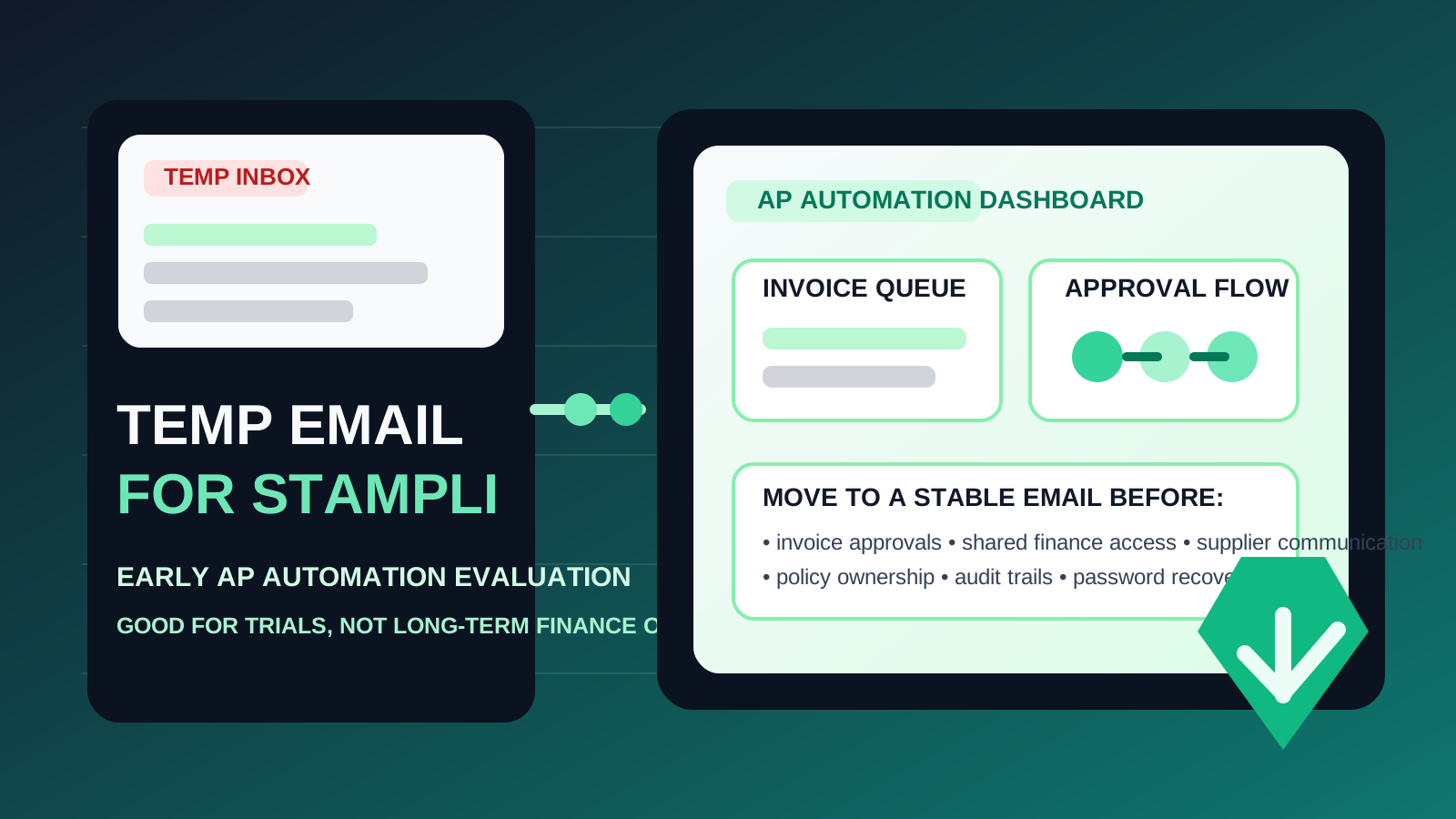
That is the practical answer behind most searches for temp email for Stampli. People usually want a clean way to sign up, receive the verification email, and see whether the platform feels useful before inviting the rest of finance into another trial. That is reasonable. Early-stage software research gets noisy fast, especially when every vendor sends onboarding emails, demo reminders, product-tour sequences, and “ready to talk?” follow-ups.
A separate inbox can keep that noise out of your main work account. A tool like Anonibox can be handy for that first pass. But AP automation software is not a casual social signup. Once an account starts touching invoice routing, shared approvals, supplier-facing messages, or recovery workflows, the email behind it matters much more than people expect.
The right answer is not “never” and it is not “always.” A temporary inbox makes sense while the account itself is still disposable. The moment the workspace might become operational, switch to a stable work-owned address before the shortcut turns into a headache.
Why someone would use a temp email for Stampli
The appeal is simple: speed and separation. If you are comparing AP automation tools, you often want access before you are ready to commit your main inbox to another sales sequence. A temp address lets you verify the account, read the welcome email, and inspect the product without immediately folding that trial into your permanent vendor communication stream.
That can be useful if you are:
- screening several AP tools at once and do not want to mix all of their follow-up in one inbox
- doing a first-pass evaluation before you know whether the platform deserves a real pilot
- keeping research separate from production work so your main inbox stays focused on real finance operations
- avoiding long-tail marketing clutter from tools that never make the shortlist
That is the healthy use case. You are evaluating the software, not establishing permanent ownership of a finance workflow.
When a temporary inbox makes sense
You only need the trial for a quick product review
If your goal is simply to see the interface, understand the setup flow, and judge whether Stampli seems relevant, a temporary inbox is a reasonable buffer. You can verify the account, take a look around, and decide whether to keep going.
You are comparing multiple vendors in parallel
AP automation evaluations often involve side-by-side comparison. You may be checking how different tools handle invoice capture, routing, approval rules, visibility, audit trails, and finance-team usability. In that phase, inbox hygiene matters. Separate inboxes make it easier to keep each trial self-contained.
You are working alone and the account is truly disposable
A burner inbox is least risky when one evaluator is doing low-stakes research and nobody else is relying on the account. If the workspace will be abandoned unless the product proves itself, the downside is limited.
Where the temp-email approach starts to break down
Stampli becomes more valuable the moment it starts reflecting a real approval workflow instead of a curiosity click-through. That is where the email choice begins to matter.
1. Invoice approvals are not throwaway workflows
Even in a pilot, finance teams quickly start asking practical questions: who receives approval prompts, who owns the rules, who gets notified, and who can reset access if something goes wrong? A disposable inbox is weak footing for that kind of workflow.
2. Shared AP ownership raises the stakes fast
AP software rarely stays single-user for long. Controllers, finance managers, approvers, operations staff, and sometimes procurement stakeholders all end up touching the process. If the original owner account is tied to a throwaway email, handoffs become messy.
3. Supplier and invoice communication can become important
Once a tool is moving beyond a simple demo, even small tests can start to involve real patterns of communication: invoice reminders, approval notices, and internal follow-up. That is not the kind of activity you want anchored to an address you may lose access to later.
4. Recovery only matters after the shortcut stops being convenient
The biggest weakness of a temp inbox usually shows up later. Password resets, suspicious-login alerts, ownership changes, and verification prompts are easy to ignore until you need them. If the mailbox is gone by then, the cleanup is much harder than the original signup was easy.
5. Finance tools deserve cleaner account hygiene than casual trials
There is a difference between protecting your inbox from trial clutter and building finance operations on a disposable foundation. AP systems sit closer to money movement, auditability, and business process than most casual SaaS signups. That does not mean you need to overreact during a demo, but it does mean you should not leave temporary ownership in place longer than necessary.
A simple rule that works
Use a temp email for Stampli only while the account is disposable in every other sense too.
If the workspace is just a product preview, a temporary inbox is fine. If the workspace may become a pilot, a shared test, or the start of a real invoice-approval rollout, switch early to a durable work-owned address. That one rule prevents most of the avoidable trouble.
How to evaluate Stampli safely with a temp inbox
1. Decide whether this is a demo review or a real pilot
Before signing up, be honest about the intent. Are you only trying to understand the product category, or is there a real chance this trial becomes the working environment your team continues to use? If it might become a live pilot, start with a stable inbox instead of migrating later under pressure.
2. Keep the first session focused
Go in with a short checklist rather than clicking around at random. For example:
- Does the product make invoice intake and routing easy to understand?
- Does the approval logic seem flexible enough for your real process?
- Would your stakeholders actually find the workflow clearer than your current system?
- Is there enough visibility for finance without creating unnecessary approval friction?
A focused evaluation makes it easier to keep the account temporary if the answer is no.
3. Avoid attaching real operational dependence too early
If you are using a disposable inbox, keep the trial clearly separate from production. Do not let the convenience of a quick signup quietly turn into long-lived ownership. The more real workflow you attach, the more annoying the eventual migration becomes.
4. Save the details that matter right away
During early testing, record the useful things outside the inbox itself: the login URL, notes about the workflow, screenshots of setup choices, and questions you want to ask the vendor later. If you decide to restart the trial with a permanent work address, you will not lose the context that made the test valuable.
5. Switch before teammates start depending on it
The best time to migrate is before anyone else relies on the account. Once approvers, finance teammates, or process owners are involved, an old disposable login becomes harder to unwind cleanly.
When a permanent inbox is clearly the better choice
Skip the temporary-inbox step and start with a durable address if any of these are already true:
- you expect the evaluation to become a real AP pilot
- multiple stakeholders may need access soon
- approval routing or invoice handling will be tested in a realistic way
- you care about a clean recovery and ownership path later
- the account belongs to a team process rather than one evaluator’s private research
In those cases, the inbox-clutter benefit is real but small compared with the operational mess of weak account ownership.
Common mistakes to avoid
Letting a trial login become the production owner
This is the classic mistake. The product looks promising, the team keeps using the original workspace, and suddenly a throwaway inbox sits underneath a workflow people care about.
Confusing privacy with permanence
Protecting your primary inbox from vendor follow-up is sensible. That does not automatically make a disposable inbox the right long-term identity for software tied to approvals, finance collaboration, or process visibility.
Waiting for a reset request before cleaning things up
If you wait until a password reset or access problem forces the issue, the migration will feel urgent and annoying. Early cleanup is much easier than emergency cleanup.
Adding teammates before stabilizing ownership
Shared software should have shared confidence in who owns the account foundation. If other people are going to rely on the workspace, the email behind it should already be durable and monitored.
A quick decision checklist
Before you use a temp email for Stampli, ask yourself:
- Am I just doing a first-pass evaluation?
- Will anyone else need this account soon?
- Could this workspace turn into a real pilot?
- Would losing access to the inbox create a recovery problem later?
- Am I trying to reduce clutter, or am I avoiding proper account ownership?
If the account is genuinely temporary, a burner inbox is fine. If the account may become meaningful to finance operations, use a permanent address sooner rather than later.
Final takeaway
A temp email for Stampli is useful when you want to evaluate AP automation quickly, compare products, and keep early-stage vendor messages out of your main inbox.
It becomes risky once invoice approvals, shared ownership, supplier communication, or account recovery depend on that inbox. Use a temporary address for low-stakes exploration, then move to a stable work-owned address before the workspace becomes part of a real AP process.
That gives you the privacy and inbox-control benefits of a disposable signup without turning a small trial convenience into a bigger ownership problem later.