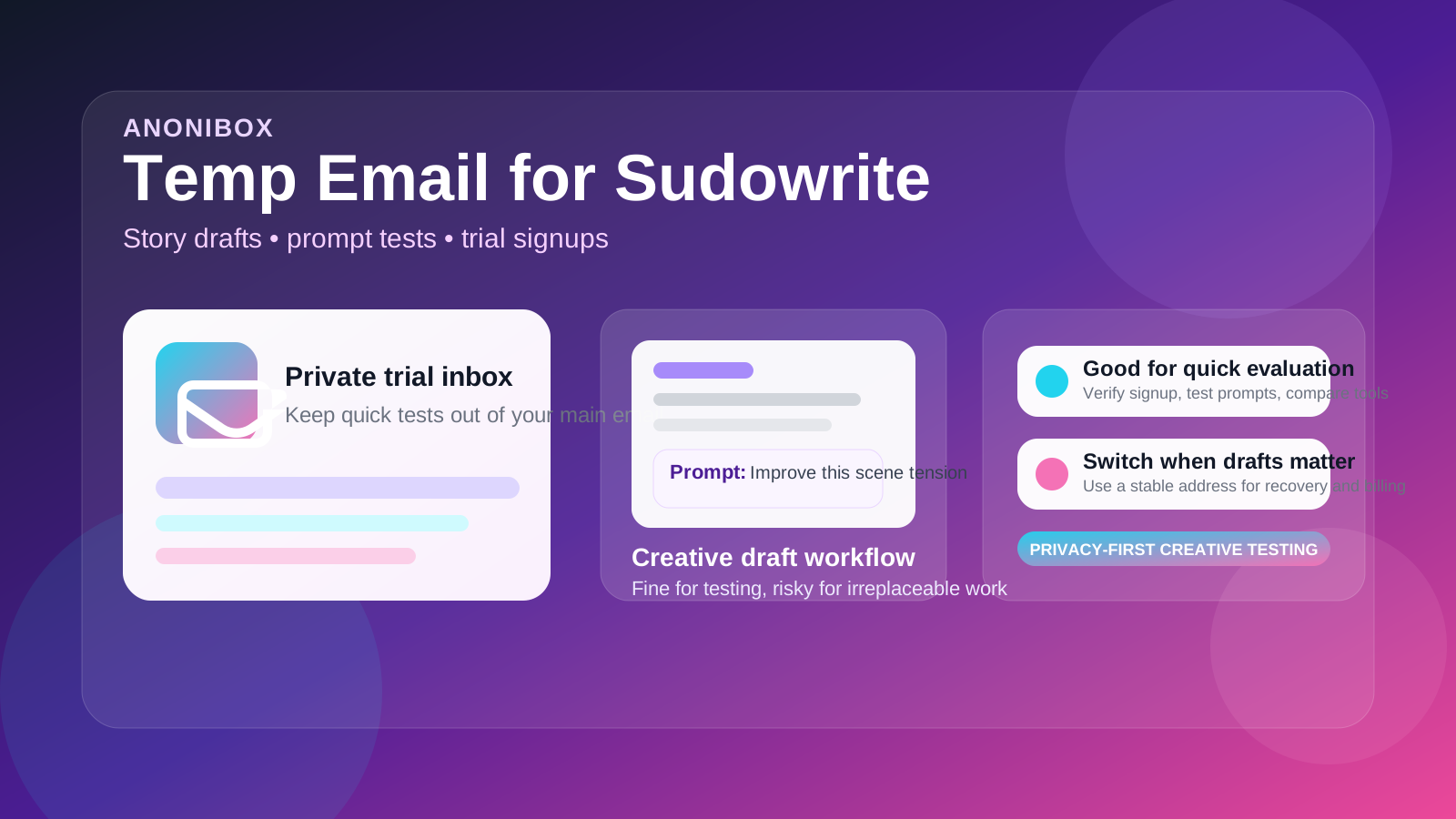
A temp email for Sudowrite can be a sensible way to test its story tools, prompt features, and trial flow without sending every experiment to your main inbox.
It stops being a smart default once your drafts, subscription, saved projects, or recovery access actually matter, so disposable email is best for short-term evaluation, not for long-term writing ownership.
Sudowrite appeals to a very specific kind of user: novelists, short-story writers, screenwriters, and creative people who want help getting unstuck. That makes it different from generic AI writing tools built around marketing copy or SEO blogs. People sign up to test brainstorming features, scene expansion, rewriting help, tone variation, and idea generation. In the early stage, a temporary inbox can feel like the right amount of commitment. You get through verification, explore the product, and keep your primary email out of yet another onboarding sequence.
That approach is reasonable if your goal is truly temporary. But creative writing tools become personal fast. A casual test can turn into character notes, scene drafts, outline experiments, or even sections of a manuscript you do not want to lose. Once that happens, the account is no longer disposable just because the signup was. That is where the temp-email decision needs more thought.
When using a temp email for Sudowrite makes sense
There are several situations where a temporary inbox is a perfectly practical choice.
- You only want to test the interface: maybe you want to see how the tool handles brainstorming, rewriting, or creative prompts before you commit.
- You are comparing several AI writing tools: for example, Sudowrite versus Jasper AI, Writesonic, QuillBot, or another writing assistant already in your shortlist.
- You want fewer promotional emails: trial reminders, upgrade nudges, webinars, feature launches, and follow-up campaigns add up quickly.
- You are running a one-off experiment: maybe you want help with a single scene, outline, or prompt session and nothing more.
- You prefer privacy during early evaluation: not every creative idea needs to be tied to your main personal or professional inbox from day one.
In those cases, using a temporary inbox is more about organization than secrecy. You are separating low-stakes product testing from your real communication channels.
Why writers use disposable email for AI writing tools
Creative software trials often start small. You sign up on curiosity, test a few prompts, compare output styles, and try to answer a simple question: does this tool actually help my process, or is it just interesting for ten minutes? A temp inbox keeps that decision clean.
Instead of mixing product emails with client messages, family mail, school notices, or your normal work inbox, you isolate the trial. Confirmation links, welcome emails, and first-day tips all stay in one place. If you decide the tool is not for you, the experience ends neatly. If it helps, you can always move to a stable address later.
That boundary matters for people who test lots of software. Writers often sample multiple drafting and editing tools before settling into a workflow. Anonibox-style disposable access fits that early research phase well because it reduces clutter without forcing a permanent commitment too early.
Where a burner inbox starts creating problems
The downsides usually appear when the account becomes useful.
Your drafts may become more valuable than you expected
A test session can become a real scene. A real scene can become a chapter idea. A chapter idea can become part of a manuscript you return to for weeks. If the only easy recovery path for that account depends on a disposable inbox you no longer control, the convenience disappears fast.
Account recovery matters more once you have momentum
Password resets, login alerts, subscription notices, suspicious activity warnings, and important account messages typically go through email. If your inbox was only meant to last long enough to click one verification link, recovery becomes much harder later.
Billing changes the stakes
If you upgrade, start a paid plan, or even consider keeping the tool in rotation, a stable address is the safer choice. Receipts, renewal reminders, and account ownership details should not live in an inbox that was designed to be temporary.
Long-term creative workflow needs continuity
Sudowrite is not just a signup form. It can become part of how you brainstorm, revise, and iterate. That means your writing history, saved ideas, and working rhythm may all become tied to a single account. Disposable email is weak infrastructure for something you may rely on repeatedly.
Sensitive drafts deserve more control
Some writing is casual. Some is private. If you are drafting memoir material, client-adjacent concepts, unpublished fiction, or anything personally sensitive, you should think carefully about how casually you want to treat the account tied to that work. A burner inbox might be fine for testing features, but it is a thin foundation for writing you care about.
How to use a temp email for Sudowrite safely
If you want the privacy upside without creating future headaches, a few simple habits help a lot.
1. Decide whether this is a trial or a real workflow
Be honest before you sign up. If you already suspect you may use the tool for serious writing, skip the disposable step and start with a stable address.
2. Keep the first session experimental
Use the temp-email account to explore prompts, outputs, and interface feel. Do not treat that first account as the permanent home for a project you would be upset to lose.
3. Export or save anything genuinely useful
If a brainstorming session produces strong ideas, copy them into your own notes, local files, manuscript software, or another system you control. Never assume a temporary setup will stay convenient forever.
4. Switch before subscribing
Once payment, recurring usage, or account history matters, move the account to a dependable email you can keep monitoring.
5. Avoid storing your only copy of important material there
This is the big one. Creative tools are great for generating momentum, but your real work should still live somewhere you deliberately manage.
Better alternatives when you want both privacy and reliability
A fully disposable inbox is not the only option. If you like separation but dislike fragility, there are better middle-ground choices.
- A dedicated writing-tools email: useful if you regularly test AI or editing software and want one stable inbox for that category.
- An email alias: helpful when you want filtering and separation without losing recovery access.
- A temp inbox only for first verification: then switch to a permanent address if the tool proves worthwhile.
That last option is often the best compromise. It keeps your early test private and low-friction, but it does not force you to build a real writing habit on top of an unreliable identity.
Practical examples
Example 1: testing whether the tool fits your style
You want to spend thirty minutes seeing whether Sudowrite helps you brainstorm scenes faster than your usual process. A temp email is a reasonable choice because the goal is evaluation, not long-term storage.
Example 2: outlining a novel you plan to keep working on
You sign up for a trial, then realize the workspace is becoming part of your actual draft process. That is the right moment to switch to a stable address before the account becomes important.
Example 3: using it for freelance or collaborative work
If the tool touches paid writing, client concepts, or work you may revisit professionally, a dependable email is the better default from the start. Recovery and ownership matter more than inbox convenience.
Signs it is time to stop using disposable email
- You log in repeatedly instead of treating it like a one-time test.
- You saved scenes, notes, prompts, or outputs you would not want to recreate.
- You are considering a paid plan.
- You rely on the tool as part of your drafting routine.
- You would be frustrated if you lost access tomorrow.
If any of those are true, the account has outgrown the disposable phase.
A quick checklist before you sign up
- Am I only evaluating the product, or do I expect real ongoing use?
- Would I care if the account became hard to recover later?
- Am I comfortable moving to a stable address quickly if I like the tool?
- Will I export useful ideas instead of leaving my only copy inside the account?
- Is privacy from trial spam my main goal, rather than long-term anonymity?
If your answers point toward a short trial, a temp email for Sudowrite is a sensible choice. If they point toward serious drafting, ongoing subscriptions, or material you care about keeping, start with a dependable address instead.
Final answer
Using a temp email for Sudowrite is a practical privacy move for testing story tools, running one-off prompt experiments, and keeping early trial messages out of your main inbox. It becomes risky once your drafts, billing details, saved projects, or recovery access actually matter.
The clean rule is simple: disposable email works well for disposable interest. If you are only exploring Sudowrite, it can help. If the tool becomes part of your real writing life, switch to a stable email before convenience turns into a recovery problem.