Maybe — a temp email for Suno can be useful for low-stakes testing if the current signup flow accepts it, but it is a weak long-term choice for an account you may want to keep.
It makes the most sense when you want to try AI music generation, keep another signup out of your main inbox, and avoid tying an early experiment to a permanent address before you know whether Suno fits your creative workflow.
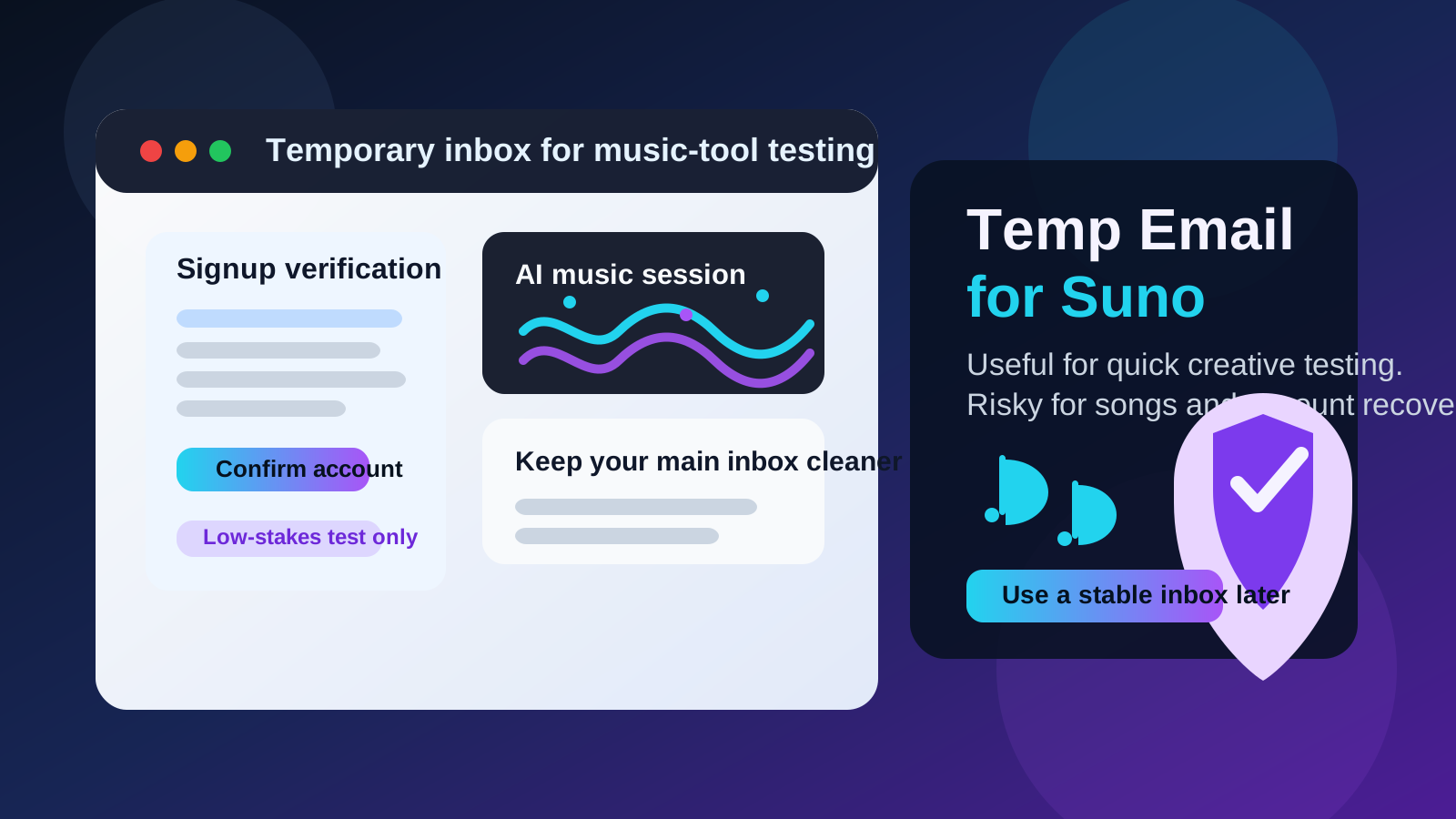
Why people look for a temp email for Suno
Creative AI tools are easy to try and surprisingly easy to accumulate. One week you are testing chat tools, the next week you are trying image generators, voice platforms, and music tools just to see what clicks. That is exactly why the search for temp email for Suno makes sense.
Most people are not looking for anything shady. They usually want to protect their main inbox, keep marketing sequences under control, separate hobby experiments from work or personal accounts, or avoid committing a permanent email address to a tool they may only use once or twice.
That logic is understandable. If you are only testing prompts, lyric ideas, instrumental moods, or quick song generations, a temporary inbox can feel like a clean way to get through signup without turning a casual experiment into a long-term email relationship.
The catch is that music tools stop being “just a quick test” faster than people expect. A throwaway account can turn into saved generations, favorite outputs, reusable prompts, subscription decisions, or a creative history you actually care about. That is where the email choice starts to matter.
Short answer: fine for a quick test, risky for anything you may value later
If you only want to explore the interface, run a few prompts, and see whether Suno is interesting enough to use again, a temporary inbox can be a practical privacy move. It helps keep welcome emails, feature updates, and promotional follow-ups out of your primary inbox while you are still deciding whether the tool deserves your attention.
But if you think you may want to keep the account, revisit old generations, manage credits, upgrade to a paid plan, or recover access later, a disposable email becomes much less attractive. A temp inbox can reduce friction on day one, but it also weakens account continuity once the account becomes useful.
When a temp email for Suno makes sense
There are a few situations where using a temporary inbox is genuinely reasonable.
You are doing a quick product test
Maybe you only want to see how the platform handles prompts, song structure, style direction, or lyric generation. If your goal is simple evaluation rather than long-term use, a temp email can be enough for the first checkpoint.
You want to avoid instant inbox clutter
Creative software often sends onboarding sequences, feature announcements, promotional campaigns, and upgrade nudges. Even when those emails are legitimate, they add up. A temporary inbox can help you delay the commitment until you know the product is worth keeping around.
You are isolating a side experiment
Sometimes you are just exploring an idea: a novelty song, a soundtrack concept, a joke prompt, or a quick demo for a friend. In those low-stakes cases, keeping the experiment separate from your main email identity is reasonable.
You prefer not to spread your main address everywhere
If you already use a privacy-first approach to signups, a temporary inbox fits naturally into that habit. A service like Anonibox can help you create that first layer of separation while you decide whether the account deserves a more permanent email later.
When it gets risky fast
A temp email for Suno becomes a weak idea as soon as the account stops being disposable in practice.
You start caring about your generated songs
What begins as “just testing” can quickly become a small library of interesting outputs, polished ideas, or prompts you want to refine. Once the account contains work you may revisit, the email behind it matters more than it did during signup.
You may want account recovery later
If you forget a password, trigger a security check, or need to confirm changes later, a dead inbox becomes a problem. Recovery is easy to ignore until the first time you actually need it.
You might upgrade or buy credits
Anything involving billing raises the stakes. If the tool becomes good enough to pay for, the account should be tied to an address you control for the long haul, not one that may disappear after a short test window.
You expect your workflow to become repeatable
If you can imagine returning to the same account for future drafts, experiments, or organization, the disposable phase should end early. Temporary inboxes are strongest when the account itself is genuinely temporary.
What can go wrong with a disposable address?
Even when a temporary email works for initial registration, there are still practical weak points you should think about.
- Login friction: some platforms rely on repeated verification steps, account notices, or email-based confirmations.
- Recovery problems: if the original inbox is gone, regaining access later can be difficult or impossible.
- Lost continuity: your best prompts, drafts, or saved generations may end up trapped behind an account identity you no longer control.
- Billing complications: subscription changes, receipts, and payment notices are better handled with a stable address.
- Blocked disposable domains: some services reject or inconsistently handle known temp email providers.
That does not mean using a temporary inbox is always a mistake. It just means the convenience is real only while the account itself remains low-stakes.
A better question to ask
Instead of only asking, “Can I use a temp email for Suno?” ask this: What kind of account am I creating right now?
If the answer is a throwaway test, then a temporary inbox may be perfectly fine. If the answer is something I may actually return to and build on, then a separate permanent inbox or alias is usually the better move.
That framing matters because creative tools often become more valuable after the first session. People sign up to test one feature, then keep coming back because the tool fits a real hobby, side project, or production habit. Choosing the right email early can save you from having to untangle that later.
Better alternatives to a temp email for Suno
If you want privacy without the fragility of a fully disposable inbox, you have stronger options.
Use a separate permanent creator inbox
A dedicated email account for AI tools, music experiments, creative subscriptions, and newsletter-heavy products is often the best balance. It protects your main inbox without sacrificing recovery or long-term access.
Use an email alias
If your main provider supports aliases, that can be even cleaner. You still get separation and filtering, but the account remains anchored to an inbox you control.
Use temporary email only for the first evaluation step
Some people use a temp inbox for the first signup, then switch to a stable address once they know the tool is worth keeping. That is often the smartest middle-ground strategy: isolate the experiment first, then stabilize the account if the tool proves valuable.
Best practices if you still want to try it
If you decide to use a temporary inbox for a short test, keep the workflow disciplined.
- Create the temporary inbox before signup so the full experiment stays separate from your everyday email.
- Use it only for low-stakes testing, not for an account you already know you want to keep.
- Save anything important during the active test window, such as verification details or information you may need in the moment.
- Avoid attaching billing, important personal information, or irreplaceable creative work until you move to a stable address.
- Switch early if you realize you want ongoing access, more generations, or a cleaner long-term setup.
That keeps the disposable phase limited to the moment when it actually helps.
Mistakes to avoid
Assuming “temporary” means “good for any casual account”
Not every low-cost or hobby tool stays casual. The problem is not whether the first session is casual. The problem is whether the account may matter later.
Waiting too long to switch
If you start getting good outputs, organizing prompts, or thinking about paying for more usage, do not keep postponing the email decision. Switch to a stable address before recovery or billing becomes a headache.
Using your primary inbox for every experiment
The opposite mistake is giving your everyday address to every platform immediately. That creates clutter and makes it harder to separate serious tools from one-off tests.
Expecting a temp inbox to provide magical anonymity
A disposable address can reduce inbox exposure, but it is not a blanket privacy guarantee. It is an inbox-management tool, not a promise that every other signal tied to the account disappears.
What a strong long-term setup looks like
For most people, the best setup is layered rather than extreme.
Your main personal or work email stays reserved for accounts that truly matter. A separate permanent inbox or alias handles creative software, AI experiments, and subscription-heavy tools. Temporary email covers genuinely low-stakes signups where you only need a quick verification step.
That approach gives you flexibility. You can protect your main inbox without building valuable creative accounts on top of unstable contact details.
So, should you use a temp email for Suno?
Yes, sometimes — mainly when you are doing a quick test and want to avoid putting another creative-tool signup into your main inbox. A temp email for Suno can be a practical way to try the platform with less long-term inbox clutter, especially if the current registration flow accepts it and you are still in the evaluation stage.
No, it is usually not the best choice for an account you may want to keep. If you expect to revisit songs, manage credits, handle billing, or rely on recovery later, a separate permanent inbox or alias is the safer move.
The cleanest rule is simple: use temporary email for disposable experimentation, not for creative accounts that are becoming valuable. If Suno ends up earning a place in your real workflow, move to a stable email early so convenience today does not become friction later.