If you are signing up for Systeme.io just to test funnels, email automations, or course setup, a temp email for Systeme.io can be useful. It becomes risky once real leads, member access, billing alerts, or password recovery depend on that inbox.
That makes temporary email a good fit for early evaluation, but a poor long-term home for an account tied to real customers or revenue. Use it to explore; switch to a durable address before the account becomes part of your real business workflow.
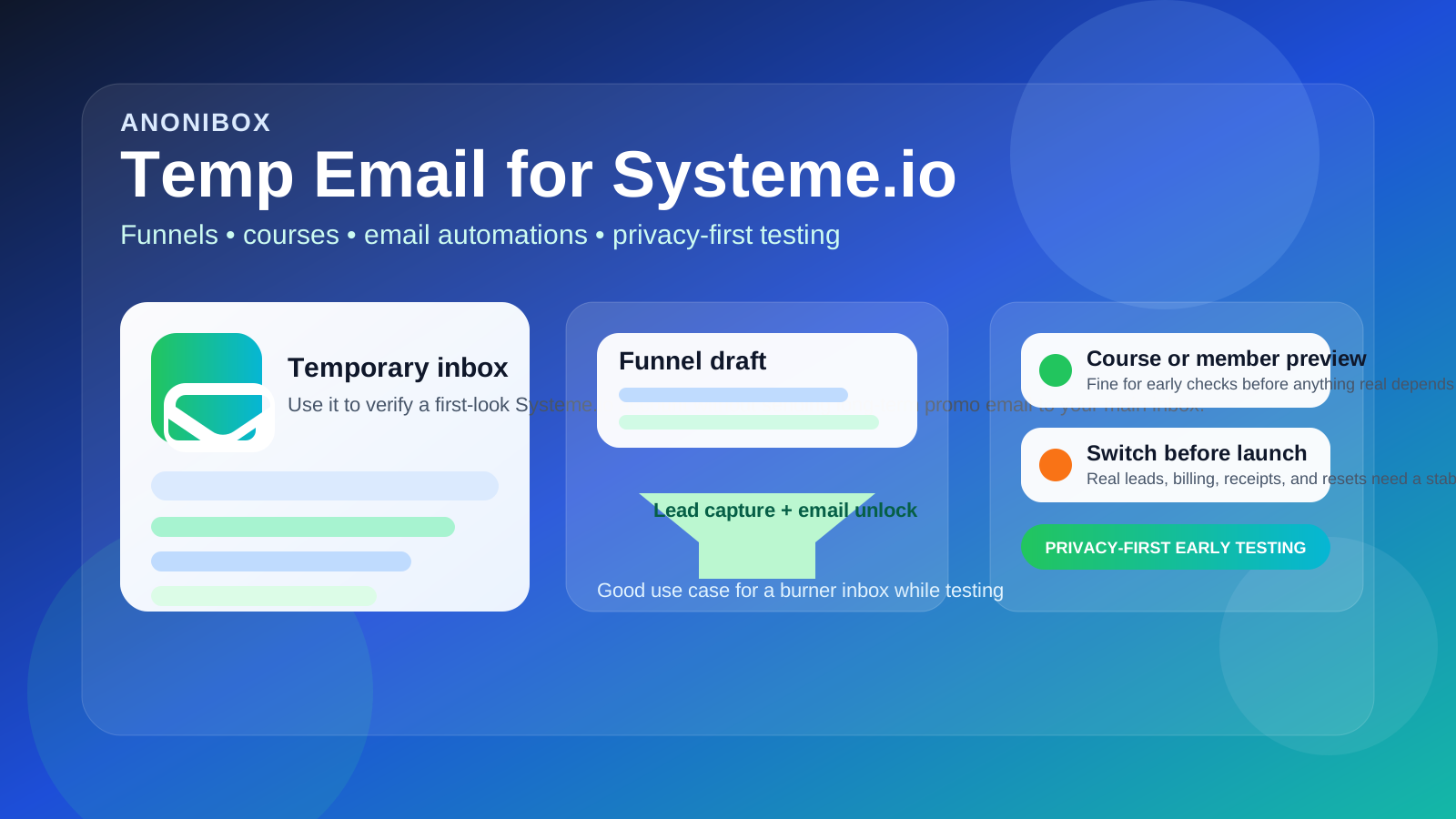
Systeme.io is one of those platforms where the line between “just testing” and “actually using it” disappears fast. You might start with a simple signup to inspect the dashboard, build a draft funnel, or check whether course hosting and email automations are good enough for your project. A day later, you may have a live opt-in page, a paid offer, an email sequence, and a member area that now matters. That is why the email you attach at the beginning deserves a little thought.
A disposable inbox can absolutely help during the low-stakes stage. It keeps your main address out of onboarding sequences, launch promos, and “finish setting up your funnel” reminders while you decide whether the platform is worth keeping. But once your account starts holding leads, products, billing notices, or login recovery details, that same temporary setup becomes fragile. The smart move is to treat a burner inbox as a short-term testing tool, not a permanent operating system for a serious account.
Why people look for a temp email for Systeme.io
Systeme.io combines several categories that all generate email: funnel builders, landing pages, course platforms, membership areas, newsletters, automations, sales pages, and sometimes affiliate-style workflows. That means even a casual first look can trigger more inbox activity than people expect.
- You may only want to compare tools: maybe you are evaluating Systeme.io against ClickFunnels, Kartra, Kajabi, Podia, Teachable, Thinkific, or Stan Store.
- You may want less follow-up: setup nudges, webinar invites, upgrade prompts, feature announcements, and case studies pile up quickly.
- You may be testing one specific flow: such as a signup page, a course preview, a one-time offer page, or a basic automation.
- You may want a privacy buffer: handing over your permanent inbox before you know whether the platform fits can feel unnecessary.
Those are reasonable motivations. If your goal is simple evaluation rather than long-term use, a temporary inbox can keep that experimentation cleaner and more organized.
When a temporary inbox makes sense on Systeme.io
1. You are only exploring the platform
If you want to inspect the interface, understand the onboarding, or judge whether the product feels intuitive, a temp address is fine. At that point the account is still disposable enough to match the inbox.
2. You are checking a draft funnel
Testing whether an opt-in page fires a confirmation email or whether a simple form connects to an automation is a normal short-term use case. You get the first-touch verification messages without inviting long-term inbox clutter.
3. You are previewing a course or membership area
If you are only looking at how the student or member experience behaves, a burner inbox can be practical. The key word is previewing. Once real users or paid access matter, the calculus changes.
4. You are comparing several creator or funnel tools at once
Many people do not test one platform in isolation. They compare landing pages, email automation, course hosting, checkouts, and member areas across multiple products. A temporary inbox helps isolate that early research and keeps your primary email out of several competing nurture sequences.
Where temporary email starts to break down
Systeme.io becomes risky territory for disposable email when the account stops being a sandbox and starts becoming infrastructure.
1. Real leads and contact notifications matter
If people are signing up through your forms, booking through your pages, or joining your list, the account has crossed into real business use. Missing a contact confirmation, a delivery notice, or an important alert is a bigger problem than a little promotional email.
2. Course and member access depend on continuity
When an account controls course logins, membership access, or content delivery, the attached email is no longer just a signup field. It becomes part of the recovery and notification path that keeps access stable.
3. Billing and receipts are not throwaway details
Once you are paying for the platform, selling through it, or relying on it operationally, you want invoices, renewals, failed-payment alerts, and product-related notices to arrive somewhere durable. A disposable inbox is weak infrastructure for anything involving money.
4. Password resets get important at exactly the wrong time
People rarely think about recovery until they are locked out, traveling, launching, or fixing something in a hurry. If that reset path points to an inbox you no longer control, the convenience of a burner address disappears quickly.
5. Automations can outlive your original intention
A small workflow test can quietly turn into a real sequence with tags, follow-ups, links, and live traffic. When that happens, you do not want the owner account sitting on contact information you treated as temporary from the start.
Safe use cases versus risky use cases
Usually safe for a temp inbox
- Browsing the dashboard for the first time
- Verifying a trial account
- Testing a draft opt-in page
- Checking whether a sample automation fires
- Previewing a course or member area before deciding whether to keep the platform
Usually risky for a temp inbox
- Launching a live funnel that will collect real leads
- Selling products or subscriptions through the account
- Hosting courses or member content that people actually need ongoing access to
- Relying on the account for billing notices, invoices, or payment troubleshooting
- Keeping a long-term owner login on a disposable address
The difference is simple: temporary email works well for temporary interest. It works badly for systems you expect to revisit, protect, and grow.
How to use a temp email for Systeme.io without creating future problems
Decide upfront whether this is a test or the beginning of a real setup
If you already suspect you will use Systeme.io seriously, starting with a durable address is usually smarter. If you genuinely do not know yet, temporary email is fine for the first pass.
Use it for verification and low-stakes exploration only
That is where a tool like Anonibox is most helpful. It gives you a buffer during the earliest stage while keeping your permanent inbox out of immediate follow-up sequences.
Save anything important immediately
If you receive a setup email, automation test result, or account confirmation that you need later, save it right away. A temporary inbox is a checkpoint, not an archive.
Switch before you connect revenue or real people
The best migration point is before a live launch, before paid traffic, before active customers, and before real course or member delivery starts. Waiting until after launch usually makes the switch more annoying.
Keep the owner account stable even if test contacts are temporary
You can still test lead flows and signup paths creatively, but the main administrative account should live on an email you control long term once the platform matters to you.
A better middle ground than using your personal inbox everywhere
For many users, the best answer is not “burner forever” and not “personal inbox for everything.” A dedicated but durable business or project email often works better.
- Use a temporary inbox for first-contact testing and one-off evaluation.
- Use a separate long-term project inbox for the real account if you plan to keep building.
- Keep your main personal inbox out of noisy platform trials without sacrificing recoverability.
That gives you privacy and organization without creating a brittle account foundation.
Practical examples
Example 1: comparing funnel builders
You want to see whether Systeme.io feels simpler than ClickFunnels or Kartra for a basic landing-page flow. A temp email is reasonable because you are still shopping, not committing.
Example 2: testing a free mini-course setup
You build a draft lesson area and want to check whether the first welcome email arrives. A burner inbox can help during testing, but if you decide to keep the course, switch before real students depend on it.
Example 3: launching a live lead magnet
Once the page is public and actual contacts are flowing in, the account is operational. That is no longer the moment for a disposable owner inbox.
Example 4: selling through the platform
If payments, invoices, or customer access are involved, reliability beats short-term privacy convenience. Move the account to a stable address before money enters the picture.
Quick checklist before you use a temp email for Systeme.io
- Am I only testing the platform, or do I expect to keep this account?
- Will real leads or students depend on this setup?
- Would missed billing or recovery emails become a problem?
- Am I reducing spam, or just postponing a better account setup decision?
- If the platform works, do I already have a durable inbox ready to switch to?
If your answers point toward short-term evaluation, a temp inbox makes sense. If they point toward a serious funnel, course, or business workflow, a stable email is the better move.
Final answer
A temp email for Systeme.io is useful for early funnel, course, and email workflow testing when you want privacy and less inbox clutter during evaluation.
It becomes the wrong foundation once real leads, member access, billing alerts, receipts, or account recovery matter. Use temporary email for the experiment; use a reliable inbox for the system you actually plan to run.