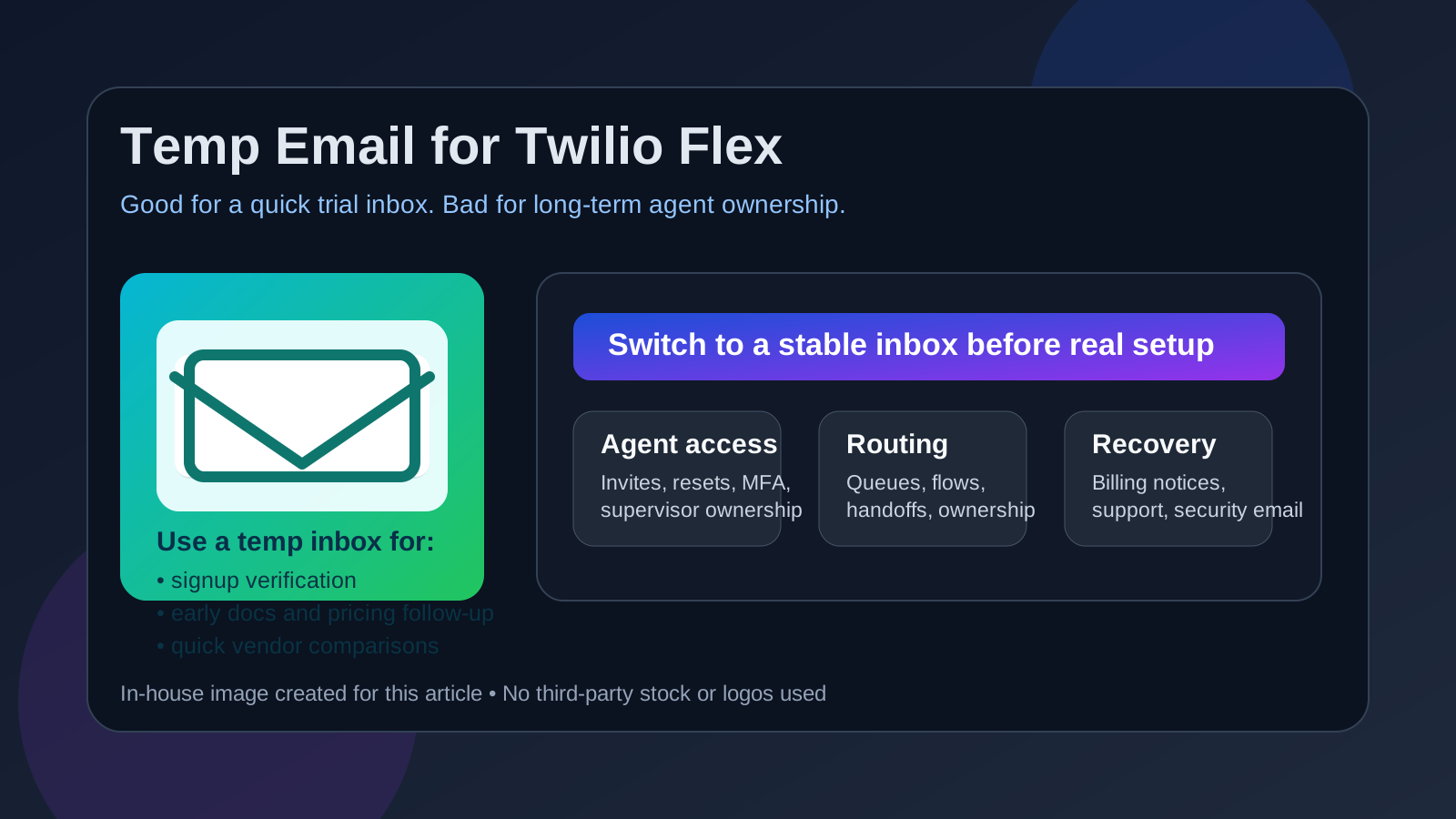
A temp email can work for a short Twilio Flex trial sign-up if you only need the verification email, a few onboarding messages, and a quiet way to compare vendors. It becomes a bad idea once agent access, routing ownership, billing notices, or account recovery depend on that inbox.
If you are evaluating contact center software and want to keep early sales follow-up out of your main mailbox, that distinction matters. Twilio Flex is the kind of platform where a disposable inbox can help during the first hour of research, but it can create real friction once the account starts touching live team workflows.
Short answer
Yes, a temporary email is reasonable for a quick Twilio Flex trial when your goal is simple: confirm the signup, look around the product, skim the documentation, and decide whether the platform deserves a deeper evaluation.
No, you should not keep a disposable inbox attached once the account starts acting like a real shared business system. That includes agent invites, queue and routing ownership, security notices, admin changes, billing communication, or any setup you would actually want to preserve.
Why people consider a temp email for Twilio Flex in the first place
Twilio Flex sits in the same general category as other contact-center and cloud-communications platforms that often require a signup before you can explore pricing details, demos, guided trials, or implementation material. If you are comparing several tools at once, your regular inbox can get noisy fast.
A temp inbox gives you a clean buffer. You can verify the account, receive the first welcome emails, and keep early-stage vendor follow-up separate from your long-term work email. That is especially useful if you are still deciding whether Flex belongs on the shortlist next to other platforms you are testing.
This is where a tool like Anonibox fits naturally: it helps you keep trial-stage email organized and disposable instead of letting every early signup follow your main inbox for months.
When a temp email works well for Twilio Flex
There are a few situations where using a temporary inbox is practical and low-risk.
- You only want to verify the trial and look around. If the goal is basic product exploration, a temp inbox can be perfectly fine.
- You are comparing multiple contact-center vendors quickly. Keeping those trial messages separate makes vendor research easier to manage.
- You do not plan to keep the account. If the test is strictly short-term, the inbox does not need long-term ownership value.
- You want to reduce sales-email clutter. Early trial follow-up can be useful, but not every vendor deserves permanent access to your everyday mailbox.
In those cases, the temp inbox is doing exactly what it should do: protecting your main email while still letting you receive the one or two messages needed to get started.
Where a temp email starts to break down
Twilio Flex stops being a simple “look around” product very quickly. The moment your account starts acting like the operational home for a support or sales team, a disposable inbox becomes fragile.
Agent and admin access
Once you invite agents, supervisors, or admins, the email behind the account matters more. Password resets, invite flows, account notices, and security prompts need to reach an inbox you actually control and can reliably revisit. A temp inbox is not a good long-term anchor for that.
Routing and workflow ownership
Flex is not just a mailbox or a lightweight chat tool. Teams use it for contact routing, workflows, queues, and customer interactions. When your account starts owning those settings, losing the inbox tied to admin communication becomes a real operational risk, not just a small inconvenience.
Billing and account notices
If the evaluation turns serious, you may eventually care about plan changes, billing notices, account alerts, or implementation follow-up. Those emails should land somewhere stable, searchable, and accessible to the right people later.
Support and troubleshooting
Any complex contact-center rollout eventually creates support questions. If the main account email was disposable, you can end up with a messy handoff when you need to refer back to setup notices, verification messages, or prior support communication.
Recovery and security
Recovery is the big one. The inbox attached to a serious business account should be recoverable, monitored, and owned intentionally. Disposable email is almost the opposite of that design goal.
A better way to use temp email with Twilio Flex
The smartest setup is not “never use a temp email” and it is not “use one forever.” It is a staged approach.
- Use the temp inbox for the first pass. Sign up, verify, collect the early onboarding material, and decide whether Flex deserves more time.
- Switch early if the product becomes a real contender. Do not wait until the account already owns important setup or team access.
- Move to a stable team-controlled inbox. For a real evaluation, use an email that the right people can access later, such as a shared admin or operations address.
- Document the handoff. Make it clear which inbox owns the account before anyone builds routing, integrations, or agent workflows around it.
This gives you the privacy benefit at the start without creating long-term ownership problems later.
What kind of stable inbox should replace the temp one?
For a serious Twilio Flex evaluation, the best replacement is usually not one person’s forgotten side inbox. It is a durable address that fits the company’s real ownership model.
That might be:
- a shared operations inbox
- a team-owned support or admin address
- a role-based address used for vendor trials and platform ownership
- a monitored company inbox with clear internal access rules
The exact setup depends on your team, but the principle is simple: if the platform might matter later, the inbox behind it should matter too.
Twilio Flex-specific questions to ask before keeping a temp inbox
If you are unsure whether you have crossed the line from harmless trial to risky ownership, ask yourself these questions:
- Will this account invite real agents or supervisors?
- Will anyone depend on this account for queue or routing setup?
- Will the account receive billing, compliance, or support communication that needs to be retained?
- Will multiple people need continuity if the original evaluator leaves?
- Would it be painful to lose access to the inbox tied to this account next week?
If the answer to any of those is yes, a disposable inbox is already the wrong long-term fit.
What a temp email can still do well during evaluation
Even with those warnings, temporary email still has a legitimate role here. It is useful for:
- screening whether the vendor experience feels worth deeper effort
- collecting the first confirmation and welcome emails
- isolating trial-stage communication from your primary inbox
- protecting a personal or heavily used work inbox from unnecessary follow-up
- keeping multiple vendor tests from blending together
That is a good privacy workflow. The mistake is turning a trial-only privacy tool into the permanent root of an operational contact-center account.
Common mistakes to avoid
- Waiting too long to switch. If the product becomes promising, change the account email before more people and settings depend on it.
- Using a disposable inbox for shared team ownership. Shared systems need durable access and accountability.
- Forgetting about recovery. Admin accounts always look harmless until the day a reset, security check, or ownership dispute happens.
- Treating all trial software the same. A simple newsletter tool and a contact-center platform do not carry the same operational risk.
So, should you use a temp email for Twilio Flex?
Use a temp email for initial research, not for real ownership. That is the cleanest rule.
If you want to open a Twilio Flex trial without giving every early sales or onboarding message permanent access to your main inbox, a disposable address is reasonable. If the evaluation moves beyond a quick look and starts involving agents, routing, support ownership, billing, or security recovery, switch to a stable inbox right away.
That gives you the best of both worlds: privacy at the start, reliability when the account begins to matter.
Final takeaway
A temp inbox is useful for a short Twilio Flex trial because it helps you verify the account, compare platforms, and avoid long-term email clutter. But Flex is the kind of product that can become operational fast, and once it does, the inbox behind the account needs to be stable, intentional, and recoverable.
Use temporary email for the trial stage. Use a real team-owned inbox for everything that comes after.