A temp email for VEED can make sense if you only want to test the editor, open a one-off workspace, or compare it with other video tools without tying your main inbox to another long-tail signup.
If the account might end up holding real drafts, client review links, team access, billing, or exports you will want later, use an email address you control long term instead of a disposable one.
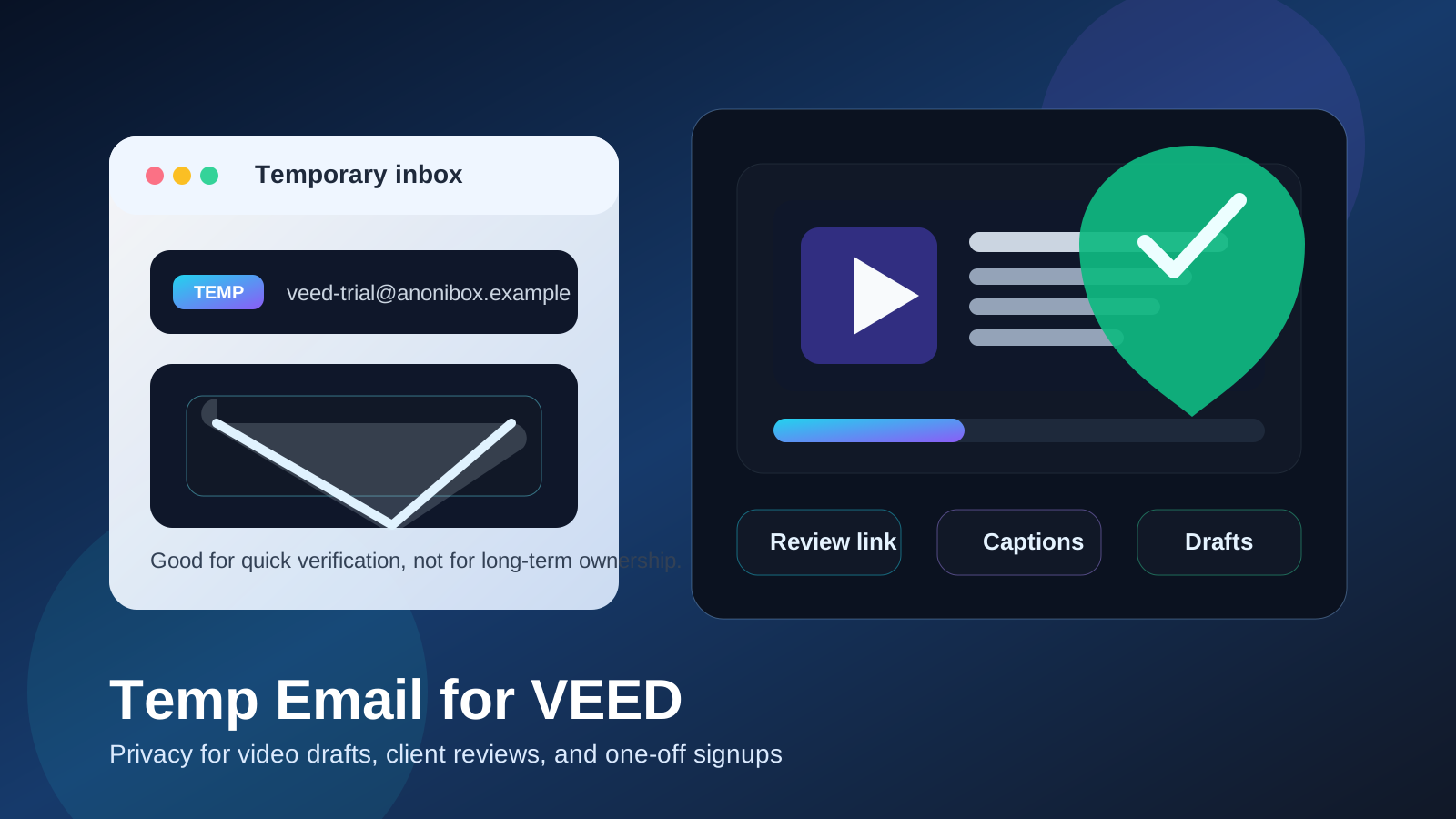
That is the short answer, but VEED sits in one of those categories where a casual test can turn into real work faster than people expect. You might sign up to try captions, trim a talking-head clip, clean up a social video, or compare editing workflows with tools like CapCut, Runway, and Canva. Then a quick experiment becomes a reusable project, a review link for a client, or part of a real publishing process.
That is why temporary email can be useful at the start and frustrating later. It helps with inbox privacy and trial hygiene, but it is weak as a foundation for anything you might need to revisit. If you use it carefully, it can keep early experimentation tidy without creating a recovery problem later.
Why people look for a temp email for VEED
Most people searching for a temp email for VEED are trying to solve a very ordinary problem: too many software signups lead to too many follow-up emails. Verification emails are fine. A never-ending stream of onboarding tips, webinar invites, feature announcements, upsell nudges, and reminder campaigns for a tool you only tested once is less appealing.
VEED is exactly the kind of product that creates this tension. It is easy to justify a quick test. You may want to upload one clip, compare subtitle workflows, try a template, or see how the browser-based editor feels before deciding whether it deserves a place in your actual process. In that moment, a temporary inbox feels smart because you get the confirmation message without giving another service a permanent line into your everyday email.
That instinct is reasonable. The problem is not the first login. The problem is what happens if the trial turns into ongoing work.
Short answer: useful for low-stakes testing, risky for anything you may need later
If you only want to verify an account, poke around the interface, and decide whether VEED is even worth using, a disposable inbox can be a practical privacy choice. It keeps the signup isolated and reduces the chance that your primary inbox collects months of follow-up messages from a tool you never adopt.
But if you think there is a real chance you will keep the account, save video drafts, share review links, invite collaborators, or pay for features, temporary email becomes fragile. The more valuable the account becomes, the more valuable stable email access becomes too.
When using a temp email for VEED makes sense
1. You are only evaluating the editor
Maybe you just want to see whether the workflow feels faster than your current setup. You are not promising yourself that this will become your default video editor. In that case, a temp inbox is a reasonable way to verify the account and explore the product without adding another permanent sender to your main inbox.
2. You are comparing several creative tools side by side
It is common to test VEED alongside CapCut, Canva, Runway, or other browser-based creation tools. When you are evaluating multiple products at once, giving each one your permanent inbox can create unnecessary noise. A temp address keeps the trial contained while you decide what is actually worth keeping.
3. You need a one-off signup for a short test
Sometimes the goal is not long-term use at all. You may want to trim one clip, check a workflow, or open a temporary workspace and then move on. If losing easy access later would not matter, a disposable inbox can be perfectly fine.
4. You want a clean boundary between experiments and real accounts
Some people simply prefer not to let every product trial live beside work correspondence, personal communication, and important accounts. A temporary inbox can act as a filter during that earliest evaluation stage.
When a temp email for VEED becomes a bad idea
1. Your draft is turning into a real project
This is the most common failure point. A video that started as a casual test becomes the first edit for a client, a reusable template for a channel, or a draft you plan to revisit next week. Once the project itself matters, a disposable inbox stops looking convenient and starts looking flimsy.
2. You expect to come back later
People routinely underestimate how often “I am just testing this” turns into “I need that project again on Monday.” If there is a decent chance you will return to the account, stable access matters more than inbox minimalism.
3. Review links or collaboration enter the picture
The moment you involve a teammate, client, editor, or stakeholder, reliability becomes more important. Shared access, comments, invitations, and account notices are much easier to manage when the account is tied to an email address you can always access.
4. Billing or plan changes matter
If you ever move beyond a casual trial and pay for features, you do not want invoices, renewal notices, or support communications attached to a disposable address. Paid use deserves a durable login and a durable contact point.
5. You care about recovery or ownership
If losing the account would be annoying, expensive, or embarrassing, do not build that risk into the signup. Account recovery almost always matters more after the trial than during it.
What kinds of email a VEED signup can lead to
One reason people reach for a temporary inbox is that even a simple creative-tool trial can trigger more email than expected. Depending on how the product is used, you may see:
- verification and login emails,
- welcome and onboarding sequences,
- editing tips and tutorial content,
- feature announcements and upgrade prompts,
- workspace or collaboration invitations,
- account and billing notices,
- return-to-product reminders after an unfinished project.
None of that is inherently bad. The real question is whether you want that relationship attached to your main inbox before you even know whether VEED will matter to you long term.
How to use a temp email for VEED without creating a mess
Step 1: decide whether this is a trial or a real workflow
Be honest before you sign up. Are you just comparing editors, or do you already suspect the account may become part of your content process? If it is a true trial, a temp inbox is often fine. If it may become real work, start with a stable address.
Step 2: create the temporary inbox first
Generate the inbox before you begin so the entire signup stays segmented from your normal email. A service like Anonibox is useful here because the goal is simple: receive the verification message and early onboarding emails without immediately committing your long-term inbox.
Step 3: keep the account scoped to the original test
If you opened the account just to test captions, edit one clip, or compare workflows, stick to that purpose. The mistake is letting a throwaway account quietly become the home for projects you actually care about.
Step 4: save what matters early
If you end up with a draft, export, or setup flow that you may need later, capture it while you still have clean access. Temporary inboxes are best when the account itself is temporary too.
Step 5: switch to a stable address before the stakes rise
As soon as the project starts to matter, move to an email address you control long term. Do it before client links, paid features, or recurring use turn the switch into a stressful cleanup job.
A better alternative for many people: a separate permanent project inbox
Some people think they need a disposable email when what they really want is separation rather than throwaway access. In that case, a separate permanent inbox is often the better answer.
For example, you might keep one address for real work communication, one address for software trials and side projects, and temporary inboxes only for genuinely low-stakes signups. That gives you most of the privacy and organization benefits without the recovery headache.
If you believe there is even a moderate chance that VEED will become part of your real content workflow, a dedicated long-term project inbox is usually smarter than a fully disposable one.
Practical examples
Good use case
You want to compare a few browser-based video editors, upload a sample clip, and see which interface feels easiest. You do not plan to keep the account if the tool disappoints. A temp email is a good fit.
Borderline use case
You are cutting a short social clip for a project that might become recurring work. You are still “just testing,” but there is a real chance you will come back to the same draft or workflow. This is where a separate permanent inbox is usually the better choice.
Bad use case
You are preparing client videos, building a repeatable editing process, paying for features, or expecting to revisit projects later. Do not anchor that to a disposable inbox. Use a durable address from the start.
A quick checklist before you sign up
- Am I only testing VEED, or do I think I may keep using this account?
- Would losing easy access next month be harmless or annoying?
- Could this account end up holding real drafts, shared links, or paid access?
- Will collaborators or clients become involved?
- Do I want a throwaway inbox, or do I really want a separate long-term project inbox?
If your answers lean toward short-term, low-stakes, and disposable, a temp email for VEED can be useful. If they lean toward important, collaborative, or ongoing, use an address you control long term.
Final takeaway
A temp email for VEED is a practical privacy tool for quick testing, one-off signups, and early comparison work. It helps keep your main inbox cleaner while you decide whether the editor actually belongs in your workflow.
Just do not confuse trial convenience with long-term account strategy. The moment a VEED account starts holding real work, client links, billing, or repeat-use value, a disposable inbox becomes a liability. Use temporary email for temporary evaluation, and switch to a stable address for anything you expect to keep.