Yes — using a temp email for Wedding Spot is a practical way to ask about venue pricing, availability, and packages without handing your main inbox to every venue you contact on day one. It helps you collect replies, compare options, and keep early wedding research separate until you know which venues are actually worth continuing with.
If a venue becomes a serious contender, switch to your real email before contracts, deposits, guest communication, or long-term coordination start. A temporary inbox is best for the research and shortlist stage, not the final planning stage.
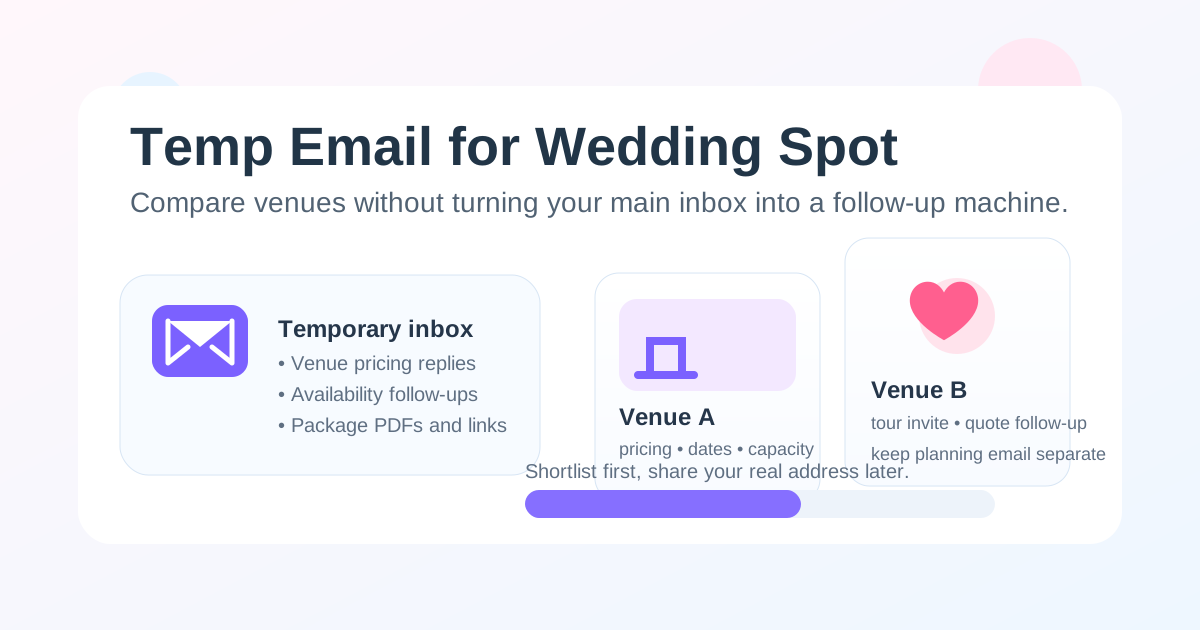
Why people look for a temp email for Wedding Spot
Wedding venue research gets noisy fast. One afternoon of browsing can turn into multiple inquiry forms, package PDFs, availability replies, reminders to schedule tours, and follow-up messages that keep coming long after you have crossed a venue off your list. That does not mean the platform or the venues are doing anything wrong. It just means wedding planning creates a lot of email volume, especially when you are still comparing options.
A temp inbox gives you a cleaner way to handle that early stage. Instead of mixing venue inquiries with work messages, bills, family threads, and everything else in your real account, you can keep your first round of Wedding Spot conversations in a separate lane. That makes it easier to review quotes calmly and harder for a burst of wedding planning messages to take over your main email.
What a temporary email helps with on Wedding Spot
- Early pricing inquiries: You can ask for rough package details without committing your long-term inbox right away.
- Availability checks: If you are contacting multiple venues for similar dates, a separate inbox keeps those replies easy to compare.
- Tour scheduling and follow-ups: You can decide which venues are serious before moving the conversation to your real address.
- Spam control: Even legitimate follow-up can become too much when you are researching broadly.
- Better organization: A single-purpose inbox makes it simpler to keep planning notes separate from everyday life.
The real benefit is not secrecy. It is separation. You are creating a buffer between casual research and full commitment.
When a temp email for Wedding Spot makes the most sense
A temporary address is most useful when you are still trying to narrow the field. Maybe you do not know whether you want a ballroom, winery, rooftop, garden, or restaurant venue yet. Maybe you are collecting pricing ranges before you build a realistic budget. Maybe you are sending a first wave of inquiries and you expect that only a few venues will survive your shortlist. That is exactly the moment when a temp inbox is valuable.
It is also useful if you are privacy-conscious and do not want your primary address tied to every planning platform, venue request form, or vendor reply chain you touch during research. Wedding planning often spreads across multiple sites, multiple categories, and multiple follow-up threads. Separating that activity early can save you a lot of inbox cleanup later.
When you should switch to your real email
Do not keep a temporary inbox attached forever. Once you are seriously considering a venue, it is better to move the conversation to a stable address you actually monitor long term. That usually means switching when:
- you are booking a tour or live call,
- you are reviewing a detailed proposal,
- you need to coordinate with a partner, planner, or family member,
- you are discussing contracts, deposits, or payment schedules, or
- you expect an ongoing planning thread for weeks or months.
In short: use the temp inbox for exploration, then graduate to your main planning address when the conversation becomes real.
How to use a temp email for Wedding Spot without creating extra chaos
1. Create the inbox before you start sending inquiries
Set up the address first so every early message lands in the same place. If you are using Anonibox, generate the inbox before opening multiple venue tabs. That way you do not end up scattering replies across several throwaway addresses or accidentally using your real one on the third form out of habit.
2. Use it only for first-contact research
Think of the temporary inbox as your screening layer. Use it for availability requests, rough pricing, brochure downloads, and first-round venue questions. If a venue looks promising, that is the point where you can reply from your real planning address or tell them where to continue the conversation.
3. Save important details immediately
Do not rely on memory. As replies come in, copy the details that matter into your planning notes:
- venue name
- starting price or package range
- available dates
- guest capacity
- outside vendor rules
- tour availability
- parking, catering, or minimum-spend notes
This step matters because a temporary inbox is a research tool, not your permanent record system.
4. Compare venues using the same questions
The easiest way to get useful answers is to be consistent. Ask each venue the same core questions so you can compare replies side by side instead of trying to interpret a pile of loosely related sales messages.
A simple set might include your preferred date range, estimated guest count, rough budget range, ceremony/reception needs, and whether you need on-site catering or coordination. Structured questions produce much cleaner answers.
5. Move finalists to a stable email address
Once you have a shortlist, switch to the address you want tied to real planning. That gives you continuity for contracts, reminders, proposals, and future vendor coordination while keeping your early-stage venue research neatly contained.
A practical checklist before sending venue inquiries
Before you contact venues through Wedding Spot, it helps to know what you are actually trying to learn. Otherwise every reply feels urgent and none of them feel comparable. A good first-pass checklist includes:
- Your target season or date window
- Expected guest count
- Whether you want ceremony and reception in one place
- Your rough all-in venue budget
- Whether weekday or off-season dates are acceptable
- Any must-haves such as outdoor space, accessibility, parking, or in-house catering
When you know your own filters, a temp inbox becomes even more useful because you can sort replies quickly and ignore the ones that do not match your needs.
Common mistakes to avoid
Using the temp inbox too late
If you start with your real address and only switch after the inbox gets noisy, you have already given that address to every venue you contacted. The cleaner move is to separate early.
Using a temp inbox for final booking steps
A disposable address is not the right tool for deposits, contracts, or months of planning communication. Once money and commitments enter the picture, use an address you control and check consistently.
Failing to capture the useful replies
Some people use a temporary inbox correctly but forget to save pricing links, attached brochures, or scheduling information. That defeats the point. Save the data you care about while it is fresh.
Contacting too many venues without a filter
If every venue looks interesting, the inbox problem is not just email volume. It is decision volume. Narrow the list with location, guest count, price range, and style before you start sending messages.
What a temp email does not do
A temporary address is useful, but it is not magic. It does not make a venue anonymous, it does not protect every other detail you choose to share, and it does not replace basic common sense. If you include your full name, phone number, budget, and event details in every message, you are still sharing real information. The inbox only changes where the replies go.
That is why the best privacy approach is layered. Use a temporary inbox for early contact, keep your message minimal until a venue looks promising, and only move into deeper planning conversations when you actually want the relationship to continue.
Is a temp email for Wedding Spot worth it?
For most people in the research stage, yes. If you are comparing multiple venues, a temp email for Wedding Spot is a simple way to reduce clutter, protect your primary inbox, and keep wedding planning from spreading everywhere at once. You still get the information you need, but you stay in control of when a venue earns access to your real long-term address.
That makes the process calmer, cleaner, and easier to manage — especially when you are fielding a lot of venue replies in a short period of time.
Final takeaway
A temp email for Wedding Spot works best as a shortlist tool. Use it when you are gathering pricing, availability, and first-round details from several venues. Save the useful replies, compare them in one place, and then switch to your real planning email only for the venues you genuinely want to pursue.
That way you can move through the early wedding research stage without turning your main inbox into a permanent archive of every venue you almost considered.