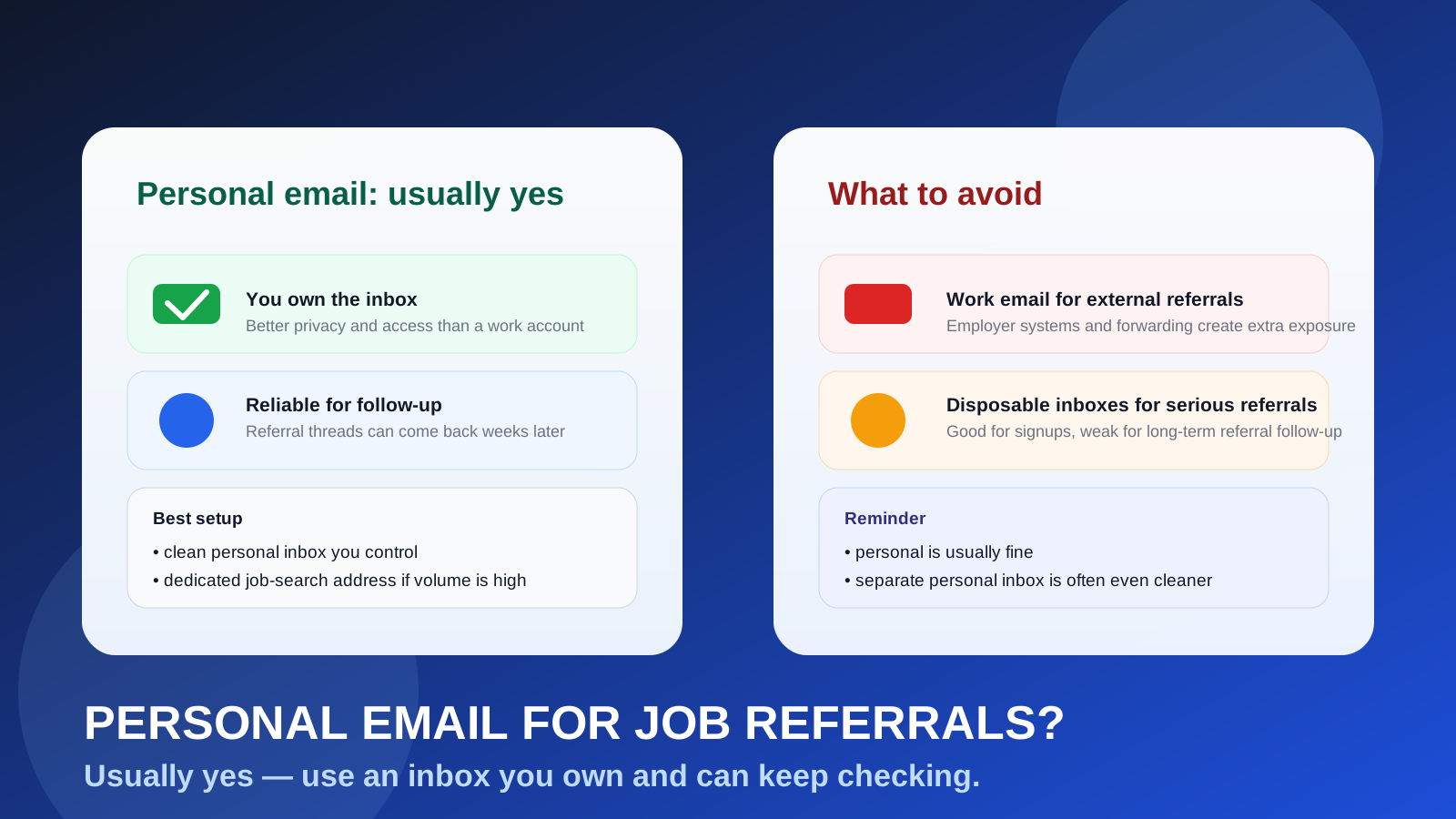
Usually yes. A personal email is a reasonable default for job referrals because you control it, keep access to it, and avoid tying a private job search to employer-owned systems.
If you want cleaner boundaries, a dedicated job-search inbox can be even better than your main everyday address, but your own personal email is still a much safer choice than a work inbox for most referral conversations.
Referrals feel informal compared with a normal application, but they often create longer and more important communication threads. A friend forwards your resume. An employee introduces you to a recruiter. A recruiter replies a week later. A hiring manager asks about timing. Then someone sends an application link, interview options, or a follow-up months later when a better opening appears.
That is why the email address you use for job referrals matters more than people think. It is not just about whether the first message lands. It is about who controls the inbox, whether you will still have access later, how professional the address looks, and how much job-search activity you want mixed into your everyday life.
For most people, a personal email is perfectly acceptable for referrals. In fact, it is often the most practical middle ground: more stable than a temporary inbox and more private than a work account. The only real caveat is that your main personal inbox is not always the best personal inbox. If you are actively networking, applying widely, or trying to keep your search very organized, a separate personal inbox used only for job hunting can work even better.
Why referrals are different from ordinary job applications
A standard job application can be fairly transactional. You fill out a form, upload a resume, and wait. A referral is usually more human and more dynamic. Someone inside a company is helping you get seen, which means there is often a chain of introductions, forwarding, and follow-up.
That referral chain may involve:
- a friend, former coworker, classmate, or alum introducing you
- your resume being forwarded to a recruiter or hiring manager
- clarifying messages about role fit, location, timing, or salary range
- requests for a portfolio, GitHub, LinkedIn, or work samples
- later follow-up if the first role closes but another one opens
Because referral conversations often stay alive longer than people expect, the best email choice is usually one that is stable, professional, and fully under your control.
Short answer: a personal email is usually fine, and often preferable
If you are wondering whether using your personal email for job referrals looks unprofessional, the answer is generally no. A normal personal address is completely standard in most hiring contexts. Recruiters and employees making referrals do not expect you to conduct an external job search through a company-managed mailbox.
In fact, using a personal email often signals better judgment than using a work address. It shows that you understand boundaries, want consistent access to your messages, and are not treating your current employer’s systems as the home base for a confidential search.
Why a personal email works well for job referrals
1. You control the account
This is the biggest advantage. A personal email belongs to you. You are not depending on employer access policies, company devices, or account shutdown rules. If the referral process stretches over weeks or months, your inbox does not disappear just because your work situation changes.
2. It protects your search from employer visibility
Even when no one is actively monitoring a work inbox, employer-managed email still lives inside employer-managed systems. Notifications can show up on work laptops, phones, browsers, archives, and security tools. A personal account reduces that exposure immediately.
3. It is normal and professional
Using a personal address for an external job referral is not unusual. It is the default for many candidates. As long as the address itself looks clean and reasonable, most recruiters will not think twice about it.
4. It is better for long-tail follow-up
One of the hidden strengths of personal email is continuity. Referral-driven hiring is not always immediate. Sometimes a recruiter says no to one opening and comes back later for another. Sometimes your internal contact changes teams and reconnects months later. Those opportunities are much easier to preserve when the thread lives in an inbox you still own.
What can go wrong if you use your main everyday personal email?
Even though a personal email is usually fine, that does not mean your main everyday inbox is always ideal. There are a few drawbacks to think about.
Inbox clutter
If your personal email already handles bills, friends, travel, shopping, newsletters, and account logins, referral messages can get buried. That is not a privacy disaster, but it can create avoidable delays.
Old or unprofessional handles
The issue is rarely the fact that an address is personal. The issue is whether it still looks mature and professional. If your primary address has an old joke handle, gaming reference, or overly casual format, it is worth using a cleaner one for career conversations.
Too much context in one place
Some people simply do not want career moves mixed into the same inbox they use for family, healthcare, banking, and personal accounts. That is a reasonable preference. Separation can make a search feel calmer and easier to manage.
Follow-up overload during an active search
If you are networking hard, asking for many referrals, and talking to multiple recruiters, even a good personal inbox can get noisy fast. Labels and filters help, but sometimes the better solution is a dedicated search address.
When a separate personal job-search email is better than your main personal email
This is the nuance that matters. The question is not only “personal email or not?” It is also “which personal email?”
A separate personal inbox used only for job searching is often the best option when:
- you are running a confidential search while employed
- you expect a lot of referral traffic and recruiter follow-up
- you want your resume, referrals, interviews, and applications in one place
- you want to mute or retire the inbox later without touching your main personal accounts
- you want a cleaner professional identity than your oldest everyday email provides
That setup gives you the ownership benefits of personal email without the clutter of your all-purpose inbox. So if someone asks, “Should I use my personal email for job referrals?” the practical answer is often: yes, preferably a personal inbox dedicated to your search if you can manage one.
Why a work email is usually worse
Using your work email for job referrals is usually the riskier move. The problems are straightforward:
- your employer owns the mailbox and surrounding systems
- referral threads are often forwarded, which spreads the address
- notifications can surface on work-managed devices
- you may lose access later if you leave or get locked out
- it can create awkwardness for the person referring you
A personal email avoids nearly all of that. Even if your main inbox is not perfect, it is usually still safer and more future-proof than an employer address.
Where temporary email fits — and where it does not
Because Anonibox is built around privacy and disposable inboxes, it is worth being clear here: a temporary inbox is usually not the best home for a real referral conversation.
Temporary email works best when the interaction is low-trust, early-stage, or likely to create spam. That can include job-board signups, gated salary content, newsletters, one-off career communities, or exploratory tools you are not sure you want to keep using. In those cases, using Anonibox or another temporary inbox can reduce clutter and exposure.
But a genuine referral is different. A real person is introducing you to a real opportunity, and the thread may matter later. You do not want that conversation tied to an inbox that expires, gets abandoned, or looks too disposable for a serious hiring process. For referrals, stability matters more than short-term anonymity.
A good rule is simple:
- Use temporary email for disposable signups, low-trust platforms, and spam-prone exploration.
- Use a stable personal email for real referrals, recruiter follow-up, and interview coordination.
Best practices if you use your personal email for job referrals
Use a clean display name and address
Your email should look simple and adult. Usually your name or a close variation is enough. If your main personal account does not meet that standard, create a cleaner search inbox.
Check it consistently
Referrals lose value when follow-up sits unanswered. If you use a personal inbox, make sure you are watching it closely enough to respond to recruiter messages in a reasonable time.
Organize the thread early
Create labels or folders for referrals, recruiters, applications, and interviews. Referral chains can branch into several conversations quickly, and structure helps you avoid missing details.
Keep work devices out of it when possible
A personal email becomes less private if you only access it through a work laptop, a work browser profile, or a company-managed phone. If you are trying to keep your search discreet, keep the whole workflow in personal environments you control.
Preserve context outside the inbox too
When someone offers a referral, note who they are, what role they mentioned, when they introduced you, and which company or team is involved. Those notes matter later if the conversation goes quiet and then returns.
When using your personal email might not be the best choice
There are a few cases where you may want something else:
- your main personal address looks casual or outdated
- you already know the search will create a heavy message volume
- you want stronger separation between daily life and job-search activity
- you share device notifications in a way that makes the inbox less private
Notice that none of these reasons automatically point you toward a work email or a disposable inbox. They usually point toward a better personal inbox — one that is clean, stable, and dedicated.
A quick decision checklist
Before using your personal email for a referral, ask yourself:
- Do I fully control this inbox?
- Will I still have access if my job situation changes tomorrow?
- Does the address look professional enough for recruiter communication?
- Can I keep up with follow-up from this inbox?
- Would a separate personal job-search email make my life easier?
If the answers are mostly yes, your personal email is probably a solid choice.
Final answer
Yes — in most cases, you can use your personal email for job referrals, and it is usually a better option than using a work email. It gives you ownership, continuity, and more privacy while still looking normal in a professional hiring process.
That said, the best version of “personal email” is often a dedicated job-search inbox rather than your busiest everyday address. Use temporary email for disposable signups and spam-prone exploration, keep real referrals on a stable inbox you own, and you will have a setup that is both practical and privacy-conscious.