Usually no. You generally should not use your work email for job referrals if you want to keep your search private, stay in control of the conversation, and avoid tying a personal career move to employer-owned systems.
A stable personal or dedicated job-search inbox is almost always the better choice. Referral threads can be forwarded internally, revived weeks later, and turned into interviews or portal logins, so the email address attached to them should be one you own and can keep using.
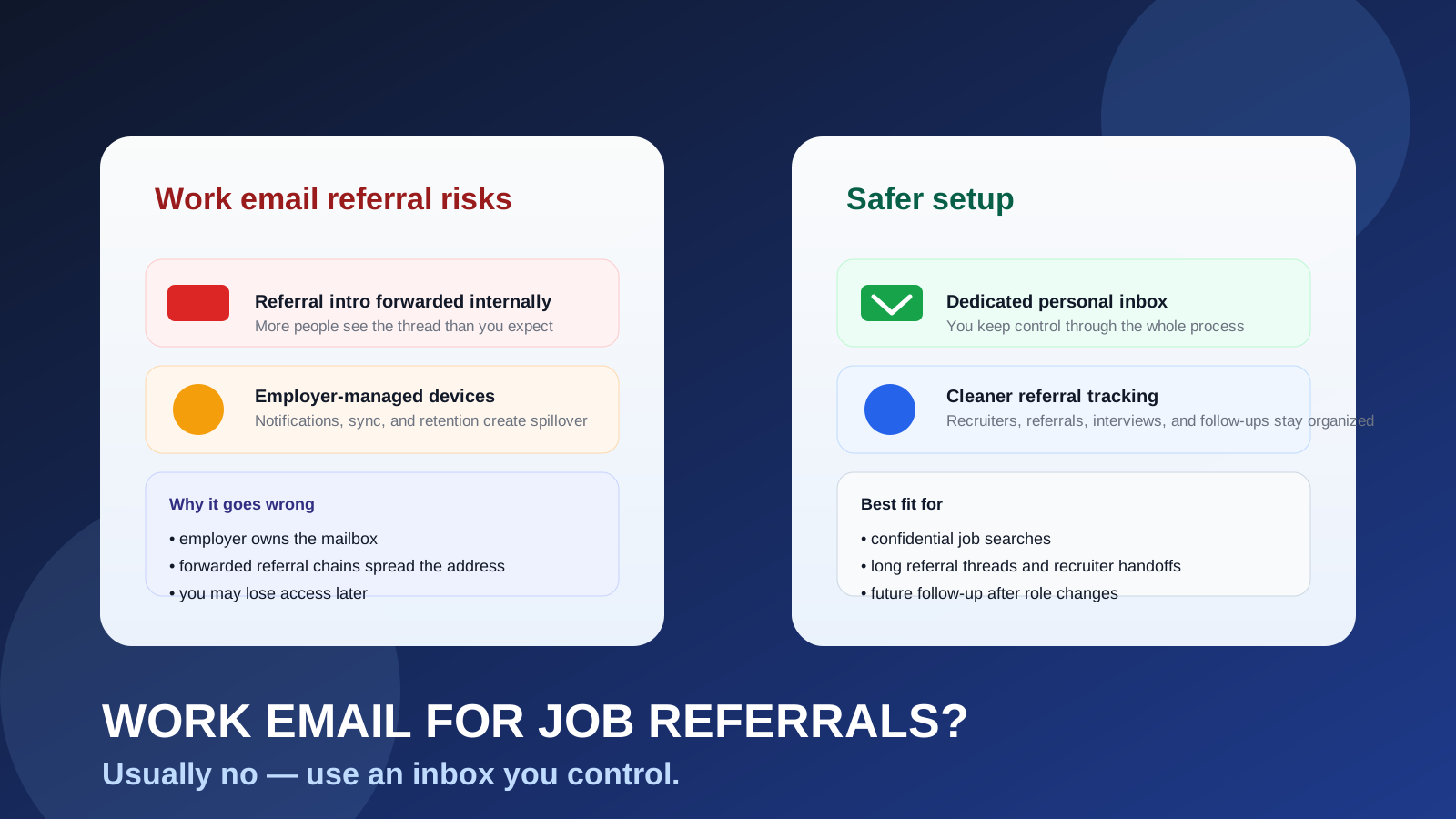
People sometimes treat referrals as low-risk because they begin with someone they know: a former coworker, a friend, an alum, or a trusted recruiter introduction. But referrals can create surprisingly long and messy email trails. One person introduces you to another, a recruiter replies later, a hiring manager gets looped in, and soon your information is moving through several inboxes, hiring systems, and follow-up threads. If that whole chain starts from your employer-provided address, you are adding avoidable risk right at the beginning.
The issue is not that referrals are bad. In many searches, they are one of the best ways to get serious attention. The issue is that a referral is still part of a job search, which means privacy, account control, and long-term access matter. A work inbox is usually weak on all three.
Why job referrals need a more careful email choice
A referral is different from a cold application. With a normal application, you might fill out a form and wait. With a referral, someone often vouches for you, forwards your resume, introduces you to a recruiter, or sends your profile to a hiring team. That tends to create more human follow-up and more message forwarding.
In practice, a referral thread may include:
- an employee introducing you to a recruiter or hiring manager
- requests for your resume or portfolio
- questions about timing, location, or role fit
- links to a formal application portal
- screening calls or interview scheduling
- later re-contact if the first role closes but another opens
That is why referrals need a real, stable address. At the same time, they should not be tied to a mailbox your employer controls. The best setup is usually a professional personal inbox or a dedicated job-search email you manage yourself.
Short answer: use an email address you own, not one your employer owns
If somebody is helping you get in front of a company, you want the process connected to an address that stays with you. Your current employer’s mailbox does not. Even if it feels convenient and even if nobody is actively looking over your shoulder, the control problem remains the same: it is not your infrastructure.
That creates two practical problems at once. First, it weakens confidentiality because the messages live inside employer-managed tools, devices, and retention systems. Second, it weakens reliability because you could lose access if your employment changes or if company policies interfere with the thread.
Why using your work email for job referrals is usually a bad idea
1. Your employer owns the mailbox and the surrounding systems
This is the core problem. A work email address is usually connected to company-managed security controls, mobile-device policies, browser sessions, archive rules, and access logs. That does not automatically mean someone is reading every message. It does mean your private career activity is happening in an environment built for company business, not for your confidential job search.
Even simple things can create exposure: recruiter replies showing up on a work laptop, notifications appearing during meetings, search suggestions surfacing the wrong thread, or referral messages being synced to a company phone. None of that is necessary if you use a personal inbox instead.
2. Referral threads are easy to forward and harder to contain
Referrals often move by forwarding. One contact says, “Happy to pass this along,” then sends your details to someone else. That person may reply from another department. Then a recruiter may copy you on a new thread. Because of that forwarding behavior, your email address can spread farther than you expect inside another company’s hiring process.
If the address being forwarded around is your work inbox, you are effectively broadcasting a confidential search through a channel connected to your current employer. That is a bad trade. You gain almost nothing and give up control.
3. You may lose access at exactly the wrong time
Referral-driven hiring is not always fast. Sometimes a conversation cools off, then comes back a month later. Sometimes the original role closes and another one opens later. Sometimes a recruiter says, “We are not moving now, but stay in touch.” If the thread is tied to a work email and you leave your current job, get laid off, or lose access during offboarding, those future messages may never reach you.
An address used for referrals should survive employment changes. A work inbox does the opposite.
4. It can make the referrer uncomfortable too
People who refer candidates usually want the process to feel clean and professional. If they see your current employer’s email address in the thread, it can create a subtle awkwardness. They may wonder whether they are putting you at risk, whether you are being too casual with company resources, or whether the thread could become visible on the wrong device.
Even if nobody says that out loud, it is extra friction in a situation where you want trust and ease.
5. It can send the wrong signal to recruiters
Recruiters notice details. When someone appears in a referral chain using a current employer’s email address, it can signal weak boundaries or poor judgment. The recruiter may still move forward, but there is no upside to making them think about your email setup at all. A simple personal address keeps the focus where it belongs: on whether you are a fit.
When might a work email be acceptable?
There are a few narrow exceptions, but they are much rarer than people assume.
- Internal referrals inside your current company: if you are moving to another role inside the same organization and the process happens inside internal systems, a work address may be standard or required.
- A business domain you personally own: if you are self-employed and the “work” address is actually yours, the ownership problem changes completely.
- Very unusual context-specific cases: occasionally a specific industry or existing relationship may make one address convenient, but even then, ownership and long-term access still matter.
For an external confidential search, though, the answer is usually still no.
What should you use instead?
A dedicated job-search email
This is often the best answer. A separate personal inbox used for networking, referrals, applications, and interviews gives you cleaner organization without exposing your main personal inbox everywhere. It is stable enough for real recruiter follow-up and separate enough to keep your search contained.
A dedicated inbox works especially well if you are:
- actively networking with multiple people at once
- trying to keep your search quiet while still employed
- juggling referrals, applications, and recruiter outreach in parallel
- trying to keep future job-search cleanup simple
A professional personal email you already use
If you do not want another inbox, a normal personal email can still be perfectly fine as long as it is professional, stable, and monitored regularly. The key is that you control it and can keep using it if your employment situation changes.
Where temporary email fits — and where it does not
This is where people sometimes overcorrect. If you care about privacy, it is tempting to think every part of a job search should use a disposable address. That is usually the wrong move for referrals.
A temporary inbox is useful for low-trust signups, exploratory job boards, gated downloads, newsletters, or one-off tools you are not sure you want to use long term. Something like Anonibox is great when the main goal is to avoid spam and reduce exposure during early research.
But a real referral is not early-stage noise. It is relationship-based communication with a real chance of turning into a serious process. For that, you need continuity. If a recruiter follows up later, asks you to confirm availability, or sends an assessment link, you want the address to still exist and still be checked. So the practical split is simple: use temporary email for disposable interactions, and use a stable personal inbox for actual referrals.
How to handle referral email the smart way
1. Use one consistent address for referral conversations
If multiple people are introducing you around, consistency helps. The same stable address across referral threads, your resume, and later follow-up reduces confusion and makes it easier for recruiters to match you to prior conversations.
2. Keep your contact setup boring and professional
The best referral email address is usually the least interesting one. Use your name or a simple variation. Avoid old joke handles, gaming references, or anything that looks temporary or strange. Referrals already give you a warm start; do not create preventable friction.
3. Separate referral traffic from daily clutter
Whether you use a dedicated inbox or a carefully managed personal inbox, set up labels, folders, or filters early. Helpful buckets often include Referrals, Recruiters, Applications, and Interviews. Referral threads can branch quickly, and a little structure helps a lot.
4. Keep work devices out of the loop when possible
Even a personal email address becomes less private if you only access it through a work laptop, work browser profile, or employer-managed phone. If confidentiality matters, keep your job-search communication in personal environments you control.
5. Save important context outside the inbox too
When somebody refers you, note who they are, where they work, which role they mentioned, and when they made the introduction. Referral threads often become hard to skim later, especially if several people help at once. A few notes can prevent missed opportunities and embarrassing mix-ups.
Red flags to watch for in referral-related email
Even real referrals can lead to sketchy third-party outreach if the process moves into recruiter pipelines or external staffing channels. Slow down if:
- someone immediately pushes you off email into a less traceable channel
- the company or role details stay vague
- you are asked for sensitive personal information too early
- the sender claims connection to a company but uses an unconvincing or inconsistent address
- the conversation becomes urgent before the basics are clear
A separate, controlled inbox helps, but it does not replace verification and common sense.
A quick decision checklist
Before using any email for a referral, ask yourself:
- Do I personally own and control this inbox?
- Will I still have access to it if I leave my current job tomorrow?
- Would I be comfortable if this thread gets forwarded several times?
- Am I checking this inbox consistently enough for real recruiter follow-up?
- Am I choosing this address because it is best, or just because it is convenient right now?
If the address belongs to your employer, the safest move is usually to switch before the referral conversation goes any further.
Final answer
No — in most cases, you should not use your work email for job referrals. Referrals may feel informal at first, but they often create long, forwarded, recruiter-involved threads that deserve a stable address you fully control.
A dedicated job-search inbox or a clean personal email is the better choice. Save temporary inboxes for disposable signups and early-stage experimentation, and keep real referral conversations on an address that protects your privacy without making you harder for real opportunities to reach.