Usually no. You generally should not use your work phone number for job referrals if you want to keep your search private, avoid employer-linked call and text trails, and stay in control of follow-up.
A personal phone number or a dedicated job-search line is usually safer, because referral conversations often turn into recruiter calls, voicemail, scheduling texts, and repeated check-ins that do not belong on a company-owned line.
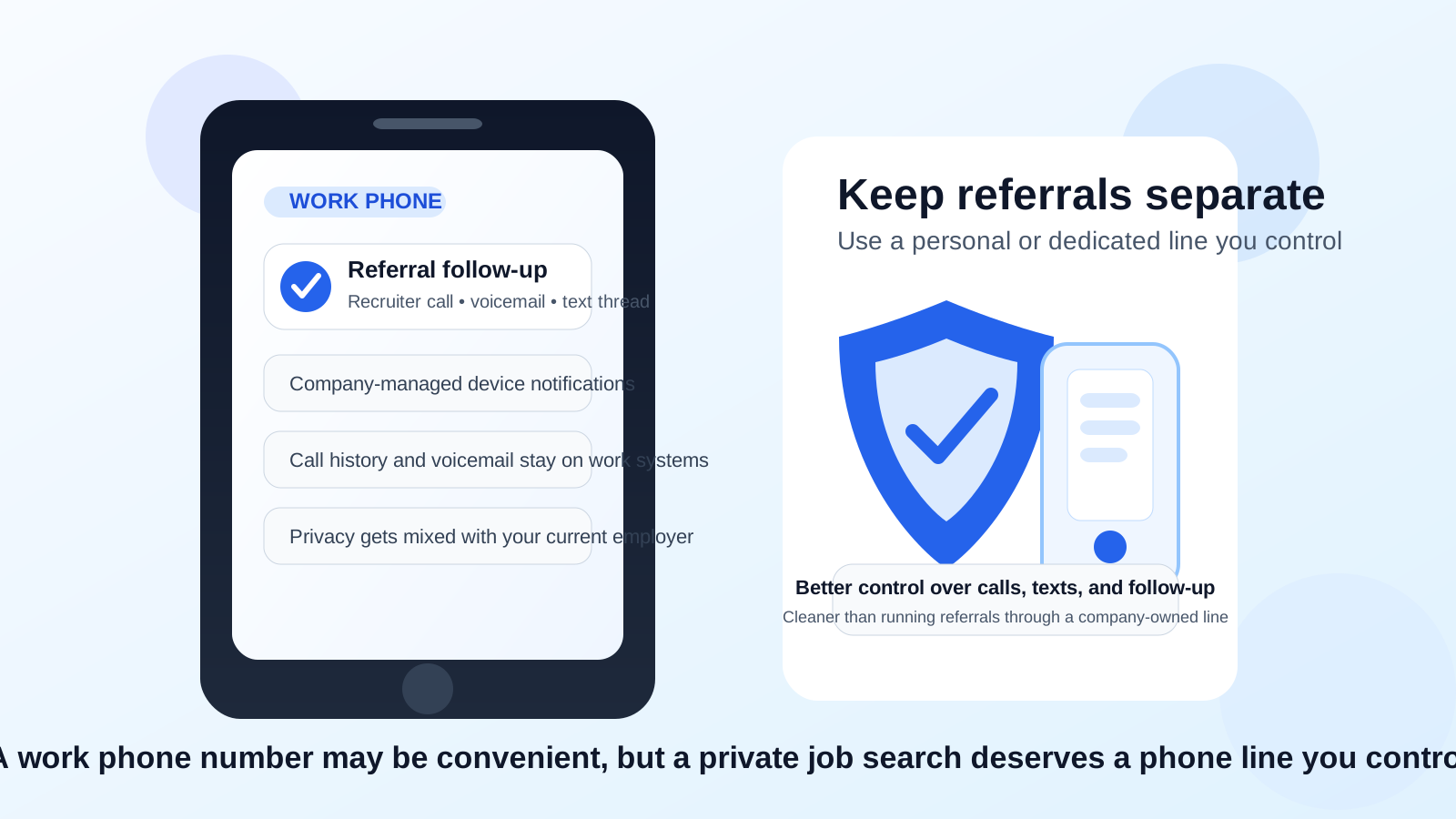
People often think about privacy when they choose an email address for job referrals, but they forget that phone numbers can create just as much exposure. Referrals are personal by nature. They usually involve someone you know sending your information forward, a recruiter reaching out, and then a mix of short calls, missed calls, text messages, and scheduling messages that can stretch across several weeks. If all of that activity happens on your work number, your private job search starts sharing space with your current employer’s systems, devices, and habits.
Short answer: use a number you own, not a number your employer controls
If the question is should you use your work phone number for job referrals, the practical answer is usually no. The core issue is not professionalism. It is control. A work number may feel efficient because it is already active, charged, and always nearby. But if the line belongs to your employer, or lives on a work-managed device, you are using company infrastructure for something deeply personal: exploring other jobs.
That is rarely the cleanest setup. Referral conversations often need privacy, continuity, and easy long-term access. A work number is weak on all three.
Why job referrals create phone traffic faster than normal applications
A cold application may stay email-only for a while. Referrals are different. Once another person makes an introduction, the process often speeds up. Recruiters may call instead of writing a long email. A hiring coordinator may text to confirm availability. A referrer might send a quick message asking if you are still interested in another role. In a short span, the referral can generate:
- introductory calls from recruiters,
- voicemails when you miss those calls,
- text messages about scheduling,
- follow-up calls after resume review,
- last-minute interview logistics, and
- future re-contact if another opening appears.
That kind of communication is exactly why your phone number matters. If you use a work line, you are not just sharing contact information. You are choosing where that whole communication trail will live.
What makes a work phone number risky for referrals
1. The number may belong to your employer, not to you
This is the biggest problem. If the number is issued by your company, tied to a work mobile plan, or attached to a device your employer manages, then the practical ownership is not yours. Even if you carry the phone every day, the line may still be part of a company account, company billing, or company device policy.
That does not mean someone is actively watching every call. It means your private search is happening on a line you do not fully control. If you change jobs, return equipment, or lose access to the device, you may also lose clean continuity with your referral contacts.
2. Call logs and voicemail can create unnecessary exposure
Phone privacy is not just about live conversations. It is also about records and side effects. A work number can leave traces through call logs, voicemail notifications, call summaries, carrier portals, or device-level history. The details vary by employer and setup, but the basic issue is the same: you do not need recruiter calls living inside work infrastructure if you can avoid it.
Even if nobody ever checks those logs, the fact that they exist in the wrong place is already a privacy downside.
3. Work devices make accidental visibility easier
Many people use their work phone in public or semi-public contexts: on a desk, in meetings, while screen sharing from a nearby laptop, or with message previews turned on. Referral texts can surface at awkward times. A recruiter name can flash on the lock screen. A voicemail badge can appear during a meeting. A coworker can glance over while you are checking another notification. None of that requires dramatic surveillance. It is just ordinary device friction.
Private job-search leaks are often boring, not cinematic. A notification at the wrong moment is enough.
4. The company identity attached to the number can be awkward
Some work phone setups clearly identify the business, especially when calls or texts flow through company systems, shared numbers, or branded caller ID tools. That can make your referral communication look oddly tied to your current employer when you would rather present yourself as an independent candidate.
Even when the branding is subtle, using a work line can blur the boundary between your current role and your next move.
5. Offboarding can break the thread
Referrals do not always move quickly. A recruiter may circle back weeks later. A hiring manager may reopen a conversation after a headcount freeze lifts. If that thread started on a work phone number you later lose, the opportunity may land on a line you no longer control.
That is a bad failure mode for something as important as a referral. The safer rule is simple: if you want the conversation later, use a number you can still answer later.
When a work phone number might be acceptable
There are a few narrow cases where using a work number is less problematic, but they are exceptions.
- Internal mobility: if the referral is inside your current company and the communication is meant to happen through internal channels, a work line may be normal.
- You personally own the business line: if the “work” number belongs to your own company or consulting practice and you control it fully, the ownership problem changes.
- The conversation is truly one-off and low-stakes: even then, convenience is still not the same thing as a good privacy choice.
For a confidential external job search, though, those exceptions usually do not apply. Most people are better off separating the referral from their employer’s phone systems entirely.
What should you use instead?
Your normal personal phone number
If your personal number is stable, private enough for your comfort level, and easy for you to monitor, it is usually a better choice than a work number. You control the device, the voicemail, the call history, and the long-term continuity.
A dedicated job-search phone number
This is often the strongest option. A separate line lets you keep recruiter calls, text scheduling, and referral follow-up away from your personal life without mixing them into your employer’s devices. It also makes it easier to mute, archive, or retire that number later if it starts attracting spam.
Think of it as the phone-number version of a separate job-search inbox. A clean boundary reduces clutter and gives you more control.
A separate email plus a separate phone strategy
This is where Anonibox fits naturally. Anonibox can help with temporary or low-trust email exposure early in the process, especially when you are testing a job board or protecting your main inbox from spam. But referrals are usually more important than a throwaway email flow. They deserve a stable contact setup. In practice, that often means a dedicated personal email for serious opportunities plus a dedicated personal phone number if privacy really matters to you.
Best practices if you do share a phone number for referrals
Keep voicemail professional
A short greeting with your name is enough. Referral calls are more likely to involve real humans than spammy application portals, so voicemail quality matters.
Use texting for logistics, not for sensitive documents
It is fine to confirm time slots or say you will call back. It is less wise to send sensitive personal information, identification details, or anything you would not want floating around in screenshots or chat history.
Save contacts clearly
Label recruiters, referrers, and hiring coordinators so you can recognize them instantly later. That matters more than people think when several opportunities are moving at once.
Do not rely on memory alone
Keep a simple note of who referred you, when they did it, and which number or channel they used. A referral is easier to manage when you can see the whole communication chain in one place.
Avoid mixing referral traffic into work-managed devices
If you must use a work number once, move the conversation off it as soon as possible. The longer the thread stays there, the more annoying the privacy trade-off becomes.
Red flags that mean you should be extra cautious
- The recruiter immediately wants to move from email to a work-managed text thread.
- The “referral” arrives from someone you barely know and the role details are vague.
- You are asked to install apps, join channels, or verify identity through work hardware.
- Your current employer’s device settings expose previews or notifications too broadly.
- You would be genuinely uncomfortable if a missed call or voicemail became visible at work.
Those are signs that your contact setup is not private enough for the stage you are in.
A quick decision checklist
- Do I fully control this number, or does my employer control part of it?
- Will recruiter calls and texts appear on a work-managed device?
- Could I lose access to this number if my job situation changes?
- Would a personal or dedicated line make this referral easier to manage?
- Am I choosing convenience, or am I actually choosing the best long-term contact method?
If those questions make you hesitate, that is useful. It usually means the work number is the wrong home for the referral.
Final answer
So, should you use your work phone number for job referrals? In most cases, no. It is convenient in the short term, but it creates avoidable privacy exposure through company-owned devices, call logs, voicemail, notifications, and long-term ownership issues.
A personal number or a dedicated job-search line is usually the cleaner choice. Pair that with an email strategy that matches the trust level of the situation — including tools like Anonibox for spam-prone or early-stage signups when appropriate — and you get the best mix of reachability, privacy, and control. Referral conversations matter. They should live on contact channels that belong to you.