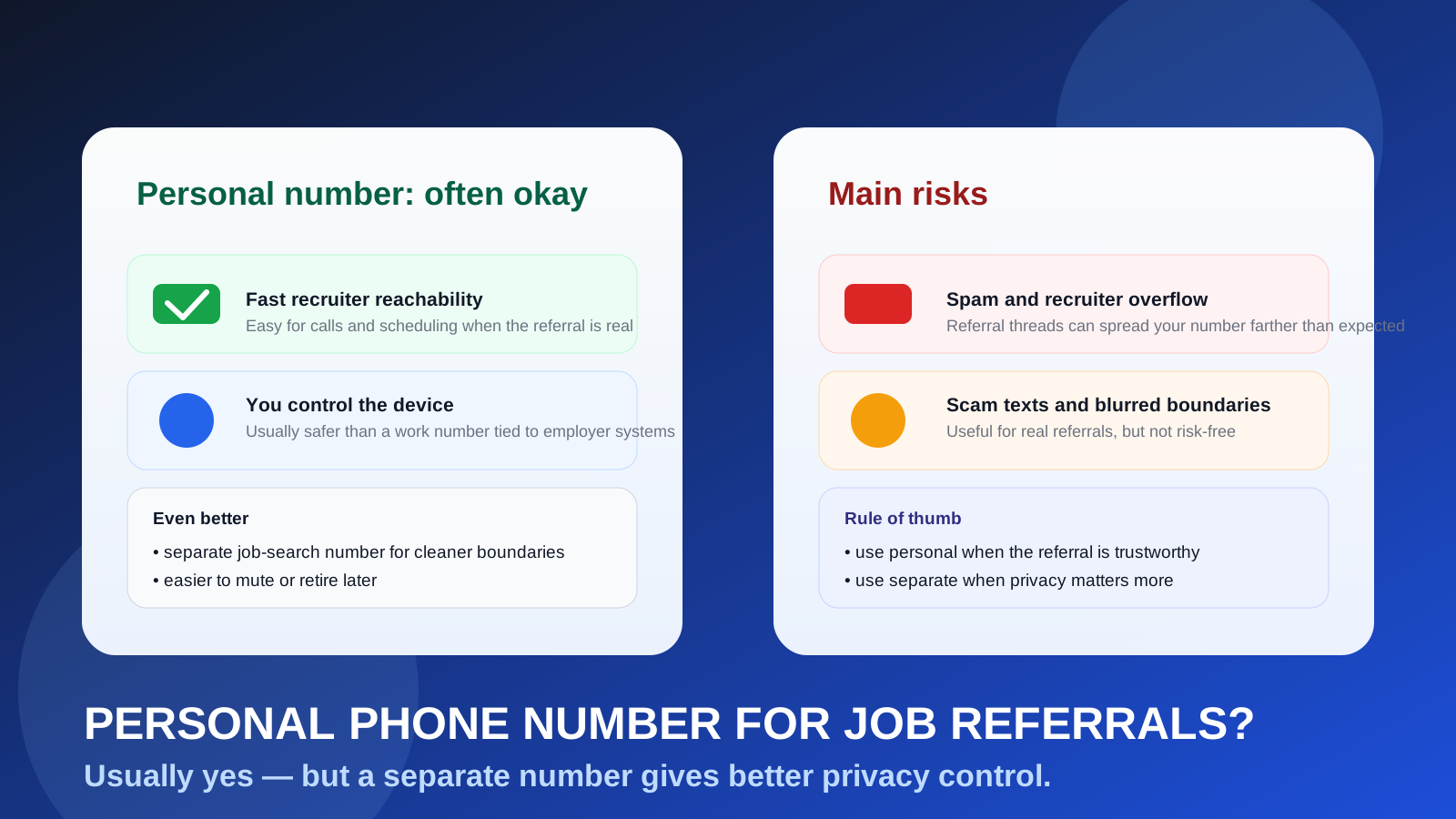
Usually yes — using your personal phone number for a legitimate job referral is often normal and practical, especially when someone needs to reach you quickly about next steps.
That said, your main personal number is not always the best number. If you want stronger privacy, fewer spam texts, and cleaner boundaries, a separate job-search number can be an even better choice than giving out the number tied to your everyday life.
Job referrals feel more trustworthy than random job-board leads, and often they are. A former coworker introduces you to a hiring manager. A friend forwards your resume internally. A recruiter follows up because someone inside the company suggested your name. That is a very different context from dropping your number into a low-trust application form online.
But “more trustworthy” does not mean “zero privacy risk.” Referral conversations can still spread farther than you expect. Your number may be forwarded to recruiters, coordinators, or interviewers. You may get follow-up calls weeks later. You may also find that one useful referral thread turns into a handful of texts, calls, and reminders landing on the number you use for family, healthcare, banking alerts, and daily life.
So the real question is not just whether your personal phone number is acceptable. It is whether it is the right level of exposure for the kind of search you are running.
Short answer: yes, often — but not always
If the referral is real, the company is credible, and you are actively open to contact, using your personal phone number is usually fine. Recruiters and hiring teams still rely on calls and texts for scheduling screens, confirming availability, handling last-minute changes, and nudging stalled conversations forward.
Still, there is a difference between “fine” and “ideal.” If you are doing a confidential search, expect a lot of outreach, or simply do not want your main number circulating widely, a separate number can be smarter. In other words: your personal number is usually acceptable, but it should be a deliberate choice, not an automatic one.
Why referrals change the equation
A referral is more personal than a standard application. Instead of submitting your details into a form and waiting, there is often a live chain of people involved. Your contact may text you before making the intro. The employee referring you may pass your number to a recruiter. The recruiter may call, then hand you to a coordinator, then text you later with scheduling details. That creates convenience, but it also increases the number of people who may end up with your number.
That is why phone strategy matters in referral workflows. Even when the first contact is trustworthy, the communication chain can get longer and noisier than expected.
Why people use their personal phone number for referrals
1. It is the most reachable number
For many people, their personal mobile number is the number they actually answer. It is on the phone they carry everywhere. That matters when a recruiter wants to move quickly or when an internal referral suddenly turns into an interview opportunity.
2. It avoids employer-owned systems
A work phone or company-managed communication channel creates obvious problems for a private job search. Your personal number is at least yours. You control the device, the voicemail, the notification settings, and the long-term access.
3. It feels natural in a human referral flow
Referrals are often conversational. A friend may text, “Can I pass your number to our recruiter?” In that kind of moment, sharing your personal number can feel more normal than forcing everything through a formal inbox.
4. It helps when timing matters
Some referrals move fast. A hiring manager may have a sudden opening. A recruiter may want to line up an intro screen the same day. A phone call or text is sometimes the easiest way to prevent delay.
What are the downsides of using your main personal number?
Even though a personal number is often acceptable, it still comes with trade-offs.
Spam and repeat follow-up
One recruiter call is fine. Several follow-up texts from coordinators, sourcing teams, or related openings can get old quickly. Even legitimate hiring teams sometimes keep numbers in circulation longer than candidates expect.
Scam exposure
Phone numbers involved in job-search activity can attract scam texts and impersonation attempts. Once someone knows you are open to opportunities, messages like “Your referral has been approved, reply on WhatsApp” or “Send your ID to confirm onboarding” become more believable than they should be.
Blurring personal boundaries
Your main phone number belongs to your whole life, not just your job search. If you use it for every referral, job-search activity can bleed into evenings, weekends, vacations, or family time. That may not be dangerous, but it can be exhausting.
Profile leakage through messaging apps
In some cases, a phone number can reveal more than the number itself. Depending on the app, it may connect to profile photos, status messages, or other bits of personal identity you would rather not share with every recruiter or referral contact.
When your personal number is usually a reasonable choice
Using your personal number is often perfectly sensible when:
- the referral comes from someone you know and trust
- the company is real and the role is clearly defined
- you want fast contact for screening calls or interview scheduling
- you are not expecting a huge volume of recruiter outreach
- you are comfortable keeping job-search communications on your everyday phone
In those cases, your personal number may be the easiest and most effective option. There is no rule saying a serious candidate has to hide their number in normal, low-risk referral conversations.
When a separate job-search number is better
This is where the nuance matters. A separate number is often the better choice if you want the convenience of phone contact without giving away your main line everywhere.
A dedicated job-search number makes sense when:
- you are running a confidential search while currently employed
- you expect multiple referrals, recruiter callbacks, and interview rounds
- you want to mute or retire the number later if it becomes noisy
- you want a voicemail and text channel built specifically for professional outreach
- you do not want your everyday number tied to every career conversation
Think of it the same way privacy-conscious people think about email. A separate email keeps search traffic away from your main inbox. A separate phone number does the same thing for calls and texts.
Why a work phone number is usually worse
If the choice is between a personal number and a work number, the personal number is usually safer. A work phone may be tied to employer devices, employer billing, employer records, company mobile-device-management policies, or shared visibility in ways you cannot fully control.
It also creates awkwardness. If someone inside another company is referring you, giving them a current employer’s number can send the wrong signal and increase the chance of accidental exposure. Even if no one is actively watching, you are still conducting a private search through infrastructure you do not own.
That is why “personal versus separate” is a more useful debate than “personal versus work.” Work is often the weakest option for privacy.
How email privacy tools fit into this decision
Anonibox is naturally more about email than phone numbers, but the same logic applies. Early-stage job searching creates clutter and exposure. You may use a temporary or separate email address for low-trust signups, job boards, gated salary content, or spam-prone career resources. That can be smart.
But phone contact is different. You generally do not want a serious referral process to depend on a disposable communication path that is hard to maintain or easy to abandon. For referrals, stability matters. A stable personal number or a stable separate job-search number is usually better than trying to stay too anonymous once a real human opportunity is in motion.
A practical setup often looks like this:
- Use Anonibox or a separate email for disposable signups, exploratory tools, and spam-prone platforms.
- Use a stable phone number you control for real recruiter contact, interview scheduling, and referral follow-up.
- Use a separate number instead of your main one if privacy and boundary control matter more than convenience.
Best practices if you do use your personal phone number
Keep your voicemail simple and professional
A short greeting with your name is enough. If a recruiter reaches voicemail, you want to sound reachable and organized.
Be selective about who gets the number
It is one thing to share your number with a trusted referrer or named recruiter. It is another to drop it into every vague “opportunity” message that appears in your inbox or on social media.
Move cautiously with unexpected texts
Even if a message mentions a real company, do not assume it is legitimate just because it arrived on your phone. Verify names, domains, and role details independently.
Do not send sensitive documents by text
A phone number is for contact, not for oversharing. If someone wants IDs, tax details, banking information, or other sensitive documents too early, slow down and verify everything first.
Watch for platform-switch pressure
Scammers love to move candidates quickly onto WhatsApp, Telegram, or personal texting. A legitimate recruiter may text you, but aggressive channel-switching plus urgency is still a warning sign.
Consider silencing unknown callers during heavy search periods
If your phone supports it, features that label or filter unknown numbers can reduce annoyance without making you unreachable. Just make sure legitimate voicemail is still easy to review.
Red flags that mean you should not share your number yet
- the “referral” is vague and cannot explain the role clearly
- the recruiter refuses to identify the company or department
- the opportunity arrived out of nowhere and immediately feels rushed
- you are asked for personal data far beyond normal scheduling needs
- the conversation turns into pressure to continue only through chat apps
- the message quality is sloppy enough to suggest impersonation or scam activity
In those situations, protecting your number is only part of the answer. You should also avoid clicking unknown links, sending attachments too early, or treating the contact as legitimate until you confirm it independently.
A quick checklist before you share your number
Ask yourself:
- Do I know and trust the person making or relaying this referral?
- Is the employer real and is the role clearly defined?
- Do I want fast call or text access for this opportunity?
- Would I be more comfortable using a separate number instead of my main one?
- Am I prepared for this number to be forwarded beyond the first contact?
If the answers point to a credible opportunity and manageable exposure, your personal number is probably fine. If several answers make you hesitate, that is a good sign you should use a separate number or hold off until the opportunity is better verified.
Final answer
Yes — you can usually use your personal phone number for job referrals, and in many legitimate referral situations it is the simplest practical choice. It keeps you reachable, works well for fast-moving scheduling, and is still far better for privacy than using a work number.
But “personal” does not automatically mean “best.” If you want cleaner boundaries, less spam risk, and more control over your search, a separate job-search number is often the smarter long-term setup. Use your main personal number when the context is trustworthy and the convenience matters, and use a separate number when privacy matters more.