Usually no. A temporary email can help at the very edge of a job search, but it is a weak choice for real job referrals because referrals often turn into longer, delayed, and higher-stakes email threads.
If someone may introduce you to a recruiter or hiring manager, a stable inbox or reliable email alias is usually safer. Temporary addresses are better for low-trust signups than for referral follow-up you cannot afford to miss.
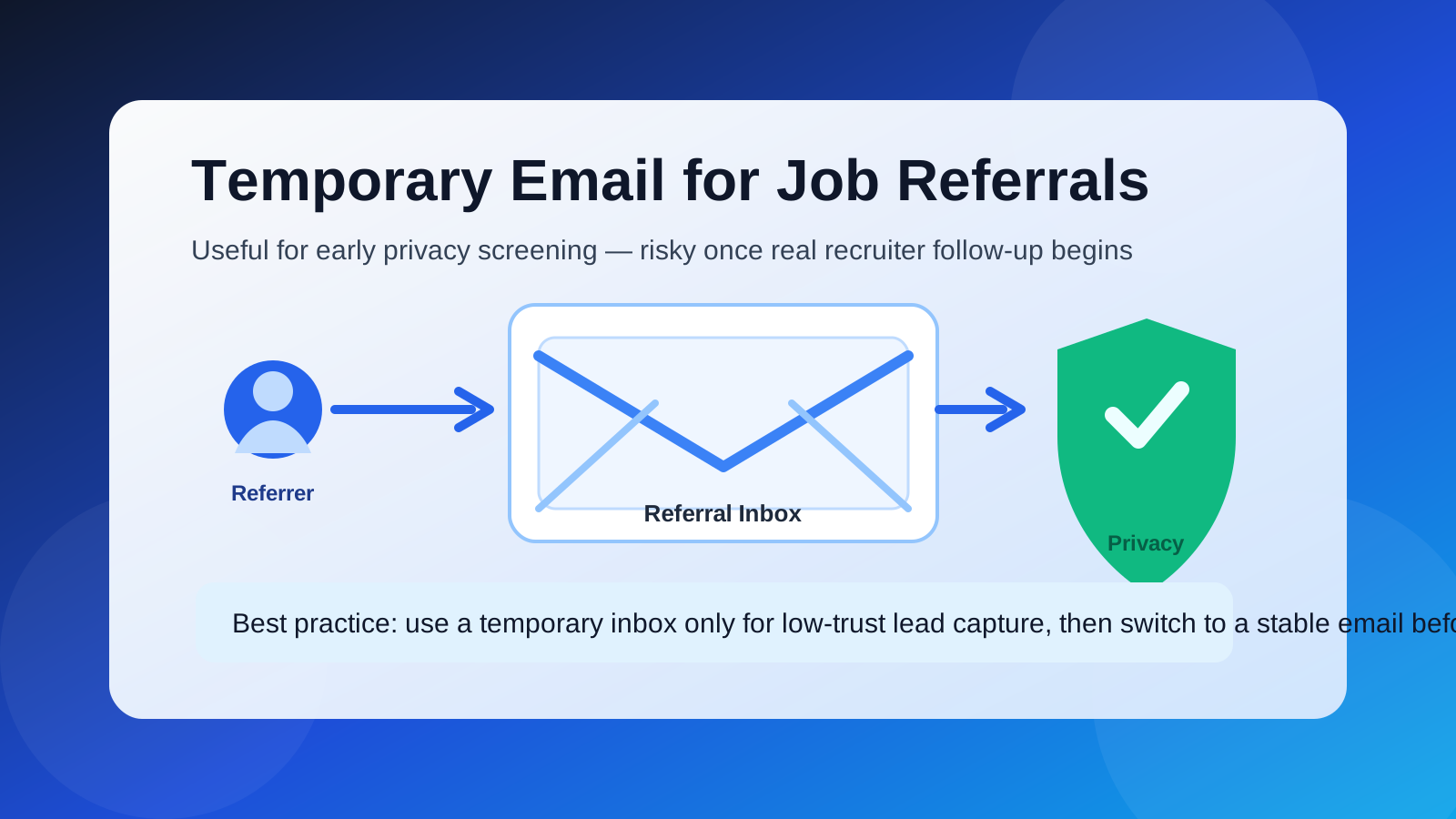
Short answer: temporary email is better before the referral than during it
A job referral is not just a one-time form submission. It often starts with a casual message, then turns into an introduction, then becomes a recruiter email, an application link, a request for availability, or a follow-up weeks later. That timeline is exactly why a temporary inbox is often the wrong tool once a referral is real.
The privacy instinct is understandable. Many people do not want every networking site, resume tool, alumni directory, or “career community” tied to the email they use every day. A temporary inbox can reduce spam and help you test low-trust platforms without exposing your long-term address immediately. But a referral is different from a random signup. A real person is putting your name in front of another real person, and the email chain that follows needs continuity.
In practice, the best setup is usually a stable address you control: a personal inbox, a dedicated job-search inbox, or a professional alias that forwards into something you monitor. That gives you privacy without sacrificing reliability.
Why job referrals create more email risk than people expect
People often think referrals are informal, but the email trail around them can be surprisingly long.
- An employee may forward your resume internally and cc you later than expected.
- A recruiter may reply days or weeks later after the team opens or reopens the role.
- The company may send an ATS link that becomes your formal application record.
- A hiring manager may ask a follow-up question before deciding whether to schedule a call.
- An older referral can revive later when a better-fit role appears.
That timing problem matters. Disposable inboxes are good at short-lived access. Referrals usually demand the opposite: persistence. Missing one message can make you look unresponsive when the real issue was simply that the inbox was temporary, expired, filtered strangely, or was not checked as closely as your primary inbox.
When a temporary email can still make sense around referrals
There are situations where a temporary inbox is useful on the edges of referral-driven job hunting. The key is understanding that these are pre-referral or low-trust stages, not the heart of the referral itself.
Testing a low-trust networking platform
If you want to see what a niche career community, networking directory, or event-signup page looks like before sharing your long-term address, a temporary inbox can be a sensible first step. It lets you receive a verification code or activation link without committing your main inbox to future promotions.
Downloading gated career resources
Some referral-adjacent resources are really just lead generation pages. Think “warm intro templates,” “employee referral scripts,” or “salary negotiation packs” that demand an email before access. If you only want the document and do not trust the sender to stop emailing you afterward, a temporary inbox may be enough.
Screening a questionable recruiter funnel
If a recruiter marketplace or “job referral accelerator” looks sloppy, overpromises results, or asks for an email before it reveals anything meaningful, it is reasonable to be cautious. A temporary address can help you investigate without giving away your permanent inbox immediately.
This is the lane where a tool like Anonibox fits naturally. It can be useful for low-trust signups, one-off verifications, and early screening when you are still deciding whether a platform deserves deeper engagement.
When a temporary email becomes a bad idea
Once the referral crosses from “exploring” into “real conversation,” the trade-off changes quickly.
1. When an actual person is introducing you
If a former coworker, friend, classmate, or current employee is willing to forward your resume or introduce you to a recruiter, the address attached to that thread should be one you can keep. You do not want the person helping you to look foolish because their introduction bounced, expired, or disappeared into a throwaway inbox you stopped checking.
2. When the company may reply later than expected
Referrals do not always move fast. A recruiter may be traveling. A role may be paused. Headcount may reopen a month later. If your email strategy only works for the first 24 hours, it is a bad fit for a process that could stretch over several weeks.
3. When the referral connects to a real application
Many referrals eventually lead to an application link, a candidate profile, or a request to confirm your details in a hiring portal. At that point, your email address becomes part of a more formal hiring record. Using a short-lived inbox can create unnecessary friction if you later need password resets, status updates, or archived correspondence.
4. When you may need to reply from the same address
Some temporary inboxes are built mostly for receiving. Even when they support replies, they may not behave like a professional long-term mailbox. Referral conversations usually work best when you can reply cleanly, search old threads, star important messages, and keep a record of what was said.
Better alternatives than a throwaway inbox
If your real goal is privacy and reliability, you have better options than a purely temporary address.
A dedicated job-search email
This is often the strongest default. It keeps referrals, applications, recruiter messages, and interview logistics out of your everyday inbox while still giving you an address that looks normal and stays under your control. It is cleaner than using your main personal email everywhere, and much safer than relying on something disposable.
An email alias that forwards to your main inbox
An alias gives you separation without forcing you to babysit another mailbox. It can be ideal if you want a professional-looking contact point for referrals while keeping underlying messages routed into an account you already monitor closely.
Your regular personal email, if it is stable and well-managed
If you do not want more setup, your personal inbox is still usually better than a temporary one for real referrals. Add filters, labels, and a dedicated folder if needed. Control and continuity matter more than perfect compartmentalization.
A practical workflow that protects privacy without missing opportunities
If you like the privacy benefits of temporary email but do not want it to sabotage a promising referral, use a staged approach.
- Use a temporary inbox only for low-trust entry points. Examples: gated downloads, speculative networking tools, unknown career communities, and one-off event registrations.
- Switch to a stable address before a human introduction happens. If someone is about to refer you, send your real job-search contact email before they forward anything.
- Use the same stable address for the recruiter thread and the application link. That reduces confusion and keeps the hiring trail consistent.
- Monitor that inbox daily. Referrals can move slowly, then suddenly require a same-day response.
- Save important messages. Keep copies of intro emails, application links, recruiter names, and role details so you do not lose the thread if the process stretches out.
This approach lets you use temporary email where it actually helps while avoiding the common mistake of carrying it too far into a serious opportunity.
Example: when the wrong email choice costs momentum
Imagine you join a networking platform with a disposable inbox because you are not sure whether the site is credible. That part is fine. A week later, you connect with someone who offers to refer you internally. They send a note to their recruiter and copy the same address you used to register.
The recruiter responds nine days later with an application link and a question about location. By then, the inbox is inactive, buried, or simply not part of your normal daily workflow. You miss the message, the recruiter assumes you are not interested, and the employee who tried to help you gets silence in return.
Nothing about that failure is dramatic, but it is exactly how real opportunities get lost. The problem is not that temporary email is useless. The problem is that it is optimized for disposable interactions, while referrals are valuable precisely because they are not disposable.
Red flags that call for caution even with a referral
Even when someone mentions a referral, you should still pay attention to the quality of the process.
- Vague company identity: no clear employer, no proper domain, and no solid job description.
- Pressure to move fast off-platform: especially if they push messaging apps before establishing who they are.
- Requests for sensitive information too early: tax forms, banking details, ID documents, or verification codes before a legitimate hiring process exists.
- Overhyped promises: guaranteed placement, instant hiring, or paid referral schemes that sound more like lead generation than recruiting.
In those situations, the smart move is not to keep using a throwaway inbox forever. It is to verify the opportunity first and only continue through channels that look legitimate and sustainable.
Quick checklist: should you use a temporary email for this referral?
- Is this still just a low-trust signup or download?
- Has a real person offered to introduce you to a recruiter or hiring manager?
- Might the conversation continue for weeks?
- Will you need password resets, portal updates, or archived message history?
- Would missing one email cost you a real opportunity?
If the answer to the last four questions is yes, use a stable inbox instead.
Final answer
Should you use a temporary email for job referrals? Usually no — not for the referral itself. A temporary inbox can be useful when you are testing low-trust platforms, grabbing a one-off resource, or protecting your main email during early research. But once a referral becomes real, reliability matters more than disposable privacy.
The safer move is a personal inbox you control, a dedicated job-search account, or a stable alias that forwards to an inbox you already watch carefully. That gives you the privacy benefits you want without risking missed intros, delayed recruiter replies, or broken application continuity.