Maybe, but only for low-stakes testing. A temp email for Claude can help you verify a one-off signup and keep early messages out of your main inbox if the current signup flow accepts disposable addresses.
It is a poor choice for long-term chats, paid plans, shared access, or anything you may need to recover later. For serious use, a separate permanent inbox or email alias is usually the safer move.
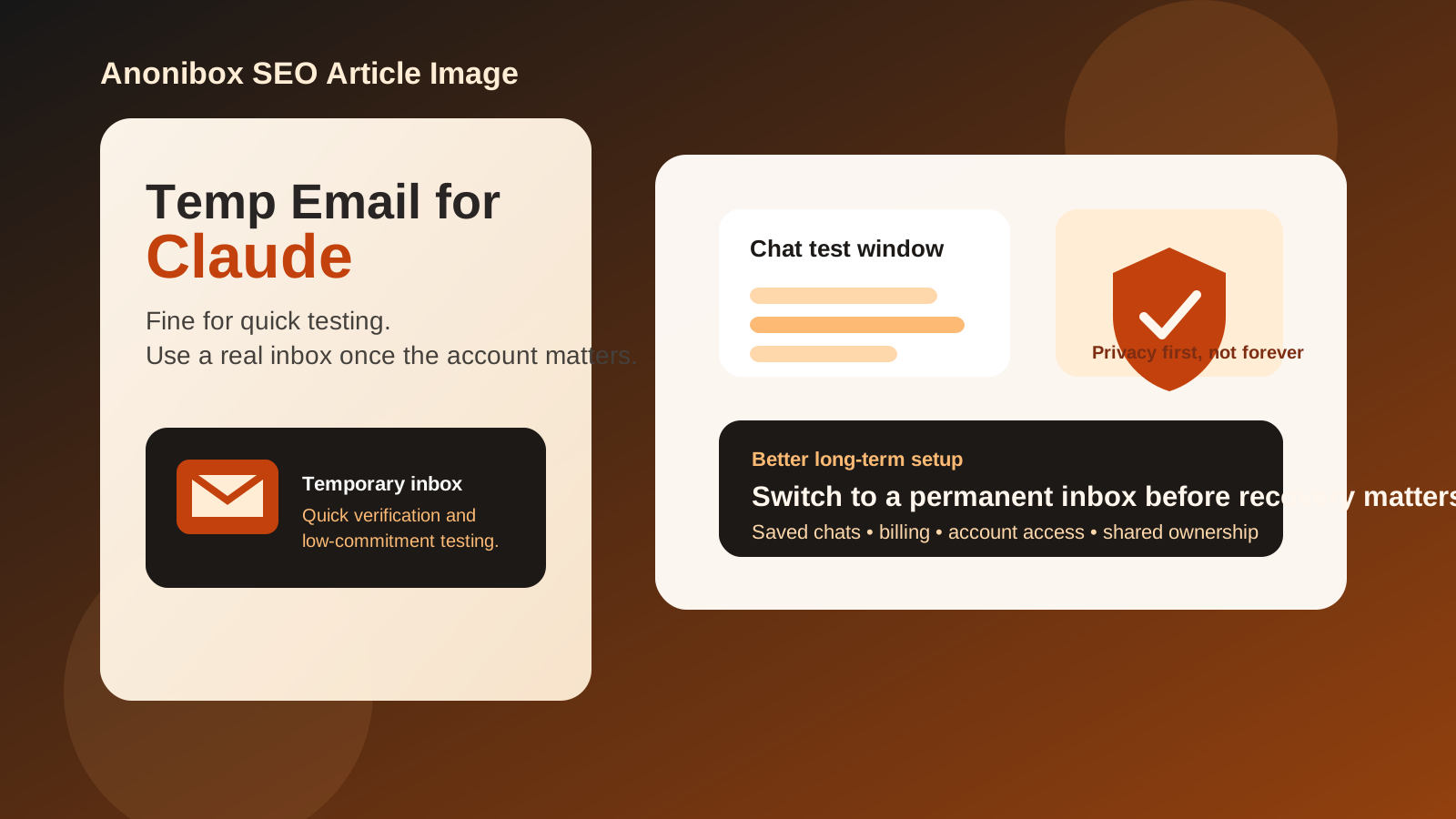
That is the real trade-off. People usually search this because they want quick access without turning a casual AI experiment into another permanent stream of welcome emails, product updates, and follow-up nudges. That is a reasonable goal. The problem is that an account for an AI tool can stop feeling temporary very quickly once it starts holding useful conversations, saved context, or work you actually care about.
Claude sits right in that gray area. You might only want to test it for a day, compare it with another assistant, or keep an early experiment separate from your everyday inbox. In that short window, a temporary inbox can make sense. But if the account starts becoming part of your routine, the email behind it needs to be reliable, recoverable, and under your long-term control.
A service like Anonibox can be helpful for that first stage. It lets you create a temporary inbox for quick verification and low-commitment testing, without handing your main address to every tool you are only trying once.
Why people look for a temp email for Claude
Most people are not searching this because they have some complicated privacy plan. They usually have a simpler reason: they want to try the product without creating permanent inbox clutter.
That makes sense. Early account emails often include verification links, product announcements, tips, feature notices, upgrade prompts, and occasional reminders to come back. None of that is unusual, but it adds up if you test several AI tools in the same week.
There is also another common reason: separation. Some people want to keep AI experiments away from their primary work inbox, client-facing inbox, or long-term personal account. They are not trying to disappear. They are trying to stay organized and reduce unnecessary exposure.
So the core question is not just whether a disposable address can work for signup. The better question is whether a disposable address still makes sense after the first few hours or days. In many cases, the answer changes fast.
When using a temporary email for Claude can make sense
A temporary inbox is most useful when the account is truly disposable too. Good examples include:
- Quick evaluation: you want to sign up, verify access, test the interface, and decide whether the tool is worth deeper time.
- Comparing multiple AI tools: you are testing Claude alongside other assistants and want each trial kept separate.
- Short-lived experiments: you are trying prompts, workflows, or ideas you may never revisit.
- Inbox protection: you want the first confirmation email and setup instructions, but not a long tail of follow-up email in your main account.
- Privacy-first exploration: you want to avoid sharing your long-term address before you even know whether the product fits your needs.
In those situations, a temp inbox can be practical. The risk stays fairly low because the account itself is still low value. If you walk away from it, nothing important is lost.
When it becomes risky fast
The trouble starts when a throwaway signup quietly becomes a real account.
That happens a lot with AI tools. You open the account for a casual test, then a week later you realize it contains useful prompts, reference conversations, draft ideas, or work you want to keep. Once that happens, the weak point is no longer the product. It is the temporary email behind the account.
Here is where a disposable inbox becomes a bad fit:
- You care about account recovery: if you may need reset links or login help later, a temp inbox is fragile.
- You plan to return to old chats or saved work: short-lived email access is a poor foundation for long-term account continuity.
- You might attach billing or paid access: once money enters the picture, reliability matters more than inbox separation.
- You may share access with coworkers or collaborators: a throwaway inbox creates confusion about ownership and future control.
- You would be annoyed if the account disappeared tomorrow: that is usually the clearest sign the account is no longer temporary.
A temporary inbox is good at one thing: reducing commitment during early testing. It is bad at everything that depends on continuity.
What people often overlook
1. The signup may not be the hard part
Even if the current signup flow accepts a temporary address, that does not mean it is the right long-term setup. The bigger risk is not always getting in. The bigger risk is what happens later when you need the account to remain stable.
2. Important emails are not always obvious at first
People think they only need one verification link, but future notices can matter too. Security alerts, login confirmations, account changes, plan updates, and recovery messages are easy to ignore when the inbox was never meant to last.
3. AI accounts can become valuable unexpectedly
An experiment can turn into a real workflow very quickly. A good prompt chain, a saved piece of analysis, or a project draft can make an account worth keeping even if that was not the original plan.
4. Disposable domains can be filtered
Some signup systems reject or limit known temporary-email domains. That means a temp inbox is not always guaranteed to work. If you are relying on it, be prepared for the possibility that the current flow may block certain addresses.
Better alternatives than a disposable inbox
If your real concern is privacy and organization, you do not always need a temporary inbox. In many cases, a separate permanent inbox is the better answer.
Good alternatives include:
- A dedicated secondary inbox: useful if you want long-term control without mixing AI accounts into your main email.
- An email alias: useful if you want separation, filtering, and easier tracking while still keeping recovery options intact.
- A project-specific address: useful if the account may eventually matter for work, research, or a team workflow.
The advantage of these options is that they preserve the privacy benefit without creating a recovery problem later. You still avoid handing out your oldest personal or work inbox everywhere, but you do not build an account on top of something designed to disappear.
A practical way to test Claude without creating a mess
If you still want to try a temp email for Claude, the safest approach is to keep the use case narrow and the decision window short.
Start with the temp inbox only for early evaluation
Use it for the signup and the first round of testing. That is the point where the account is still low stakes and easy to abandon.
Decide quickly whether the account matters
Do not let a temporary setup drift for weeks. If the tool seems useful, decide early whether you want a stable account behind it.
Save anything important right away
If the account sends setup details, confirmation links, or other useful messages, save them while the inbox is still available.
Switch to a permanent address before the account has real value
The best time to move away from a disposable inbox is before you need recovery, not after. Once the account starts to matter, the email choice should become more durable too.
Should you use a temp email for paid or serious Claude usage?
Usually no. If you expect ongoing usage, repeat access, saved work, or anything tied to payments or responsibilities, a disposable inbox is the wrong foundation.
For serious use, a separate long-term inbox is usually the sweet spot. It gives you privacy and organization without the instability of a throwaway address. That is often a much better fit than either extreme of using your oldest personal email for everything or using a temporary inbox for too long.
Simple signs a temp inbox is still fine
- You are only testing the product briefly.
- You do not care about preserving the account long term.
- You are not attaching billing or shared responsibility to it.
- Your goal is mainly to check the signup and product experience.
- You can comfortably abandon the account after the trial.
Signs it is time to stop using one
- You want to keep important chats or work from the account.
- You may need recovery access later.
- You are considering paid access.
- You are sharing the workflow with another person.
- You would be frustrated if the account became inaccessible.
Final verdict
A temp email for Claude can be useful for low-commitment testing, especially if your main goal is to verify a signup, compare tools, and keep early product email out of your permanent inbox.
It stops being a smart choice once the account holds anything you value. If you think you may keep using the tool, return to old chats, upgrade later, or depend on the account for real work, switch to a stable address early. Used that way, a temp inbox is a good evaluation tool. It is not a good long-term identity strategy.