A temp email for Fireflies AI can make sense for a short trial, a one-off signup, or a quick feature comparison. It stops another SaaS tool from feeding your main inbox before you decide whether the product is worth keeping.
It becomes a bad idea once you rely on shared meeting notes, team invites, saved transcripts, or account recovery. Use a temporary address for low-stakes evaluation only, then switch to a permanent inbox before the account starts holding work you would hate to lose.
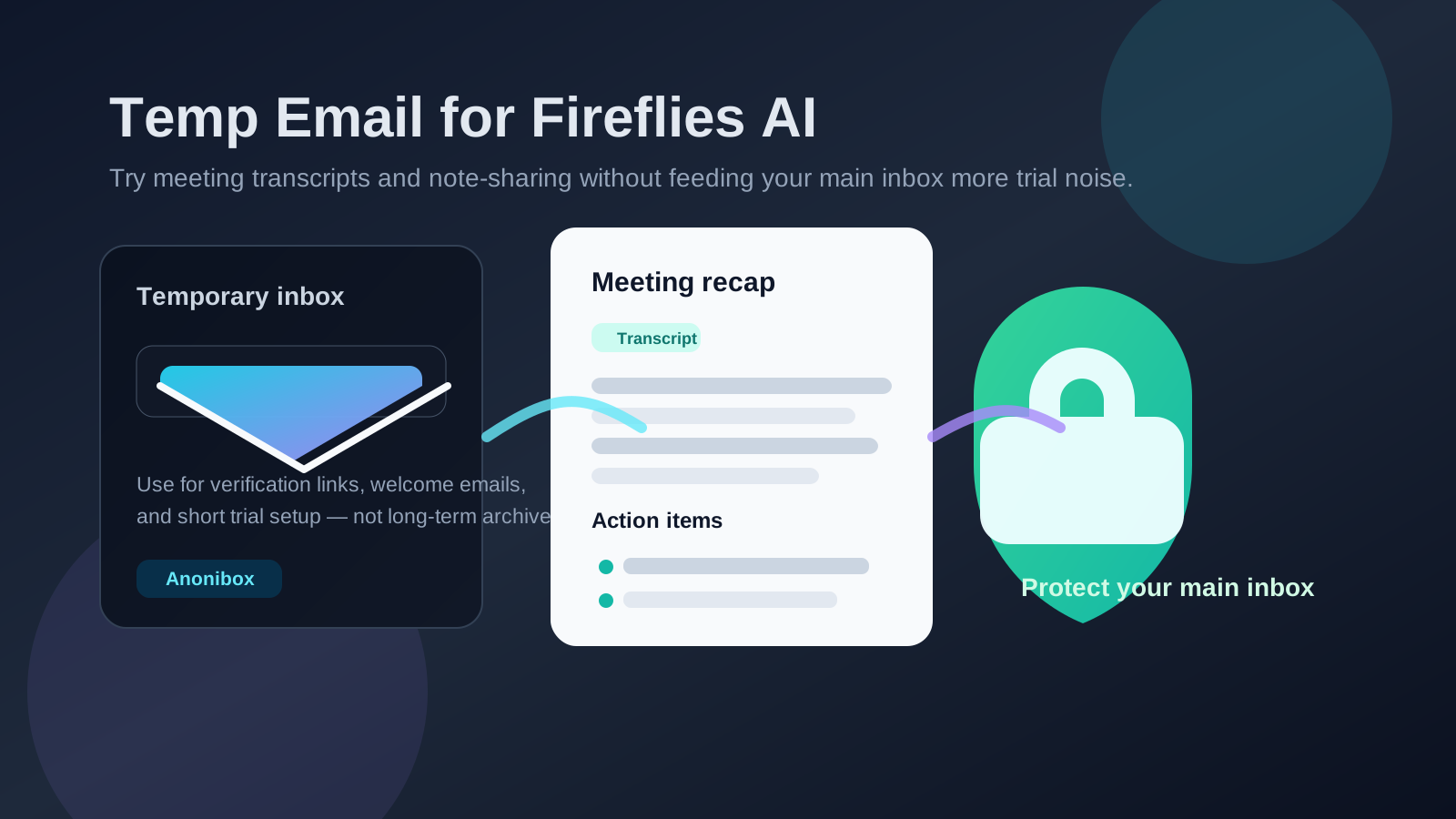
Why people look for a temp email for Fireflies AI
Fireflies AI sits in a part of the workflow stack that gets valuable very quickly. It can turn live conversations into transcripts, meeting summaries, searchable notes, and action items. That makes it useful for testing, because you can learn a lot from one or two calls. It also means your signup choice matters more than it would for a throwaway app.
Many people want to test meeting tools without opening the door to another stream of onboarding messages, webinar pushes, upgrade nudges, and “book a demo” follow-ups. That is a reasonable impulse. A temporary address can help you verify an account, look around, and decide whether the interface and workflow fit your needs. The problem is that meeting software tends to grow roots fast. Once transcripts, notes, and shared recaps start piling up, the email attached to the account stops being a minor detail.
Short answer: when a temporary inbox works
A disposable address is most useful when your goal is narrow, fast, and low risk. Examples include:
- Checking whether the signup flow is smooth
- Testing the dashboard before you commit your real inbox
- Comparing Fireflies AI against nearby tools like Otter-style note takers or other meeting recap platforms
- Running one or two sandbox calls to see whether the summaries are helpful
- Keeping early product research separate from your everyday work email
In those cases, the account is disposable because the work inside it is disposable too. If you are only gathering first impressions, a temporary inbox can be a clean way to reduce inbox noise.
When a temp email becomes the wrong tool
Fireflies AI is not just a sign-up-and-forget service. People often start with a quick test, then keep using the account for recurring meetings, internal notes, candidate interviews, sales calls, customer check-ins, or project follow-ups. That is where the risk changes.
1. Your meeting history may become important faster than expected
A transcript that feels disposable today can become useful next week when you need to confirm a decision, revisit an action item, or share notes with someone who missed the meeting. If the account sits behind an inbox you cannot reliably access later, your trial setup turns into a small operational mess.
2. Shared notes and workspace invites are not one-person-only data
Meeting tools often stop being private the moment a teammate joins. If you invite colleagues, share recaps, or connect the workflow to live collaboration, you should use an address you control long term. A throwaway inbox is a weak foundation for something that may become part of a team process.
3. Account recovery matters more with meeting software
Losing access to a casual image prompt tool is annoying. Losing access to meeting notes, action items, and searchable transcripts is much more disruptive. If the inbox expires, you may create friction the next time you need to verify ownership or recover the account.
4. Calendar and workflow connections raise the stakes
As soon as you start linking the account to regular meeting flow, the trial is no longer just a trial. At that point, it makes more sense to switch to a stable email address you are willing to keep attached to the product.
Best use cases for a temp email with Fireflies AI
If you still want the privacy and inbox-control benefits of a disposable address, keep the use case disciplined. Good examples include:
- Quick product evaluation: You want to see the layout, settings, and onboarding flow before using your regular inbox.
- Feature comparison: You are testing several meeting tools and do not want each one adding long email sequences to your main account.
- Short-lived solo experiments: You plan to upload or review a couple of low-stakes examples and then decide whether to continue.
- Early market research: You are helping choose a tool for a team, but you are not ready for account ownership or procurement follow-up yet.
That is where a service like Anonibox fits naturally. It helps you create separation between “I want to inspect this tool” and “I want this tool tied to my long-term identity and inbox.”
When you should switch to a permanent email
Use a real inbox before Fireflies AI becomes part of any workflow you care about. That usually means switching once one or more of these become true:
- You are saving transcripts you may need again
- You are inviting coworkers or clients
- You are using the tool for regular meetings rather than a one-off test
- You want reliable access to old notes and summaries
- You would be frustrated if you lost the account tomorrow
If any of those apply, the temporary phase is over. Keep the privacy lesson, but move the account to a stable address.
How to use a temp email for Fireflies AI without making a mess
1. Decide whether the test is truly low stakes
Before you sign up, ask one practical question: “Am I evaluating the tool, or am I about to start depending on it?” If the answer is evaluation, a temporary inbox may be fine. If the answer is dependency, skip the disposable email and start with a permanent address.
2. Use the temporary inbox only for signup and early verification
The cleanest pattern is simple: generate the address, receive the verification email, explore the dashboard, and run a limited test. Do not let the disposable inbox silently become the default home for a serious account.
3. Save anything you would actually need later
If the trial produces a useful recap, an especially good transcript sample, or setup information you might want to reference, export or copy it while you still have easy access. Disposable inboxes are best when you assume impermanence instead of fighting it later.
4. Avoid attaching the account to important recurring work
If you are about to use the product for real client calls, hiring interviews, internal planning meetings, or anything with follow-up value, switch emails first. That small step is easier than untangling the account later.
5. Keep the privacy goal realistic
A temporary inbox reduces inbox exposure. It does not magically erase every privacy trade-off that comes with creating an account or putting meeting content into a cloud tool. Use it as one layer of control, not as a fantasy invisibility cloak.
Better alternatives if you like the privacy idea but need long-term access
Sometimes the real need is not “throwaway forever.” It is “keep my main inbox cleaner while staying reachable.” In that case, a permanent but separated address is usually the better move. Good options include:
- An email alias: useful when you want filtering and separation without losing ownership.
- A dedicated work-testing inbox: helpful if you trial many SaaS products regularly.
- A separate job or project inbox: smart when the tool belongs to one campaign, client, or workflow rather than your personal account.
These options preserve the main advantage of a temp inbox — less clutter and less exposure for your primary address — without creating the same recovery and continuity problems.
Practical checklist before you sign up
- Is this just a short evaluation, or will the account hold real meeting knowledge?
- Will teammates, clients, or collaborators need access?
- Would losing the account be merely annoying, or genuinely disruptive?
- Do you want to avoid product email, or do you actually need a stable secondary inbox?
- Are you prepared to switch to a permanent address before the workflow becomes important?
If your answers point toward “short, solo, and low stakes,” a temporary email is a reasonable fit. If they point toward “shared, recurring, and valuable,” use a permanent address instead.
Common mistake: treating a meeting tool like a disposable toy
The easiest mistake here is underestimating how useful the tool may become. People often sign up thinking they only want to test the interface, then one helpful transcript turns into five, then into a searchable archive, then into a habit. By the time they realize the account matters, it is already tied to an inbox they never meant to keep.
That does not mean temporary email is the wrong idea. It means you should set a clear boundary. Use it for the tryout phase, not for the “this now powers part of my real work” phase.
Final verdict
A temp email for Fireflies AI is useful when you want to test the product quickly, protect your main inbox from more trial traffic, and keep early evaluation separate from long-term account ownership. It is not a great long-term setup once transcripts, summaries, shared notes, and recovery access start to matter.
If your goal is a fast sandbox, a disposable inbox can do the job. If your goal is an ongoing meeting workflow, use a permanent address you control and can keep. That balance gives you the best of both worlds: better privacy during exploration, and better stability once the tool becomes worth keeping.