A temp email for Notta can be a smart choice for a quick trial, a one-off feature test, or a fast comparison with other meeting-note tools. It becomes a bad long-term choice once your transcripts, summaries, shared notes, or account recovery start to matter.
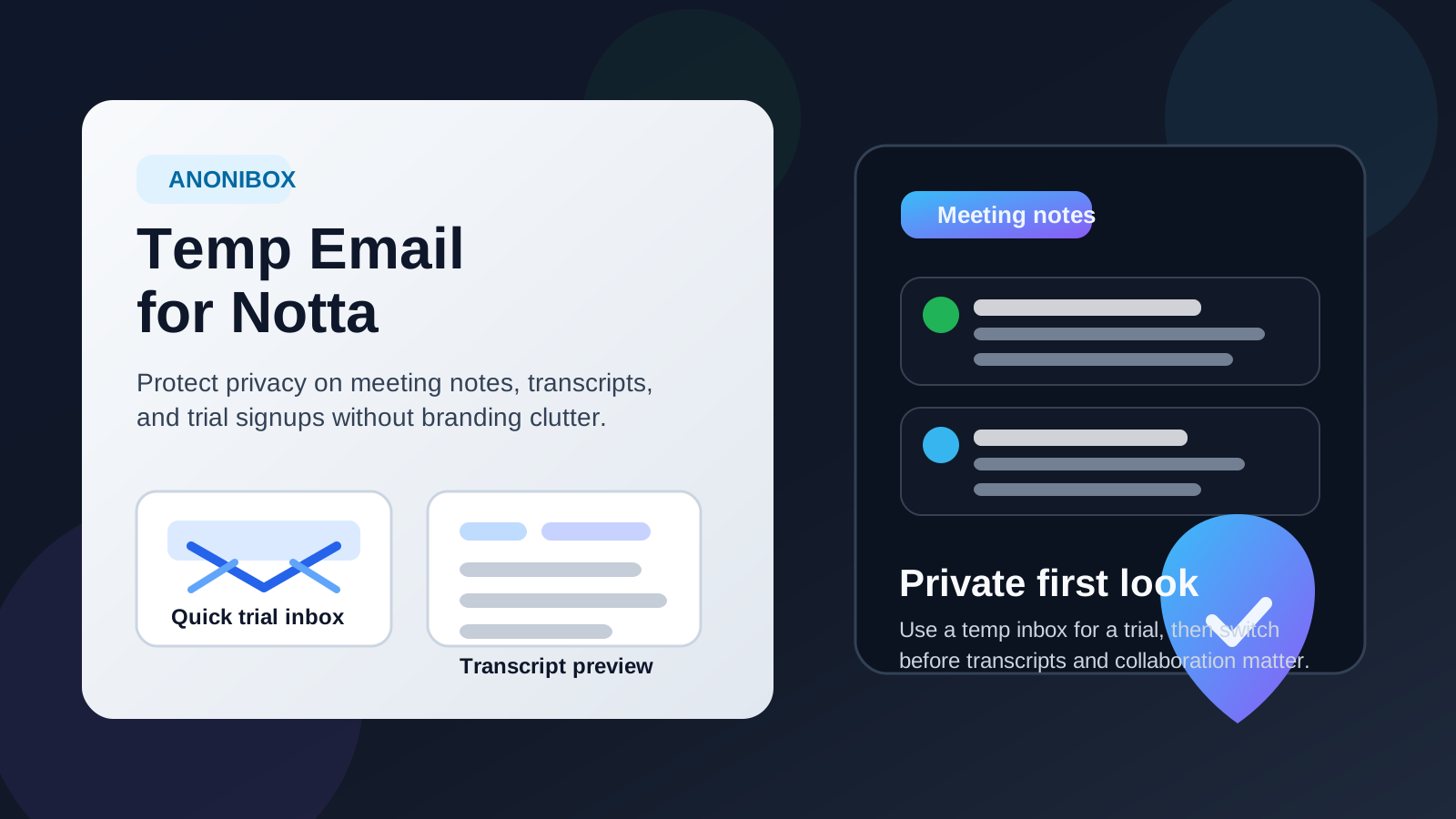
If you want privacy during early evaluation, use a temporary inbox only for the first look, then switch to a permanent address before you store important recordings, collaborate with teammates, or rely on the account for real work.
Why people look for a temp email for Notta
Notta sits in a workflow category that people often test quickly but keep using for much longer than they expect. You may sign up just to check transcript quality, upload a sample recording, compare speaker labeling, or see whether the summaries feel accurate enough for your team. That first pass is exactly where a temporary inbox can help, because it keeps another SaaS trial from landing in your everyday mailbox.
It is also common to compare Notta with other meeting and transcript tools in the same week. Maybe you are testing Otter AI, Fireflies AI, Fathom AI, MeetGeek, or Supernormal at the same time. In that phase, the inbox problem is real: onboarding sequences, webinar invitations, “book a demo” nudges, discount reminders, and product updates pile up fast. A throwaway address can keep that noise contained.
That said, Notta is not just a toy signup or a one-screen demo. The moment you upload useful calls, save interview notes, capture customer conversations, or invite other people into the workflow, your email address stops being just a login field. It becomes part of the account’s continuity.
Short answer: when a temp email makes sense
A temp email for Notta makes sense when your goal is limited, time-boxed, and low stakes. Good examples include:
- Testing the signup flow before you commit to another software account
- Checking transcript accuracy on one short meeting or sample file
- Reviewing the interface, export options, and summary layout
- Comparing Notta with competing tools without giving every vendor your main inbox
- Opening a sandbox account for personal evaluation before deciding whether it belongs in your actual workflow
In those cases, the account is disposable because the work inside it is disposable too. If you would not care about losing the account tomorrow, using a temporary inbox is usually reasonable.
When a temp email becomes the wrong tool
The problem is that meeting-note platforms become valuable through accumulation. A single test transcript may not matter. A week of recordings, summaries, action items, and shared notes absolutely can. That changes the email decision.
1. Your transcripts may become reference material
People often underestimate how quickly transcript tools become part of daily work. A test recording turns into a saved client call. A practice upload becomes a useful interview recap. A summary you meant to glance at once becomes the document you refer back to next week. If the inbox behind the account disappears, recovering access can become messy.
2. Shared notes and team invites need continuity
Notta is more useful when conversations are shared, searched, and revisited. If you invite a teammate, connect follow-up workflows, or start organizing recurring meetings, you do not want the account tied to an address that may vanish before the project does. Even if the account stays accessible for a while, support and recovery paths are usually better when the login address is stable.
3. Notifications may actually matter
At the start, product email feels like clutter. Later, some of it becomes useful: account alerts, invite notices, export confirmations, security-related messages, billing updates, and workflow changes. A throwaway inbox can block the exact messages you eventually need.
4. Collaboration raises the cost of losing access
A solo test is one thing. Shared meeting notes are another. If a transcript is tied to a candidate interview, a customer discovery call, a podcast planning session, or internal project notes, the cost of losing the account is not just inconvenience. It can interrupt real work.
A better way to evaluate Notta without overexposing your main inbox
If you want the privacy benefit without the long-term risk, a staged approach works better than treating the whole account as disposable.
Step 1: decide whether this is a sandbox or a real workflow
Be honest about why you are signing up. If you only want to test accuracy, summaries, speaker labels, or import limits, a temp inbox is fine. If you already know you may use the tool for recurring meetings, research calls, or team collaboration, start with a permanent address instead.
Step 2: use the temp inbox only for the first look
Use it to receive the confirmation message, unlock the dashboard, and run one or two test cases. This is the cleanest use of a service like Anonibox: get into the product quickly, keep early marketing noise out of your main inbox, and decide whether the tool deserves deeper attention.
Step 3: save anything you would hate to lose
If you upload a recording that matters, export the transcript, copy the summary, or store the notes somewhere you control. Disposable access is only safe when the underlying work is also disposable.
Step 4: switch to a permanent address before collaboration starts
Once you want to keep transcripts, invite teammates, revisit summaries, or depend on the account for interview prep, customer calls, class notes, or internal meetings, move the account to a permanent inbox if the platform supports that path. Do it before the trial turns into real dependency.
Temp email vs. separate permanent email
A lot of people treat this as a choice between “main inbox” and “throwaway inbox,” but there is a third option that is often better: a separate permanent email used for tools, trials, and workflow testing.
That middle-ground setup gives you several advantages:
- You keep your personal or primary work inbox cleaner
- You still retain long-term access to transcripts and settings
- You can filter software notifications without losing recovery options
- You reduce risk if the tool becomes important later
If you already know you are serious about comparing a few meeting tools over a longer period, a separate permanent address is usually smarter than a fully disposable one.
Situations where a temp email for Notta is usually fine
- You are checking whether the transcript engine handles your accent or audio quality well enough
- You want to compare summary quality across several AI meeting tools in the same afternoon
- You are evaluating the interface before deciding whether to involve a team
- You are opening a low-stakes personal test account with no important recordings inside it
- You do not plan to store anything you would care about next week
Situations where it is better to avoid a temp email
- You are recording job interviews, research interviews, or customer calls you may need later
- You plan to share notes or transcripts with teammates
- You are testing workflows that depend on invites, exports, or account notifications
- You expect the tool to become part of recurring weekly meetings
- You want a reliable recovery path if you forget your password or lose access
Common mistakes people make
Using a temp email for an account that stops being temporary
This is the big one. People start with a trial mindset and accidentally build real workflow value inside the account. If the notes matter, the email should probably stop being disposable.
Forgetting that “privacy” and “recoverability” trade against each other
A disposable inbox reduces exposure, but it can also reduce your ability to recover the account later. The right choice depends on which risk matters more at that stage.
Keeping everything in the platform instead of exporting key notes
Even during trials, save useful outputs. If a summary or transcript helps you make a decision, keep a copy somewhere stable.
Using the same throwaway address across too many tools
If you compare multiple products at once, do not turn one inbox into a messy catch-all. Separate your tests enough that you can still tell which confirmation, invite, or reminder belongs to which platform.
So, should you use a temp email for Notta?
Yes, if you are only taking a quick look and you would not care about losing the account later. No, if you expect the account to hold valuable transcripts, shared notes, recurring meeting history, or anything tied to real collaboration.
The cleanest rule is simple: use a temp email for Notta when the account is truly temporary. The moment the work inside it stops being disposable, your inbox should stop being disposable too.
Final takeaway
A temp email for Notta is best treated as an evaluation tool, not a long-term account foundation. It can help you verify a trial, compare transcript tools, and protect your main inbox from another round of software marketing. But once meeting notes, summaries, exports, and collaboration start to matter, the smarter move is a stable address you control.
That balance lets you keep early-stage privacy without creating avoidable headaches later. Use the temporary inbox for the first look, then graduate to a permanent one before the account becomes something you rely on.