A temp email for Booksy can help with one-off booking tests and low-stakes signups, but real appointment reminders, reschedules, and account access work better with a stable inbox.
If you only need to verify a new account, compare booking flows, or keep promotional email out of your main inbox, a disposable address can be useful. If the appointment actually matters, switch to a permanent email before anything important depends on it.
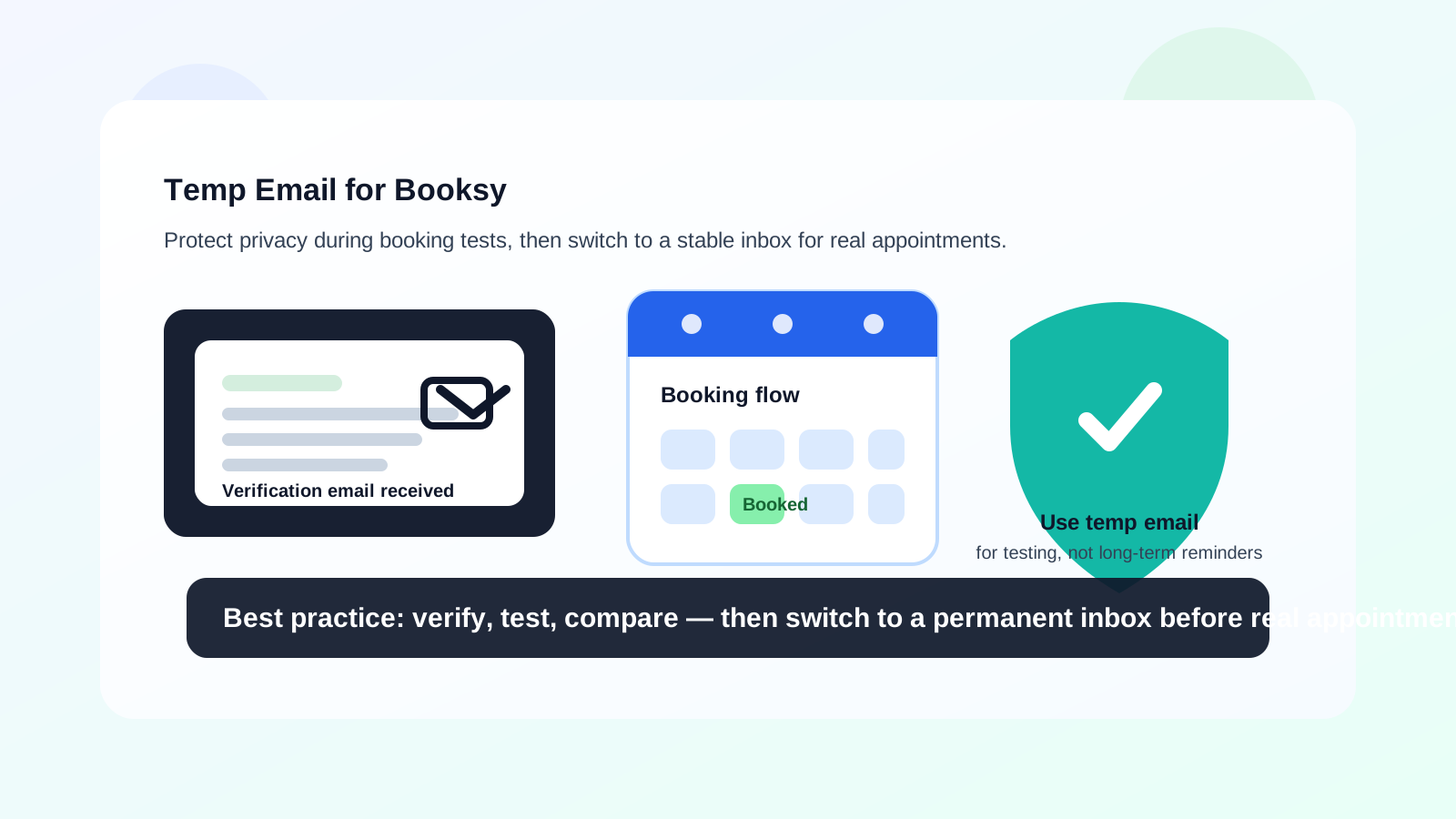
That distinction matters with Booksy because it sits close to real-world appointments. People use it to browse services, book haircuts, schedule beauty visits, compare providers, and sometimes evaluate the platform from the business side too. The first email may just be a verification message, but the later ones are often the emails you actually care about: confirmations, reminders, cancellations, reschedule notices, account changes, and follow-up messages tied to a real booking.
So the right answer is not “always use a burner email” or “never use one.” The smarter approach is to match the inbox to the stage you are in. For quick research, a temporary address can be practical. For live appointments, loyalty accounts, or customer-facing workflows, a stable inbox is the safer choice.
When a temp email for Booksy makes sense
There are several normal situations where using a disposable address with Booksy is reasonable.
- Testing the signup flow: You want to see how Booksy works before giving it your long-term email address.
- Exploring nearby providers: You are browsing local salons, barbers, or wellness services and do not want every exploratory click tied to your main inbox.
- Trying a one-off booking: You only need access long enough to confirm a single appointment and you plan to move on if the fit is not right.
- Comparing schedulers: From the business side, you may be reviewing Booksy alongside tools like Square Appointments, SimplyBook.me, Acuity Scheduling, or Setmore and want to keep the follow-up separate.
- Avoiding long-term promo mail: You want the verification email and maybe the first onboarding message, but not weeks of marketing after a casual trial.
That is where a tool like Anonibox fits naturally. You still receive the message you need to finish signup, but you do not have to hand your everyday inbox to every service you test along the way.
Why people look for a disposable email with Booksy
Booksy is not just another random dashboard. It is tied to scheduling, availability, and personal routines. Whether you are booking a barber visit or testing appointment software, the account can start feeling “real” very quickly. That is exactly why some people want extra privacy at the beginning.
Common reasons include:
- keeping appointment experiments separate from personal email,
- avoiding inbox clutter while comparing several providers or platforms,
- reducing the amount of long-term promotional mail after a trial,
- limiting exposure when you are not yet sure you will keep using the service.
Those are all fair reasons. The mistake is assuming the same short-lived inbox that works for initial verification will also be reliable later when a real appointment or account issue shows up.
Where a temp inbox starts to become risky
A burner address is best at the beginning. The risk grows later, when continuity matters more than convenience.
1. Reminder emails can matter more than the welcome email
The first message is usually easy to replace. The message that says your appointment time changed, your provider needs confirmation, or your booking was canceled is much harder to lose without consequences. If your inbox expires or becomes hard to access, that can create avoidable friction.
2. Reschedules and follow-ups need continuity
Appointment workflows do not end at booking. If you need to confirm a new time, reply to a message, or keep a record of past appointments, a stable inbox is simply more dependable than a temporary one.
3. Loyalty, repeat booking, and account recovery can break
Even if you started with a casual test, many booking accounts become recurring accounts. If you later want to log back in, review your history, or reset access, a throwaway inbox may be the weakest link.
4. Business-side workflows need even more reliability
If you are evaluating Booksy as a service provider rather than as a customer, the stakes climb faster. Anything connected to customers, staff calendars, payments, availability, or account administration should move to a permanent email before it becomes operational.
A practical two-stage workflow
The cleanest approach is usually a two-stage one.
Stage 1: Use a temp email for exploration
Create the disposable address first. Use it to verify the account, inspect the booking flow, and decide whether Booksy is even worth your attention. This keeps the early trial separate from your long-term inbox.
Stage 2: Switch to a stable inbox before anything real goes live
Once a real appointment matters, or once you decide the platform deserves deeper use, change the account to an address you control long term. That lets you keep the privacy benefit during evaluation without building real-world scheduling on top of a temporary inbox.
This is the sweet spot: privacy first, continuity second.
How to test Booksy safely with a temporary email
- Create the inbox before signup. Start with the temporary address from the beginning so the whole test stays segmented.
- Use it for low-stakes tasks only. Account verification, browsing, trial setup, and initial testing are all fine. Do not treat it as your forever inbox.
- Run a realistic check. Book a sample appointment or preview the reminder flow so you understand what messages actually arrive.
- Save anything important. If there is useful setup information, account guidance, or timing details you may need later, store them before the inbox disappears.
- Decide quickly. If Booksy is not a fit, let the disposable inbox absorb the leftover promotional mail. If it is a fit, upgrade the account to a stable address before real reminders or account recovery matter.
Who benefits most from this approach?
A temp email for Booksy is most useful for people who are still in research mode rather than fully committed.
- Consumers trying a new local provider without wanting long-term email clutter right away.
- Freelancers or solo operators comparing booking platforms before choosing one.
- Salon, barber, beauty, and wellness businesses testing customer-facing schedulers before connecting them to a primary operational inbox.
- Privacy-conscious users who prefer to separate product experiments from their everyday email identity.
In all of those cases, the goal is not secrecy. It is inbox control. You want enough access to evaluate the workflow without turning every test into a permanent stream of messages.
When you should skip the temp email entirely
Sometimes the better move is to start with a permanent address from day one.
- If the appointment is important and you cannot afford to miss reminders.
- If you expect repeat bookings and want a durable account history.
- If billing, customer records, or operational settings will depend on the inbox.
- If multiple staff members or collaborators will touch the account.
- If you already know Booksy is going into real use and you are past the testing stage.
Once money, service delivery, or customer expectations enter the picture, reliability beats inbox neatness every time.
Quick checklist before you decide
- Am I only testing Booksy, or am I setting up something real?
- Will I need this inbox later for reminders, reschedules, or recovery?
- Would losing access create a problem for an actual appointment?
- Am I comparing several tools and trying to limit follow-up mail?
- Do I have a stable inbox ready if this turns into a real workflow?
If most of your answers point toward short-term testing, a burner inbox makes sense. If they point toward repeat use, reliability, and continuity, switch to a permanent address early.
Final answer
A temp email for Booksy is useful for low-stakes testing, first-pass signups, and keeping promotional email out of your main inbox while you explore. It becomes a poor fit once appointment reminders, reschedules, account access, or customer-facing workflows depend on that address.
The best practice is simple: use temporary email for exploration, then move to a stable inbox before anything important depends on it. That way you get the privacy benefit without introducing unnecessary risk into a real booking workflow.