A temp email for Wufoo can be a smart privacy move when you only need to create a test account, verify the inbox, and explore the form builder without feeding your main address into another long vendor email sequence.
It becomes a risky setup once real submissions, notification emails, account recovery, or long-term form ownership depend on that inbox.
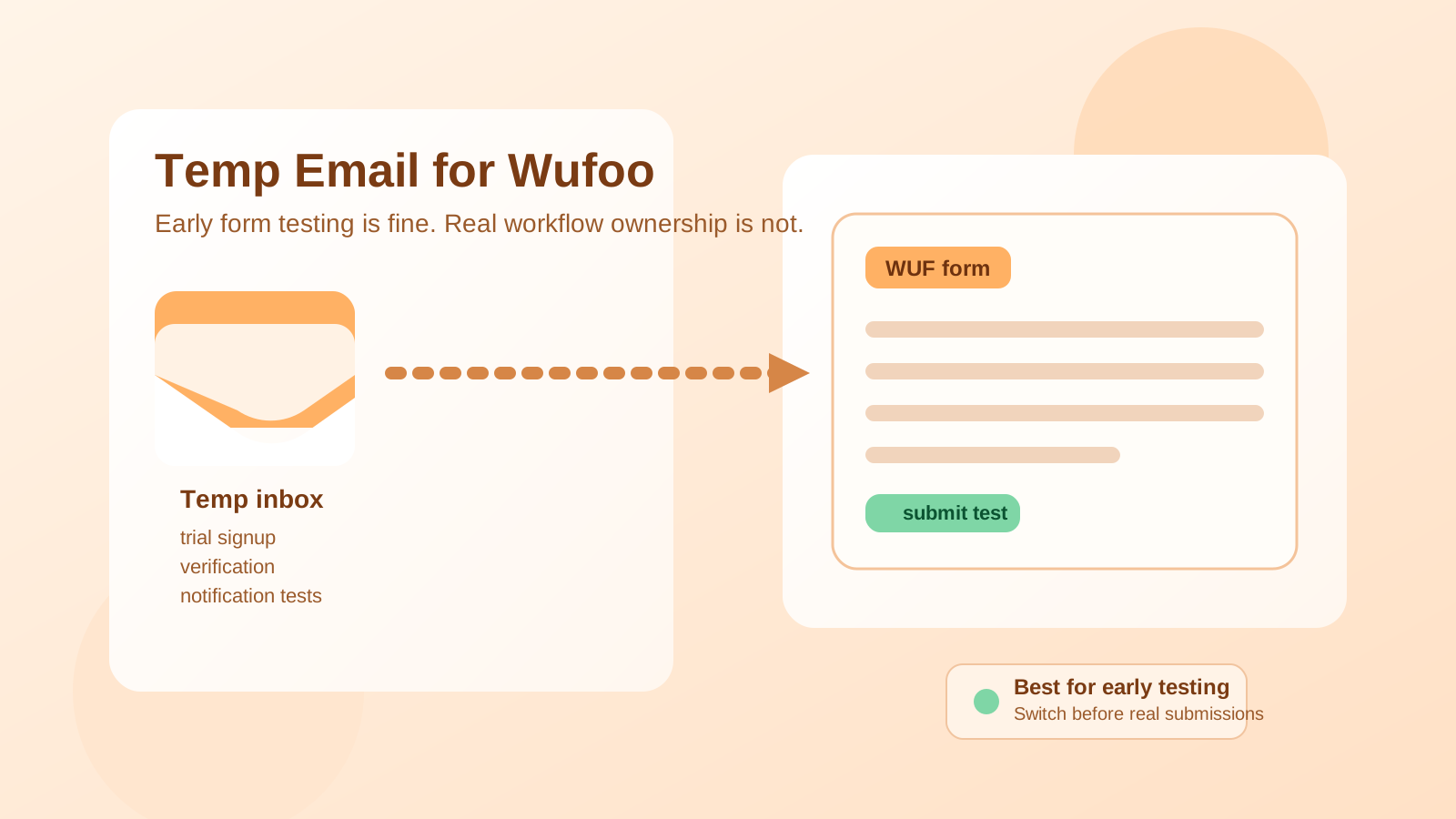
That is the practical answer, and for most people it is the right one. Wufoo sits in a category where temporary email can be genuinely useful at the beginning because a lot of people sign up just to compare builders, test a workflow, or preview how embedded forms will feel on a site. In that stage, inbox privacy matters more than permanence.
The problem is that forms rarely stay “temporary” for as long as people expect. A quick trial form can quietly turn into the registration form for an event, the contact form on a service site, the internal request form for a team, or the intake form that starts collecting actual leads. Once that happens, the email address tied to the account stops being a small setup detail and starts becoming part of the workflow itself.
If you are using Anonibox to keep early software testing out of your primary inbox, Wufoo is a good example of when that strategy helps at first but needs a clear cutoff point. Use a temporary inbox for evaluation. Switch to a monitored permanent address before anything real depends on it.
Why people look for a temp email for Wufoo
The intent behind this keyword is pretty normal. Most people are not trying to hide anything dramatic. They are usually trying to do one of a few ordinary things:
- test the builder without committing their everyday inbox right away
- compare Wufoo against other form tools like Formsite, FormAssembly, Gravity Forms, Jotform Sign, or Google Forms
- keep trial and onboarding emails out of a personal or work mailbox that is already crowded
- separate low-stakes software research from production business communication
- avoid long follow-up campaigns if the product never makes the shortlist
That is a reasonable use case. Form software often triggers more email than people expect: welcome emails, setup suggestions, upgrade nudges, feature announcements, notification tests, and account reminders. A temporary inbox can reduce that clutter during the first pass.
When using a temp email for Wufoo makes sense
There are several situations where using a disposable or short-lived inbox is practical rather than sloppy.
1. You are only doing a first-pass product evaluation
If your goal is simply to sign in, look around the dashboard, create a sample form, preview the design, and judge whether Wufoo still fits your needs, a temp inbox is perfectly reasonable. At this point, the account exists to support research, not real operations.
2. You are comparing multiple form builders in the same week
Many buyers do not start with a single obvious winner. They test several tools side by side. In that context, using a separate inbox for each trial can keep the evaluation cleaner and make it easier to walk away from tools that are not a fit.
3. You are running a private mockup or internal proof of concept
Sometimes a form is only meant to answer a narrow question: can the builder handle a certain field layout, a registration flow, a file request, or a simple approval path? If the build is clearly temporary and nobody outside your team depends on it, a temp inbox can still be fine.
4. You want less inbox noise while testing
This is the obvious reason, but it is still a good one. A temporary inbox lets you verify the account, test one or two notification flows, and move on without turning your real mailbox into a long tail of software follow-ups.
Where a temp email for Wufoo starts becoming a bad idea
The risk changes as soon as the form stops being an experiment and starts becoming infrastructure.
Real submissions raise the stakes fast
If your Wufoo form is collecting actual customer inquiries, event registrations, internal requests, applications, signups, or client intake details, the account behind it needs stable ownership. Once real people are involved, a disposable inbox is weak plumbing.
Notification emails matter more than the signup email
People tend to think about the original verification email and forget about everything after it. In practice, the ongoing messages are usually more important: submission alerts, administrative notices, ownership changes, billing reminders, password resets, and workflow-related notifications. Those are exactly the kinds of messages you do not want tied to an inbox that may disappear or become inaccessible.
Account recovery becomes a long-tail problem
A surprising number of “test” accounts last longer than expected. Someone embeds the form on a page. A teammate reuses it. The event form stays active for another quarter. The intake form becomes the default workflow. Six months later, the temporary inbox decision suddenly matters. If you cannot receive recovery or account notices when you need them, a small early shortcut turns into real friction.
Shared ownership and handoffs need a durable address
Once a form is maintained by more than one person, or once the workflow may be handed off later, the contact email needs to be stable and intentional. A throwaway inbox is a poor foundation for teamwork because nobody fully trusts that it will still be available when something breaks.
Payment, registration, or operational workflows deserve more stability
Even without making grand security claims, some forms are obviously more important than others. If the form touches money, registrations, approvals, business-critical requests, or customer response expectations, the account behind it should use a monitored permanent email.
A safe way to test Wufoo with a temporary inbox
If you want the privacy benefit without the mess, use a staged approach instead of treating the same inbox as both a trial tool and a production foundation.
1. Start with the temp inbox only for evaluation
Use the temporary address for account creation, verification, and your first round of testing. That keeps the evaluation isolated and protects your main inbox while you decide whether Wufoo is even worth deeper time.
2. Keep the test clearly fake
Do not quietly let the trial become real. Use sample data, placeholder names, internal-only links, and nonessential workflows. The more realistic your test becomes, the easier it is to forget that the inbox behind it was never meant to last.
3. Test the specific workflow questions that actually matter
Instead of wandering around the product, use the trial to answer concrete questions:
- Can you build the form layout you need without fighting the editor?
- Do notifications and confirmations behave the way you expect during testing?
- Is the embedded form experience acceptable on the site or page where you may use it?
- Would a teammate understand the setup easily later?
- Does Wufoo feel simpler or more limited than the alternatives you are reviewing?
A temporary inbox is most useful when the trial stays disciplined and short.
4. Switch to a permanent monitored address before going live
If Wufoo makes the shortlist, change the account email before the form starts handling real submissions, live notifications, or anything customer-facing. That is the cleanest handoff point. Do not wait until after the form is embedded across real pages and relied on by real people.
5. Document ownership if the form will stick around
Even small forms can outlast the person who originally created them. If the form may stay active, make sure the inbox tied to it is one the business or team can actually monitor and recover later.
Disposable inbox vs separate evaluation inbox vs permanent inbox
For Wufoo, the best answer is not always a pure throwaway inbox. There are really three different levels of email strategy:
- Disposable inbox: best for a very short first-look trial
- Separate long-lived evaluation inbox: better if you compare tools often and may revisit the account later
- Permanent monitored inbox: the right choice once forms become part of an ongoing workflow
That middle option is underrated. If you test form builders regularly, a dedicated evaluation mailbox can be smarter than a fully temporary one. It still protects your main inbox, but it avoids the fragility of an address that may vanish just when you want to revisit a product.
Common mistakes people make
Letting the trial drift into production
This is the biggest one. A form starts as a harmless test, then gets reused because it works well enough. Weeks later, the business is depending on something that was never given a durable contact address.
Thinking the signup email is the only email that matters
In reality, the important messages often arrive later. Notification tests, account alerts, changes to the setup, and password recovery matter far more over time than the original welcome email.
Using a temp inbox for forms other people rely on
If strangers, customers, applicants, registrants, or colleagues are depending on the workflow, the email decision should be boring and stable. A disposable inbox is the opposite of boring and stable.
Forgetting the ownership question
Forms often outlive campaigns, projects, contractors, or original site builds. The person who made the form first is not always the person who needs access later. Durable ownership matters more than most people expect.
Quick decision checklist
Before you use a temp email for Wufoo, ask yourself:
- Am I only evaluating the builder, or is this form likely to go live?
- Will real people submit data through this workflow?
- Will I need stable access to notifications, resets, or admin notices later?
- Could a teammate inherit this form in the future?
- Would a separate long-lived evaluation inbox be safer than a fully disposable one?
If the account is purely experimental, a temp inbox is fine. If even one of those questions points toward long-term use, a stable email is the safer move.
Final answer
Yes, a temp email for Wufoo can be useful for short early testing, trial privacy, and keeping product research out of your main inbox. No, it is not a good long-term setup once real submissions, notification emails, recovery access, or workflow ownership depend on that address.
The smart move is simple: use a temporary inbox for evaluation, then switch to a permanent monitored email before the form becomes part of a real process. That gives you privacy when it helps and reliability when it matters.