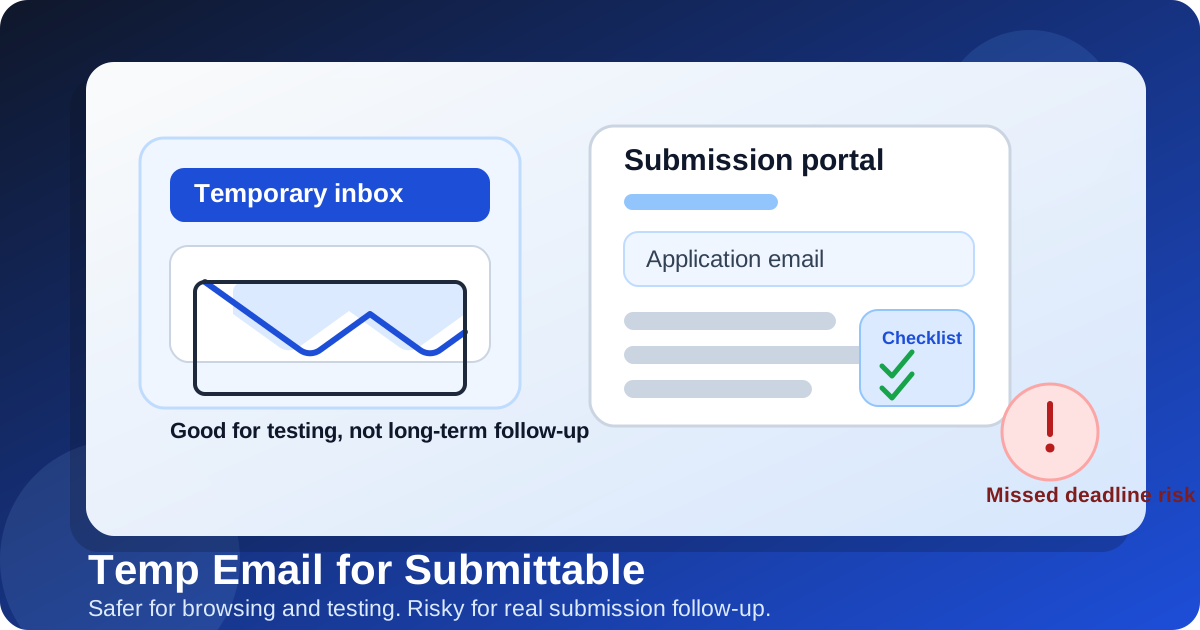
A temp email for Submittable can work for low-stakes account setup, browsing, or a one-off test submission, but it is a bad long-term choice for real grants, magazine submissions, scholarships, or program applications that may need follow-up.
If the submission matters beyond the first confirmation email, use a stable inbox you control rather than a disposable one.
Why people consider a temp email for Submittable
Submittable sits in an awkward middle ground for privacy. On one hand, it often powers one-off opportunities: a literary submission, a scholarship application, a local arts grant, a residency call, a volunteer program, or a form for a nonprofit project. On the other hand, those “one-off” opportunities frequently turn into multi-step conversations that stretch across weeks or months.
That is why many people search for a temp email for Submittable in the first place. They want to avoid adding another platform to their main inbox, and they do not want recurring calls for submissions, newsletters, deadline reminders, or organization updates following them forever. That instinct makes sense. A temporary inbox can reduce clutter and limit exposure when you are just exploring.
The problem is that Submittable is often not just a signup gate. It is part of the actual communication path. Confirmation emails, submission receipts, revision requests, eligibility questions, status changes, interview messages, acceptance notices, and deadline-related reminders can all pass through email. If the inbox disappears, the risk is not theoretical. You may miss the message that actually matters.
When a temporary inbox can be reasonable
There are a few situations where using a disposable or short-term address is understandable.
1. You are only exploring an opportunity
If you are opening a call for entries just to read the requirements, see the document checklist, or understand how the portal works, a temporary inbox can keep that first contact separate from your main email. This is especially reasonable when you are still comparing multiple programs and have not decided whether you will actually submit.
2. You are testing the workflow
Some users create a low-stakes account to see what the submission steps look like before they commit time to a real application. In that narrow use case, a temporary inbox from a service like Anonibox can be useful. It lets you verify the account, look around, and decide whether the process is worth continuing.
3. The submission itself is not important
If you are sending a throwaway test file, checking formatting rules, or confirming whether a portal is open, there is less downside to using a temporary address. The key phrase there is less downside, not no downside.
When a temp email becomes a bad idea
For any real submission with real stakes, disposable email gets risky fast.
1. Grants and fellowships
Grant programs often send clarifications, eligibility questions, deadline reminders, award notices, and follow-up instructions by email. If the address expires, you may not even know the organization tried to contact you. Missing one message can ruin a strong application.
2. Literary magazines, contests, and editorial submissions
Editors sometimes reply months later. They may ask for a revision, a withdrawal confirmation, a contributor agreement, or bio details. Using a disposable address for a serious submission is a gamble, because the timeline is usually much longer than the life of a temp inbox.
3. Scholarships, residencies, and community programs
These opportunities often include multiple stages: initial confirmation, shortlist notices, scheduling, supplemental documents, and final decisions. A temporary address can work for the first step and fail you on the one that actually counts.
4. Any submission tied to identity or portfolio history
If you are building a track record with an organization, publication, or funding body, you want a contact method you can access later. Consistency matters. Disposable inboxes are designed for short-term convenience, not long-term recordkeeping.
The real issue is follow-up reliability
Most people focus on spam when they think about temporary email. That is only half the picture. With Submittable, the bigger issue is follow-up reliability.
A serious submission is rarely a single event. It may produce:
- a confirmation receipt
- status-change messages
- requests for clarification
- deadline reminders
- award or rejection notices
- requests for revised files or supporting documents
- interview or scheduling messages
If any of those messages matter, your inbox should still exist when they arrive.
A better middle ground: use a separate permanent inbox
If your goal is privacy rather than disappearing, the best compromise is usually a separate long-term inbox just for submissions, applications, and opportunity research.
That gives you most of the benefits people want from a temp email:
- your main personal inbox stays cleaner
- calls for entries and follow-up messages stay organized
- you reduce cross-over with shopping, banking, or personal conversations
- you keep access to important updates for as long as needed
For many people, this is the smartest setup: use a temporary address only for true throwaway exploration, and switch to a dedicated permanent submissions inbox before you send anything that could matter later.
How to decide whether Submittable is “temporary-email safe” for your case
Ask yourself five practical questions before you submit.
Will I care about the result a month from now?
If the answer is yes, do not use a disposable inbox.
Could the organization contact me for more information?
If they might request additional documents, updated links, or scheduling details, use an address you can keep.
Is this tied to money, publishing, career progress, or portfolio credibility?
Anything tied to funding, publication, credentials, or serious opportunity deserves a stable inbox.
Am I only testing or browsing?
If you are not actually committing to the submission, a temporary address is easier to justify.
Do I need a record later?
Receipts, reference numbers, and prior submission history can matter. If you may need to look back, use an inbox with persistence.
Common scenarios and the safer choice
Browsing an arts grant you are not sure about
A temp inbox is probably fine for opening the portal and reading the instructions, as long as you are not sending the real application yet.
Submitting a finished grant application before a hard deadline
Use a stable inbox. There is too much room for follow-up, corrections, and status changes.
Sending a short story or poem to a magazine
Use a stable inbox unless you truly do not care whether you ever hear back. Editorial timelines can be slow and unpredictable.
Applying for a scholarship, residency, or fellowship
Use a stable inbox. These processes often involve multiple rounds and time-sensitive instructions.
Testing whether a portal works before telling your team to use it
A temporary inbox can be fine for that first pass, especially if you are just confirming basic workflow behavior.
If you already used a temp email for Submittable
Do not panic, but fix it early if the submission matters.
- Log in and see whether you can update the email address in your account or profile settings.
- Save every confirmation receipt, reference number, and submission ID you already received.
- Check whether the organization provided another contact route inside the portal.
- If needed, contact the organization and ask whether they can update your contact address on file.
- Monitor the temp inbox until you know the change is complete.
The earlier you correct it, the lower the chance that an important update goes missing.
Privacy tips that work better than disposable email alone
If your real concern is spam, tracking, or inbox overload, there are better habits than relying on a vanishing address for everything.
- Use a dedicated submissions inbox: keep applications and opportunity emails separate from daily life.
- Store receipts immediately: save confirmation messages, PDFs, or screenshots in a folder outside your inbox.
- Check notification settings: some organizations send optional updates you can turn off later.
- Use temporary email only at the exploration stage: it is a filter, not a full workflow.
- Keep your portfolio and application records organized: the less you rely on memory, the less one missed email can hurt you.
Bottom line
A temp email for Submittable is reasonable only for low-stakes browsing, quick workflow tests, or throwaway exploration. Once a real submission, deadline, editor reply, grant update, or interview message could affect the outcome, a disposable address stops being clever and starts being fragile.
If you want privacy, the better answer is usually not “use no permanent inbox at all.” It is “use a separate permanent inbox for serious submissions, and reserve temp email for the earliest, lowest-risk stage.” That way you still protect your main address without losing the messages you may later wish you had kept.