Yes — a temp email for dev.to can make sense if you are only testing signup, exploring the writing flow, or keeping a one-off experiment out of your main inbox.
It becomes a bad idea as soon as the account matters, because password resets, comment notifications, account recovery, and long-term publishing are all much harder when the inbox disappears.
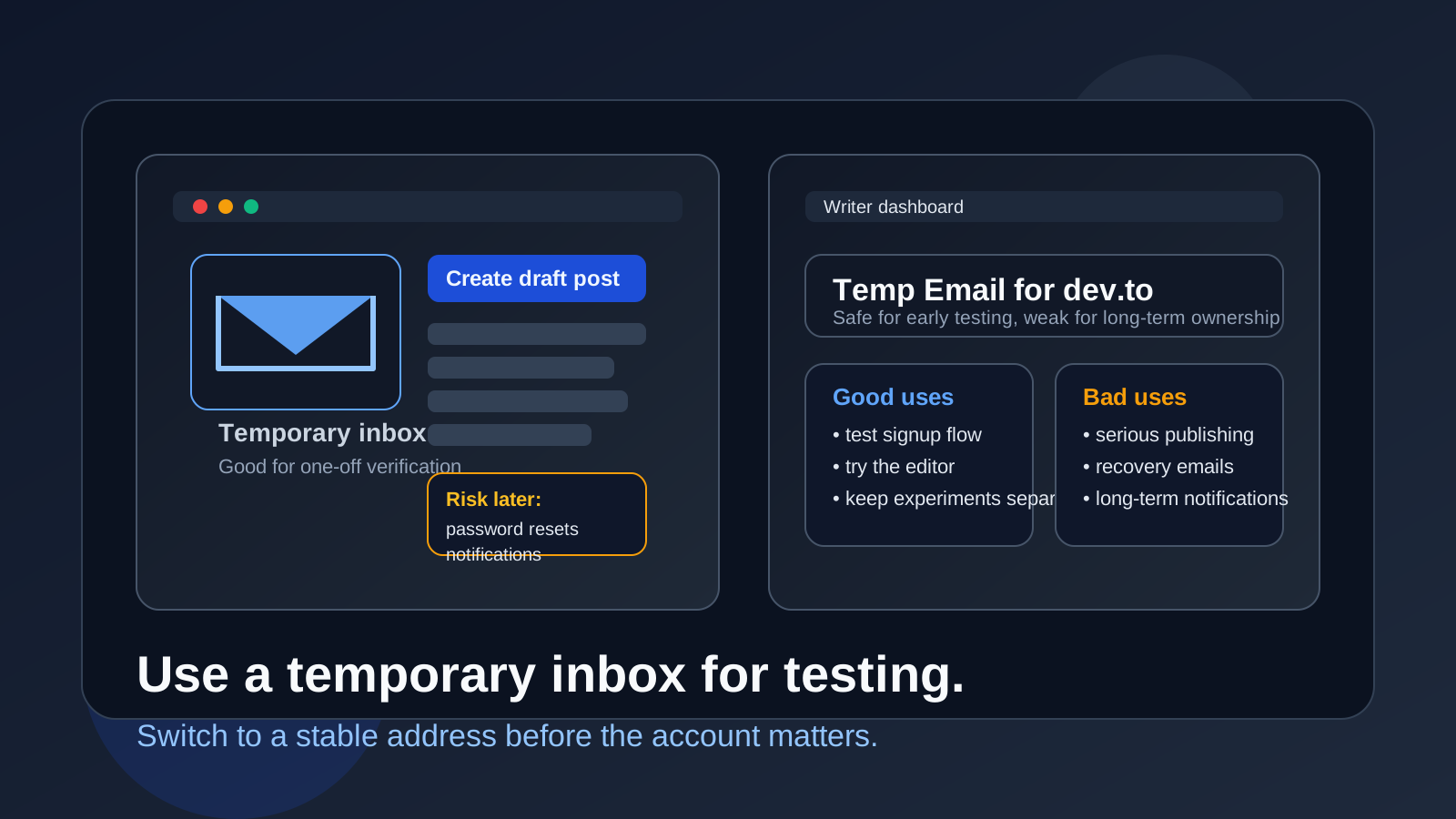
Why people consider a temp email for dev.to
dev.to is easy to treat as a low-stakes platform at first. You might want to test the editor, see how posting works, explore the community, or check whether your writing style fits before tying another service to your permanent email address. That instinct is reasonable. A temporary inbox can reduce clutter, shield your main address from one more account, and help you separate casual experiments from accounts you actually intend to keep.
That said, a dev.to account is not always as disposable as it feels during the first ten minutes. Once you publish articles, join conversations, collect followers, save drafts, or link the profile to your public identity, the account stops being a throwaway test. At that point, the email behind it becomes part of your long-term access plan, not just a signup detail.
When a temporary inbox can help
Using a temporary inbox on dev.to is most defensible when the goal is narrow and short-lived. Good examples include:
- Testing the signup flow: You want to see whether email verification works, how the account is created, and what the onboarding experience looks like.
- Trying the editor before committing: You want to experiment with Markdown, embeds, tags, or draft formatting without immediately tying the account to your main inbox.
- Separating platform experiments: If you test multiple writing or community platforms in the same week, a temporary inbox can keep those one-off checks from spilling into your everyday email.
- Reducing promotional or product emails: Even when a platform is not especially noisy, some people still prefer not to add another permanent sender to their primary address unless the tool proves useful.
If that is all you are doing, a temporary inbox is a practical privacy move. It keeps the experiment contained, and it lets you decide later whether the platform deserves a real email identity.
Where the risk starts on dev.to
The risk begins when the account stops being experimental. If you publish something you care about, comment under your real name, or start treating the profile as part of your public writing presence, a disposable inbox turns from a convenience into a weak point.
1. Account recovery becomes fragile
If you lose access to the account, forget a password, or need to confirm ownership later, the recovery path usually starts with email. That is fine if the inbox is stable. It is a mess if the inbox expired days ago. A temporary email is great for short-term verification and terrible for long-term recovery.
2. Notification value grows over time
At the beginning, comment notifications and account emails may feel unimportant. Later, they often matter more than expected. You may want alerts for replies, moderation issues, security notices, or account changes. If those messages go to an inbox you no longer control, you lose visibility right when the account becomes more valuable.
3. Published work is harder to manage
Once articles are live, the account is not just a login anymore. It controls editing, updates, cleanup, profile changes, and in some cases your public reputation as a writer or developer. Losing access after you have published is much more annoying than losing access to an empty test profile.
4. Temporary inboxes are not always accepted forever
Some platforms, tools, or later account events may treat disposable addresses differently. Even if initial signup works, future verification, security checks, or email changes may not be as smooth as they would be with a stable address you control.
A safer way to use a temp email on dev.to
If you still want the privacy benefit, the best approach is to use a temporary inbox only during the true testing phase, then switch to a permanent address before the account becomes important.
- Create the temp inbox first. If you are using Anonibox or another disposable mailbox, generate it before signup so the entire experiment stays separate from your everyday inbox.
- Use it only for evaluation. Explore the editor, draft a post, test formatting, and decide whether you actually want a dev.to presence.
- Do not build a real publishing routine on it. Avoid using the temporary address for an account that will hold real articles, serious comments, or long-lived community activity.
- Move to a stable email early. If the platform seems worth keeping, change the email while you still have access and before you start depending on recovery or notification flows.
This gives you the upside of privacy without locking important account access to a mailbox that may disappear.
Better than a disposable inbox: use a separate permanent writing email
For many writers, the best answer is not “main email” versus “temporary email.” It is a third option: a separate permanent address used only for writing platforms, newsletters, and publishing accounts.
That middle ground is usually stronger because it gives you:
- Long-term recovery access without mixing the account into your primary personal inbox
- Cleaner organization for publishing notifications, replies, and platform messages
- Lower spam risk than giving your main address to every writing tool you try
- More professionalism if you eventually want to build a recognizable author identity
If you think there is even a decent chance you will keep publishing on dev.to, a dedicated permanent writing email is almost always the smarter choice than a disposable one.
Good use cases vs bad use cases
Good use cases
- Checking whether signup works the way you expect
- Testing the editor, tags, layout, and draft workflow
- Exploring the platform before deciding whether it deserves a real place in your writing stack
- Keeping a short-lived experiment away from your main inbox
Bad use cases
- Publishing articles you want to maintain later
- Building a profile tied to your real name or portfolio
- Relying on the account for ongoing comment discussions or community notifications
- Using the same disposable inbox for multiple important writing accounts and then losing track of them
Mistakes to avoid
The most common mistake is simple: using a throwaway email for a test account, then accidentally letting the test account become a real account. That happens all the time. One draft turns into a published post, then another, then a useful comment thread, and suddenly the disposable inbox is attached to an identity you actually care about.
Other avoidable mistakes include:
- Not saving important messages: If the inbox is short-lived, save any verification or account-change messages you may need during the evaluation phase.
- Waiting too long to switch: The longer you wait, the easier it is to forget or lose access.
- Using a disposable address for audience-facing work: Public writing accounts deserve stable recovery options.
- Assuming all “free” inboxes behave the same way: Some are public, some expire quickly, and some are better for privacy than others.
Quick checklist before you decide
- Am I only testing dev.to, or do I expect to keep the account?
- Would I care if I lost access in a month?
- Do I want comment and security notifications long term?
- Will this profile be tied to my real writing identity?
- Would a separate permanent writing email solve the problem better than a disposable one?
If your honest answer is “this is just a short experiment,” a temp email is fine. If the answer is “I may actually publish here,” move to a stable address early and avoid future cleanup.
Final answer
A temp email for dev.to is useful for early writer testing, quick privacy protection, and one-off signup experiments. It is not a strong choice for any account tied to real articles, public identity, notifications, or recovery.
Use a disposable inbox only if you truly mean disposable. If the account starts turning into a real publishing home, switch to a permanent email before the profile, comments, and posts become something you do not want to lose.