Yes, a temp email for Postman can make sense when you only need to verify an account, compare API tools, or keep another test signup out of your main inbox.
No, it is not a good long-term setup once shared workspaces, saved collections, monitors, recovery, or team access depend on that address.
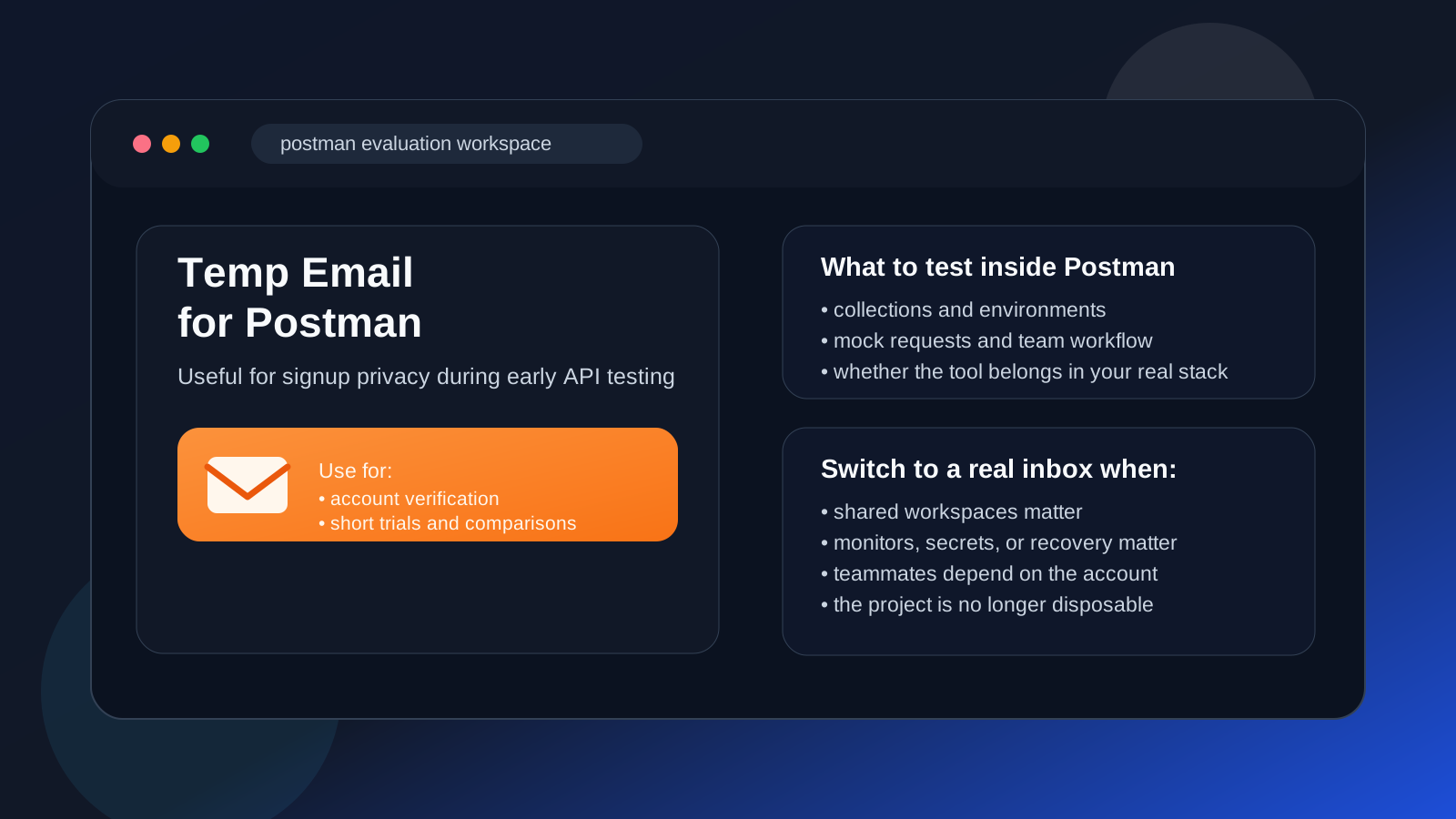
That is the practical answer most people need. Postman is exactly the kind of product people want to try before they commit. You may want to inspect the interface, test a few requests, import a collection, compare it with another API client, or see whether it fits your workflow without giving your permanent address to another software vendor on day one. A temporary inbox can help with that first step.
But a Postman account can also become more important than it looks at the start. What begins as a quick evaluation can turn into a workspace with saved collections, environments, mock endpoints, team invites, monitoring, or documentation that other people rely on. Once that happens, the inbox behind the account matters. A disposable address that felt convenient during the trial can become the weakest point in the setup.
If you use Anonibox or another temporary inbox for low-stakes signups, the safest rule is simple: use it during the evaluation phase, then move to a durable address before the account becomes part of real work.
Why people use a temp email for Postman
The motivation is usually straightforward. People are not always trying to hide from something dramatic. Often they are just trying to stay organized.
API tools tend to create a familiar signup pattern: account verification, welcome messages, feature tours, template suggestions, follow-up emails, product updates, and occasional sales nudges. If you are already testing several developer tools in the same week, your normal inbox can fill up with noise before you have decided which products are actually worth keeping. A temp inbox gives you a clean place to receive the one or two emails you need for initial access without turning a quick evaluation into long-term inbox clutter.
That is especially useful when you are comparing Postman with other API or developer workflow tools. You may only want enough access to answer basic questions: Does the interface feel fast? Is collaboration manageable? Can you organize requests and environments clearly? Will it fit your workflow better than a lighter alternative? A temporary address is reasonable if the account exists only to answer those questions.
When a temporary inbox makes sense
A temp email for Postman is most defensible when the work is clearly short-lived and exploratory.
1. You are comparing API tools
If you are checking Postman against tools like Insomnia or Hoppscotch, a disposable inbox can keep those test accounts separate. You get the confirmation email, finish the comparison, and avoid attaching several one-off trials to your primary address.
2. You only need a sandbox account
Sometimes the goal is limited: import a sample collection, test a few requests, poke around the workspace layout, and decide whether the tool even belongs on the shortlist. In that scenario, the account is little more than a temporary doorway. A temporary inbox works fine for the doorway.
3. You are doing private early research
Maybe you are evaluating tools before recommending one to a client or employer. Maybe you are a contractor who wants to stay organized before you know whether a project will move forward. Maybe you simply do not want your main inbox exposed to another vendor until you are sure the product matters. Those are practical reasons, not overreactions.
4. You want cleaner vendor separation
One of the underrated benefits of temporary inboxes is segmentation. If each product test has its own inbox, you can review onboarding quality, compare setup friction, and keep software-trial noise from piling into the address you use every day.
When a temp email becomes risky
The risk is not usually the first login. The risk shows up when the account quietly becomes important.
Shared workspaces
If your Postman account starts hosting a real workspace that teammates depend on, the email behind the account is no longer a throwaway detail. Shared ownership needs stable ownership. If the inbox disappears, password recovery and account continuity can get messy.
Saved collections and environments
Collections often begin as test material and then become real assets. The same goes for environment setup, request organization, and documentation. If you would care about losing smooth access to that work next month, the disposable inbox has already outlived its safe window.
Monitoring and ongoing operational use
Once you use Postman for recurring checks, longer-term collaboration, or active maintenance, you want predictable access to notices, recovery emails, and any account-level communication. A temporary inbox is a bad foundation for something that now matters on an ongoing basis.
Team invites and handoffs
Tools become operational the moment more than one person relies on them. If you expect coworkers, clients, or collaborators to touch the Postman workspace, do not leave the core account tied to a mailbox that may be forgotten later.
Account recovery and continuity
Even careful people underestimate this part. The problem is not just whether you can log in today. The problem is whether you can still prove ownership, recover access, or sort out an interruption later. Temporary inboxes are helpful for low-stakes testing precisely because they are temporary. That same quality makes them fragile for long-term use.
A safe way to use a temp email for Postman
The best approach is not to avoid temporary email entirely. It is to use it at the right stage.
- Use the temporary inbox for signup and first-look evaluation. Verify the account, explore the workspace, and decide whether Postman deserves deeper attention.
- Keep the evaluation focused. Test the things that matter: organization, usability, collaboration basics, and whether the product actually solves your problem.
- Save anything important early. If there is an invite, a verification link, or useful setup information, capture it while the inbox is still fresh and accessible.
- Switch to a stable address before real work accumulates. If the account is becoming part of your routine, do not wait for a recovery problem to remind you that the inbox choice mattered.
This gives you the privacy and inbox-cleanliness benefits of a service like Anonibox without turning a temporary convenience into permanent operational debt.
What to evaluate while you are inside Postman
The email question is only step one. Once you are in the product, use the evaluation time well.
Request and collection organization
Does the structure make sense for the kinds of APIs you work with? Can you keep requests readable and reusable, or does the tool feel heavy for your actual needs?
Environment handling
Look closely at how comfortable you feel separating local, staging, and production-like setups. Even if you are only doing a trial, this is where tools reveal whether they support disciplined work or encourage shortcuts.
Collaboration fit
If there is any chance the tool will become shared, imagine another person stepping into your setup. Would they understand it? Would the handoff feel smooth, or is the whole thing tied too closely to one personal testing account?
Long-term usability
Ask whether you are evaluating a product or just enjoying the novelty of a clean first-run experience. The real test is whether the workflow would still feel manageable after weeks of use, not whether the welcome screen looked polished.
Common mistakes to avoid
- Leaving the temp inbox in place after the trial becomes real. This is the most common mistake.
- Forgetting which address was used. A disposable inbox helps only if you can still trace what it was used for.
- Mixing several unrelated product trials into one inbox. Separate inboxes are cleaner and easier to reason about.
- Assuming low-stakes signup means low-stakes account forever. In tools like Postman, value accumulates quickly once collections and collaboration begin.
- Judging the product by marketing emails instead of workflow quality. Use the inbox to access the tool, then evaluate the tool itself.
A quick decision checklist
Before you use a temp email for Postman, ask yourself:
- Am I only evaluating Postman, or am I already building something I will keep?
- Would I care if access to the original inbox disappeared next week?
- Will teammates, clients, or collaborators depend on this account?
- Am I likely to store collections, environments, or other reusable work here?
- Do I want to separate the trial from my main inbox for a legitimate short-term reason?
If the answers lean toward short-term exploration, a temp inbox is sensible. If the answers lean toward continuity, shared ownership, or repeated use, start with a real address or move quickly to one.
Final answer
A temp email for Postman is a smart short-term choice for account verification, private tool comparisons, and early API testing when you want to avoid long-term inbox clutter. It is a poor long-term choice once collections, workspaces, monitoring, recovery, or teammate access matter.
The cleanest workflow is to treat temporary email as a testing tool, not a permanent foundation. Use it to get in, evaluate the product honestly, and then graduate the account to a stable inbox before the workspace becomes important. That gives you privacy and flexibility now without creating access headaches later.