Yes, you can use a temp email for Homerun when you are exploring a company careers page, testing an early application flow, or applying for roles you are still screening.
No, it is a bad long-term address once recruiter replies, interview scheduling, account access, or recovery depends on that inbox.
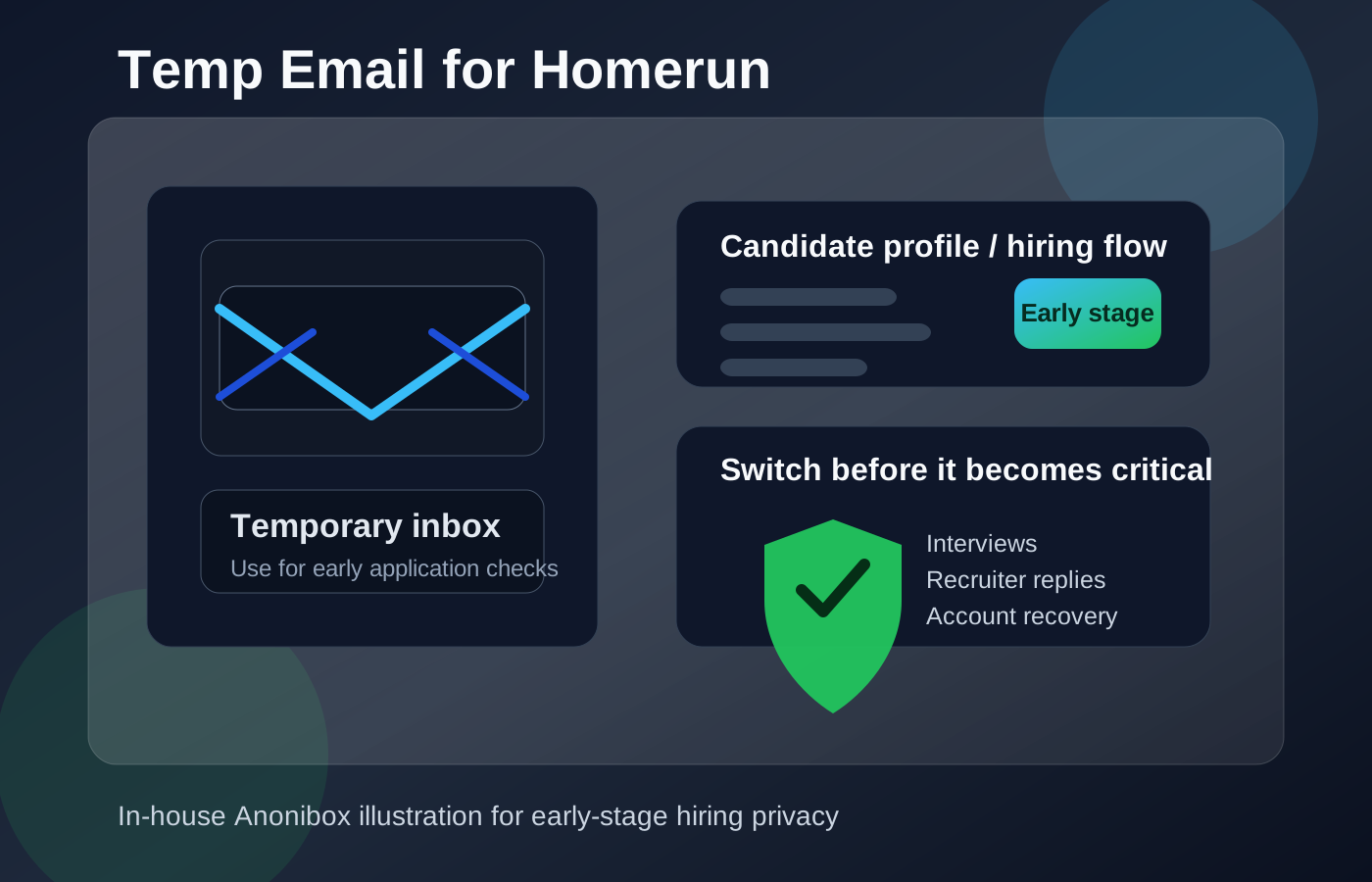
That is the practical rule. Temporary email can be useful during the earliest Homerun stage, especially when you want to reduce inbox clutter and keep exploratory applications separate from your main address. But the moment a role becomes serious, you should switch to a permanent inbox you actually monitor every day.
Why people look for a temp email for Homerun
Most people searching this phrase are not trying to deceive an employer. They are trying to solve a very normal job-search problem: too many platforms, too many recruiter emails, and too little control over what happens after one quick application. A hiring platform like Homerun can sit right at the point where browsing turns into signup, profile creation, confirmation emails, status updates, and longer-term follow-up.
If you are applying to several companies in the same week, that traffic adds up quickly. Even legitimate messages can become noisy: application receipts, reminders to finish a profile, interview coordination, requests for extra details, rejection notices, and future-opportunity outreach. A temporary inbox can help you isolate that early-stage traffic so your primary email does not become a permanent archive for every job you considered once and forgot.
That makes temp email for Homerun a useful search intent. The key is understanding that it is best for low-commitment exploration, not for the parts of the hiring process where missing one message can cost you an opportunity.
What Homerun-related emails you may receive
The exact experience depends on how each employer has configured its hiring flow, but Homerun-powered careers pages can generate messages such as:
- email verification or confirmation links
- application receipts
- requests to finish missing profile details
- messages about attached resumes or portfolio submissions
- recruiter follow-ups
- interview invitations or scheduling requests
- status updates, rejections, or next-step instructions
Some of those messages are disposable after a day. Others become critical immediately. That is why a temp inbox can be smart at the front of the process but risky later on.
When using a temp email for Homerun makes sense
1. You are still deciding whether the role is worth serious attention
If you found a job through a search engine, social post, newsletter, or friend and you are not yet sure whether the company is a real fit, using a temporary inbox can be reasonable. It gives you space to verify the application flow and see what happens next without tying every exploratory step to your long-term inbox.
2. You want to keep broad job-search traffic separate
Many people apply in batches. They may send out several applications over a few days, compare salaries, locations, and remote policies, then narrow the field later. In that phase, the problem is often organization more than security. A disposable inbox can help you separate “maybe” opportunities from the few roles you truly care about.
3. You are testing a hiring workflow rather than pursuing a real role
Sometimes the user is not a typical job seeker at all. Recruiters, operations teams, QA staff, or product evaluators may want to see how an employer-side careers flow behaves from the candidate side. In that context, a temp inbox is often ideal because the account is meant to be short-lived from the start.
4. You want to reduce long-tail recruiter email
Even when an employer is legitimate, not every role deserves permanent access to your main email. If you are using a service like Anonibox to protect your primary inbox during early research, Homerun is exactly the kind of platform where that boundary can be useful.
When a temp email for Homerun becomes a bad idea
1. A recruiter is actively replying
Once a human recruiter starts emailing you directly, reliability matters more than inbox cleanliness. You do not want a short-lived address controlling interview invitations, clarifying questions, or follow-up threads after a phone screen.
2. You may need to log back in later
If the employer uses the address for candidate access, password resets, or future status checks, a disposable inbox becomes fragile. Losing access to the inbox can mean losing access to the application history tied to it.
3. The process moves into interviews, assessments, or offers
At that stage, the inbox is no longer handling low-stakes messages. It may carry scheduling details, meeting links, assessment deadlines, or time-sensitive paperwork. Missing one important email is a much bigger problem than receiving a few extra recruiter messages.
4. You genuinely want future roles from that employer
If this is a company you would happily hear from again, a permanent monitored address is better. Using a temp inbox for the first click is one thing. Using it for a long-term relationship with a target employer is usually not worth the risk.
A safer workflow if you want privacy without losing opportunities
- Use the temp inbox only for the first pass. Verify the application, save the important messages, and decide whether the role is worth pursuing.
- Switch early if the opportunity looks real. Do not wait until a recruiter has already sent a critical next-step email.
- Keep notes outside the inbox. Save company names, job titles, dates, and any confirmation screens so you are not depending on a disposable mailbox as your record system.
- Use one stable address for serious roles. Once a position moves into screening or interviews, consolidate that conversation into the inbox you trust most.
This gives you the best of both worlds: privacy and lower spam exposure during the exploratory phase, plus reliability once the hiring process matters.
Mistakes to avoid
- Using a temp inbox for every application, including the roles you care most about
- Forgetting that a profile or candidate login may depend on the original email
- Missing a recruiter reply because the inbox expired or was not monitored
- Treating a disposable address like a long-term identity instead of a short-term filter
- Assuming all follow-up will happen inside the platform instead of by email
Will employers care if you use a temp email?
Sometimes they will not notice. Sometimes they will notice but not care, especially if you quickly switch to a normal address when the process becomes real. But some recruiters may see a disposable address as lower commitment or worry that they cannot reliably reach you later.
That does not mean using one is always a mistake. It means you should use it strategically. The safest approach is to treat a temp inbox as a tool for early filtering and privacy, not as the final communication channel for a serious candidacy.
Final answer
A temp email for Homerun can be a smart way to protect your main inbox during exploratory applications, quick workflow tests, and early-stage job browsing. It helps most when the account is short-lived and the opportunity is still uncertain.
But once recruiter replies, login access, scheduling, or recovery matters, switch to a permanent address you control and check daily. That is the cleanest balance between privacy and reliability, and it keeps temporary email useful instead of turning it into the reason you miss a real opportunity.