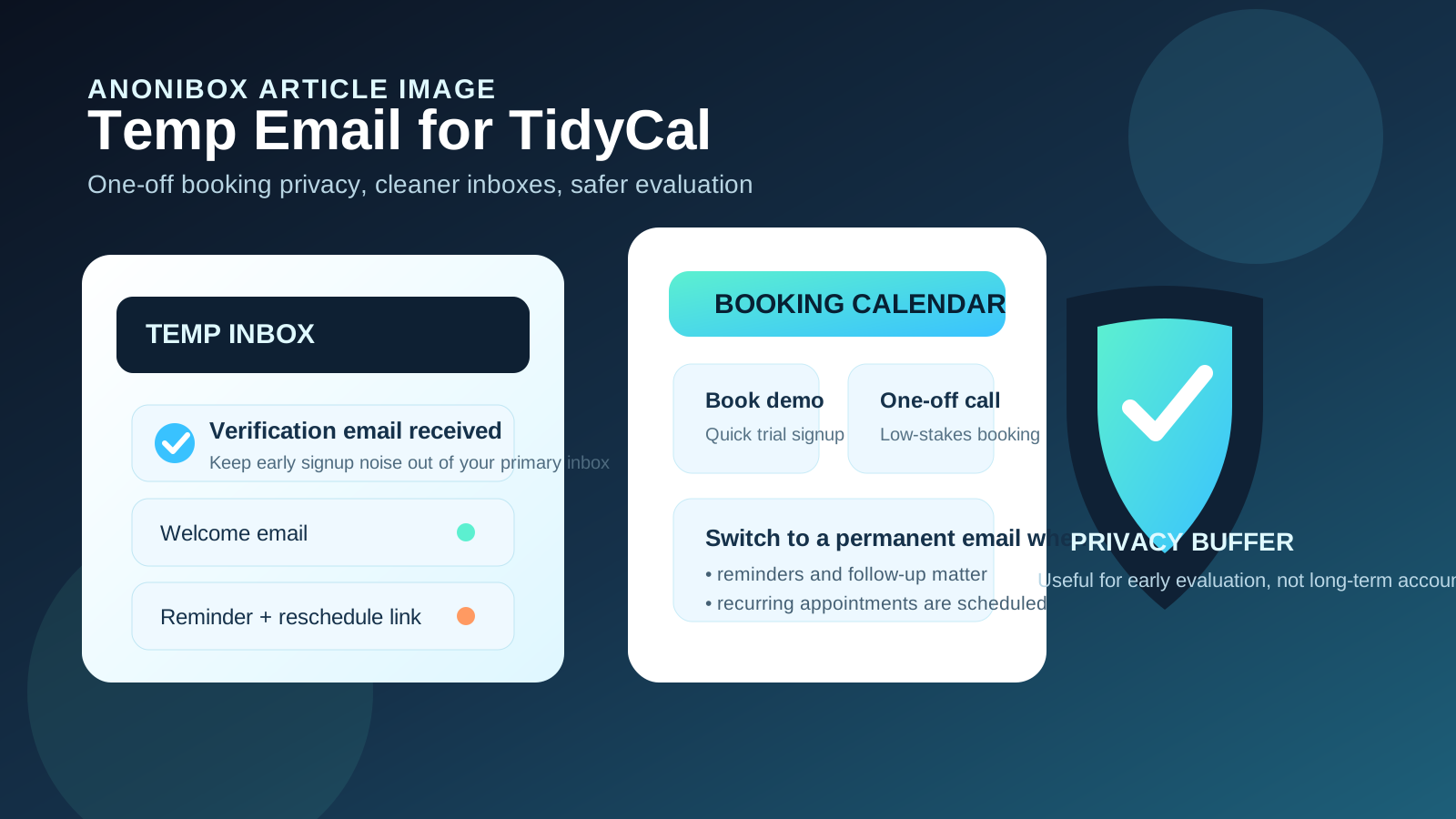
A temp email for TidyCal can work for one-off bookings, demo requests, and low-stakes testing, but it becomes risky once reminders, reschedules, recurring appointments, or account recovery matter.
Yes — if you only need the first confirmation email and want to keep early scheduling noise out of your main inbox, a temporary address can be useful. Once the booking turns into a real workflow, switch to an email you actually plan to keep.
That distinction matters because booking tools feel simple right up until they stop being simple. The first interaction may be nothing more than a link, a timeslot, and a confirmation email. A few days later, that same thread can hold reminder messages, reschedule links, intake questions, video meeting details, and follow-up communication you do not want to lose. If you are using TidyCal for a quick test or a one-off appointment, a disposable inbox can be convenient. If you are using it for recurring calls, real client work, or anything that depends on continuity, it is the wrong long-term setup.
For people who want more control over inbox clutter during the exploration stage, a service like Anonibox can be a practical buffer. The key is understanding where that buffer helps and where it starts creating more risk than convenience.
Why people look for a temp email for TidyCal
Most people searching for this are not trying to disappear. They are trying to reduce friction.
Scheduling tools often sit at the front door of sales calls, coaching sessions, consultations, discovery meetings, and product demos. Even when the appointment is small, the contact trail can stretch longer than expected. One meeting can turn into reminder emails, follow-up offers, newsletters, and future outreach from people or companies you are only loosely interested in.
Using a temporary inbox for TidyCal can make sense when you want to:
- book a one-time demo without giving every vendor your long-term inbox right away
- test how a booking page works before deciding whether the product or service is worth deeper engagement
- separate exploratory calls from the inbox you use for work, family, or real customers
- avoid months of follow-up email after a quick consultation or discovery chat
That is a reasonable goal. The mistake is assuming that every appointment is disposable just because the first step looks lightweight.
When a temp email for TidyCal makes sense
One-off demo signups
If you are comparing tools, agencies, or service providers and only need the first confirmation message, a temporary inbox can keep the noise contained. You get the booking confirmation without committing your main address to every demo you try.
Low-stakes exploratory calls
Sometimes you are willing to talk, but not willing to open a long-term communication channel yet. A short introductory call, a community office-hours session, or a first-pass consultation can be a fine use case for a disposable inbox.
Early product evaluation
If you are evaluating TidyCal itself, the earliest stage is where temp email helps most. You can review the signup flow, see the first onboarding emails, and decide whether the tool deserves a real account before tying it to an address you plan to keep.
Inbox hygiene during research
Scheduling experiments stack up quickly. If you are testing multiple products in the same week, using a separate address for each low-stakes signup can make your main inbox much easier to manage.
When a temp email is the wrong tool
TidyCal may begin with a simple booking link, but real scheduling workflows depend on continuity. A temporary inbox is a weak fit once missing a message becomes costly.
Recurring meetings
If an appointment may turn into a series of calls, you need stable access to reminders, changes, and future invitations. A disposable address adds unnecessary fragility.
Client or revenue-related appointments
Anything tied to live clients, paid work, or real sales conversations should use an email you control long term. If a follow-up message contains the next step that matters, you do not want it tied to an inbox you stop checking.
Shared team workflows
If other people are involved, your email address stops being a private testing choice and becomes part of a working process. Team scheduling, lead routing, and handoffs are better anchored to a permanent account.
Account recovery and settings you care about
Even if the first few emails feel disposable, that can change fast. If you may need to reset a password, confirm ownership, revisit settings, or reconnect the account later, temporary email becomes risky.
What can go wrong if you keep using a disposable inbox too long?
The problem is usually not the first email. The problem is the email that arrives later.
- Missed reminders: you may lose access to the message that helps you actually show up on time.
- Broken reschedules: if a meeting changes, the reschedule or cancellation link may go to an inbox you no longer monitor.
- Lost follow-up context: an organizer may send prep details, a meeting link, or next steps after the original confirmation.
- Harder account recovery: if the account becomes worth keeping, recovering it later is much harder when the email was temporary by design.
- Confusion across multiple bookings: disposable workflows can be tidy at first, then messy when several appointments start overlapping.
In other words, temp email works best when both the inbox and the relationship are disposable. As soon as either one becomes important, the setup starts working against you.
A safer way to use temp email with TidyCal
If you want the privacy benefits without the obvious downsides, use a simple rule: treat temporary email as a screening tool, not a permanent operating system.
1. Decide whether this is a trial or a real relationship
Before signing up, ask a blunt question: if this meeting goes well, will I want continued access to future messages? If the answer is yes, start with a permanent inbox instead of creating migration work for yourself later.
2. Use temp email only for low-stakes first contact
A disposable address is most useful when the appointment is exploratory, replaceable, or purely evaluative. That is the zone where the privacy upside is strongest.
3. Save the confirmation details you actually need
If you use a temporary inbox for a one-off TidyCal booking, do not assume you will remember everything later. Save the confirmation page, calendar link, or meeting details right away.
4. Switch early if the workflow becomes real
The best time to move to a stable email is before you depend on the next message, not after you miss it. If a demo turns into ongoing conversations or a one-time appointment turns into recurring meetings, change the contact email as soon as the platform allows.
Who should avoid using a temp email for TidyCal?
Some use cases are poor fits from the start.
- people booking healthcare, legal, financial, or otherwise sensitive appointments
- consultants, coaches, and freelancers who expect repeat bookings
- teams routing qualified leads or managing shared calendars
- anyone who is likely to need account recovery, billing notices, or historical continuity
These are not the moments to optimize for throwaway convenience. They are the moments to optimize for reliable access.
Quick checklist before you use a temp email for TidyCal
- Is this booking truly one-off and low stakes?
- Would losing reminder emails be annoying or a real problem?
- Am I only testing the platform, or am I starting a relationship I may continue?
- Will I need to reschedule, recover the account, or review messages later?
- Would a separate permanent inbox serve me better than a disposable one?
If your answers point toward a short-lived test, temp email is reasonable. If they point toward ongoing communication, use a stable address from the start.
Final answer
A temp email for TidyCal is useful when you want privacy during a one-off booking, a quick demo request, or an early product evaluation. It is a poor long-term choice once reminders, reschedules, recurring appointments, or account recovery matter.
Use a disposable inbox to filter low-stakes scheduling noise, not to run an important calendar workflow. That way you get the privacy and inbox-control benefits without turning future communication into a preventable mess.