Yes, a temp email for Bruno can be useful when you only want to test a low-stakes account flow, optional cloud feature, or short evaluation without feeding more product mail into your main inbox.
No, it is a poor long-term choice if the address becomes the recovery path for shared access, saved project history, billing, or anything you may need again after the disposable inbox disappears.
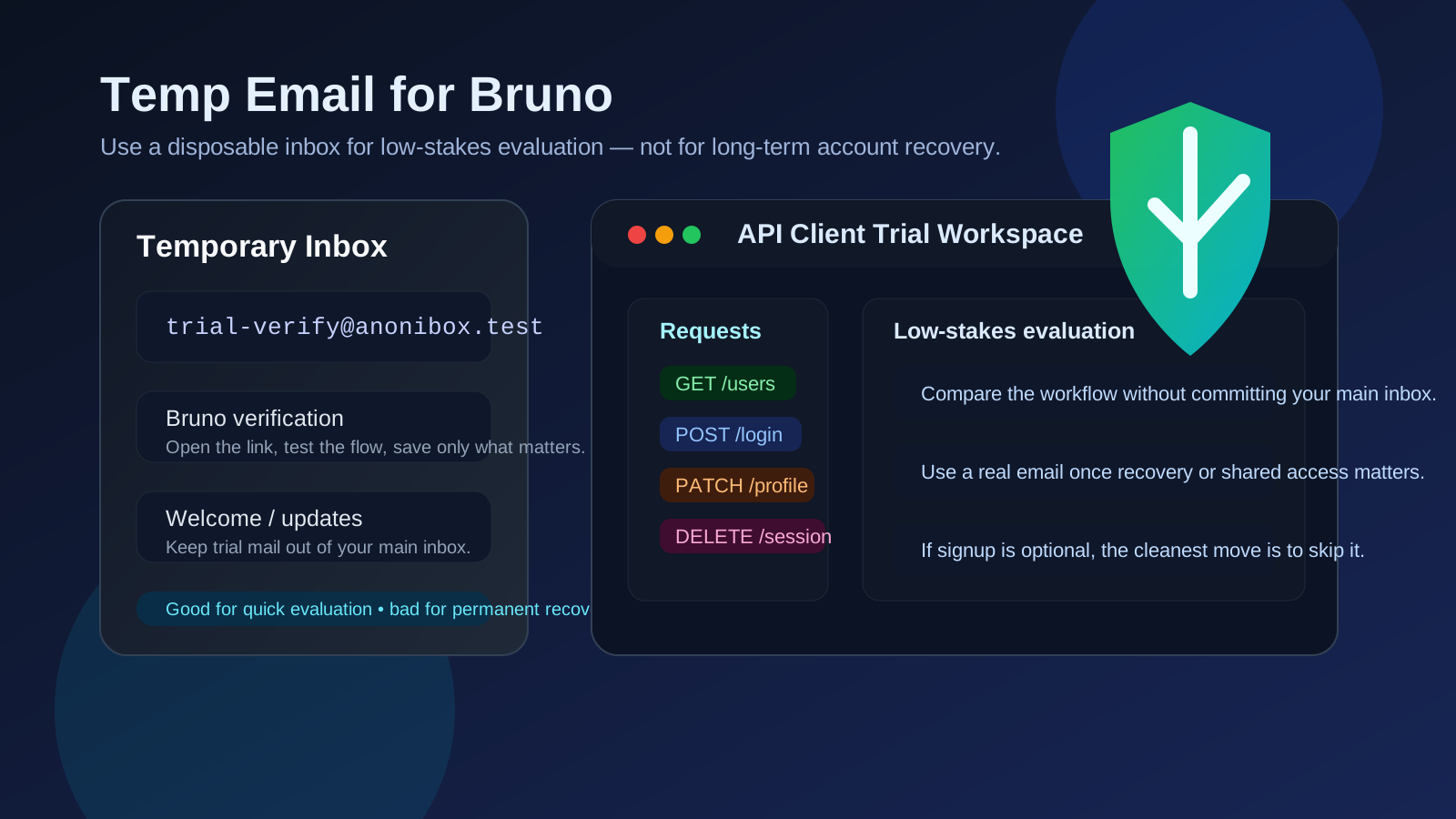
That short answer matters because Bruno sits in a slightly different category from many fully SaaS-first developer tools. A lot of developers reaching Bruno are curious, comparison shopping, or trying to keep their API workflow more local and lightweight. In some cases, the best privacy move is not even to use a temporary email at all. It is to skip signup entirely if the workflow you want does not require one.
But if you do hit an account gate, want to test an optional cloud feature, need a confirmation email, or simply want to isolate one more dev-tool signup from your main inbox, a temporary address can still make sense. The trick is understanding where the line is between a throwaway evaluation and a real working account. Once that line is crossed, a disposable inbox stops being tidy and starts being a liability.
Why people look for a temp email for Bruno
Most people searching this are not trying to game anything. They usually fall into one of a few normal buckets:
- They want to compare Bruno with Postman, Insomnia, or Hoppscotch without creating another long-term vendor relationship right away.
- They want to see whether an account-linked feature is worth using before they attach a permanent identity to it.
- They are trying to keep test signups, announcements, and onboarding mail out of a work inbox that is already crowded.
- They are experimenting with a new API client and do not yet know whether it will become part of their real workflow.
Those are all reasonable motivations. Developer tools multiply quickly. One trial becomes five. One welcome email becomes a month of updates, release notes, webinars, feature announcements, and upgrade nudges. Using a temporary inbox for the low-stakes stage can keep that noise contained.
Bruno changes the decision slightly: do you even need an account?
This is the first practical question to ask before you even open a temp inbox: does your Bruno workflow actually require an email signup?
If the answer is no, the cleanest privacy choice is to avoid unnecessary signup entirely. That gives you less inbox clutter, less account sprawl, and fewer recovery headaches later. People sometimes jump straight to disposable email because it feels privacy-friendly, but avoiding a needless account is even simpler.
If the answer is yes because you want to test some optional online layer around the product, receive a verification email, access an account-gated area, or evaluate support, billing, or collaboration-related features, then a temp inbox becomes a fair option for the first pass.
When a temp email makes sense for Bruno
A temporary address is usually fine when the goal is narrow, reversible, and low-risk. Good examples include:
- Quick product comparison: you only want to judge the interface, request flow, or general fit.
- Short trial verification: you need to click one confirmation link or receive a welcome message.
- Inbox isolation: you want evaluation mail separated from your normal personal or work inbox.
- One-off research: you are exploring whether Bruno belongs in your stack at all.
- Non-critical experimentation: nothing valuable will be trapped behind the account later.
In these scenarios, a temporary inbox does what it is supposed to do. It helps you reach the useful part of the test quickly, while reducing the odds that a simple experiment turns into another source of long-term email clutter.
When a temp email becomes a bad idea
The risk changes as soon as the account starts mattering beyond the first test. A disposable address stops being smart when it becomes tied to anything you would actually miss later.
That includes situations like:
- Shared access: more than one person may rely on the account or whatever it unlocks.
- Recovery dependence: password resets, ownership verification, or security checks may go to that inbox later.
- Project continuity: you may want the same identity attached to saved work, support conversations, or account history.
- Billing and receipts: if you pay for anything, the email address should not evaporate.
- Team handoff: a coworker may need to understand or access the same setup later.
A good rule is simple: if losing the inbox would annoy you, confuse your team, or slow down future access, it should not be temporary anymore.
A practical workflow that keeps the risk low
1. Decide whether signup is necessary
Before you use Anonibox or any other temporary inbox, ask whether you can evaluate what you need without creating an account. That is the cleanest path.
2. If you need an inbox, keep the test narrow
Use the temporary address only for the short stage where you are verifying the product, checking the first few flows, or deciding whether the tool is worth deeper attention.
3. Save anything you truly need
If there is a useful onboarding link, setup note, or support response, save it outside the inbox while the message still exists. Temporary inboxes are not archives.
4. Upgrade your identity before the account matters
The right time to switch to a permanent address is before the account becomes important, not after something breaks. If you think Bruno may become part of a real workflow, move early.
5. Keep your permanent address boring and stable
Once you decide the tool is worth keeping, use a monitored inbox that you or your team will still control months from now. Reliable beats clever here.
Common benefits of using a temp email for Bruno
- Less inbox clutter: you avoid turning a short developer-tool test into long-term mail overhead.
- Cleaner comparison work: your Bruno trial stays separate from other product evaluations.
- More privacy during early exploration: you do not have to give your primary address to every tool immediately.
- Lower commitment pressure: you can explore first and decide later whether the product deserves a more permanent setup.
These are real advantages. They just have an expiration date. A disposable inbox is best at the beginning, not at the point where the account becomes operationally important.
The main downsides people forget
The biggest mistake is assuming a “temporary” account will stay temporary. Developers do this all the time. A quick experiment survives the afternoon. Then it survives the week. Then people keep reference requests there, share notes, or circle back later and realize the account email was disposable.
That is where problems show up:
- You cannot reliably reset the password.
- You lose access to a verification or ownership message.
- You forget which disposable inbox was used.
- A teammate asks for account access and you have nothing stable to hand over.
- You end up rebuilding context that could have been preserved with one sensible email switch.
The tool is not the problem. The problem is waiting too long to stop treating the account like a throwaway.
How Bruno differs from more account-heavy API tools
This is worth spelling out because it changes the advice. With some API clients, the default assumption is that your work lives inside an account-heavy cloud workflow from the beginning. In those cases, the email decision matters immediately.
With Bruno, some people approach it specifically because they want a lighter, more local, less account-dependent experience. That means the smartest privacy move may be one of these three:
- Do not sign up at all if you do not need to.
- Use a temp inbox if you only need a shallow, short-lived check.
- Use a permanent inbox the moment you think the setup may persist beyond evaluation.
That middle path is what makes sense for most people searching this keyword. They are not asking about a forever identity. They are asking how to test without clutter. The answer is yes, but only while the stakes are still low.
Should you use Anonibox for Bruno?
If your goal is a quick one-off confirmation, a privacy buffer during early research, or a clean way to keep product emails out of your main inbox, Anonibox fits that use case well. You get the message you need, verify the flow, and keep moving.
What Anonibox is not for is pretending an account will stay disposable forever when it is quietly becoming part of your real toolchain. Once Bruno becomes something you depend on, the best move is to switch to a normal monitored address that matches the seriousness of the account.
A quick decision checklist
Before you pick a temporary or permanent email, ask yourself:
- Am I testing Bruno casually, or do I expect to keep using this setup?
- Do I even need an account for the workflow I want?
- Would losing the inbox later break recovery, access, or support?
- Could another person need this account in the future?
- Is this just a trial, or is it already drifting toward real usage?
If your answers point to “quick trial,” a temporary inbox is fine. If they point to “real usage,” switch to a stable address before that reality catches up with you.
Examples of the right and wrong way to use a temp email here
A sensible use
You want to compare Bruno with a couple of other API clients this afternoon, receive one confirmation email, check whether the interface suits you, and move on if it does not. That is a textbook temporary-email scenario.
A risky use
You start with a disposable inbox, then weeks later the account is the one you reference for support, billing, saved context, or shared access. Now the original convenience becomes a maintenance problem.
The best long-term use
You test with a temporary inbox first, then deliberately migrate to a permanent monitored address the moment Bruno proves useful enough to keep. That is usually the cleanest balance between privacy and practicality.
Final answer
A temp email for Bruno is a smart choice for short-lived evaluation, optional account checks, and keeping yet another dev-tool signup out of your main inbox.
It is a bad choice once the account becomes important for recovery, shared access, paid usage, or anything you may need again later. If you can skip signup entirely, do that. If you cannot, use a temporary inbox only for the trial stage, then switch to a real address before the account turns into something you actually depend on.